Fundamentally Reformed Radio
 Bob Hayton, of the Fundamentally Reformed blog, which is featured in my blogroll, was interviewed yesterday on the Iron Sharpens Iron radio show regarding the theme of his blog, “Reforming Fundamentalism through Reformed theology.” Bod discusses the issues he has with the Independent, Fundamental Baptist movement in general, his experiences within it and as he and his brother were leaving it, and explains the key ingredient that makes Reformed theology such a draw: the gospel of Jesus Christ, not only preached to unbelievers for their justification, but also applied on a consistent basis to believers for their sanctification. The life, death and resurrection of the Lord Jesus Christ is the one thing that will free a believer, not only from the guilt of sin, not only the ongoing power of sin, as the believer is built up in the message of God’s grace in Jesus Christ, but also from the need for legalistic standards and divisive forms of “separatism.”
Also, ten minutes from the end of the show, you’ll be treated to my call-in question, and Bob’s insightful answer. Click on the link below to listen. Don’t be deterred by the Spanish language programming at the beginning of the podcast–Iron Sharpens Iron will begin directly…
\20100308–“Reforming Fundamentalism Through Reformed Theology\”
The Risk of Setting “Heart” Ahead of “Head”
 The following is a third generation post. I have nothing to add, but wish I had the credentials to actually write about such topics on my own without directing you elsewhere. But truth and quality sometimes dictate that I not attempt to take matters into my own hands.
The topic at hand is one that is utterly compatible with the theme of my blog: the sometimes false dichotomy between the head and the heart in matters related to Christian faith and life, and the havoc such dichotomies can wreak on the life of the church itself. Believe it or not, even in spiritual matters, some things are better left to the professionals.
Sean Michael Lucas, Presbyterian pastor in Hattiesberg, Mississippi, and former Church History professor at Covenant Theological Seminary in St. Louis, Missouri, has commented on an article written for the Nine Marks Ministries website, by Greg Wills, another Church History professor at Southern Baptist Theological Seminary in Louisville, Kentucky. Hence the three generations. The topic is how our current generation of the American evangelical church is in danger of degenerating into a new liberalism.
Wills gives us the narrative and diagnosis, and Lucas shows us how Wills’ proposals exemplify the risks of pitting the heart against the head. Some of it can be admittedly heady reading (especially regarding some of Lucas’ appeals to philosophy), but, as you read keep in mind that Merriam-Webster has a helpful website, as well as Wikipedia. These are usually all I ever need to keep up with what the experts with all the complicated terminology are trying to tell me, and I recommend their services to you. You will not regret the effort. But don’t worry, the gist is plain as day, even if you don’t want to tangle with the details.
I suppose it would be best to send you first to Lucas’ blog, to allow him to introduce you to the topic the same way I was. His post is called, “A New Liberalism?” and it links you to Wills’ article, “What Lessons Can We Learn From the History of Liberalism?”
Read and heed!
Hear Horton on Harried Haiti
In times like these, Biblical Christianity doesn’t only have to answer the biblical inquiry, “Why do bad things happen to good (bad or indifferent) people?” but also have to be able to explain why American Evangelicals with TV cameras persist in adding insult to injury to the suffering as they explain why God is judging them. Talk about taking religious liberty for granted…
Dr. Horton corrects Pat Robertson’s insensitive remarks about the Haitians’ alleged historic “pact with the devil” with the words of Jesus in his post, “Judgment, Fate or Providence in Haiti?” It’s a must read and it’s a must “Share.” If you’ve got an account on a social networking site, click the Share This link below Horton’s post and give the truth a fighting chance of catching up with the lie that’s doubtless bewitching and bemusing innocent bystanders around the world.
Will “Something Good Happen To” the Word of Faith Movement?

Oral Roberts, 1918-2009
So, the news announces that yesterday the pioneering faith-healer and televangelist and prosperity-gospel preacher, Oral Roberts, dies at the age of 91. I’m still kicking myself that as soon as I read Al Mohler’s interesting blogpost on Roberts yesterday, I should have set my DVR to record TBN’s Praise the Lord program, to catch whatever eulogizing and retrospectives were going on during the day of the announcement of his death. In my childhood, my father watched Oral Roberts and Jimmy Swaggart (and Garner Ted Armstrong) rather than go to church and risk exposure to hypocrites at church (I suppose heretics on TV are less risky than the immature orthodox). Yet, being raised to respect Christ (which he tries to do in his own little ways), he does read his Bible and keep an eye on some Christian television.
Anyway, here’s hoping that with the passing of a pioneer like Oral Roberts (here’s his Wiki entry, if you’re interested), that something good will happen to the movement as a whole with a younger generation at the helm. I know that apart from the gracious intervention of God, this is a pipe dream, but, hey, look how the Worldwide Church of God turned out. There is precedent! But as the apostle James writes, “you do not have because you do not ask” (James 4:2).
For those who’d like to learn a little about the origin and teachings of the Word of Faith movement, you should read A Different Gospel, Christianity in Crisis: 21st Century, and these Wikipedia articles: “Word of Faith,” and “New Thought.”
“Prescriptive Retrospective”: Finding Your Way Forward By Looking Back
 “And what you have heard from me in the presence of many witnesses entrust to faithful men who will be able to teach others also.” 2 Timothy 2:2.
History lovers have to appreciate a book that charts the evangelical future by looking back on the life and legacy of a great theologian. Of course, such a strategy of turning back to find your way forward perfectly suits J. I. Packer. As an accomplished historian and theologian, Packer finds cures for what ails contemporary evangelicalism by exploring the contributions of spiritual giants such as the Puritans. So we expect nothing less than prescriptive retrospective from J. I. Packer and the Evangelical Future: The Impact of His Life and Thought, a new book edited by Timothy George.
Christian History Blog: J. I. Packer, Man of God’s Word
Posted using ShareThis
This opening paragraph of a post on the Christian History Blog is the kind of thing I’m all about. I’ve always said, “You can’t know where you are going until you learn where you’ve come from.” The state of the church can always benefit when her members learn that the name of the game is taking what was left them by previous generations and building on it–not in ways that will radically change and leave behind the sacred deposit of the truth of God’s Word (hello, theological liberalism and some emerging churches and other wayward brethren), but in ways that teach us to preserve the essentials of the faith on which we all stand (“catholicity”), while gaining deeper insight into the issues that divide us, that we might at least come to understand each other better, if not come to a place of outward confessional unity around agreement on the non-essentials of the faith.
Respect the faithfulness of past generations by allowing yourself to be guided by their light. Yes, that includes the ever-present call to be “Bereans,” always searching the Scriptures to see whether the things they taught are so.
Thinking Critically About Conspiracy Theories
 Conspiracy theories abound. The New World Order; the JFK assasination; Government cover-up of UFO’s; Government involvement in the 9/11 attacks; faking the moon landing; you name it. Saint and sinner alike is distracted by claims of nefarious activities going on behind the scenes of many important events and incidents in our country and around the world.
How can you discern whether the claims you’re hearing are misguided conspiracy theories or the unvarnished truth? Ken Samples explains how on a recent episode of the conservative Lutheran radio show and podcast, Issues, Etc. Listen and learn here.
The Masculine Mandate, part 2
The following is Q&A #2 from Christ the Center, episode 87 on Richard Phillips’ soon-to-be-released title The Masculine Mandate, published by Reformation Trust. In this discussion, Phillips explains the difference between his approach to applying Genesis 2:15 and that of John Eldridge in his best-selling book, Wild at Heart.
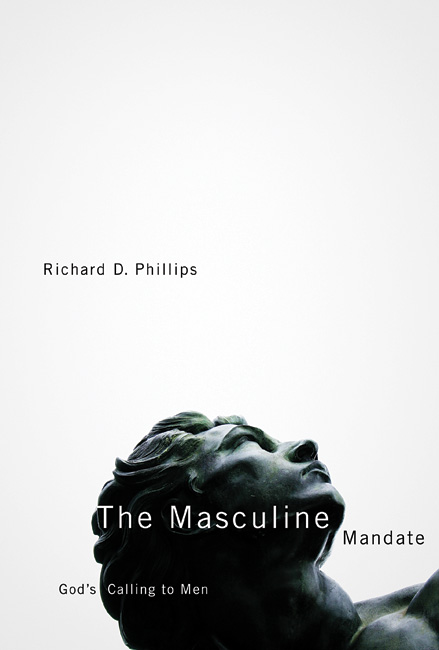 Host: I was intrigued by how you unpacked the mandate given to Adam to dress and keep the garden and how they work out in the physical realm of work and whatever labor you’re doing and in regard to your wife and children. It reminded me of the way Murray goes back in Principles of Conduct and roots everything in the creation ordinance. I had never heard that developed as much. Were these things you were reading, or was it just from your own study of Scripture that you were thinking about what was the principal work–what made a man a man, out of Genesis?
Richard Phillips: Well, you know, I mean, for the sake of the people who haven’t read the unpublished book, in Genesis 2:15, God says he placed Adam in the garden, and charged him to work it and keep it, and this book is an exposition of Genesis 2:15, which I’m describing as the masculine mandate. God put him in the garden to work it and keep it.
You know, what got me going on this was the book Wild at Heart. Because the first time I was asked to speak on this stuff, I got a copy of Wild at Heart, because I knew it was a massive best-seller, and I was absolutely mortified to read the first couple of chapters. He actually makes the statement that man was made out of the garden, and so he is undomesticated, and a male’s life is a life long quest to get in touch with your masculine side. Can you imagine Ronald Reagan making a statement like that?
No real men talk that way! “I’m on a quest for my masculinity.” That what life is, because Genesis 2:15 says–this is what he actually says–it’s a classic example of Bizarro hermeneutics–dominating today: God placed him in the garden, therefore he belongs out of the garden! And the way to get in touch with your masculine self is to get out of the place where God put you, and, as I put it in the book–I think you gotta think in these terms–you know, God placed Adam in the created, covenantal world with God-given relationships, duties and obligations. And Eldridge says, no no, you gotta go on a wilderness quest–ego trips, basically–self-quest. He actually goes so far as to say that Jesus’ forty days’ fast in the wilderness was Jesus seeking his masculine identity. I was just utterly horrified!
Well, I started reflecting on it, and I started thinking well he is right that this verse is paradigmatic. But it’s the exact opposite of what he’s teaching.
And I think, you know, two or three years ago, I did some men’s conferences, I just said, “Hey, let’s look at Genesis 2:15.” And I’m well aware that people are reading this book. I got my first copy of Wild at Heart, when an elder at my church (not this church) handed me a copy–how great the book was, and we need to buy the DVD curriculum of Wild at Heart to show all of our men.
Well, I read the book, and I go ballistic! But it occurs to me that he’s right that Genesis 2:15 is a very important statement. That’s what got me going in this direction. . .
. . . to be continued.
The Masculine Mandate, part 1
Episode #87 of Christ the Center, podcast by the Reformed Forum featured an interview with Dr. Richard Phillips regarding his new book The Masculine Mandate. Dr. Phillips says it’s primarily an exposition and application of Genesis 2:15, which reads, “The LORD God took the man and put him in the Garden of Eden to work it and keep it.” This verse, he says, is the foundational paradigm of the Scripture’s entire revelation of the male’s, or husband’s, role.
Since whenever I link to programs such as this, almost no one takes the time to go and listen, I’m transcribing the interview in a series of blog posts because I find this material to be especially needful for everyone. In this first post in the series, Dr. Phillips explains his reasons for writing the book.
Host: What did you see in men’s lives that needed to be addressed, which lead you to write this book? (Summary of the host’s actual wording)
Dr. Phillips: As is usually the case with books, there are several reasons why I wrote this book: one is, I was frustrated by the low quality of many evangelical books dealing with masculinity. Most especially, John Eldridge’s mega best-seller Wild at Heart, which is just unbiblical.
I was actually having dinner with Jerry Bridges, probably three or four years ago—and he lives out there in Colorado Springs—and we were lamenting this. I said, “Jerry, you ought to write a book on this.” And he didn’t have time, or whatever.
Meanwhile, I was asked by several conferences to speak on things like this. There was a group in Georgia two years ago who asked me to do a multi-day men’s conference.
Lig Duncan had me out to Jackson last year, to the Mid-South Men’s Rally. And so I was needing just for ministry requests, to put together biblical material. My own approach is always to exposit the Word, so if I’m asked to do a men’s conference, I’m going to exposit the Word. That got me dealing with these things.
And also, just as a pastor, I’m well aware, just as everybody is, today we’ve got a real masculinity problem in the culture and in the church. I mean, it is my view that, we talk about feminism, and all of those problems—look, we’ve got a far bigger problem with godly masculinity. In many of our churches we’ll have tlots more available, godly, marriageable women. Then we have . . . men in the church, but they’re not as mature so often. And I do believe that we have a great need for biblical instruction on masculinity.
Now, you start working on this stuff, and you start thinking about it, and you start becoming very impressed with the power of what the Bible says. As I say early on in the book, we know that when it comes to marriage and men in ministry and these sorts of things, that the New Testament directs us back to the early chapters of Genesis. If we’re going to say, “What does it mean to be a man? What is my calling as a man? What am I supposed to do to be a godly man? The answer is, go back and read Genesis 2. And what we’ll find is biblical teaching that is, in fact, a biblical paradigm.
What we read in Genesis 2 about God’s calling to Adam as the man, does in fact, have a paradigmatic influence that we will see pervading all of Scripture. And yet there’s very little teaching about the masculine mandate—that’s what I call Genesis 2:15. That there is a clear calling given to men, that will be seen playing out through the book of Proverbs, playing out through biblical examples of fatherhood, husband and Christian leadership. And it plays straight into the New Testament teaching. And I just came to believe that there is a need for some clear biblical teaching on this.
To be honest with you, it was a hard book to write, because most of my books will come out of my pulpit ministry. My working life is geared that way. I do a sermon on Sunday morning, I preach Sunday evening, I teach Wednesday night. I don’t have a lot of free time beyond that. So this book killed me. I mean, to write a book on the side—most of my books are biblical exposition flowing out of my pulpit ministry-but this one was a labor of love, because I just felt I had to get it done. Not that the world needs my book, but, I just felt an obligation to write this book.
It was not a book that I had time to do, but I just felt that there’s a great need for this, and I’m hopeful the Lord will bless it. You know, I ended up getting in about a year late, because you want to do it right.
But that’s why I wrote the book, just out of my own experiences, being asked to do work in it, and a profound sense that this material has to get out there.
Tullian’s “Unfashionable” Book Tour
 The new pastor of Coral Ridge Presbyterian Church, Rev. Tullian Tchividjian (last name rhymes with “religion”), is making the rounds promoting his book, Unfashionable. Last week, he appeared on James Robison’s television talk show along with his wife, Kim.
This show is filmed not five miles from my house, but I missed when they were in town for the shooting several weeks ago, otherwise, you probably would have been able to spot my wife and me in the audience. Guess I need to put my name back on the Life Today email list so I’m prepared when people I’ll actually want to see are in town. It doesn’t happen often, but it does happen.
The episode was broadcast last week, but you can view it online here, and read about it at Tchividjian’s own blog here. Also, here’s the search results for “unfashionable” at his blog which lists the posts that contain more about the book.
It turns out that this Unfashionable author’s interview with the White Horse Inn was this Sunday morning as well. You can listen to this more in-depth interview here.
You can read about the book at the Multnomah Books website here.
On the Robison show, Tchividjian cites an anecdote from the life of his legendary grandfather, Billy Graham, who back in the 1950’s was approached by a Hollywood celebrity who gave him the kind of advice about which his grandson now writes. The celebrity told Graham: “Don’t ever try to do Hollywood, because Hollywood will always do it better than you. You give this world the one thing Hollywood can’t–the timeless truth of the Gospel.” That’s similar to one of my mottoes: Leave the entertainment to the entertainers, and leave the ministry to the ministers. The church and the world will both be the better for it.
Who’s Afraid of the Big, Bad “Beast”?
 Looking back on my years as an Independent Baptist who kept his eye on TBN, and his ear on Christian radio, I must admit that I had always been susceptible to just about every end times related conspiracy theory that came my way. Believe me, if you watch TBN, at least back in the eighties, you learned about a lot of end times related conspiracy theories. When it comes to Independent Baptist church life, however, preaching on the end times can be a mixed bag: some will major on it, others will minor on it and still others may avoid it almost completely, claiming they find no practical application to be had in the preaching of prophecy.
After I discovered Peter Ruckman, whom I affectionately refer to as “The King of the King James Onlyists,” I gained, not only a rich source of bad information regarding biblical textual criticism, but also a rich source of bad information regarding end times related conspiracy theories. Eventually, I discovered that prophecy preacher, Texe Marrs, whose books I sold as a teenager in the Christian bookstore at which I worked as a high school student, was a fellow “Ruckmanite.” Now, this man is a conspiracy theorist par excellence! Like Will Rogers once said about men, Texe Marrs never met a conspiracy theory he didn’t like. You can enjoy this man’s ravings at www.texemarrs.com.
One of the most outstanding conspiracy theories that I recalled hearing about frequently during those years, was the claim that the burgeoning European Union had developed a super-computer in Brussels, Belgium which had the capability of tracking and storing not only the vitals statistics of everyone on the planet, but also their shopping habits. Rumor had it that the “Revived Roman Empire” that was the European Union had further plans to one day see to it that everyone was marked with some sort of electronic device on their forehead or the back of their hand, that featured a number by which the entire population of the world could be catalogued and tracked by this EU super-computer that just happened to be nick-named “The Beast.” This, we were assured, would be the way Revelation’s prophecies regarding the mark of the Beast would be fulfilled in the Great Tribulation period. Oh, the dread that overtook us all as we periodically heard the news of further technological advancements that brought us step by step closer to the eventual unveiling of the New World Order under the seductive, yet tyrannical rule of the Antichrist.
I don’t have the words to describe the paranoia that can develop in one who pays as close attention to such sensationalistic claims as I once paid to end times conspiracy theories. I know what it is to look for and find a demon behind every bush, and under every rock. Such a lifestyle is truly paralyzing. I recall as a Bible College student fearing to so much as throw a paper route just to earn money to live on and with which to put myself through school. I could not, in good conscience, be a party to misinforming my neighbors with the propaganda published by the liberal media who served as the useful idiots of the behind the scenes architects of the New World Order. I guarantee you, that if I still had today the same mindset I had in my early twenties, I would never have sought employment by the federal government in order to print U. S. currency as I now do. Are you kidding? U.S. currency is just riddled with New World Order and masonic symbols! Just what do you think “Novus Ordo Seclorum” means, anyway? New World Order! It’s printed right there on your money! As Randy Newman sings in the theme song for the TV show, Monk, “if you paid attention, you’d be worried, too!”
At long last, freedom from such bondage came to me in the form of…yes, you guessed it! Reformed theology! Specifically, Reformed eschatology (the study of last things, or the end times). At last, I found the courage to divest myself of any and all fear from the countless rumors that swirl about regarding all the things going on behind the scenes about which, “they don’t want you to know!” Man, Reformed air is so refreshing! At last, I can breathe easy.
Last night, I was reminded by a friend of the Belgium-based super-computer called “The Beast.” My friend hears that it can track upwards of 15 billion people, not that the population of the earth is expected to reach that number before the Rapture! But that just goes to show you, folks, how close we are to the Tribulation period! If such rumors are to be believed. When my friend mentioned these things to me, as I politely nodded and grinned, I thought to myself, “I need to check Snopes about ‘The Beast.'” So, check I did. I didn’t find anything about it at www.Snopes.com–it may be there, but I didn’t find it. But my search did lead me to a similar urban legend website called www.TruthOrFiction.com, which did contain an entry which–wonder of wonders!–pronounced “‘The Beast,’ a supercomputer in Belgium, is Being Used To Track Every Human Being On Earth–Fiction!” Whew! What a relief! But the details they provide regarding the origin of the urban legend simply blew my mind. Here’s how the entry reads:
-
Summary of eRumor
A three-story computer in Brussels, Belgium called “The Beast,” is described as being the brain-child of the European Common Market. It is said to be “self programming” and is intended to track the buying and selling activities of every person on earth. Additionally, the system is alleged to depend on invisible tattoos on the forehead or back of the hand of each person for identity purposes. Ominously, the tattoo will be of a unique, personalized number composed of three entries of three digits each.
- The Truth
It’s easy to see how this story would grab the attention of Christians. It’s almost as though it were tailor-made to fit with the book of Revelation. And… it was.
Unlike most urban legends, we have a clear trail that leads to where the story came from. There are various printed versions of the story that date back to 1973, but the most widely circulated early account appeared in Christian Life magazine in August 1976.
Three months after publishing the story, Christian Life received a letter from Christian author Joe Musser. In it, he explained that the Beast Computer of Belgium did not exist in reality, but in fantasy. Musser said that he created the scenario for a novel he wrote, titled Beyond a Pale Horse (actually, it’s Behold, A Pale Horse–jdc), and for a screenplay for the David Wilkerson film, The Rapture. In the letter, Musser said that for three years he had seen the story he had created being passed along as fact.
The possibility for confusing fiction with fact was there from the outset. As a part of the promotion for the David Wilkerson film, some mock newspapers had been printed which had convincing-looking news stories about events that could be associated with the rapture, including the Beast Computer of Belgium. Unless one read the small print next to the copyright notice, there was nothing to indicate that it was fiction.
As with other urban legends, some thoughtful evaluation of the facts would cast doubt on the story. For example, anybody who is savvy enough about computers would know that it’s not going to take a computer occupying three stories of a major building to catalog all the people on the earth. Today’s computers can handle the task in a fraction of that space – assuming there was some way to know who all the people were.
Also, some versions of the story stated that the computer was self-programming, suggesting that perhaps it had a life of its own outside of the humans who programmed it. Artificial intelligence is a fascinating subject, and computers are getting smarter every day, but no computer expert that I know of is worried about whether a database program could become the Antichrist. Additionally, even if a decision were made to track all humans, it is not clear that the European Common Market would be the entity to initiate or control it. (Here’s the source)
My mind was officially blown. I never dreamed that I would learn, not only how it is that Belgian “Beast” Super Computer was a mere urban legend, but the very name of the man who dreamed up the idea in the first place! Let alone my astonishment that it was a fictitious scenario developed for a Christian novel on the end of the world! My adrenaline was flowing, and I couldn’t stop running around telling everyone I thought might have heard about this conspiracy theory, because I had to personally make sure they were utterly divested of any and all anxiety over such a prospect. Was I ever giddy! I didn’t know what to do with myself! But telling a few of my co-workers, both believing and unbelieving, I had to help make sure the world had more access to this information. I must make sure these facts are featured on Wikipedia! The world’s free online encyclopedia! Under the heading of “The Beast (Bible)” on Wikipedia, you will find my first ever contribution to this global pooling of knowledge. In the article, under the sub-topic of “Alternative Views” I found this single sentence referencing “The Beast” supercomputer: “Some identify the Beast with a Super Computer in Brussels, Belgium.” To this, I added the truly “alternative view”: “However, author Joe Musser, attributes the origin of this urban legend to his 1970 novel, Behold, a Pale Horse and the movie The Rapture which is based on his book. (Read the article here)
Finally, a little more surfing of the web produced a more in-depth discussion of this story. Silicon.com, a website featuring writing on all things computer related, interviewed Joe Musser, and the resulting article features what he had to say. I highly recommend that you read this article here.
White Horse Inn Website Redesign
 If you haven’t checked out the newly redesigned website of the White Horse Inn radio show, featuring a panel of two presbyterian-type Reformed minister/scholars (Michael Horton and Kim Riddlebarger, a Calvinistic Baptist pastor (Rev. Ken Jones) and a Lutheran seminary professor (“Dad” Rod Rosenblat), talking about the doctrines of the Reformation and how they apply to current issues in American Evangelicalism, you really ought to check it out. I don’t know how many new resources have been added to the site, but the new format really makes them all a lot more accessible in my opinion. Here’s the outline of tabs, with several links on many of them, that will be at your disposal:
- Home
- White Horse Inn—White Horse Inn, Broadcast Archives, Upcoming Topics, Radio Stations
- Modern Reformation
- First Time Visitors—First Time Visitors, Guest Book, Newsletter
- Support Us
- About Us—Contact Us, Testimonials, Share WHI
- Resources—Resources, News, Events, Free Articles
- Blog
- F.A.Q.
If you’ve never listened to the show, and fear that a theological talk show may go over your head, I ask you to give it a try, and see if the chemistry between these co-hosts doesn’t hook you and keep you coming back. Although the topics are serious theological issues, the way the hosts interact is often light-hearted and entertaining. I think you’ll find it not only a fascinating show, but also an entertaining one.
The image included on this post is a link to the website, and you’ll notice that it may also be found in my sidebar. There it shall remain as a reminder to you to not let a week pass that you do not listen to an episode of the White Horse Inn. A new episode is broadcast every Sunday.
The Agony of the Deceit of the Word of Faith Movement
Just found this great video presentation of Steve Camp’s song “The Agony of Deceit” from his album “Consider the Cost.” Camp’s song applies 2 Peter 2 to today’s Word of Faith movement, and draws it’s title from the book, The Agony of Deceit, edited by Dr. Michael Horton of The White Horse Inn radio show and Modern Reformation Magazine. If you don’t know what the Word of Faith movement is, they’re the guys preaching the health and wealth, name-it-and-claim-it gospel that tends to make Christians more interested in what’s on the Master’s table rather than the Master himself (get a basic intro here). I’ve also included the great testimony by the Pentecostal minister who posted this video to his YouTube page. But best of all is the passage of Scripture on which the song is largely based. It’s simply astounding how well prosperity preachers fulfill the Holy Spirit’s revealed and revealing description of false teachers. This post concludes with Peter’s words inspired by the Holy Spirit.
While feeling called to study to be a missionary at Baptist Bible College back in the early 90’s, my mind was still somewhat confused about what to do with the claims of the Word of Faith and charismatic movements. It wasn’t until 1994, when I discovered a voice on my AM radio that was actually speaking critically of Kenneth Copeland and the others, and heard the speaker mention the release of his new book, Christianity in Crisis, that I was able to see clearly how in error this movement is, and to finally break free from the false notion that God may actually be using this movement. The radio show was The Bible Answer Man, and the host/author was Hank Hanegraaff.
from aflame4God:
“You MUST hear this song! A powerful song and teaching that gives you a serious warning concerning false teachers and their ungodly dangerous doctrines. You should listen to holy men of God who preach the truth from a sincere heart. THIS SONG IS FROM THE CD “CONSIDER THE COST” BY STEVE CAMP.I CONSIDER IT ONE OF HIS BEST. The following book is a very good book to read on the subject it is called “The Agony of Deceit” by Michael Horton. The song is based on this book and 2 Peter 2. You can order this book on Amazon.com or ebay.
If you are a serious Christian and want to know the truth about this Movement consider buying these books.
“You can find these books on amazon.com
1. “A Different Gospel” by D.R. McConnell
2. “The New Charismatics” by Michael Moriarty
3. “Christianity in Crisis” by Hank Hanegraaff
4. “The Seduction of Christianity” by Dave Hunt
5.” The Word-Faith Controversy” by Robert Bowman
6. “The Born Again Jesus of the Word-Faith Teaching” by Judith Matta
7. “The Strange World of Benny Hinn”
8. The Disease of the Wealth and Health Gospel” Gorden Fee (A renown godly Pentecostal Bible scholar).
“If fact there is no church historian or Bible Scholar that would agree with these false teachings. I know this movement well. I graduated from Rhema Bible Training Center in 1979 and spent 12 long years as a part of this movement. I preached in many WOF Churches. I was a devout reader of E.W. Kenyon. I read one of his books over 40 times! I met and heard many of the key figures of this movement in the ’70s and 80s. So I’m not a novice on the subject. God by His grace set me free from these false doctrines in 1988. At the time I was a pastor of a growing church. I recanted before my congregation. The Bible became like a new book to me, so precious, pure and powerful. Since then I’ve been on the narrow road that leads to life. I now preach the Gospel as according to Jesus and the Apostles as inspired by the Holy Spirit. Finally, let it be said that not all pentecostals agree with the Word of Faith Movement. God bless you. . . “
False Prophets and Teachers–2 Peter 2 ESV
2:1 But false prophets also arose among the people, just as there will be false teachers among you, who will secretly bring in destructive heresies, even denying the Master who bought them, bringing upon themselves swift destruction. 2 And many will follow their sensuality, and because of them the way of truth will be blasphemed. 3 And in their greed they will exploit you with false words. Their condemnation from long ago is not idle, and their destruction is not asleep.
4 For if God did not spare angels when they sinned, but cast them into hell [1] and committed them to chains [2] of gloomy darkness to be kept until the judgment; 5 if he did not spare the ancient world, but preserved Noah, a herald of righteousness, with seven others, when he brought a flood upon the world of the ungodly; 6 if by turning the cities of Sodom and Gomorrah to ashes he condemned them to extinction, making them an example of what is going to happen to the ungodly; [3] 7 and if he rescued righteous Lot, greatly distressed by the sensual conduct of the wicked 8 (for as that righteous man lived among them day after day, he was tormenting his righteous soul over their lawless deeds that he saw and heard); 9 then the Lord knows how to rescue the godly from trials, [4] and to keep the unrighteous under punishment until the day of judgment, 10 and especially those who indulge in the lust of defiling passion and despise authority.
Bold and willful, they do not tremble as they blaspheme the glorious ones, 11 whereas angels, though greater in might and power, do not pronounce a blasphemous judgment against them before the Lord. 12 But these, like irrational animals, creatures of instinct, born to be caught and destroyed, blaspheming about matters of which they are ignorant, will also be destroyed in their destruction, 13 suffering wrong as the wage for their wrongdoing. They count it pleasure to revel in the daytime. They are blots and blemishes, reveling in their deceptions, [5] while they feast with you. 14 They have eyes full of adultery, insatiable for sin. They entice unsteady souls. They have hearts trained in greed. Accursed children! 15 Forsaking the right way, they have gone astray. They have followed the way of Balaam, the son of Beor, who loved gain from wrongdoing, 16 but was rebuked for his own transgression; a speechless donkey spoke with human voice and restrained the prophet’s madness.
17 These are waterless springs and mists driven by a storm. For them the gloom of utter darkness has been reserved. 18 For, speaking loud boasts of folly, they entice by sensual passions of the flesh those who are barely escaping from those who live in error. 19 They promise them freedom, but they themselves are slaves [6] of corruption. For whatever overcomes a person, to that he is enslaved. 20 For if, after they have escaped the defilements of the world through the knowledge of our Lord and Savior Jesus Christ, they are again entangled in them and overcome, the last state has become worse for them than the first. 21 For it would have been better for them never to have known the way of righteousness than after knowing it to turn back from the holy commandment delivered to them. 22 What the true proverb says has happened to them: “The dog returns to its own vomit, and the sow, after washing herself, returns to wallow in the mire.”
The “Deformed” Theological Pedigree of Murder
Here’s an interesting article from the Weekly Standard on the theological background of those who believe it’s justifiable to murder abortion doctors. What’s scary about it is how people can get so close to the truth and then twist it to extremes. The other scary thing is how closely tied to Reformed theology this aberration is.
Wake Up, America!
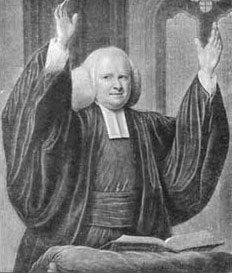 Read Burk Parson’s Tabletalk Magazine article, “A Sower Went Out To Sow . . . ” in which you will be introduced to George Whitefield, the great Calvinistic Methodist evangelist who, along with Jonathan Edwards (of “Sinners in the Hands of an Angry God” fame–aka, “the theologian of revival“), and John Wesley, for whom “the world [was his] parish,” with his earnest and sometimes blunt preaching, was the agent of God in the First Great Awakening.
As I read Parson’s article, it occured to me that I’ve heard evangelicals praying for and even “claiming” revival all of my life, with little to show for it, but a few enthusiastic excesses on the fringe of the charismatic movement. Considering the cultural climate in which we now live, perhaps God is bringing the American people to a greater place of hunger and thirst after righteousness. Pray for revival as we are all providentially confronted with some harsh economic and cultural realities. But, lest another explosion of error results, pray for reformation along with revival. Revival without reformation will bring spiritual life, but can also spread doctrinal error; reformation without revival will improve the church’s theological integrity whether or not spiritual integrity accompanies it. Reformation and revival is what America desparately needs.


 The Misadventures of Captain Headknowledge
A Question of Chicken and Egg from John’s First Epistle
First John 5:1 reads “Everyone who believes that Jesus is the Christ has been born of God, and everyone who loves the Father loves whoever has been born of him.” Most contemporary fundamentalist and evangelical Christians miss the implication of the apostle John’s wording “has been born of God” as it relates to those who believe. Does this text imply that those who believe were first born of God? Does it therefore imply that regeneration precedes faith? Or must we deny this implication based on our preconceived notion that regeneration is not possible until after we make the right decision to choose to believe?
Reformed Baptist apologist, Dr. James White, has posted a short video explaining this passage in the light of the apostle John’s repeated use of the language “everyone who _____ has been born of God.” He explains that all agree that in the case of two other texts from the same epistle, 1 John 2:29 and 4:7, the apostle’s clear implication is that the action of the believer is the result, and therefore logically follows, the fact of his having been born of God. In these two passages, the actions are “practicing righteousness” (2:29), and “loving” (4:7). In other words, it’s easy to accept the idea that “everyone who practices righteousness has been born of God” at face value, and it is easy to agree that everyone who loves God and his neighbor is one who has been born of God. No one’s tradition teaches the contrary. However, when it comes to the exact same grammatical structure in the first verse of chapter five, we are told by many that we must not make the same inference that being born of God is the prerequisite of saving faith. Dr. White attempts to make the case that this is no more than reading one’s tradition into the text, rather than basing one’s interpretation of the verse on what the text demonstrably means. I agree with him. Watch the following video, and see if you, too, can agree with the apostle John that “everyone who believes that Jesus is the Christ has been born of God.”
Share this: