Countdown to OPC DFW Ref Con 2014!
![image[1]](https://capthk.com/wp-content/uploads/2014/10/image1.jpeg) This morning, my pastor, Joe Troutman, my friend Chris and I erected our conference banner in front of the church. Then we got in the car and drove by the church to see just how visible it is from the road. Pastor Troutman said, “It pops!”
This morning, my pastor, Joe Troutman, my friend Chris and I erected our conference banner in front of the church. Then we got in the car and drove by the church to see just how visible it is from the road. Pastor Troutman said, “It pops!”
![image[1]](https://capthk.com/wp-content/uploads/2014/10/image11.jpeg)
![image[2]](https://capthk.com/wp-content/uploads/2014/10/image2.jpeg) I can’t wait for OPC DFW Reformation Conference 2014!
I can’t wait for OPC DFW Reformation Conference 2014!
Join us by clicking here for free registration. There are 93 seats available at present. I hope you can make it to see Dr. Carl Trueman speak on the biblical case for creeds and probably survey the development of the ancient Apostles’, Nicene and other creeds on Friday night at 7:00pm CT. Then at 9:30am CT Saturday he will survey the confessions of the Protestant Reformation, and finally at 11:00am he will commend the usefulness of creeds and confessions in the life and worship of the Christian church today.
What if “No creed but the Bible” is unbiblical?
Distinctions Regarding Sanctification in the Household Principle

Robert Mossotti, OPC Licentiate
OPC Licentiate Robert Mossotti explores a distinction between the holiness of the children of a believing parent and the way an unbelieving spouse is sanctified by a believing spouse. These remarks conclude his lesson delivered on August 31, 2014 at Mid-Cities Presbyterian Church. Subscribe to Robert’s SermonAudio page for more worthwhile teaching and preaching.
Let’s not forget that in Hebrews 6, there are some who are in the visible church who actually enjoy many spiritual benefits including tasting the heavenly gift, and the good word of God, and the powers of the age to come, and sharing in the Holy Spirit. But not, as we have discussed in a previous lesson, sharing in the Spirit’s work of regeneration, but in other very real, but lesser, blessings of the Holy Spirit, blessings which our Confession calls “common operations of the Spirit” in chapter 10, paragraph 4.
There is one other text that I would like to examine briefly. These are broad brush strokes, these may not even be the best arguments for why we baptize infant children of believers, but I think that they’re fairly good ones: the continuity of the one covenant of grace, the unalterability of covenants once they’re ratified in Abraham, and all the things we’ve gone through so far in this lesson.
Let’s go to 1 Corinthians chapter 7.
For the unbelieving husband is made holy because of his wife, and the unbelieving wife is made holy because of her husband. Otherwise your children would be unclean, but as it is, they are holy (1 Corinthians 7:14 ESV).
In the Greek text of this verse, the children of a believer, whether it’s mother or father, are called saints in the Greek. They are called “holy ones,” that’s what “saints” means. Now, this is a noun, it’s not an adjective, like it appears in the text here in English. It’s not a description of them as an adjective, it is a statement that they are a noun, they are saints; they are holy ones.
Let’s go to chapter 1 and verse 2 of this epistle.
To the church of God that is in Corinth, to those sanctified in Christ Jesus, called to be saints together with all those who in every place call upon the name of our Lord Jesus Christ, both their Lord and ours: (1 Corinthians 1:2 ESV)
It’s not as obvious in the English, here, but in the Greek it is the same noun. It’s not a verb, it’s not an adjective, it’s a noun, they’re being called saints, holy ones. So, let’s go back to chapter 7. The thing is, that although the children seem to be called by the same noun as other members of the visible church, and that is the point that I want to make, nevertheless, it says something odd about the unbelieving spouse as well, doesn’t it? It would seem to create a problem for my thesis because you can’t say that an unbeliever is a member of the church, and it says that he is being sanctified by the believing wife, or vice versa, and the children are called holy ones. That creates an apparent problem, I’m trying to say with this text that children are members of the church just like the ones Paul addresses at the beginning of the epistle, so there is some difficulty there. But I think the explanation is to be found in the grammar. The children, like the visible church members in chapter 1 verse 2 are declared to be saints, holy ones. That is not what happens, here, with the unbelieving spouse. They are not called saints, they are not called holy ones, it’s says with a passive verb, they “are sanctified.” It is a different idea; it’s slight, I admit, but it is a distinction that Paul actually puts in there. He doesn’t say, “the children are saints, and the unbelieving parents are saints, too.” He doesn’t say that the children “are sanctified,” in the Greek, the way the unbelieving parent is sanctified. He makes a distinction. He calls the children “saints” the way he calls all of them saints at the beginning, and with the unbelieving parent, he says that they “are sanctified,” and I think the explanation for this distinction in the grammar is this idea of being sanctified by virtue of being in proximity to something holy.
Let’s go to Matthew 23:17-19.
You blind fools! For which is greater, the gold or the temple that has made the gold sacred? And you say, ‘If anyone swears by the altar, it is nothing, but if anyone swears by the gift that is on the altar, he is bound by his oath.’ You blind men! For which is greater, the gift or the altar that makes the gift sacred? (Matthew 23:17-19 ESV)
The gold was sanctified, not because of what it is, but because of its proximity to something else.
Now let’s go to Exodus 30:29
You shall consecrate them, that they may be most holy. Whatever touches them will become holy (Exodus 30:29 ESV).
You can see it much more clearly in the Septuagint and in the Hebrew text that it is the same idea of sanctifying, but it’s not that these things were holy in themselves, but whatever they touched was holy, so going back to 1 Cortinthians 7, the unbelieving spouse is made holy in that sense, by virtue of their proximity to the believing parent and the child, in their marital and parental relationship to holy ones, they are in a sense sanctified. I can’t do much better than that, I think, in explaining in what sense the unbelieving spouse can be sanctified. It’s not as if they are holy, “holy ones,” but they are sanctified, receiving holiness by the unbelieving spouse’s proximity to holy things.
One more note on the unbelieving spouse being described as being sanctified, if we were to take the time to go to Leviticus 27:28, especially in the Masoretic Hebrew text and the Septuagint, we would see that there is all kinds of sanctifying in the Scriptures. I don’t think this is the kind of sanctifying we’re talking about in Leviticus 27, where it is those that are set apart for God’s destruction are called holy as well, so I don’t mean the unbelieving spouse is sanctified in the sense that he is set apart for destruction. I only introduce this to make the point that in the Scriptures there is more than one meaning for “sanctifying.” It doesn’t always have the meaning of which we typically think.
So, what is the overall argument that I want to make from 1 Corinthians 7:14? It’s not ambitious. I don’t want to make too much out of my grammatical distinctions, but simply that children of believers are to be admitted as members of the visible church, and are to be granted the rite of admission to the same. I think surely the New Testament language stands at least for that. They are called saints just like anybody else in the church at Corinth.
I have said that Genesis 17 makes clear that the household principle is not simply the physical descendants of the believer that are to be included into the visible church. It’s a household principle, not so much a genetic line kind of principle. Now we in the United States of the 21st century don’t have slavery. So how would you apply that? We should keep in mind that they did have slavery in the first century as well as during the time of Abraham. So by the first century, where this principle of admission into the visible church by household would include slaves it is the same as saying that in the twenty-first century the household would not include slaves. Slavery is an historical accident of local, civil law. It’s something that the Bible does not confront head on, nor does it warrant it. That’s how we would apply it today. We would do the same thing, we would admit by households, but since households no longer include slaves we wouldn’t even consider that, but children would still be a part of that, according to Genesis 17.
Why Baptism Has Replaced Circumcision as Sign of the Covenant of Grace
Robert Mossotti, OPC Licentiate
OPC Licentiate Robert Mossotti explains how the Bible teaches that baptism replaces circumcision as the sign of the covenant of grace. This lesson was delivered on August 31, 2014 at Mid-Cities Presbyterian Church. Subscribe to Robert’s SermonAudio page for more teaching and preaching.
Now let’s talk about whether baptism has replaced circumcision. That’s something that’s batted around between Baptists and Presbyterians, so let’s talk about that for a moment. Before I start dealing with a couple of texts, I would like to pose a couple of rhetorical questions to the group.
What was the sign of entry into the one covenant of grace, into the visible church, in the Old Testament? It was circumcision. What is the sign of admission into the one covenant grace in the New Testament visible church? Baptism. So we believe that if the one rite of admission into the visible church is now in effect, and that the old rite of admission into the visible church is no longer in effect, then the one has replaced the other.
We should also ask, what do these two signs, circumcision and baptism, signify? In short, both circumcision and baptism signify the same thing. Both signify spiritual regeneration, the putting off of the body of sin, of being cleansed, and of belonging to the Lord’s household. A couple of places you can go is Romans 2:29 and Philippians 3:3. They also both signify something that isn’t as obvious, but is, nevertheless a legitimate thing signified, and that is passing under God’s wrath, his judgment ordeal. I would direct you to Meredith Kline’s By Oath Consigned which may be obtained on the internet. This book explains how circumcision is passing under the judgment sword of God, and baptism is passing under the judgment waters of God, as 1 Peter mentions that baptism is analogous to the judgment waters of the flood. Kline draws this out, so I would direct you to that.
The fact that baptism fills the void left by circumcision’s removal, serving the same function of admittance into the visible church, and the fact that both signify the same spiritual realities, we believe that baptism has replaced circumcision. 25:38
The Scriptures also suggest this very thing in Colossians 2. The relationship between the participle and the finite verb is more obvious in the Greek grammar, but we can still talk about it and get the meaning here in English.
In him (Christ) also you were circumcised with a circumcision made without hands, by putting off the body of the flesh, by the circumcision of Christ, having been buried with him in baptism, in which you were also raised with him through faith in the powerful working of God, who raised him from the dead (Colossians 2:11-12 ESV).
The phrase in verse 11 “you were circumcised” is the finite verb. In verse 12, the phrase “having been buried,” is a participle in the Greek, and it relates to the finite verb. So you were circumcised by being buried with him in baptism. That’s what the grammatical shorthand of this is. If I were to say, “I went to the store riding on my bike,” you would understand that the participle “riding” is a participle of means. How did I get to the store? I got to the store by riding my bike. It’s the same in this Colossians passage: “you were circumcised…by being buried…in baptism.” So we believe that the Scriptures tell us in so many words that baptism replaces circumcision.
Little Studio Films partners with Author David R. Stokes for Hollywood Productions
For decades, I have said, “The life story of J. Frank Norris would make a great gangster movie!” Well, it looks like I finally get my wish, although it comes in the form of a courtroom drama. I’ll take it! Congratulations to author David Stokes on accomplishing the goal I’ve been waiting years to see: the colorful and controversial story of J. Frank Norris on film.
I guess I’ll have to write the “gangster-movie” version someday… 😉
Read more about The Shooting Salvationist in my old posts categorized under the name J. Frank Norris.


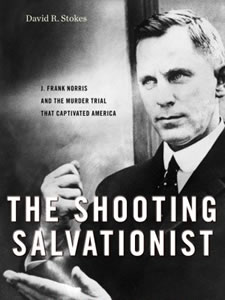
LOS ANGELES, CA, USA, September 16, 2014 — Little Studio Films is pleased to announce a collaboration with author David R. Stokes. They will be working on promoting for Film and TV adaptations his novel, Camelot’s Cousin, as well as his narrative non-fiction bestseller, The Shooting Salvationist.
Camelot’s Cousin is an espionage thriller set against the backdrop of the Cuban Missile Crisis and other famous events during the Kennedy administration. The discovery of a long-buried journal indicates that one of President Kennedy’s most trusted friends was actually a Soviet mole. Templeton Davis, a scholar and media personality becomes lost in an investigation and travels far and wide in his quest to unravel one of the 20th century’s greatest mysteries.
The Shooting Salvationist, distributed by Random House, is the real-life story of the Reverend Doctor J. Frank Norris. A powerful pastor, publisher, and broadcaster in the 1920s, Norris is the subject…
View original post 278 more words
Filling in the Blanks on the Life and Death of Ian Paisley
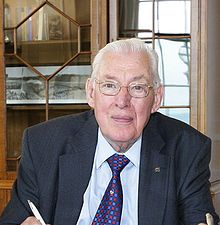
Dr. Ian R. K. Paisley (1926-2014)
Among the King James Onlyist writers I used to read back in the height of my fundamentalist zeal, one of the more scholarly, by comparison, was David Cloud, whose work may be found at his website Way of Life Literature, Inc. He was definitely a schismatic fundamentalist on many issues, but he did not descend into the nuttiness of Ruckmanism. I found many of his writings on the defense of the KJV to be somewhat more satisfying than the fringe lunacy of Gail Riplinger’s New Age Bible Versions, which was her personal regurgitation of many of Peter Ruckman’s views on the Bible version debate, up to and including the inspiration of the KJV, and David Cloud wrote a worthy critique of her book.
David Cloud also included short bios of many proponents of the exclusive use of the King James Version. Called, in classic fundamentalist typography, “TESTIMONIES OF KJV DEFENDERS (do they think we’re all deaf?),” my favorite is the one on OPC minister and Westminster Theological Seminary grad, Edward F. Hills (read it here), author of The King James Version Defended, which introduces the textual arguments of then Dean of Chichester, John William Burgon, the first great opponent of the Critical Text developed by the committee selected to revise the King James Version in 1881 which fell under the influence of, to hear modern fundies tell it, Roman Catholic-loving, heretic-defending spiritualists, Westcott and Hort (cue ominous music—BOM BOM BOMMM!) and misuses the presuppositional apologetic method, which he calls the logic of faith, to provide his unique twist to Burgon’s outdated scholarship. Hills’s book was my all-time favorite criticizing modern English Bible versions, because it was otherwise very informative with his short histories of “Unbelief” and “Modernism” and detail on the textual sources of many of the contested readings. Indeed, Hills, provoked by a quote of B. B. Warfield which praised higher textual criticism, went on to get the needed credentials and work as an actual textual critic in that field for 20 years before writing his book. Despite my critical description above, it contains many examples of fine scholarship when it comes to reporting the facts of the history of textual criticism and the translation of the King James Version, and it also planted many of the seeds of Reformed theology which would take root and bear fruit in my own mind and heart in the years to follow. It’s just the methodology by which he reaches his conclusions with which I disagree.
Another of the TESTIMONIES OF KJV DEFENDERS which intrigued me was that of the founder of the fundamentalist Free Presbyterian Church of Ulster and Irish Protestant political leader, Ian Paisley (read it here) who died on Friday. It tells the story of a courageous public figure who endured violence and assassination attempts for boldly standing up to Pope John Paul II (footage) and calling him the Antichrist among other anti-Catholic activities and rhetoric. And although he was considered a revivalist, Paisley also was consistent with his fundamentalist anti-Catholicism when he boycotted a Billy Graham crusade for allowing the participation of Roman Catholics. And most relevant to Cloud’s appreciation of him was his rejection of modern English translations of the Bible. Cloud reprints at least part of a speech delivered by Paisley at a World Congress of Fundamentalism at Bob Jones University in 1983 called (again, reach for your hearing protection) “THE AUTHORITY OF THE SCRIPTURES VS. THE CONFUSION OF THE TRANSLATIONS.”
This TESTIMONY was last updated back in 2004. It only gives the reader the information regarding Paisley’s views which parallel those of American fundamentalists who consider the pope the Antichrist from the perspective of dispensational premillennialism, rather than post- or amillennialism, to which Paisley likely subscribed. It excuses his otherwise “heretical” Calvinism, denial of congregational polity and the leadership of only one elder, called either the pastor or the preacher, or just “Preacher.” It omits a dark period in which he was involved in the cover-up of sexual abuse against children in a boy’s home (HT: Jeri Massi). Cloud’s report also leaves out the details of the violence on the ground which Paisley’s political rhetoric inspired, or the man himself lead. Because his webpage remains so incomplete, Cloud also neglects to point out the fact that in 2007, after decades of spearheading the movement to suppress Roman Catholic civil rights in Ireland, which led to thirty years of violence in what is called “The Troubles,” and leadership of the Ulster Resistance which teamed up with other Protestant groups dedicated to violence against Roman Catholic civil rights, when the Catholic Irish Republican Army disarmed itself and promised an end to its terrorism, according to the New York Times obituary on the late fundamentalist Presbyterian minister and First Minister of Ireland, Ian Paisley, entered into a power-sharing unity government with a leader of his former Catholic opposition.
The day many thought would never come arrived in Belfast on May 8, 2007. Mr. Paisley, founder of the Democratic Unionist party, which sought continued association with Britain, and Martin McGuinness, a Sinn Fein leader and former commander of the Irish Republican Army, which had fought for a united Ireland, took oaths as the leader and deputy leader, respectively, of Northern Ireland’s power-sharing government.
This is not to say that Paisley necessarily recanted his stern anti-Catholic views regarding the Pope, or his rejection of modern English Bible versions, or his other fundamentalist views, but it is to say that when all you know about someone originates from a fundamentalist resource, you will want to compare it to other sources of information to make sure you are getting the whole story. It is nice to hear that Paisley’s controversial career ended on a more conciliatory note the way it did.
The Christian Dating Dilemma

A Captain Headknowledge family Easter portrait from enough years ago to avoid getting himself in trouble with his kids–and, Lord willing, his wife.
I recommend Christian parents listen to this week’s episode of The Mortification of Spin podcast entitled “The Duggar Dilemma.” It is an informal discussion, and not a commercial for the latest trend in controlling the process of matching young men and ladies in the godliest of godly fashions. Rather, it takes a more realistic approach which I find to be more compatible with Christian liberty. Mortify the commandments of men with Todd “Meatloaf” Pruitt, Aimee “Housewife Theologian” Byrd, and Dr. Carl “Just have sons” Trueman as they explore the contours of the contemporary world of teenage relationships from the perspective of Christians parents, specifically the Christian parents of teenage daughters, which largely leaves Carl out of the discussion. But if you’d like to hear more from Dr. Carl Trueman, then register today for the first annual OPC DFW Reformation Conference at MId-Cities Presbyterian Church in Bedford, Texas on October 10-11 where the good Dr. Trueman will be mortifying contemporary Evangelical spin regarding the need and benefit of creeds, and how those of the Protestant Reformation are particularly beneficial, indeed.
Visible Church Membership for Covenant Children
Robert Mossotti, our summer intern at Mid-Cities Presbyterian Church in Bedford, Texas taught a Sunday School series on Ecclesiology. All of the lessons are available online here. They’re also available on Robert’s SermonAudio page here. My favorite lesson in the series was the following on the biblical case for infant baptism and the Reformed inclusion of the infant and unbelieving children of believers into church membership. The following is a transcript of his remarks, lightly edited at some points. I hope you find it as helpful and enlightening as we have. You can listen to this particular lesson online here. We begin with his introductory remarks regarding principles that govern our interpretation on this issue, and an exposition of Paul’s words regarding covenants from Galatians 3. The rest will follow in the coming days and weeks.
Why do Presbyterians baptize babies and count them as members of the visible church?
Let’s restate some principles first, before we get into some passages.
The visible covenant community is the visible church—Old Testament and New Testament—and what makes it visible are the sacraments. These place a mark on the church to identify it as belonging to the Lord. The sacraments mark God’s people off from the world. Another principle we have to keep in mind is that there is only one covenant of grace in Scripture. The covenant by which Abraham and the Old Testament church were saved is our covenant, too. By God’s grace, in the Scriptures we are all called children of Abraham through faith. There is no essential difference between the Old Covenant church and the New Covenant church. There are differences, but no essential differences. No differences as to substance, just form. The church is one across all the ages, because the covenant of grace is one. To embrace the one idea is to embrace the other. If you accept that there is one covenant of grace throughout Scripture by which we are all saved, then you have to accept that the church is one across both Old and New Testaments. We affirm this over against dispensationalism, which maintains an essential difference between Israel and the church. So the Abrahamic Covenant, the Mosaic Covenant (the one at Mount Sinai mediated through Moses), and the New Covenant are all different administrations of the one covenant of grace. In section 5 of chapter 7 of the Westminster Confession of Faith, the Mosaic Covenant is called an administration of the covenant of grace. Alright, now that those principles have been stated, let’s go to Galatians 3.
The apostle Paul is going to give us in this passage a principle of covenant theology. A principle of Interpretation of Covenants, of Application of Covenants, the Nature of Covenants. Paul says not only biblical covenants, but all covenants. Let’s go to Galatians 3:15.
“To give a human example, brothers: even with a man-made covenant, no one annuls it or adds to it once it has been ratified. Now the promises were made to Abraham and to his offspring. It does not say, “And to offsprings,” referring to many, but referring to one, “And to your offspring,” who is Christ. This is what I mean: the law, which came 430 years afterward, does not annul a covenant previously ratified by God, so as to make the promise void” (Galatians 3:15-17 ESV).
In verse 15, this idea of “ratified” in the ESV comes from the Greek word kuro’o, and Bauer-Danker, the premier Greek lexicon or dictionary defines it as “to confirm, to ratify, to validate or to make legally binding.” Although the covenant of grace goes all the way back to Eden, note that Paul is saying here that it was not ratified until Abraham. Now note that in verse 15, Paul begins with a general principle of covenants. Then, as he moves down through verses 16 and 17 he applies that general principle of covenants to the particular case of the Mosaic administration of the one covenant of grace—that’s what he means by the Law coming in. Paul says that once the covenant of grace was ratified at the time of Abraham, no modifications may be introduced even by later administrations of the covenant of grace, including the Mosaic administration.
So, it is because there is only one covenant of grace throughout Scripture that we Presbyterians apply the sign of admission into the visible church to the children of believers, for we are not free to change the way the covenant is administered. It is not because the Reformers didn’t sufficiently push off from Rome that we baptize babies, it is because of our covenant theology which we receive, we believe, from the Scriptures. It is also because the covenant of grace is one across the various administrations that we need not seek for proof of continuity between the Abrahamic administration and the New Covenant administration of the one covenant of grace. In fact, because of the underlying unity of the one covenant of grace across the ages, which cannot be altered once ratified, says Paul, that we actually would need to find evidence in the New Testament that God intends to change who it is who receives the rite of admission to the covenant community. Because of the underlying continuity of the one covenant of grace, it is discontinuities, and not continuities, between the Old Covenant and New Testament administrations, that need positive proofs from the New Testament. We don’t have to go to the New Testament and ask if there are specific cases where it says in explicit terms that babies were baptized. Because of the underlying unity of the one covenant of grace, you have to look for a command to no longer give the sign of the covenant of grace to the children of believers. The underlying unity drives the belief that we assume continuity unless there is evidence in the New Testament of discontinuity.
So the absence of explicit revelation in the New Testament on whether children are to be included in the visible church actually works in favor, not against, the inclusion of children in the visible church. Because of this principle of covenant administration, the default setting, says Paul, is covenantal continuity. But, in fact, we can find more evidence than just these principles of covenant theology that the children of believers are to be included in the visible church as members.
The Role of Creeds in the Protestant Reformation

You are invited to attend my church’s first annual OPC DFW Reformation Conference, Friday-Saturday, October 10-11, 2014. Dr. Carl Trueman will be the featured speaker. His subject will be the role of creeds in the Protestant Reformation.
Seating is limited, but free. You may register for the conference here.
The location of Mid-Cities Presbyterian Church is:
1810 Brown Trail
Bedford, TX 76021
I hope you can make it!
OPC’s Doctrine of Assurance Blamed for Bergdahl’s Religious Uncertainty
In this day when America is, for better or worse, trying to wind down its war against radical Islamist jihadists, Skidmore College Professor and Director of Religious Studies, Mary Zeiss Stange, opines in a USA Today piece that we don’t think enough today about how religion can be a source of evil as well as good. Just let that sink in for a moment. But Stange’s focus is not on radical strains of Islam. Hers is on the Orthodox Presbyterian Church. You know, that “hyperconservative offshoot of the mainstream Presbyterian Church USA” which she calls “Calvinism on steroids” because it “sees the world in stark either/or terms” in which you are either “saved and bound for heaven. Or you are a sinner, treading a one-way path to the fiery pit of hell.” She characterizes the struggle to discern one’s eternal destiny as “making extraordinary demands on a sensitive young person’s conscience and conduct.” Having painted this dramatic portrait of my denomination with such colorful brush strokes, broad as they may be, she then proposes the possible diagnosis for the “chaotic mood swings” which lead to Bowe Bergdahl’s “transformation from gung-ho warrior to pacifistic deserter”: “The Orthodox Presbyterian Church compels followers to feel the inner spark of absolute certainty of one’s own God-given righteousness.” This is what we hyperconservative Calvinists on steroids call “assurance of salvation.” But Stange’s description of this teaching is overly simplistic, and with the use of the phrase “absolute certainty,” she is associating the OPC with that predominant flaws of the fundamentalist movement. In the doctrinal standard of the OPC, the Westminster Confession of Faith, we find a little more nuance in what we confess about the Bible’s teaching on assurance. Chapter 14, “Of Saving Faith,” section 3, reads,
This faith is different in degrees, weak or strong; may be often and many ways assailed, and weakened, but gets the victory: growing up in many to the attainment of a full assurance, through Christ, who is both the author and finisher of our faith.
Likewise, in Chapter 18, “Of the Assurance and Grace of Salvation,” the doctrine is treated more fully. Section 3 again demonstrates our allowance for degrees of assurance which may often fall far short of Stange’s portrayal of “absolute certainty.”
This infallible assurance doth not so belong to the essence of faith, but that a true believer may wait long, and conflict with many difficulties before he be partaker of it: yet, being enabled by the Spirit to know the things which are freely given him of God, he may, without extraordinary revelation, in the right use of ordinary means, attain thereunto. And therefore it is the duty of everyone to give all diligence to make his calling and election sure, that thereby his heart may be enlarged in peace and joy in the Holy Ghost, in love and thankfulness to God, and in strength and cheerfulness in the duties of obedience, the proper fruits of this assurance; so far is it from inclining men to looseness.
These excerpts indicates that not all will come to “absolute certainty” regarding their assurance of salvation, but this lack of absolute certainty does not necessarily entail the absence of faith. A weak faith, maybe, but a saving faith nonetheless. Since 2012, the congregations of the OPC have been praying that Bowe Bergdahl would come to faith in Christ, if he truly does not believe, or, if he does, that the Lord would strengthen that faith, that he might grow up “to the attainment of a full assurance, through Christ, who is both the author and finisher of [Bowe’s] faith.” We are careful to point out that assurance is a goal, yet it is not a constant, unwavering quality of the genuine Christian life. For those who find this assurance of faith elusive, it is our desire to comfort, encourage, and point them again to the imputed righteousness which Christ procured by his humble, sinless life, propitiatory death and glorious resurrection in the Word of God preached, and signified and sealed to them in the sacraments of baptism and the Lord’s Supper. Each of these are ordinary means of God’s grace which can develop an assurance that is not contingent upon the strength of one’s faith, or the quality of his works. So it’s not as if those of us who believe in assurance of salvation strive to keep the heat turned up on people to make sure they get some “feeling” of certainty, or else they’re in trouble. That is mischaracterization of the doctrine of the grossest sort on the part of Professor Stange.
Yet it is just such a one-dimensional view of the doctrine of assurance which Professor Stange would have us believe makes my religion a “source of evil.” The idea that moral absolutes and the search for assurance of salvation are bad is consistent with the contemporary religious and philosophical culture in Western civilization, where secularism and relativism are the virtues of our time. I can’t help but see the climactic light saber duel between Obi Wan Kenobi and Anakin Skywalker in Star Wars Episode III: Revenge of the Sith, in which the latter paraphrases Jesus (and George W. Bush) by declaring the ultimate either/or proposition, “if you’re not with me, then you are my enemy,” to which the former replies, “only a Sith deals in absolutes.”
That’s right, dear reader, if you affirm the Ten Commandments, and believe that only through repentance of sin and faith in Christ can one find assurance of salvation from eternal conscious torment, then to liberals like Mary Zeiss Stange, whose kind of view is currently in favor, you have embraced the Dark Side, and your form of religious extremism is what makes people want to kill the innocent and take over the world, and it may even be what stresses our kids out when they can’t “feel” this “absolute certainty” and makes Bowe Bergdahls of them. I never cease to be amazed by the logical leaps which liberals make about orthodox Christianity. It’s positively fundamentalistic.
But Bergdahl’s woes cannot be the sole responsibility of the Orthodox Presbyterian Church, because, from what I’ve read, the Bergdahl family were members of two different OPC congregations in the past, neither of which exist today. I’ve heard that it is possible that they may remain under the oversight of their regional presbytery, and Bob and Jani do retain an ongoing relationship with pastor turned missionary Phil Proctor, but the OPC does not seem to be as solely influential in the life of the Bergdahl’s, Bowe least of all, as it may appear.
The Bergdahls: Muslims? Christians? Traitors? Patriots?
For five years, citizens of the United States have waited, wondered and prayed for US Army Sergeant Bowe Bergdahl who was taken into custody by the Taliban on June 30, 2009 after leaving his outpost (OP) in Afghanistan. While there were indications of possible desertion on Bergdahl’s part, and a 2012 Rolling Stone article reporting email correspondence between Bowe and Bob Bergdahl in which Bowe expressed rather distressing sentiments critical of the United States, many of us did not follow the story closely enough to be aware of these things. As far as people like me were concerned, Bowe Bergdahl was a straightforward victim of the war in Afghanistan, who was bravely suffering for his country in the hands of the enemy.
As you may or may not be aware, I am a member of a congregation in the Orthodox Presbyterian Church (OPC). One Sunday in 2012, a flyer was distributed to our churches, calling on us to pray for the health, safety and faith of Bowe Bergdahl, and peace of mind for his family. Responding to this call, our congregation, and many like ours, corporately prayed for the Bergdahls. This flyer was the most I would read about Bowe Bergdahl until this past weekend when he was released, and his father, Bob, raised eyebrows by reciting a Muslim prayer from the Koran in a personal statement to Bowe. This, added to the growing awareness of Bowe’s desertion and possibly traitorous intentions while among the Taliban, and Bob’s recently publicized tweet expressing his desire for the closure of Guantanamo Bay, has made the person of Bob Bergdahl the object of much controversy as well. People wonder if he converted to Islam, or if he is an Islamist sympathizer.
Even I began to wonder, given our denomination-wide efforts to pray for the Bergdahls, if they were at least still members in good standing of an OPC church, and inquired about this on Facebook, hoping for some input from OPC ministers with which I am in contact. I did learn much in private messages with my FB friends which was reassuring regarding the ongoing Christian faith of the Bergdahl family. It is safe to presume that Bob and Jani Bergdahl have become all too familiar with the Christian grace of perseverance over the last several years, and, despite the release of their son, no end of their need for perseverance seems to be in sight. Prayer on behalf of the Bergdahl family remains a tremendous obligation.
Details about Bowe and his leaving his outpost, statements by fellow soldiers who knew or were involved with recovery operations, and the political and national security implications of releasing the Taliban figures from indefinite detention, continue to dominate the daily news. Yesterday, the Washington Post published a profile of Bob Bergdahl and World Magazine has now also run a story featuring the perspective of the Bergdahl’s former pastor and friend, Phil Proctor, who remains in contact with the Bergdahl family.
Today in my Facebook newsfeed, I discovered another statement from Proctor who wishes to silence the rumors that the Bergdahls have converted to Islam or seek to aid Islamist efforts against the United States. This statement was posted by Andy Webb, Pastor of Providence Presbyterian Church (PCA) in Fayetteville, North Carolina, on his Facebook page, The Outer Monologue. Phil Proctor writes:
I appreciate your asking about the Bergdahls. I’ve really been saddened about how the Christian community is jumping all over this. Here’s the deal…
I pastored the Bergdahl family in 2003, prior to going to Uganda. We were very close, and remained so throughout my time in Uganda (I just found out this evening that apparently I’m referenced in some important Rolling Stone article from 2012).
Bowe was a young man with all the dangers of home-schooling—a brilliant and inquisitive mind, a crisp thinker, and someone who had never really been exposed to evil in the world. He was wanting to determine whether the Christian faith was his own, or his parents’ and was doing a lot of exploring of ideas—never drugs or alcohol, but trying to be an outdoors/Renaissance type figure. We’ve stayed in close contact with Bob and Jani, especially since Bowe’s capture. Since we moved here to Northern Virginia, Bod and Jani have stayed in our home on a couple of occasions and I’ve spoken on the phone with Bob once a month or so.
Bob felt (with some justification) that the US government was not going to engage with diplomatic efforts and so decided to try to free his son himself. He learned Pashtun and developed a lot of contacts in the Middle East. The Qatar connection is one that either originated with Bod or, at the very least, became very personally connected to Bob. Bob has, for quite some time, been saying that the closure of Guantanamo is integrally connected to the release of his son.
Whatever one thinks of Bob’s political views, I can attest to both he and Jani’s unwavering commitment to Christ and trust in him. I’ve prayed with both of them regularly. They both have been through a torture mill that I cannot begin to comprehend—5 years of a living death. It has affected their health, both physically and mentally, as Bob has been completely obsessed with tracking down any possible communication avenue to get his son home. There are a number of things I would disagree with Bob on in terms of political statements, but at the end of the day, I think this whole mess is a WHOLE lot more complicated than a 30 second sound bite (sic) can explore—the very existence of Gitmo attests to the complicated nature from the very beginning, and it’s only gotten worse over the years.
To the foundational issue: Bob and Jani both have regularly confessed their dependence upon Christ and rest in him—the most recent being Bob’s conversation with me about a month ago. They are broken peop;le who need prayer, love, and compassion. I personally intend to run as hard as I can in the opposite direction of judging his words in the moment of his crucible—I would HATE to have that standard applied to my moments of stress, which have never reached anything approaching his intensity and duration!
Feel free to forward this and use it as widely as you like.
Yours in Christ,
Phil Proctor
Pastor, Sterling Presbyterian Church (OPC)
Sterlingopc.org
FYI, My most recent conversation with Bob and Jani was 30 minutes ago. Still Christians.
Analyzing the Character and State of the PCA
“The Christian Curmudgeon” was a member of the Presbyterian Church in America (PCA) since its founding. He recently left the PCA for his own reasons and is now ministering in the Reformed Episcopal Church. In the past few weeks, you may have noticed that The Aquila Report has posted two articles expressing the growing concern over the state of the PCA. In light of this, The Christian Curmudgeon has written a very helpful post characterizing the various theological and practical trajectories represented by the first generation of the PCA. The point being that the PCA was never intended to be a strictly confessional Reformed denomination. This sheds light on how they got into the chaotic state they are in today. Read his informative post, “I Don’t Have a Dog in this Fight, But That Doesn’t Keep Me From Having an Opinion.”
The Bible & Homosexual Practice with Robert Gagnon
Robert Gagnon summarizes his masterful work on what the Bible teaches about human sexuality in a series of short videos. You will find them very helpful.

Robert Gagnon is perhaps the world’s leading authority on Christianity and homosexuality. His The Bible & Homosexual Practice is a wealth of scholarship addressing just about every possible attempt to read the Bible as endorsing a homosexual lifestyle. Now, thanks to Jim Garlow, much of Gagnon’s wisdom on this pressing issue is available in a few relatively short clips. With the cultural pressure to accept homosexuality as a positive and even God-pleasing option for human sexuality, this is study time well spent and well invested. Enjoy!
Part 1: The Old Testament – Genesis 1 & 2
Part 2: The Old Testament – Sodom
Part 3: The Old Testament – The Levitical Prohibition
Part 4: The Old Testament – David & Jonathan
Part 5: The New Testament – The Witness of Jesus
Part 6: The New Testament – The Witness of Paul
Part 7: The Hermeneutical Relevance of the Bible
For more from Gagnon, see his exhaustive work:
Divine Inspiration Evidenced by the Providential Preservation of the Holy Scriptures

Lithograph of the Reverend John Brown of Haddington
VI. The providence of God has, in a most marvellous manner, PRESERVED the scriptures of the Old and New Testament from being lost or corrupted. While perhaps millions of other books, once of considerable fame in the world, and which no one sought to extirpate, are lost and forgotten, the Scriptures, though more early written, and though Satan and his agents unnumbered have hated them, and sought to cause their memory to perish from among men, or to corrupt them, still remain, and remain in their purity.
In great wisdom and kindness, God, for their preservation, ordered an original copy to be laid up in the Holy of Holies (Deuteronomy 31:26); and that every Hebrew king should write out a copy for himself (Deuteronomy 27:18); and appointed the careful and frequent reading of them, both in private and public. With astonishing kindness and wisdom has he made the contending parties who had access to the Scriptures–such as the Jews and Israelites, the Jews and Samaritans, the Pharisees and Sadducees, the Jews and Christians, and the various parties of Christians–MUTUAL CHECKS upon each other for almost three thousand years past, that they might not be able either to extirpate or to corrupt any part of them. When the Christians had almost utterly lost the knowledge of the Hebrew originals, God, by his providence, stirred up the Jewish rabbins to an uncommon labour for preserving them in their purity, by marking the number of letters, and how often each was repeated, in their Masoras.
By what tremendous judgments did he restrain and punish Antiochus Epiphanes, the Syro-Grecian king; Dioclesian, the Roman emperor; and others who attempted to destroy the copies of Scripture, in order to extirpate the Jewish or Christian religion! And he has bestowed amazing support and consolation on such as have risked or parted with their lives rather than deny the dictates of Scripture, or in the least contribute to their extirpation or misinterpretation.
By quickly multiplying the copies or the readers of the Scriptures, he rendered it impossible to corrupt them in anything important, without causing the corruption all at once to start up into every copy dispersed through the world, and into the memories of almost every reader;–than which nothing could be more absurd to suppose. Nay it is observable that of all the thousands of various readings which the learned have collected, not one in the least enervates any point of our faith or duty towards God or man.
The God-Given Righteousness of Noah
The following post was originally written in 2007. I thought maybe it would be a good time to post something edifying about Noah in light of the recent unpleasantness.
“This is the genealogy of Noah. Noah was a righteous man, perfect in his generations. Noah walked with God. And Noah begot three sons: Shem, Ham and Japheth. The earth also was corrupt before God, and the earth was filled with violence. So God looked upon the earth, and indeed it was corrupt; for all flesh had corrupted their way on the earth.” Genesis 6:9-12
The God who promised to send the Seed of the Woman to crush the Serpent’s head (Genesis 3:15) gave Noah the faith to believe this promise. God was the ultimate basis of Noah’s righteousness. The way in which the Seed of the Woman would crush the Serpent’s head, destroying Satan’s power through sin over God’s chosen, had not yet been revealed. Noah did not know how God’s promised Seed would save him from sin, he just believed that he would. As we study through the Old Testament, we’ll learn that God reveals his plan to save sinners progressively, a little bit at a time.
Our lives are like that. We set goals, but we don’t know everything we’ll need to do yet, or what will happen to us before we reach our goal, but these details become clear to us day by day. This is the way it works with the history of God’s work of redemption from sin. First we learn the big picture: God had announced his plan to send Someone to defeat the great enemy of our souls; then, bit by bit, who this Someone is, and how he’s going to defeat this enemy slowly became clear to people like Adam, Seth, Enoch and Noah one detail at a time. A few of these details are revealed to us in the righteous life of Noah.
By his grace, God promised to deliver Noah from the flood of judgment which he and the entire world deserved (Genesis 6:18), and Noah believed God’s promise, so one of the factors of Noah’s righteous life was faith. This faith in God’s promise was the basis for Noah’s righteous life, but it was not his faith that saved him, it was the gracious, promise-keeping God who chose to save him that was the ultimate basis of his righteousness and his salvation. Noah was a righteous man because God made Noah a righteous man.
The other factor that adds up to righteousness for Noah was his obedience to God’s commands. God gave Noah very specific instructions to build an ark (Genesis 6:14-16), what size to build it, what to build it with, how to build it and how many of the various beasts, birds and bugs to gather into the ark (Genesis 6:19-20). The testimony of Moses was that Noah obeyed all that God commanded him to do (Genesis 6:22). Yet this obedience by itself did not earn for Noah his status as a righteous man. Remember he was righteous by God’s grace through the faith granted to him by God (see Ephesians 2:8-9) with which he believed the God of the promise of salvation from sin, Satan and the flood. Noah’s faith was the root of Noah’s obedience. Noah’s obedience was the fruit of Noah’s faith. Therefore Noah’s faith evidenced by his obedience was what Moses was talking about when he wrote that Noah was a righteous man (Genesis 6:9).
God saves us the same way. All of us were born with Adam’s guilt legally imputed to us (Romans 5:12-14) by virtue of the fact that Adam represented us in the covenant with God which he violated when he ate the fruit of the tree of the knowledge of good and evil (Genesis 3; cf. Hosea 6:7). In addition to this, we were born, having inherited a corrupt human nature that wants nothing but sin (Romans 3:10-18), unable to do anything (Romans 8:7) that will please him (Hebrews 11:6) and save ourselves. As things stand, we deserve death and an eternity of suffering the wrath of God.
But out of the mass of condemned humanity, a remnant finds favor with God (Genesis 6:8; cf. Romans 11:5-7). Because of Jesus’ crucifixion and resurrection for sinners, God looks on this remnant with grace and gives them the faith (Acts 13:48; 18:27) to trust the work of Christ that is preached to everybody (Mark 16:15). We then rely on his grace to give us the obedience with which we show our thanks and love for the work of Christ on the cross (John 14:15). So we learn how God saved us in the Bible, and we also learn how to respond to this good news in grateful love by learning the commands of God—because true faith works by love (Galatians 5:6). That’s how we can be remembered as a righteous man or a righteous woman after our story has been told, just like Noah, by a God-given faith in Christ that obeys God’s commands.


 The Misadventures of Captain Headknowledge
Inclusion of Whole Households and Covenantal Continuity
The following is part two of a series featuring OPC Licentiate Robert Mossotti’s August 31, 2014 Sunday School Lesson on Why Presbyterians Baptize Children of Believers, taught at Mid-Cities Presbyterian Church in Bedford, Texas. Read Part 1. Subscribe to Robert’s podcast at SermonAudio.
.
In this passage, we see that Ishmael is commanded to be given the sign of the covenant, even though Abraham knows God’s covenant is actually with Isaac, and not with Ishmael. In other words, Ishmael is admitted into the visible church even though Abraham knows he’s not a member of the invisible church. He knows it—he’s told it by God. God’s covenant is really and truly with Isaac. But since Ishmael is in Abraham’s household, and under Abraham in God’s eyes, he, too is to receive the covenant sign. In other words, if the household principle that we see in Genesis 17 dictates that even definite reprobates like Ishmael are to receive the sign and be admitted into the visible church, then the household principle means that possible reprobates should be given the sign and admitted to the visible church. The greater includes the lesser, if you follow my meaning.
We don’t give children the sign of the covenant because we believe they are elect; we give them the sign of the covenant because that’s what we’re supposed to do, even when it is the case that, even by divine revelation God has told the parent, “My covenant is not with this boy. My covenant is with the boy that Sarah is actually going to have. Now give Ishmael the sign of the covenant.” Abraham knew that Ishmael would not be a member of the invisible church–he was not God’s chosen—Isaac was going to enjoy that position. God told him to circumcise Ishmael, and that’s because of this household principle: the believer is in charge of the household, the parent is a Christian, the parent is in the visible church, and the child is to be admitted into the visible church.
In Genesis 17, in verse 7, we see that the covenant of grace is established on these terms. It is between God and Abraham, and God and his seed after him for an everlasting covenant to be his God, and the God of his offspring. Now in verse 9 of Genesis 17, we can see that Abraham and his offspring are to keep this covenant. Think of Galatians 3:29 here: if we are in Christ, then we are Abraham’s offspring.
Now let’s look at verses 12 and 13 of this chapter.
He who is eight days old among you shall be circumcised. Every male throughout your generations, whether born in your house or bought with your money from any foreigner who is not of your offspring, both he who is born in your house and he who is bought with your money, shall surely be circumcised. So shall my covenant be in your flesh an everlasting covenant.
These verses reveal that the sign and seal of the covenant of grace was not contemplated by God as being only based on the principle of fleshly descent from Abraham, but on a different principle. It was not only the physical descendants of Abraham who were to receive the sign, it was his whole household. Abraham’s household had slaves and servants numbering in the hundreds (I direct you to Genesis 14:14 to see that). Because Abraham, the head of the household, was a believer, every member of Abraham’s household was to come into the visible church. In the covenant of grace, then, those who are under the authority of the believing head of a household are likewise to receive the sign and seal of the one covenant of grace, and verse 14 of this chapter says that if you don’t, then that person is to be cut off. The uncircumcised child is to be cut off from my people. He is a covenant breaker.
This is all established by divine appointment, so we maintain that only by divine appointment it may be altered, according to Galatians 3:15-17, which we read at the beginning. Nothing has changed with respect to this principle in the New Testament church, which is why the whole household was granted the sign and seal of the one covenant of grace during the days of the apostles. We see this same principle of household admission to the visible church. It is still in effect in the New Covenant administration of the one covenant of grace. The New Testament, therefore, does not need to be careful to point out that children are being baptized in order for us to baptize children. We must only be careful to point out that households are being taken into the New Testament church, which, indeed, the New Testament is careful to do in many instances. So the household principle of Genesis 17 is carried over into the New Covenant, and because it is, we believe it is appropriate to baptize the children of believers.
Regarding whether the New Testament explicitly mentions the baptism of infants, I would direct you to sermon Pastor Troutman preached on Joshua chapter 5. The grown men of the children of Israel who invaded Canaan all had to be circumcised as adults. That’s because their parents in the 40 years in the wilderness never circumcised them like they were supposed to. If we just looked at Joshua 5 and we did not look at prior revelation—Genesis 17—one would mistakenly assume that only adult males were to be circumcised because there is no explicit mention of children being circumcised in Joshua chapter 5. But one must look at the Abrahamic administration of the one covenant of grace to understand that children are to receive the sign, too. That’s why, as a matter of literary inclusion, if you will, the writers of the New Testament didn’t go out of their way to say that infants are being baptized as well because the explicit household principle comes into play and the rest is assumed. Because people who are coming into the church as the apostles preached the gospel are all adults, that’s what gets explicit mention in the same way that the adults that went into Canaan got explicit mention that they were receiving the sign of the covenant, and you would have to go prior to that, into earlier revelation, like we’re trying to do now, to establish that it’s children as well as adult males.
We’ve covered a lot of territory about the distinction between the visible and invisible church. We know from John 15 that even branches that are fruitless are for a time united to Christ externally only to be broken off later and cast into the fire, Jesus says, like the thorny and rocky ground in the parable of the sower, or like the bad fish in the parable of the dragnet, many reprobates are, in fact, in the visible church by profession, and, as we know from the Scriptures, by birth as well, and we have the explicit example of Ishmael and Esau. That’s important to keep in mind: baptism is not an assertion that this person is elect, it’s a rite of admission into the visible church, not the invisible church.
Share this: