The Masculine Mandate, part 3
In this post, Richard Phillips gets into the details of his exposition and application of the “masculine mandate” in Genesis 2:15.
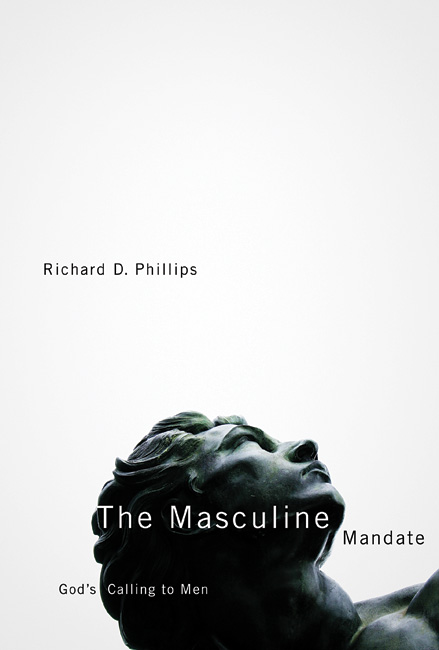 Host: I was in a church where home men’s groups were reading this book (Wild at Heart) and going off on men’s trips. I remember thinking, “Well, what is distinctively Christian about this? I mean, it’s good that we want men to be men, and to be tough, and I actually expected to have more of that in your book since you’re a tank commander. And, you know, to have more of this emphasis on men being manly men, and that’s a good emphasis, and it’s right, but, I really liked how in the book you bring out the story of the professional dirt bike racer . . . Brian Deacon . . . talked about doing all of that before he was in Christ. He was doing all of those manly things, but that’s not what made him a man, but knowing what God’s will for him and knowing the Lord is.
Richard Phillips: A couple of years ago, I was speaking at a men’s conference. So I’m sitting at a barber shop, and I’m reading ESPN Magazine. They have an article about Brian Deacon, this hooligan, X-game, trick-bike jumper. He’s like the Michael Jordan of that quasi-sport. He has a near-death crash. He got his girlfriend pregnant, and she’s off living with her parents. Meanwhile, he has this nationally televised crash, and he loses half his blood, and he goes to his girlfriend’s house to be medically rehabilitated. Meanwhile, she’s been converted to Christ at her parents’ church. He starts going to the parents’ church, and he gets converted. He heals up, and he comes back to the Metal Militia and starts leading a Bible study, and, one by one, leads most of these guys … he leads them all, one by one, to Christ.
Then I read another interview, where the typical thing’s happening: some guys saying, you know, “Dude, you’ve change! What happened to you? You’re Brian Deacon!” And Deacon says, “You know what? I’ve realized that I’ve got to become a man.” Now, the last thing this guy needs to be told is that being a man is going off on ego trips (see parts 1 & 2). You know, what he needs to be told is what his duty is as a husband and father biblically and what biblical love is. And biblically, what it means to be a covenantally faithful man. And I’m reading all this stuff, and I’m thinking, “I gotta write a book on this.”
Host: So let’s talk about that. The mandate involves two aspects, working and keeping; that’s what man was placed in the garden to do. Could you help us to understand what you mean by “work”? What is man’s specific duty in working, and what is he supposed to do?
Richard Phillips: Yeah, thanks. The two in the Hebrew, the two verbs are abad and shamar. Very simple, basic Hebrew words appear hundreds of times in the Old Testament. They’re kind of, you know, building block common verbs.
Abad, in a construction context, means “to build.” In a Temple context, it’s used of the priests serving the Temple. And in an agricultural setting, such as the garden, it’s used as farming. You know, cultivating, causing things to grow. And, what we see is, the man is given the mandate by God–and this is all in the agricultural meaning–what God calls a man to do. The first thing is, that he is to engage in labor that is to have the result of causing good things to grow. Now that alone is paradigm shifting.
Now one thing that strikes me is that in American culture, we don’t think of the man as the nurturer. Biblically he is. I’m not saying women aren’t nurturers. But I am saying that it is the role of a man in a relationship to grow and cultivate and engage in activity and ministry and labor that will cause others to grow. It may be to cause a business to grow. In marriage, it means your job is to, your wife’s heart is the garden in which you’re to have a spade and you’re to minister in that garden so that she grows spiritually.
I mean, you know, as a pastor, how often do I have someone come into my office and say, “Help, pastor. I’ve got a lot of problems in my relationship with my mother.” The answer is, virtually never. It may happen once or twice, you know. But how often do I have someone come and say, “Oh, my relationship with my dad…” All the time. Why? Because the father is the one through whose ministry we gain so much of our identity and who we are, and the cultivation of character and faith and all those things result from the man’s role.
And so, it’s enormously helpful for Brian Deacon to be told, “Hey, Brian, if you want to be a man now, what you are to do is, like Adam, you’re put by God to work the garden. To engage in sacrifical ministry that would cause us to grow. You’re to do that in all your relationships. And so the book works that out. First in principle, that in various relationships–marriage, fatherhood, church, friendship, those kinds of things.
The other verb is shamar. Another very common word. It means “to watch over and protect.” In Psalm 121, “the LORD will keep you.” The LORD watches over you, he neither slumbers nor sleeps. He will keep your life. That’s shamar. And so, Adam was placed by God into his covenantal world of relationships and duties, to cause the garden to grow and to keep the garden safe. And likewise, godly men are to engage in a life of labor, the effect of which is that those under our care are to be kept safe, and their growth will be nurtured by our ministry.
That’s it. Isn’t that beautifully simple?
Host: It is. It’s profound as well….
Richard Phillips: Profoundly simple, but it requires the redeeming work of Jesus Christ in my life fully expressing itself for me to do it. It’s anything but easy. But to me that is so helpfully clear: I’m a husband–what am I to do? My wife is to feel safe in our relationship, and I’m to make her–I’m to make her safe, to promote her safety, and I am to engage in ministry to her so that she grows.
Now you read Ephesians 5:22 and following and 1 Peter 3:1-6 and that is a good summary of what the apostles are teaching. So it’s a profoundly simple, but powerful paradigm.
Listen to Christ the Center episode #87 on The Masculine Mandate today!
The Masculine Mandate, part 2
The following is Q&A #2 from Christ the Center, episode 87 on Richard Phillips’ soon-to-be-released title The Masculine Mandate, published by Reformation Trust. In this discussion, Phillips explains the difference between his approach to applying Genesis 2:15 and that of John Eldridge in his best-selling book, Wild at Heart.
Host: I was intrigued by how you unpacked the mandate given to Adam to dress and keep the garden and how they work out in the physical realm of work and whatever labor you’re doing and in regard to your wife and children. It reminded me of the way Murray goes back in Principles of Conduct and roots everything in the creation ordinance. I had never heard that developed as much. Were these things you were reading, or was it just from your own study of Scripture that you were thinking about what was the principal work–what made a man a man, out of Genesis?
Richard Phillips: Well, you know, I mean, for the sake of the people who haven’t read the unpublished book, in Genesis 2:15, God says he placed Adam in the garden, and charged him to work it and keep it, and this book is an exposition of Genesis 2:15, which I’m describing as the masculine mandate. God put him in the garden to work it and keep it.
You know, what got me going on this was the book Wild at Heart. Because the first time I was asked to speak on this stuff, I got a copy of Wild at Heart, because I knew it was a massive best-seller, and I was absolutely mortified to read the first couple of chapters. He actually makes the statement that man was made out of the garden, and so he is undomesticated, and a male’s life is a life long quest to get in touch with your masculine side. Can you imagine Ronald Reagan making a statement like that?
No real men talk that way! “I’m on a quest for my masculinity.” That what life is, because Genesis 2:15 says–this is what he actually says–it’s a classic example of Bizarro hermeneutics–dominating today: God placed him in the garden, therefore he belongs out of the garden! And the way to get in touch with your masculine self is to get out of the place where God put you, and, as I put it in the book–I think you gotta think in these terms–you know, God placed Adam in the created, covenantal world with God-given relationships, duties and obligations. And Eldridge says, no no, you gotta go on a wilderness quest–ego trips, basically–self-quest. He actually goes so far as to say that Jesus’ forty days’ fast in the wilderness was Jesus seeking his masculine identity. I was just utterly horrified!
Well, I started reflecting on it, and I started thinking well he is right that this verse is paradigmatic. But it’s the exact opposite of what he’s teaching.
And I think, you know, two or three years ago, I did some men’s conferences, I just said, “Hey, let’s look at Genesis 2:15.” And I’m well aware that people are reading this book. I got my first copy of Wild at Heart, when an elder at my church (not this church) handed me a copy–how great the book was, and we need to buy the DVD curriculum of Wild at Heart to show all of our men.
Well, I read the book, and I go ballistic! But it occurs to me that he’s right that Genesis 2:15 is a very important statement. That’s what got me going in this direction. . .
. . . to be continued.
The Masculine Mandate, part 1
Episode #87 of Christ the Center, podcast by the Reformed Forum featured an interview with Dr. Richard Phillips regarding his new book The Masculine Mandate. Dr. Phillips says it’s primarily an exposition and application of Genesis 2:15, which reads, “The LORD God took the man and put him in the Garden of Eden to work it and keep it.” This verse, he says, is the foundational paradigm of the Scripture’s entire revelation of the male’s, or husband’s, role.
Since whenever I link to programs such as this, almost no one takes the time to go and listen, I’m transcribing the interview in a series of blog posts because I find this material to be especially needful for everyone. In this first post in the series, Dr. Phillips explains his reasons for writing the book.
Host: What did you see in men’s lives that needed to be addressed, which lead you to write this book? (Summary of the host’s actual wording)
Dr. Phillips: As is usually the case with books, there are several reasons why I wrote this book: one is, I was frustrated by the low quality of many evangelical books dealing with masculinity. Most especially, John Eldridge’s mega best-seller Wild at Heart, which is just unbiblical.
I was actually having dinner with Jerry Bridges, probably three or four years ago—and he lives out there in Colorado Springs—and we were lamenting this. I said, “Jerry, you ought to write a book on this.” And he didn’t have time, or whatever.
Meanwhile, I was asked by several conferences to speak on things like this. There was a group in Georgia two years ago who asked me to do a multi-day men’s conference.
Lig Duncan had me out to Jackson last year, to the Mid-South Men’s Rally. And so I was needing just for ministry requests, to put together biblical material. My own approach is always to exposit the Word, so if I’m asked to do a men’s conference, I’m going to exposit the Word. That got me dealing with these things.
And also, just as a pastor, I’m well aware, just as everybody is, today we’ve got a real masculinity problem in the culture and in the church. I mean, it is my view that, we talk about feminism, and all of those problems—look, we’ve got a far bigger problem with godly masculinity. In many of our churches we’ll have tlots more available, godly, marriageable women. Then we have . . . men in the church, but they’re not as mature so often. And I do believe that we have a great need for biblical instruction on masculinity.
Now, you start working on this stuff, and you start thinking about it, and you start becoming very impressed with the power of what the Bible says. As I say early on in the book, we know that when it comes to marriage and men in ministry and these sorts of things, that the New Testament directs us back to the early chapters of Genesis. If we’re going to say, “What does it mean to be a man? What is my calling as a man? What am I supposed to do to be a godly man? The answer is, go back and read Genesis 2. And what we’ll find is biblical teaching that is, in fact, a biblical paradigm.
What we read in Genesis 2 about God’s calling to Adam as the man, does in fact, have a paradigmatic influence that we will see pervading all of Scripture. And yet there’s very little teaching about the masculine mandate—that’s what I call Genesis 2:15. That there is a clear calling given to men, that will be seen playing out through the book of Proverbs, playing out through biblical examples of fatherhood, husband and Christian leadership. And it plays straight into the New Testament teaching. And I just came to believe that there is a need for some clear biblical teaching on this.
To be honest with you, it was a hard book to write, because most of my books will come out of my pulpit ministry. My working life is geared that way. I do a sermon on Sunday morning, I preach Sunday evening, I teach Wednesday night. I don’t have a lot of free time beyond that. So this book killed me. I mean, to write a book on the side—most of my books are biblical exposition flowing out of my pulpit ministry-but this one was a labor of love, because I just felt I had to get it done. Not that the world needs my book, but, I just felt an obligation to write this book.
It was not a book that I had time to do, but I just felt that there’s a great need for this, and I’m hopeful the Lord will bless it. You know, I ended up getting in about a year late, because you want to do it right.
But that’s why I wrote the book, just out of my own experiences, being asked to do work in it, and a profound sense that this material has to get out there.
Who’s Afraid of the Big, Bad “Beast”?
 Looking back on my years as an Independent Baptist who kept his eye on TBN, and his ear on Christian radio, I must admit that I had always been susceptible to just about every end times related conspiracy theory that came my way. Believe me, if you watch TBN, at least back in the eighties, you learned about a lot of end times related conspiracy theories. When it comes to Independent Baptist church life, however, preaching on the end times can be a mixed bag: some will major on it, others will minor on it and still others may avoid it almost completely, claiming they find no practical application to be had in the preaching of prophecy.
After I discovered Peter Ruckman, whom I affectionately refer to as “The King of the King James Onlyists,” I gained, not only a rich source of bad information regarding biblical textual criticism, but also a rich source of bad information regarding end times related conspiracy theories. Eventually, I discovered that prophecy preacher, Texe Marrs, whose books I sold as a teenager in the Christian bookstore at which I worked as a high school student, was a fellow “Ruckmanite.” Now, this man is a conspiracy theorist par excellence! Like Will Rogers once said about men, Texe Marrs never met a conspiracy theory he didn’t like. You can enjoy this man’s ravings at www.texemarrs.com.
One of the most outstanding conspiracy theories that I recalled hearing about frequently during those years, was the claim that the burgeoning European Union had developed a super-computer in Brussels, Belgium which had the capability of tracking and storing not only the vitals statistics of everyone on the planet, but also their shopping habits. Rumor had it that the “Revived Roman Empire” that was the European Union had further plans to one day see to it that everyone was marked with some sort of electronic device on their forehead or the back of their hand, that featured a number by which the entire population of the world could be catalogued and tracked by this EU super-computer that just happened to be nick-named “The Beast.” This, we were assured, would be the way Revelation’s prophecies regarding the mark of the Beast would be fulfilled in the Great Tribulation period. Oh, the dread that overtook us all as we periodically heard the news of further technological advancements that brought us step by step closer to the eventual unveiling of the New World Order under the seductive, yet tyrannical rule of the Antichrist.
I don’t have the words to describe the paranoia that can develop in one who pays as close attention to such sensationalistic claims as I once paid to end times conspiracy theories. I know what it is to look for and find a demon behind every bush, and under every rock. Such a lifestyle is truly paralyzing. I recall as a Bible College student fearing to so much as throw a paper route just to earn money to live on and with which to put myself through school. I could not, in good conscience, be a party to misinforming my neighbors with the propaganda published by the liberal media who served as the useful idiots of the behind the scenes architects of the New World Order. I guarantee you, that if I still had today the same mindset I had in my early twenties, I would never have sought employment by the federal government in order to print U. S. currency as I now do. Are you kidding? U.S. currency is just riddled with New World Order and masonic symbols! Just what do you think “Novus Ordo Seclorum” means, anyway? New World Order! It’s printed right there on your money! As Randy Newman sings in the theme song for the TV show, Monk, “if you paid attention, you’d be worried, too!”
At long last, freedom from such bondage came to me in the form of…yes, you guessed it! Reformed theology! Specifically, Reformed eschatology (the study of last things, or the end times). At last, I found the courage to divest myself of any and all fear from the countless rumors that swirl about regarding all the things going on behind the scenes about which, “they don’t want you to know!” Man, Reformed air is so refreshing! At last, I can breathe easy.
Last night, I was reminded by a friend of the Belgium-based super-computer called “The Beast.” My friend hears that it can track upwards of 15 billion people, not that the population of the earth is expected to reach that number before the Rapture! But that just goes to show you, folks, how close we are to the Tribulation period! If such rumors are to be believed. When my friend mentioned these things to me, as I politely nodded and grinned, I thought to myself, “I need to check Snopes about ‘The Beast.'” So, check I did. I didn’t find anything about it at www.Snopes.com–it may be there, but I didn’t find it. But my search did lead me to a similar urban legend website called www.TruthOrFiction.com, which did contain an entry which–wonder of wonders!–pronounced “‘The Beast,’ a supercomputer in Belgium, is Being Used To Track Every Human Being On Earth–Fiction!” Whew! What a relief! But the details they provide regarding the origin of the urban legend simply blew my mind. Here’s how the entry reads:
-
Summary of eRumor
A three-story computer in Brussels, Belgium called “The Beast,” is described as being the brain-child of the European Common Market. It is said to be “self programming” and is intended to track the buying and selling activities of every person on earth. Additionally, the system is alleged to depend on invisible tattoos on the forehead or back of the hand of each person for identity purposes. Ominously, the tattoo will be of a unique, personalized number composed of three entries of three digits each.
- The Truth
It’s easy to see how this story would grab the attention of Christians. It’s almost as though it were tailor-made to fit with the book of Revelation. And… it was.
Unlike most urban legends, we have a clear trail that leads to where the story came from. There are various printed versions of the story that date back to 1973, but the most widely circulated early account appeared in Christian Life magazine in August 1976.
Three months after publishing the story, Christian Life received a letter from Christian author Joe Musser. In it, he explained that the Beast Computer of Belgium did not exist in reality, but in fantasy. Musser said that he created the scenario for a novel he wrote, titled Beyond a Pale Horse (actually, it’s Behold, A Pale Horse–jdc), and for a screenplay for the David Wilkerson film, The Rapture. In the letter, Musser said that for three years he had seen the story he had created being passed along as fact.
The possibility for confusing fiction with fact was there from the outset. As a part of the promotion for the David Wilkerson film, some mock newspapers had been printed which had convincing-looking news stories about events that could be associated with the rapture, including the Beast Computer of Belgium. Unless one read the small print next to the copyright notice, there was nothing to indicate that it was fiction.
As with other urban legends, some thoughtful evaluation of the facts would cast doubt on the story. For example, anybody who is savvy enough about computers would know that it’s not going to take a computer occupying three stories of a major building to catalog all the people on the earth. Today’s computers can handle the task in a fraction of that space – assuming there was some way to know who all the people were.
Also, some versions of the story stated that the computer was self-programming, suggesting that perhaps it had a life of its own outside of the humans who programmed it. Artificial intelligence is a fascinating subject, and computers are getting smarter every day, but no computer expert that I know of is worried about whether a database program could become the Antichrist. Additionally, even if a decision were made to track all humans, it is not clear that the European Common Market would be the entity to initiate or control it. (Here’s the source)
My mind was officially blown. I never dreamed that I would learn, not only how it is that Belgian “Beast” Super Computer was a mere urban legend, but the very name of the man who dreamed up the idea in the first place! Let alone my astonishment that it was a fictitious scenario developed for a Christian novel on the end of the world! My adrenaline was flowing, and I couldn’t stop running around telling everyone I thought might have heard about this conspiracy theory, because I had to personally make sure they were utterly divested of any and all anxiety over such a prospect. Was I ever giddy! I didn’t know what to do with myself! But telling a few of my co-workers, both believing and unbelieving, I had to help make sure the world had more access to this information. I must make sure these facts are featured on Wikipedia! The world’s free online encyclopedia! Under the heading of “The Beast (Bible)” on Wikipedia, you will find my first ever contribution to this global pooling of knowledge. In the article, under the sub-topic of “Alternative Views” I found this single sentence referencing “The Beast” supercomputer: “Some identify the Beast with a Super Computer in Brussels, Belgium.” To this, I added the truly “alternative view”: “However, author Joe Musser, attributes the origin of this urban legend to his 1970 novel, Behold, a Pale Horse and the movie The Rapture which is based on his book. (Read the article here)
Finally, a little more surfing of the web produced a more in-depth discussion of this story. Silicon.com, a website featuring writing on all things computer related, interviewed Joe Musser, and the resulting article features what he had to say. I highly recommend that you read this article here.
The Agony of the Deceit of the Word of Faith Movement
Just found this great video presentation of Steve Camp’s song “The Agony of Deceit” from his album “Consider the Cost.” Camp’s song applies 2 Peter 2 to today’s Word of Faith movement, and draws it’s title from the book, The Agony of Deceit, edited by Dr. Michael Horton of The White Horse Inn radio show and Modern Reformation Magazine. If you don’t know what the Word of Faith movement is, they’re the guys preaching the health and wealth, name-it-and-claim-it gospel that tends to make Christians more interested in what’s on the Master’s table rather than the Master himself (get a basic intro here). I’ve also included the great testimony by the Pentecostal minister who posted this video to his YouTube page. But best of all is the passage of Scripture on which the song is largely based. It’s simply astounding how well prosperity preachers fulfill the Holy Spirit’s revealed and revealing description of false teachers. This post concludes with Peter’s words inspired by the Holy Spirit.
While feeling called to study to be a missionary at Baptist Bible College back in the early 90’s, my mind was still somewhat confused about what to do with the claims of the Word of Faith and charismatic movements. It wasn’t until 1994, when I discovered a voice on my AM radio that was actually speaking critically of Kenneth Copeland and the others, and heard the speaker mention the release of his new book, Christianity in Crisis, that I was able to see clearly how in error this movement is, and to finally break free from the false notion that God may actually be using this movement. The radio show was The Bible Answer Man, and the host/author was Hank Hanegraaff.
from aflame4God:
“You MUST hear this song! A powerful song and teaching that gives you a serious warning concerning false teachers and their ungodly dangerous doctrines. You should listen to holy men of God who preach the truth from a sincere heart. THIS SONG IS FROM THE CD “CONSIDER THE COST” BY STEVE CAMP.I CONSIDER IT ONE OF HIS BEST. The following book is a very good book to read on the subject it is called “The Agony of Deceit” by Michael Horton. The song is based on this book and 2 Peter 2. You can order this book on Amazon.com or ebay.
If you are a serious Christian and want to know the truth about this Movement consider buying these books.
“You can find these books on amazon.com
1. “A Different Gospel” by D.R. McConnell
2. “The New Charismatics” by Michael Moriarty
3. “Christianity in Crisis” by Hank Hanegraaff
4. “The Seduction of Christianity” by Dave Hunt
5.” The Word-Faith Controversy” by Robert Bowman
6. “The Born Again Jesus of the Word-Faith Teaching” by Judith Matta
7. “The Strange World of Benny Hinn”
8. The Disease of the Wealth and Health Gospel” Gorden Fee (A renown godly Pentecostal Bible scholar).
“If fact there is no church historian or Bible Scholar that would agree with these false teachings. I know this movement well. I graduated from Rhema Bible Training Center in 1979 and spent 12 long years as a part of this movement. I preached in many WOF Churches. I was a devout reader of E.W. Kenyon. I read one of his books over 40 times! I met and heard many of the key figures of this movement in the ’70s and 80s. So I’m not a novice on the subject. God by His grace set me free from these false doctrines in 1988. At the time I was a pastor of a growing church. I recanted before my congregation. The Bible became like a new book to me, so precious, pure and powerful. Since then I’ve been on the narrow road that leads to life. I now preach the Gospel as according to Jesus and the Apostles as inspired by the Holy Spirit. Finally, let it be said that not all pentecostals agree with the Word of Faith Movement. God bless you. . . “
False Prophets and Teachers–2 Peter 2 ESV
2:1 But false prophets also arose among the people, just as there will be false teachers among you, who will secretly bring in destructive heresies, even denying the Master who bought them, bringing upon themselves swift destruction. 2 And many will follow their sensuality, and because of them the way of truth will be blasphemed. 3 And in their greed they will exploit you with false words. Their condemnation from long ago is not idle, and their destruction is not asleep.
4 For if God did not spare angels when they sinned, but cast them into hell [1] and committed them to chains [2] of gloomy darkness to be kept until the judgment; 5 if he did not spare the ancient world, but preserved Noah, a herald of righteousness, with seven others, when he brought a flood upon the world of the ungodly; 6 if by turning the cities of Sodom and Gomorrah to ashes he condemned them to extinction, making them an example of what is going to happen to the ungodly; [3] 7 and if he rescued righteous Lot, greatly distressed by the sensual conduct of the wicked 8 (for as that righteous man lived among them day after day, he was tormenting his righteous soul over their lawless deeds that he saw and heard); 9 then the Lord knows how to rescue the godly from trials, [4] and to keep the unrighteous under punishment until the day of judgment, 10 and especially those who indulge in the lust of defiling passion and despise authority.
Bold and willful, they do not tremble as they blaspheme the glorious ones, 11 whereas angels, though greater in might and power, do not pronounce a blasphemous judgment against them before the Lord. 12 But these, like irrational animals, creatures of instinct, born to be caught and destroyed, blaspheming about matters of which they are ignorant, will also be destroyed in their destruction, 13 suffering wrong as the wage for their wrongdoing. They count it pleasure to revel in the daytime. They are blots and blemishes, reveling in their deceptions, [5] while they feast with you. 14 They have eyes full of adultery, insatiable for sin. They entice unsteady souls. They have hearts trained in greed. Accursed children! 15 Forsaking the right way, they have gone astray. They have followed the way of Balaam, the son of Beor, who loved gain from wrongdoing, 16 but was rebuked for his own transgression; a speechless donkey spoke with human voice and restrained the prophet’s madness.
17 These are waterless springs and mists driven by a storm. For them the gloom of utter darkness has been reserved. 18 For, speaking loud boasts of folly, they entice by sensual passions of the flesh those who are barely escaping from those who live in error. 19 They promise them freedom, but they themselves are slaves [6] of corruption. For whatever overcomes a person, to that he is enslaved. 20 For if, after they have escaped the defilements of the world through the knowledge of our Lord and Savior Jesus Christ, they are again entangled in them and overcome, the last state has become worse for them than the first. 21 For it would have been better for them never to have known the way of righteousness than after knowing it to turn back from the holy commandment delivered to them. 22 What the true proverb says has happened to them: “The dog returns to its own vomit, and the sow, after washing herself, returns to wallow in the mire.”
Derek Thomas on the Regulative Principle of Worship
 Put simply, it’s about worshiping God according to Scripture.
Don’t miss Christ the Center, episode 80, “The Regulative Principle of Worship.”
The Reverend Derek Thomas, Minister of Teaching at First Presbyterian Church, Jackson, Mississippi, first explains the threefold aspects of worship– form, element, and circumstance–then demonstrates that the Reformed emphasis on the Regulative Principle of Worship (RPW) is not merely an invention of the Puritans, as J.I. Packer and others maintain, but is the application of the Reformation ideal of Sola Scriptura. In other words, the final authority of Scripture in the faith and practice of the church is the foundation on which the RPW is built. Rev. Thomas is also very helpful on many debatable issues like the frequency and symbolisms of the Lord’s Supper and the appropriateness of the inclusion of original hymnody and musical instruments in New Covenant worship. Finally, he makes a compelling and edifying case for Sunday evening worship. Would that more churches returned to such a practice in the interests of keeping holy the Lord’s Day.
Listen and learn a little more about what it means to worship God according to Scripture by Reading the Word, Praying the Word, Singing the Word and Hearing the Word Preached.
Calvinists Make “Craig’s List”
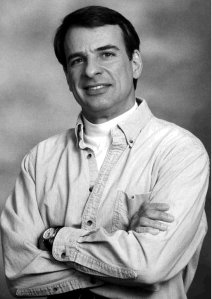
Critic of Calvinism, William Lane Craig
Tuesday on Reformed apologist James White’s webcast, The Dividing Line, Dr. White was playing clips of an interview with evidentialist apologist William Lane Craig in which he discusses how much respect he has for Roman Catholicism, yet why he continues to remain a Protestant. Craig’s language is awash with his politically correct manner as he ever so politely points out that the doctrine of justification by faith alone is “a key Protestant insight.” Insight? Martin Luther called it the doctrine on which the church stands or falls, but Dr. Craig presents it simply as an insight. Well, Dr. Luther–you discovered that the Bible teaches that “The just shall live by faith”? How insightful! Somehow, it just doesn’t seem to work.
At one point in the program, Dr. White takes a call from a man who informs him that he sent Dr. White a disk with a debate between William Lane Craig and arch-atheist, Christopher Hitchens. The caller informed Dr. White that Hitchens asks Craig if there is any Christian group he considers to be truly heretical. Astonishingly, Dr. William Lane Craig, who happens to hold to a doctrine of God’s sovereign election developed by a Jesuit priest (yes, that’s Roman Catholic) named Luis de Molina (the doctrine is called “Molinism“–a doctrine James White considers to be about as realistic as Star Trek), bypasses the Roman Catholic doctrine of justification by faith and works, and pins the heresy tail on that pesky doctrine called Calvinism! Yeah, according to William Lane Craig, there are a lot of born again Roman Catholics running around, but you better watch out for that doctrine that was affirmed by the majority of the earliest Protestants.
It was this little episode that got Angel Contrares’ creative juices flowing. Angel is the professional clown caricaturist who drew my picture of Captain Headknowledge for this blog. You really need to visit James White’s blogpost on this and see Angel’s latest creation! It’s a beaut!
“We Put the NO in Innovation”
This commercial is great! It bears a striking resemblance to a biblical attitude about worship. God has prescribed how we are to worship him, and innovation is not what he had in mind. Ask Nadab and Abihu. You can read about the consequences of their “innovation” below. But first, watch the illustrative video.
Leviticus 10:1-3 Now Nadab and Abihu, the sons of Aaron, each took his censer and put fire in it and laid incense on it and offered unauthorized fire before the Lord, which he had not commanded them. And fire came out from before the Lord and consumed them, and they died before the Lord. Then Moses said to Aaron, “This is what the Lord has said, ‘Among those who are near me I will be sanctified, and before all the people I will be glorified.’” And Aaron held his peace.
If you don’t know what I’m talking about, you can get caught up by reading up on what the Reformed call “The Regulative Principle of Worship.”
Philosophers & Religionists
Dr. Sean Michael Lucas wrote an interesting post that attempts to get to the heart of Dan Brown’s Angels and Demons, the best-selling book the movie version of which is currently in the theaters. He says the best way to critique a work like Brown’s is not to correct each fictitious claim point by point but to get at the dualistic, relativistic and pluralistic philosophy behind it which he attributes to Immanuel Kant, identifying it as the source of modernity’s false distinction between faith and reason, religion and science. You can read his post here.
Twenty-first Century New Testament Textual Criticism
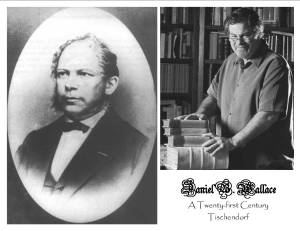
Constantin Von Tischendorf (r); Daniel B. Wallace (l)
Will the 21st century go down as another great age of discovery when it comes to our knowledge of the transmission of the text of the Greek New Testament? While many skeptical and liberal scholars like Bart Ehrman are busy using their expertise in the Biblical Studies to destroy faith in God’s revealed Word in the Scriptures, others, like Dr. Daniel B. Wallace of Dallas Theological Seminary, founder of The Center for the Study of New Testament Manuscripts, is using modern technology to “discover” ancient manuscripts which have until now been inaccessible due to their fragile condition. According to an interview of him on Friday’s edition of Christ the Center, in the past year, about 36 manuscripts have been discovered and are in line behind about 75 others to be catalogued at the place in Munster, Germany where the knowledge of such manuscripts are warehoused for use by scholars the world over.
No time to finish this post. But I want you to listen to the program. Here’s the link: http://reformedforum.org/ctc70/
Practical versus Doctrinal
Go read “A Disturbing Trend in Evangelicalism” at the blog Green Baggins. It deals with an issue that is very close to my heart: what is the relationship between doctrine and practice? Belief and behavior? Head knowledge and heart knowledge? This bloggers words are sorely needed.
Mission Accomplished
Now, this is what I call music…!
In case you can’t keep up, here’s the lyrics. Read along, then consult your Bible and read and pray and think!
Verse 1
Here’s a controversial subject that tends to divide
For years it’s had Christians lining up on both sides
By God’s grace, I’ll address this without pride
The question concerns those for whom Christ died
Was He trying to save everybody worldwide?
Was He trying to make the entire world His Bride?
Does man’s unbelief keep the Savior’s hands tied?
Biblically, each of these must be denied
It’s true, Jesus gave up His life for His Bride
But His Bride is the elect, to whom His death is applied
If on judgment day, you see that you can’t hide
And because of your sin, God’s wrath on you abides
And hell is the place you eternally reside
That means your wrath from God hasn’t been satisfied
But we believe His mission was accomplished when He died
But how the cross relates to those in hell?
Well, they be saying:
Lord knows He tried (8x)
Verse 2
Father, Son and Spirit: three and yet one
Working as a unit to get things done
Our salvation began in eternity past
God certainly has to bring all His purpose to pass
A triune, eternal bond no one could ever sever
When it comes to the church, peep how they work together
The Father foreknew first, the Son came to earth
To die- the Holy Spirit gives the new birth
The Father elects them, the Son pays their debt and protects them
The Spirit is the One who resurrects them
The Father chooses them, the Son gets bruised for them
The Spirit renews them and produces fruit in them
Everybody’s not elect, the Father decides
And it’s only the elect in whom the Spirit resides
The Father and the Spirit- completely unified
But when it comes to Christ and those in hell?
Well, they be saying:
Lord knows He tried (8x)
Verse 3
My third and final verse- here’s the situation
Just a couple more things for your consideration
If saving everybody was why Christ came in history
With so many in hell, we’d have to say He failed miserably
So many think He only came to make it possible
Let’s follow this solution to a conclusion that’s logical
What about those who were already in the grave?
The Old Testament wicked- condemned as depraved
Did He die for them? C’mon, behave
But worst of all, you’re saying the cross by itself doesn’t save
That we must do something to give the cross its power
That means, at the end of the day, the glory’s ours
That man-centered thinking is not recommended
The cross will save all for whom it was intended
Because for the elect, God’s wrath was satisfied
But still, when it comes to those in hell
Well, they be saying:
Lord knows He tried (8x)
Thank you, Shai Linne, whoever you are.
YouTube Fundy vs. Calvinism
Steven L. Anderson, pastor of Faithful Word Baptist Church in Pheonix, AZ, has a very full YouTube page of videos featuring his preaching and teaching ministry. Some of the arguments made in some of the videos, it must be said, range from the average, to the illogical, to the hilariously absurd. StuffFundiesLike featured one of the more amusing ones (view it here), but Fundamentally Reformed once posted on one I’ve yet to see topped (view it here)! Compared to these two, the one I’m posting and commenting on today is rather ho-hum.
In this video, Pastor Anderson presents a few arguments from John 6 and John 15 against the doctrines of God’s foreordination of all things (Ephesians 1:11), predestination to salvation (Ephesians 1:5; Romans 9:23) and reprobation to condemnation (2 Peter 2; Romans 9:22).
Watch the video and interact with his arguments. I’m going to be out of town over the weekend and probably have little access to the internet. If you’re not familiar with the doctrines of Calvinism regarding the sovereignty of God over all things, even the salvation of sinners, feel free to ask questions. They’ll be welcomed and answered with gentleness and respect when I return, unless one of my Calvinist commenters is pleased to interact with you over the weekend (you know who you are–this is your cue!).
Here are the passages Pastor Anderson dealt with. View them for yourself and prayerfully examine their contexts and see the sovereign hand of a God who is not merely a one-dimensional “God of love” who is passive in the face of your sovereign self-determination, but “is love” and just at the same time.
“You did not choose me, but I chose you and appointed you that you should go and bear fruit and that your fruit should abide, so that whatever you ask the Father in my name, he may give it to you” (John 15:16)
“Jesus answered them, “Did I not choose you, the Twelve? And yet one of you is a devil.” He spoke of Judas the son of Simon Iscariot, for he, one of the Twelve, was going to betray him” (John 6:70-71; cf. Acts 1:16–indicating what Judas was actually chosen for).
Christ is Risen! Happy Easter!

Cut away of a tomb like the one our risen Lord vacated! from the ESV Study Bible
John 20:1-10
Now on the first day of the week Mary Magdalene came to the tomb early, while it was still dark, and saw that the stone had been taken away from the tomb. So she ran and went to Simon Peter and the other disciple, the one whom Jesus loved, and said to them, “They have taken the Lord out of the tomb, and we do not know where they have laid him.”
So Peter went out with the other disciple, and they were going toward the tomb. Both of them were running together, but the other disciple outran Peter and reached the tomb first. And stooping to look in, he saw the linen cloths lying there, but he did not go in.
Then Simon Peter came, following him, and went into the tomb. He saw the linen cloths lying there, and the face cloth, which had been on Jesus’ head, not lying with the linen cloths but folded up in a place by itself.
Then the other disciple, who had reached the tomb first, also went in, and he saw and believed; for as yet they did not understand the Scripture, that he must rise from the dead. Then the disciples went back to their homes
1 Corinthians 15:1-8
Now I would remind you, brothers, of the gospel I preached to you,
which you received, in which you stand, and by which you are being saved,
if you hold fast to the word I preached to you—unless you believed in vain.
For I delivered to you as of first importance what I also received:
that Christ died for our sins in accordance with the Scriptures,
that he was buried, that he was raised on the third day in accordance with the Scriptures,
and that he appeared to Cephas, then to the twelve.
Then he appeared to more than five hundred brothers at one time,
most of whom are still alive, though some have fallen asleep.
Then he appeared to James, then to all the apostles.
Last of all, as to one untimely born, he appeared also to me.
Listen to “Corinthian Creed” in the audio Box toward the bottom of the sidebar. “Corinthian Creed” is a paraphrase of 1 Corinthians 15, the great apologetic of the resurrection, sermon on its implications for the Christian life, and source of hope of our own resurrection in Christ. The lyrics may be viewed here. Praise and glorify the risen Savior with me!


 The Misadventures of Captain Headknowledge
When “Whosoever” Misseth the Point
Some of us think the chorus in "Whosoever Meaneth Me" sounds like the theme to Hogan's Heroes. Visit http://free-loops.com/download-free-loop-3481.html to listen and compare to the hymn's midi below!
For God so loved the world, that he gave his only begotten Son, that whosoever believeth in him, should not perish, but have everlasting life. (John 3:16 KJV)
For God so loved the world, that he gave his only Son, that whoever believes in him should not perish, but have eternal life (ESV)
For God loved the world in this way: He gave his one and only Son, so that everyone who believes in him will not perish but have eternal life. (HCSB)
The first citation of John 3:16 is from the King James Version, which contains—and established—the traditional wording of this verse, no less in the case of the highlighted phrase in question, “whosoever believeth.” The second updates, but carries this traditional translation forward, while the third, from the Holman Christian Standard Bible (HCSB), seems to have come a little closer to the literal meaning of the verse.
This can be seen by examining the original Greek, from which all three versions are translated: pas o pisteuo. Pas means “all,” “any,” “each,” “everyone,” “all things,” etc., in individual contexts like this one, but it is usually found in collective contexts, where it means “some of all sorts.” This is the word that is translated “whosoever” in the King James Version, “whoever” in many modern translations like the ESV, and “everyone” in the HCSB. The NET Bible has some helpful notes in this regard, which may be accessed here.
In the great debate between Calvinists and Arminians about the extent of Christ’s atonement, the latter camp has, in an effort to emphasize the fact that Jesus died for everyone without distinction, turned the KJV’s “whosoever” into three words: “For God so loved the world, that he gave his only begotten Son, that Who … So … Ever (!). With often little regard for the context of this verse, Arminians will focus on this one little three letter Greek word, and seemingly make it the point of the passage, which it is not.
Pas is not the only word in this phrase. “Everyone” in this context does not stand alone. It is modified by the action taken by each member in the group of people so identified. The action they take is pisteuo: “believing.” So, the first thing we must clarify is that this verse is not intended to state or imply the number of people for whom Christ died; it merely expresses the purpose behind the Father’s giving of the Son to the world: to grant eternal life to pas (everyone) o (who, or that) pisteuo (believes).
On the Nov. 17 episode of The Dividing Line, Dr. James White explained why “whosoever,” “whoever,” and “everyone” are used to translate pas. He said that when pas is used with a singular participle (in this case, “believes”), what is being communicated is a group that is defined by the action in that participle. Since the emphasis of the verse is on the mutual activity of the group, rather than the indistinct universality of the group itself, perhaps it may help direct our attention to “believes” if translators rendered pas o pisteuo as “all those who believe,” or just “those who believe.” But I’m no scholar.
Therefore, pas o piteuo makes neither of the following Arminian emphases:
What this phrase does mean, though, is that God loved the world by sending his only Son in order to grant eternal life to those, and only those, who actually come to faith. If God sent his only Son to die for everyone indiscriminately, then everyone indiscriminately would come to faith, for he would have, with the atonement, granted faith to everyone indiscriminately. If everyone indiscriminately had the inherent moral ability to obey the command to believe, then God’s Word would be untrue (Romans 8:7; Ephesians 2:8,9).
Let us not read things into the Word of God which are not there. John 3:16 is not a proof text for general redemption (the doctrine that Christ died for everyone indiscriminately), nor a view of human sinfulness that leaves room for some amount of inherent righteousness that enables the self-determining sinner (which creature does not exist) the ability “of his own free will” to “decide to follow Jesus” without the prior work of the Holy Spirit’s effectual calling (Romans 8:30).
Are you one of those who’ve come to believe in the one and only Son of God? Then you have received the Father’s saving love in the gift of his Son who became incarnate for you, obeyed God’s Law perfectly for you, died suffering the consequences of your sin, and rose on the third day that you also might be raised up to eternal life spiritually now (regeneration), and physically upon his return (resurrection). I urge you to do what you can to reciprocate his love by Spirit-empowered love for him and your neighbor. We love because he first loved us.
“Whosoever Meaneth Me?” (audio) “Whosoever” means all those, and only those, who believe.
Share this: