Apprising “Rob Bellion”
For Whom Does Bell Toll?
Ken Silva at Apprising Ministries has begun a series of posts reviewing an advance-reader copy of Rob Bell’s Love Wins: Heaven, Hell and the Fate of Every Person Who Ever Lived (2011, HarperCollins), and he confirms that what Bell is teaching is a form of universal reconciliation–that yes, unbelievers go to hell, but will eventually be reconciled to God. Read Silva’s first post here.
Silva writes, “[Bell] makes no apology for his declaration that while Hell is a real place, and people will go there, it’s not forever. Ultimately, God’s love will prevail for every person and they will be restored” (emphasis mine).
The Wikipedia entry on “Universal Reconciliation,” to which I linked above, explains, “The concept of “reconciliation” is related to the concept of Christian salvation — i.e., salvation from spiritual and eventually physical death — such that the more [sic] (presumably, “mere”) term, “universal salvation,” is functionally equivalent. Univeralists [sic] espouse various theological beliefs concerning the process or state of salvation, but all adhere to the view that salvation history concludes with the reconciliation of the entire human race to God.”
See? We alarmist conservatives who are up in arms about Rob Bellion told you so.
Rob Bellion is as the sin of Witchcraft!
“Rob Bellion” is as the Sin of Witchcraft!
In past years, one of my children was exposed to the teaching of Rob Bell by means of at least one of his Nooma videos played in my former church’s youth group, and presumably in some ways through his influence on the teacher of that class. Knowing his interest in Bell’s teaching, and being singularly interested in keeping up with who’s teaching what, I urged him a number of times that Bell’s teaching is not good for an orthodox church. The rest of the time I would tease him in a good-natured, but persistent way, that “Rob Bellion” is as the sin of witchcraft! This is my own personal play on the KJV’s translation of Samuel’s words to Saul when he refused to obey the Lord’s commands regarding the spoils of his fight with Amalek, whom he was to wipe out entirely as God’s appointed means of judgment against them for the way they attacked the children of Israel at Rephidim while they were still lead by Moses and the pillar of cloud and fire (1 Samuel 15:23; cf. Ex. 17:8-16; Deut. 25:17-19). Notice from the parallel line of 1 Samuel 15:23, that Saul’s “rebellion” is tantamount to a rejection of the word of the LORD regarding his plans to judge and destroy his enemies (see the whole passage, 1 Samuel 15:1-35). Such is the heresy of the universalist Rob Bell.
Justin Taylor at “Between Two Worlds,” a Gospel Coalition blog, shows Bell’s promotional material related to his latest book, Love Wins: Heaven, Hell and the Fate of Every Person Who Ever Lived, surely not to help sell his book, but to raise our awareness of how Bell’s trajectory towards theological liberalism is becoming more and more apparent in his growing trend of teaching the heresy of universalism. This is the doctrine that, in eternity, regardless of one’s reception or rejection of Christ during his lifetime, everyone will be forgiven and reconciled to God, and none will justly spend eternity hell. It’s funny how so many people who break the law wind up complaining about the fact that they had to suffer the consequences of their crime. This is analogous to the fact that unbelievers find the doctrine of eternal conscious torment in hell so unattractive. Hell, condemnation and the righteous judgment of an infinite, eternal and holy God is bad public relations for Christianity, if you listen to Rob Bell. But compare the concept of universalism with what the Lord Jesus said in John 3:16-21:
“For God so loved the world, that he gave his only Son, that whoever believes in him should not perish but have eternal life. For God did not send his Son into the world to condemn the world, but in order that the world might be saved through him. Whoever believes in him is not condemned, but whoever does not believe is condemned already, because he has not believed in the name of the only Son of God. And this is the judgment: the light has come into the world, and people loved the darkness rather than the light because their works were evil. For everyone who does wicked things hates the light and does not come to the light, lest his works should be exposed. But whoever does what is true comes to the light, so that it may be clearly seen that his works have been carried out in God.”
Here, Christ clearly states that the condition for escaping condemnation is faith in him. Reader, be clear: if you do not trust the Christ of the Scriptures, not the Christ of any cult’s misinterpretation or “reimagining” of him, not the Christ of the Gnostic gospels, but the Jesus Christ of historic, apostolic, catholic, orthodox, evangelical Protestant Christianity, then you are already under the condemnation of God. If you persist in this unbelief, you will not be saved in the end. Your end will be the Lake of Fire (Revelation 20:11-15). Confess that you are indeed a sinner, repent by turning from your sins and cling to Christ (Acts 26:18) who suffered for sinners in every nation, sinners like you (1 John 1:8-10). Reject your false gods and goddesses (you know who you are!), and run to Christ, who lives to justify the wicked who repent and believe.
With Rob Bell, on the issue of universalism, finding the error in his teaching is no longer a matter of reading between the lines. Watch the video below and you will see Bell himself explain how we need to deny the Biblical doctrine of eternal, conscious torment in Hell because it makes people reject Christianity. Apparently, what the world thinks about Christianity is more important to Bell than what God reveals in his Word. Read Taylor’s post, “Rob Bell: Universalist?”
If you find that your church has been, or is being exposed to the teachings of Rob Bell, I would suggest that you present the facts regarding Bell to your pastor and patiently, but persistently, help them see that he is not just an emerging evangelical postmodern hipster, but a theological liberal of the first order whose materials ought to be avoided by every church and Christian that loves the Word of God. This is a process I had the regretful duty of engaging in myself back then.
This article by former co-founder of Brian McLaren’s Emergent Village, Mark Driscoll (who later separated from them when they began showing signs of postmodern liberalism) navigate what he calls “The Emerging Church Highway.” It would also behoove you to read D. A. Carson’s book, Becoming Conversant with the Emerging Church: Understanding a Movement and It’s Implications (2005, Zondervan).
From KJV Onlyism to Calvinism

Perhaps one day I’ll write something on how King James Onlyism opened my mind and heart to Reformed theology. It had a little to do with this book, The King James Version Defended, by Edward F. Hills.
In an attempt to bring the work of John William Burgon into the twentieth century, Hills, a Westminster Theological Seminary graduate (along with Yale, Harvard, Columbia Theological Seminary and the University of Chicago) made probably the most interesting case in favor of retaining the Textus Receptus as it has been translated in the KJV as the Protestant New Testament, applying the presuppositional apologetic of Cornelius Van Til who developed and taught it at Westminster Theological Seminary in order to arm confessional Reformed Presbyterians, among others, with a consistently Reformed, confessional and covenantal method for defending the faith.
I just got the 2006 edition of it in the mail today. It was updated in conjunction with the Encylcopedia Puritannica Project. Boy, I hope they didn’t screw it up! Hills deserves better than that! Here’s something I posted about this book in the past.
White/Moorman KJV Only Debate on YouTube!
For those of us who missed the debate live (though not for a lack of trying–my computer is a mess!), the live London debate on the exclusive use of the King James Version between Dr. James White and Dr. Jack Moorman has been posted on YouTube by one viewer. Here it is for your (and my) viewing pleasure:
Two and a Half Hours Until the White/Moorman KJV Only Debate!
Be sure to visit this page to watch live the debate between Dr. James White and Dr. Jack Moorman of London, England debating the question “Should We Exclusively Use the King James Version?”
“Should We Exclusively Use the King James Version?”
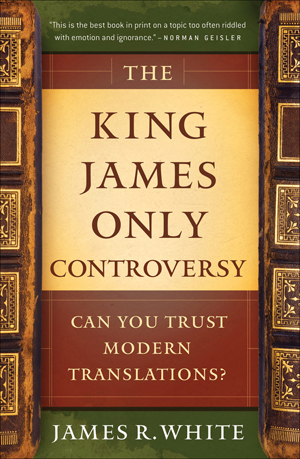 How appropriate that during the year of the quadricentennial of the King James Version of the Bible, a debate on the question of King James Onlyism should be held. Reformed Baptist apologist Dr. James White of Alpha and Omega Ministries is just on his way to London, England. RevelationTV in London is hosting a debate Wednesday night at 9pm GMT (if I’m not mistaken, that should be 3 pm CST), between Dr. White and Dr. Jack Moorman, an American fundamentalist Independent Baptist missionary in England, pastoring Bethel Baptist Church, Wimbeldon, London. The subject of the debate is, “Should we exclusively use the King James Version?” To my knowledge, it has been quite a while since a KJV Onlyist has stepped forward willing to debate Dr. White, author of The King James Only Controversy: Can You Trust Modern Translations?
This should be good. Dr. White never disappoints.
A Review of Dr. John Fesko’s Lecture on Word, Water and Spirit, part 3

In Part II of Dr. John Fesko’s book, Word, Water and Spirit: A Reformed Perspective on Baptism (2010, Reformation Heritage Books), he, in 3 chapters deals with the Biblical data related to baptism as “New Creation” (chapter 8), “Covenant Judgment” (9) and as “Eschatalogical Judgment” (10). The following is my summary of his remarks on this material at the Christ Reformed Church Friday Night Author’s Forum in Anaheim, California last Friday, January 21, 2011.
When you look at New Testament texts that teach about baptism, not merely the occurrences of the event, but which present the theology behind the event, the passages tend to point back to Old Testament passages and concepts. In 1Peter 3, the apostle shows the correspondence between the flood and baptism:
For Christ also suffered once for sins, the righteous for the unrighteous, that he might bring us to God, being put to death in the flesh but made alive in the spirit, in which he went and proclaimed to the spirits in prison, because they formerly did not obey, when God’s patience waited in the days of Noah, while the ark was being prepared, in which a few, that is, eight persons, were brought safely through water. Baptism, which corresponds to this, now saves you, not as a removal of dirt from the body but as an appeal to God for a good conscience, through the resurrection of Jesus Christ, who has gone into heaven and is at the right hand of God, with angels, authorities, and powers having been subjected to him.(1 Peter 3:18-22).
Elsewhere, the apostle Paul mentions the Israelites were baptized while crossing the Red Sea.
For I want you to know, brothers, that our fathers were all under the cloud, and all passed through the sea, and all were baptized into Moses in the cloud and in the sea, and all ate the same spiritual food, and all drank the same spiritual drink. For they drank from the spiritual Rock that followed them, and the Rock was Christ. Nevertheless, with most of them God was not pleased, for they were overthrown in the wilderness (1 Corinthians 10:1-5).
Notice that not only did the adults of the nation of Israel cross the sea and so become baptized into Moses, but so did the entire households of those adults, which necessarily includes any and all infants that were present at the time. Even the cloud, we learn, typifies the Holy Spirit in 1 Corinthians 10, says Dr. Fesko (see Isaiah 63:10-14).
Colossians 2:11-12 has been the field of a pitched battle between credobaptists and paedobaptists:
In him also you were circumcised with a circumcision made without hands, by putting off the body of the flesh, by the circumcision of Christ, having been buried with him in baptism, in which you were also raised with him through faith in the powerful working of God, who raised him from the dead (Colossians 2:11-12).
Critical of the paedobaptist appeal to such a correspondence between circumcision and baptism based on this text, some Baptists argue that circumcision is a physical, national rite–the “Jewish passport,” if you will–whereas baptism is entirely spiritual. To this, Fesko responds by pointing out that water of baptism is physical. Old Testament circumcision had spiritual connotations as well as baptism. For example, in Deuteronomy 10:16, the Israelites are commanded to circumcise their hearts. “Circumcise therefore the foreskin of your heart, and be no longer stubborn” (Deuteronomy 10:16). Later, we find that in chapter 30, this command becomes a promise, when Moses proclaims that the LORD will circumcise their hearts. “And the LORD your God will circumcise your heart and the heart of your offspring, so that you will love the LORD your God with all your heart and with all your soul, that you may live” (Deuteronomy 30:6). Paul in Romans 2:28-29 says the true Jew has had his heart circumcised.
“For no one is a Jew who is merely one outwardly, nor is circumcision outward and physical. But a Jew is one inwardly, and circumcision is a matter of the heart, by the Spirit, not by the letter. His praise is not from man but from God (Romans 2:28-29).
Thus Fesko describes the spiritual referent of circumcision.
But why was the act of circumcision chosen to serve as the sign of the covenant in the first place? Remember the first gospel promise in Genesis 3:15?
“And I will put enmity between you and the woman, and between your seed and her seed; he shall bruise you on the head, and you shall bruise him on the heel” (Genesis 3:15 NASB).
It is the seed of the woman who will bruise the serpent’s head. Elsewhere in the Old Testament, it is the seed of Abraham who will be “cut off.” The prophets applies the terminology of circumcision to the cross of Christ. Consider Isaiah’s great 53rd chapter alludes to circumcision in the sacrificial death of the Servant of the LORD: “By oppression and judgment he was taken away; and as for his generation, who considered that he was cut off out of the land of the living, stricken for the transgression of my people?” (Isaiah 53:8)
In Genesis 17, those who are circumcised are included in the covenant, and those who are not are said to be “cut off” from covenantal relationship with the LORD.
He who is eight days old among you shall be circumcised. Every male throughout your generations, whether born in your house or bought with your money from any foreigner who is not of your offspring, both he who is born in your house and he who is bought with your money, shall surely be circumcised. So shall my covenant be in your flesh an everlasting covenant. Any uncircumcised male who is not circumcised in the flesh of his foreskin shall be cut off from his people; he has broken my covenant” (Genesis 17:12-14).
Finally, the sex of the recipient of circumcision was significant in its allusion to the fact that the Seed of Abraham to come, who would be cut off for his people, would be a male—the Lord Jesus Christ. These are some of the reasons that the act of circumcision is the appropriate sign of the Covenant of Grace. Therefore it makes sense that when we go to the New Testament, we find in Colossians 2 that when Paul makes reference to the “circumcision of Christ,” it is to his crucifixion, when Christ was cut off for his people, that he refers.
But why is it, then, that circumcision is replaced as the sign of the Covenant of Grace by a rite such as water baptism? What is it about the application of water that so well fulfills in the New Testament the significance of Old Testament circumcision? In the opening of the Gospels, John the Baptist announces:
“I baptize you with water for repentance, but he who is coming after me is mightier than I, whose sandals I am not worthy to carry. He will baptize you with the Holy Spirit and fire. His winnowing fork is in his hand, and he will clear his threshing floor and gather his wheat into the barn, but the chaff he will burn with unquenchable fire” (Matthew 3:11-12).
Did John simply pull this ceremony out of thin air? Did he appropriate the immersion ceremonies of the Qumran community with whom he is considered to have possibly resided for a time? Was he simply applying Jewish proselyte baptism to repentant Jews? In the case of Jewish proselyte baptism, Dr. Fesko’s research seemed to indicate that, in fact, this baptism may have been devised only sometime after Christians began baptizing in the name of Jesus, and it may have been that they did so in imitation of Christian baptism. Instead, Dr. Fesko affirms that the true point of origin of John’s baptism is found in the Old Testament itself.
Joel refers to an outpouring of the Spirit (Joel 2:28); again, the Genesis flood corresponds to baptism in Peter (1 Peter 3:18-22); Ezekiel’s vision of the Temple features water flowing out from underneath it which makes fruitful everything it touches (Ezekiel 47:1-12); in Isaiah, the Spirit is poured out, making the desert bloom like the garden of Eden (Isaiah 51:3; cf. 35:5-7). John, then, would have concluded from passages like these that the Messiah would come and would baptize his people in the Spirit. Therefore, now, under the New Covenant, we baptize young and old, male and female to testify to the fact that the Christ has come and fulfilled circumcision by being cut off for his people and he has baptized his people in the Spirit.
For the most part, baptism is presented as a blessing, but what about the baptized who apostatize? Is baptism somehow neutralized, or rendered ineffective? Dr. Fesko declares that there are no neutral encounters with the living God, according to the Word of God. You do not enter God’s presence and leave unchanged. The professing believer, and his household, receives the visible sign of the baptism of the Spirit either to their blessing or to their cursing. When Christ was crucified between two thieves, was the thief who asked him to remember him the only one affected by his encounter with the Son of God? No, the other thief, who mocked Christ, went to his doom. Scripture identifies Christ either as the Rock on which the believing fall upon, or he is the Rock which crushes those on whom it falls (Matthew 21:44). Thus, the revelation of Christ is double-edged.
Ministers often fear that when they see no tangible results to their preaching in terms of conversion, that perhaps the preaching of the Word is an ineffective enterprise. But the faithful minister who sees no results isn’t a failure, for the unresponsive will be judged. Just as the Old Testament prophets preached with no prospect of positive response. Isaiah was called to preach a message of judgment. Paul, in 2 Corinthians 2:14-16 says that ministers are either the fragrance of life to some, and the fragrance of death to others. Consider the warnings for unworthy reception of the Lord’s Supper—Paul indicated that for this reason, some were sick and dead among the Corinthians (1 Corinthians 11:27-32). Likewise, water baptism is either the water of new creation, or it is the water of judgment. Again, during the flood, those sealed in the ark were saved through the waters (1 Peter 3:20), while those outside of the ark were lost in judgment. Similarly, the Israelites in the exodus were saved through their Red Sea baptism, while their Egyptian pursuers were drowned (Exodus 14:26-29).
Subjecting the New Testament doctrine of baptism to the classical Protestant hermeneutic of the analogy of faith, by interpreting unclear passages in light of the clear parallel passages, demonstrates how it corresponds in many of its particulars to circumcision. I find it especially helpful to see how the connection between the two is found ultimately in the Lord Jesus Christ himself. The Great Seed of Abraham has been cut off from the covenant for the transgressions of his people, and he now baptizes his redeemed with cleansing influence of the Holy Spirit, but false professors who receive the sign of the Spirit’s cleansing will instead be burned with unquenchable fire (Matthew 3:11b-12).
A Review of Dr. John Fesko’s Lecture on Word, Water and Spirit, part 2
In an attempt to explain why he wrote such an extensive presentation of the development of the doctrine of baptism in Word, Water and Spirit: A Reformed Perspective on Baptism, Dr. John Fesko paints a picture of a pair of believers who begin discussing their differences on a given theological issue, and the lively conversation lasts a number of hours. When a third party approaches and asks what they’ve been talking about, they are faced with the daunting task of rehearsing the entire track of the conversation. On a broader scale, just such a conversation has been going on, not just for a few hours, but for nearly two thousand years. Getting his readers caught up on this conversation was Dr. Fesko’s goal for the historical-theological section of his book, which makes up roughly half of the book. This is intended to help the reader see that what the Roman Catholic believes about baptism differs from what the Reformed Protestant believes and teaches, and also the differences between Reformed and Lutheran, as well as Anabaptist and Baptist.
In Part I: “The History of the Doctrine,” Dr. Fesko covers early church witnesses such as Augustine and what the medieval church thought about Augustine’s doctrine of baptism. There is also a presentation of medieval theologians such as Bonaventure, Peter Lombard, and Thomas Aquinas. The bulk of the historical section covers Reformation views, with a chapter on the view of Luther and the later Lutherans. He also brings us through the developments of figures like John Calvin and Ursinus, with the contributions of the venerable Three Forms of Unity. His description of this development progresses on from the writers between the time of the Reformation and the production of the Westminster Confession of Faith, through the later development of the London Baptist Confession. Sketching the history up to the present day, theologians such as Moltmann and Karl Barth are treated.
Dr. Fesko introduces the Roman Catholic teaching that baptism literally cleanses the recipient of sin, introducing what is known as the “created grace” of God into him. He explains that uncreated grace is the Holy Spirit’s incommunicable power; created grace is created by God and infused into the recipient at baptism. This is said to then create a “habit,” the newly formed ability to do good works.
On the other end of the spectrum, Dr. Fesko describes how that the Anabaptists in Zurich, Switzerland developed the unintended consequences of Ulrich Zwingli’s doctrine of baptism. Zwingli did accept the term sacrament, but he emphasized the term’s patristic-era usage as an oath taken by a Roman soldier who swears loyalty to his commanding officer. From this, he concluded that baptism was no more than one’s pledge of allegiance to the Lord. While Zwingli did include more nuance than this in his own teaching, the first Anabaptists reduced his argument and developed a doctrine that featured exclusively this oath-taking emphasis. For the Anabaptists, baptism became no more than the believer’s pledge of fidelity to the Lord. In this view, there was no grace attached at all to the rite.
Thus, whereas the Roman Catholic formulates an undue admixture of grace and the water of baptism, the Anabaptist radically separates the water of baptism from almost any reference to the grace of God, making it merely a believer’s pledge and in no way God’s pledge. Insofar as modern Baptists generally tend to appear to hold a view that appears to broadly coincide with this Anabaptistic kind of emphasis, Dr. Fesko assures his Baptist friends that he understands that they teach what man is doing in baptism, but he would ask them what they believe that God is dong in baptism, if anything. Why water? Why not some other substance? Or, why not some other ceremony? Even Charles Ryrie, he indicates, suggested a non-water ceremony would be just as acceptable. Maybe this could be a viable option, if baptism is all about what the believer is doing, but the historical Reformed tradition calls baptism a sign and a seal. It signifies Christ, not a thing or a substance, but Christ himself. Dr. Fesko says that what he likes about the historical Reformed view is that it reflects the ancient view that baptism is the visible Word: that which is heard in preaching is seen, felt and tasted in the sacraments—baptism, no less than the Lord’s Supper—making them what some have called “the double preaching of the Word.” In this regard, the sacrament is dependant upon the presence of the Word preached for its efficacy. The Word preached may stand alone and retain its efficacy apart from the sacrament, but the sacrament has no efficacy apart from the Word preached and so cannot stand alone.
According to Dr. Fesko, contemporary theologians are trying to run as far away from tradition as fast as they possibly can. They’ll claim that previous ages engaged too much in bad philosophy, and simply desired to defend “the traditional view.” But to these innovators, Dr. Fesko says our generation was not the first to open the Bible. For example, the middle ages are maligned as always and only engaged in extra-biblical, or even unbiblical philosophical speculation. But consider, for example, the case of Aquinas, who, before he taught theology, was first required to teach exegesis, and wrote a number of Biblical commentaries. This does not mean we must uncritically accept everything he wrote, but it at least indicates that medieval theologians were not utterly disengaged from the text of Scripture, and many of their writings do contain Scripturally-based insights from which the church in all ages can benefit.
Next time, we’ll review Dr. Fesko’s description of Part II: Biblical-Theological Survey of the Doctrine.
A Review of Dr. John Fesko’s Lecture on Word, Water and Spirit, part 1
 On Friday, January 21st, 2011, Dr. John Fesko, Academic Dean and Associate Professor of Systematic Theology at Westminster Seminary California, was the featured speaker at Christ Reformed Church in Anaheim, California, pastored by Dr. Kim Riddlebarger. He was invited to speak on his comprehensive new book, Word, Water and Spirit: A Reformed Perspective on Baptism (© 2010 by J. V. Fesko, published by Reformation Heritage Books). The link to Dr. Fesko’s lecture may be downloaded from this post at the Riddleblog. First, Dr. Fesko describes the background to his book, then he summarizes respectively the history of the doctrine of infant baptism (paedobaptim–Part I of his book), the Biblical-Theological Survey of the Doctrine (Part II), and finally he briefly describes Part III: Systematic-Theological Construction of the Doctrine. This first in a series of posts will review Dr. Fesko’s discussion of the background to his writing of the book.
The background, we learn, is ultimately connected to his upbringing. As an infant, Dr. Fesko was baptized in the mainline denomination of the Presbyterian Church (USA). His parents apparently held nominal ties to this Reformed heritage, and the Fesko family wound up attending a number of churches over the years, landing among the Baptists in the end. While in college, Dr. Fesko listened to R. C. Sproul tapes on his Walkman, which lead him to realize that he was more Reformed than he was Baptist, and so he resolved to examine the outstanding Reformed doctrines he’d yet to deal with to be sure they were true–issues like infant baptism, so that, were he to minister in a Reformed church one day, he would not have to “hold his breath” as he administered the sacrament.
After seminary, while attending the University of Aberdeen in Scotland, Dr. Fesko read a book by Paul Jewett which he says is called, A Case Against Infant Baptism, which inadvertently impressed upon him the indispensability of covenant theology and laid the groundwork to his finally embracing paedobaptism. In searching the web for this title, however, I was unsuccessful in tracking it down, but found instead a book by the same author called Infant Baptism and the Covenant of Grace: An Appraisal of the Argument That As Infants Were Once Circumcised, So They Should Now Be Baptized, which apparently argues for the practice. Unfortunately, Dr. Fesko has a little trouble with recall on this and another title below, but, we can afford to forgive him this minor oversight. I share a marginally similar experience to the one Dr. Fesko describes, in my own examination of the issues related to the biblical doctrine of baptism. Over the past several years since my transition to theologically Reformed convictions, including the truth of infant baptism, I would periodically revisit the case for the Baptist view of believer’s baptism (credobaptism). Each time, after re-exposing my newfound paedobaptistic persuasion to the critique of the Baptist doctrine, I would come away with new reasons to believe that Scripture in fact does command and exemplify infant baptism, although not in a manner that satisfies the Baptistic hermeneutic (method of interpretation) which emphasizes as central the differences between the Mosaic Covenant and the New Covenant, rather than their points of continuity.
The Reformed covenantal hermeneutic emphasizes how the nature, promises and signs of the Covenant of Grace outweigh the various administrative changes between the Mosaic and New Covenants. Big-picture issues like these bring into sharper relief the seemingly unclear Biblical testimony to infant baptism. In other words, with all due respect to my Baptist friends, when it comes to the Mosaic and New Covenant administrations of the overarching Covenant of Grace, they seem unable to see the whole covenantal forest for the New Covenant trees.
The second element in the background to Dr. Fesko’s writing of Word, Water and Spirit comes from his ministerial environment in the South. He says, “if you cannot throw a rock in the Bible without hitting a covenant, in the South, you cannot throw a rock without hitting a Baptist church.” Many Baptists, who, in the providence of God, come to embrace Reformed theology and appreciate so much about the doctrine and practice of a Reformed Presbyterian church will hold out on the Reformed practice of infant baptism. In his ministry to such believers in his congregation, Dr. Fesko tried to provide comprehensive evidence to help his converted Baptist congregants understand and believe in infant baptism, and the degree to which he would prepare such material for their benefit also facilitated his desire to publish on the subject of the Biblical and historical case for infant baptism.
Dr. Fesko was also interested in making sure his congregants understood the Biblical doctrine of baptism as a whole, not just the aspect of it that related to its administration to the infant children of believers. He observes that there is a troubling trend toward church growth by downplaying more objectionable doctrines, like paedobaptism. He desired not only to help people understand infant baptism, he wants them to understand what a sacrament is, what Biblical covenants are, and even the true nature of God’s grace itself. Many struggle to understand what grace is. I, too, struggled to understand the classical definition of grace as “unmerited favor” until I was introduced to the Reformed doctrines of grace. Once I came to grips with the fact that a sinner is unwilling to believe because as one who is dead in sin, he cannot (“Total Depravity”); that God’s election of him is not conditioned on God’s foreknowing or foreseeing that he would receive Christ (“Sovereign Election”); that the atonement of Christ for the elect in particular is properly understood in terms of his mercy, rather than his resentfully seeing such an act as inherently unjust of God’s part (“Particular Redemption”); that when the Holy Spirit enables a sinner who was dead in sin to believe and to willingly embrace Christ as his own crucified and risen Lord (“Effectual Calling”); and that God will not only prevent me from “losing my salvation,” but will graciously preserve me in such a way that I will, by his grace, persevere in my faith in him (“Perseverance of the Saints”–for more biblical testimony on these doctrines of grace, see the link in my Featured Sites widget in the sidebar), then and only then did it make sense to me how it is that grace is God’s favor for me which I in no way earned. It is in this way that God’s grace is truly unmerited favor. Just as Reformed theology helps one truly understand the nature of grace, so does Reformed covenant theology as a whole help the believer understand the Bible’s full teaching on the significance, proper candidates and proper attitude toward the mode of baptism.
God’s progressive revelation of his redemption of the elect in Christ was something Dr. Fesko often found insufficiently treated in the typical book or essay promoting the Reformed doctrine of baptism. Why is redemptive history important in relation to baptism? It helps us to better understand the nature of circumcision and baptism, the connection between the two, and why the sign of the Covenant of Grace is changed from the former to the latter with the transition from the Mosaic to the New Covenant at the first advent of Christ. Dr. Fesko finds that Reformed presentations of infant baptism often focus more on the New Testament in defense of infant baptism, and not quite enough on the Old Testament revelation of the subject. He would remind his readers that as important as the New Testament witness to infant baptism is, Christians ought not to build their doctrines on only half of the Bible, but on the entirety of the Scriptures. Too many do not realize that indeed the doctrine of baptism is, in fact, found in the Old Testament. Pierre Marcel’s book, Baptism and the Covenant of Grace (actually, Marcel wrote Biblical Doctrine of Infant Baptism), which was possibly re-titled Infant Baptism (again, we’re apparently relying on Dr. Fesko’s memory), writes, for example, that for Karl Barth, the Old Testament matters little when it comes to most doctrines, with the possible exception of the doctrine of the atonement.
Dr. Fesko finds that theological journals provide perhaps some of the most helpful information on any doctrinal question, baptism among them. He therefore desired the readers of Word, Water and Spirit, who ordinarily have no access to such information, to benefit from such journals and show them where they can go to learn more on the subject of baptism. This was another compelling reason for him to write the book.
In the next post, we’ll follow Dr. Fesko’s summary of the historical-theological section of the book, which makes up roughly half of its contents.
Revisiting “The Right Story”

- (The following was originally posted on March 3, 2006. It reappears here in a slightly edited form.)
“You can’t help nobody if you can’t tell ‘em the right story.” Jack Cash, brother of Johnny Cash, as portrayed in the movie, Walk the Line.
Every story is about fall and redemption in one way or another. There would be no plot if there were no problem to solve or conflict to resolve. The story of the entire human race is that of its fall and redemption. Your story is about your fall and your redemption. The mission of the church is to tell this story; to introduce the characters to the plot: they’ve fallen and they can’t get themselves up on their own, their problem is so bad, they can’t solve it themselves, they need Another to solve it for them, the conflict that has entered their life has killed them, and they need Another to return them to life.
Stories are often considered mere entertainment. And to be sure, the church in this Laodicean (Revelation 3:14-22) generation has caught on to the idea that entertainment will help them tell the Story. Even if at times they’re telling the right story, that of the fall of man into sin and the sinless Christ who was crucified and raised for sinners, they’ve wrapped it up in so much entertainment that many are in danger of overlooking the Gift because they’re so fascinated by the wrapping paper. If sinners are distracted from the Story by trappings geared toward appealing to their interests, or meeting their felt needs, the church can’t help them. At other times, the church forgets to get around to the Story at all because they’re so aware of all the other stories in the Bible. “Christians don’t need to hear the Story this week, they’ve already heard and believed and received it, now they need to hear what they need to do,” and thus the Story is placed on the shelf in the interest of relevance or practicality. But no matter how much they mean to help, they “can’t help nobody if [they ain’t tellin’ ’em] the right story.”
The church seeks to tell a story, but all too often it’s not the Story they were commissioned to tell (Matthew 28:19-20). Many times they tell their own story. A story about how they’ve picked themselves up by their own bootstraps, a story about what a great example they are. When this is the story they tell, the Holy Spirit won’t bring sinners to life, nor will he empower believers to serve. All applications and all examples, and all pastoral autobiography are not to stand alone. They are to be built on the firm foundation of the Story, explicitly told each week.
We’ve fallen into sin so there’s nothing we can do to redeem ourselves:
the sinless Christ was crucified because we are sinners who deserve to die;
Christ rose from the dead on the third day because God has accepted Christ’s death in the place of sinners who come to believe and repent of their sins;
saved sinners are called to be holy and to serve others, which brings them into conflict with the sin that yet remains in their natures and they aren’t always able to be holy and serve others (Romans 7).
That’s why the Right Story must remain central: The Gospel is for Christians, too!
They must be reminded that even though they’ve been saved they still need to hear the Gospel addressed to them (1 John 1:9) to cleanse them so they can progress on the journey to glorification by way of sanctification (Proverbs 4:18).
When the preacher neglects to tell the church the Right Story, he can’t help the church grow in grace.
- (Dr. R. Scott Clark gives a fuller, more Christ-centered summary of the Right Story at Westminster Seminary California’s Valiant for Truth blog. Read his post, “The Christian Life.”)
Gospel Coalition Interviews Michael Horton
 If you’re anything like me, you’re looking forward to your copy of Michael Horton’s new systematic theology, The Christian Faith: A Systematic Theology for Pilgrims on the Way (published by Zondervan), to arrive, if you haven’t already received it. If you aren’t like me, then perhaps this interesting interview of Horton by John Starke, of the Gospel Coalition, promoting his systematic theology, will make you more like me (but only in this one way).
Listen to This. . .
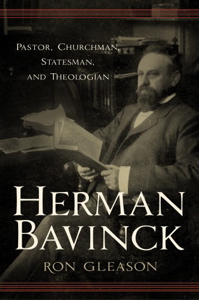
Cover of Herman Bavink: Pastor, Churchman, Statesman, and Theologian by Ron Gleason
Don’t miss these great podcasts this week.
- The White Horse Inn— “Exile, Exodus and Conquest“: On this program the hosts will explore the themes of exile, exodus and conquest showing how they each culminate in the great announcement that Jesus Christ has been given “all authority in heaven and earth” to judge, to save, and to reign forever.
- Christ the Center— “The Life and Thought of Herman Bavink“: Dr. Ron Gleason discusses his new intellectual biography, Herman Bavink: Pastor, Churchman, Statesman, and Theologian.
- Mid-Cities OPC Sermon—“Cleaning House in the Family of God” (Matthew 12:43-50). Preached by Pastor Joe Troutman on January 16, 2011. This is the church plant my family is visiting. I think you’ll appreciate Rev. Troutman’s preaching.
Sister Aimee and the “Anabaptist Nation”

"Sister Aimee" McPherson
I heard an interesting description of how American Christianity effectively developed into a form of Anabaptism. Dr. R. Scott Clark, Professor of Church History and Historical Theology at Westminster Seminary California (WSC), was interviewed this past week on Christ the Center podcast episode #157 regarding his contribution to Always Reformed, a festschrift that has recently been published in honor of WSC President and Professor of Church History, Dr. Robert Godfrey (see Dr. Clark’s post here). From what I’ve been able to gather over the past couple of years, Dr. Godfrey is an earnest student of the phenomenon of Sister Aimee McPherson’s ministry in the 1920’s, and holds her up as an example of what American Christianity is. Clark’s chapter is entitled, “Magic and Noise: Reformed Christianity in Sister’s America.” To some extent, it seems that this very subject of the Anabaptistic flavor of American Christianity is at the heart of this chapter, as may be inferred by the chapter’s title itself.
About twenty-two minutes into the interview, Clark introduces this topic by urging the study of “Sister” (as she is wont to be called) on Reformed believers. He does this because, according to Clark, in many ways McPherson’s type of Christianity is more indicative of the nature of American Christianity than the Reformed faith can lay claim to anymore. America has come a long way since the faith of the pilgrims of Plymouth Rock and the Salem witch trials (which is probably all Americans remember about those early Christian settlers (for help with that, listen to this and this). Clark believes that the Reformed would be aided in reaching America for Christ, and American evangelicals for the Reformed faith if they would see themselves more as cross-cultural missionaries, rather than natives.
Dr. Clark offers the disclaimer that his Anabaptist diagnosis of American Christianity is largely due to the fact that his primary field of research is the sixteenth and seventeenth century Reformation, rather than early twentieth century Christianity. He admits that in part he is interpreting the McPherson phenomenon and the nature of “native” American Christianity in the light of the sixteenth century Anabaptist movement, but he does attempt to support his conclusion with appeals to others who have written more extensively on Christianity in the nineteenth and twentieth centuries.
There are parallels between the Anabaptist movement of the sixteenth century and current American Christianity. Clark explains that people tend to think of the Anabaptist movement as just another facet of the Protestant Reformation, but he points out that the Anabaptists (also known as “Radical Reformers”) more or less “rejected all of the key doctrinal commitments” of the Protestant Reformation in favor of much more radical positions. Clark’s thesis is that the way American Christians commonly think about the nature of authority, epistemology (how we know what we know), Scripture and its authority, the church and eschatology (the doctrine of the end times) often bears strong resemblance to sixteenth and seventeenth century Anabaptism. Dr. Clark goes into a little more detail on this in the interview between minutes 33:15 and 42:06.
This portion of the interview caught my attention because Clark’s comparison is consistent with a conclusion I came to in my own personal pilgrimage from independent Baptist fundamentalism to Reformed theology and practice. After learning that the ultimate source of the bulk of historic Baptist theology comes from the Reformed Westminster Confession of Faith (see my newly updated “Creeds, etc.” page), and the parallels I saw between Baptist distinctives and the historic Anabaptist movement, I concluded that everything that’s right in the Baptist tradition was learned from the Reformed tradition, and everything that’s wrong in the Baptist tradition was learned, or “caught,” if you will, from Anabaptism. I realize that the 1689 Baptist Confession disclaims any formal connection between their doctrines and those of the Anabaptists, but the parallels are just too striking to Reformed paedobaptists.
This is why I encourage you to take time to listen to at least this section of the interview, if you don’t have the time or inclination to enjoy all of it. It’ll be thought-provoking time well-spent, if you ask me.
Meet Dr. Liam Goligher
Tenth Presbyterian Church is truly one of the flagship churches of the Reformed tradition in America. Two especially prominent ministers have pastored it, namely, Donald Grey Barnhouse, more recently James Montgomery Boice and finally, Dr. Philip Ryken, who has recently moved to the presidency of Wheaton College. If you’ve never heard any of these men preach, you have missed a great blessing.
Justin Taylor blogged on the announcement of the new candidate to follow in these great preachers’ footsteps, Glasgow, Scotland native, Dr. William “Liam” Goligher. You can read his post here, and the announcement published by the Pastoral Selection Committee of Tenth Presbyterian may be found at the following link here.


 The Misadventures of Captain Headknowledge
Finding Your Way
I’ve frequently repeated the saying of apparently unknown origin, “you can’t know where you’re going until you know where you’ve been.” I, however, usually modify it this way: “When you learn where you’ve been, you can see where you are, and know where you’re going.” In other words, as this applies to the visible church, when we’re informed by church history, we learn from many of the valuable lessons learned in the past, and it helps us figure out how to avoid those mistakes in the future. But if we ignore the past lessons learned, we in the present are doomed to repeat the mistakes of the past (an allusion to a better known saying). Dr. Riddlebarger assists us by appropriately moving us further back into our formative collective past by summarizing the history of redemption as progressively revealed in the Bible. His article helps us see where the church has been from the very beginning, the book of Genesis, and the promise and fulfillment of redemption in the Person and Work of Christ. But especially, we learn how to better interpret those signs of the times which we recognize in the present, and the portions of Scripture that reveal them, and how they point forward to the future coming of the Lord Jesus Christ. If you want the theological terminology, Dr. Riddlebarger helps the Dispensational-Premillennialist see how the Amillennial view of eschatology interprets end-times prophecy. If you’d like to learn more about Amillennial eschatology, I’d like to recommend Dr. Riddlebarger’s audio series “Amillennialism 101” located in the sidebar of his Riddleblog, and his books, A Case for Amillennialism, and Man of Sin. If you give this position some thought, I think you’ll find it makes clear some things that remain fuzzy for the average Dispensationalist.
In “You Are Here,” His synopsis of the article is as follows:
Dr. Kim Riddlebarger (Left) and myself (Right) after services at Christ Reformed Church, Anaheim, CA.
Dr. Riddlebarger illustrates the history of redemption and the end times by the image of a Mall Directory with it’s “You Are Here” sign. He writes:
We are also introduced to the so-called “Already/Not Yet” approach to the Kingdom of God in the New Testament:
But what about the signs of the times? Here’s an excerpt of Dr. Riddlebarger’s treatment of them:
Although it would behoove you to invest in a subscription to Modern Reformation Magazine to read the entire article for yourself, and benefit from the other helpful features, I’ve pretty much given you the heart of the article. I don’t want you to wonder as you wander, unnecessarily fearing things you shouldn’t as you look forward to the return of Christ. Reformed theology in general, and Reformed Amillennial eschatology in particular, is a liberating, comforting and most importantly, Biblical approach to our redemption in Christ from “In” (see Genesis 1:1) to “Amen” (see Revelation 22:21).
Share this: