The YouTube Bible
One of my “Featured Sites” (see sidebar) is the King James Bible Trust, an online resource for the ongoing British commemoration of the quadricentennary of the King James Version of the Bible. Check it out, if you haven’t done so already. The King James Bible Trust features a calendar of events taking place around the UK and the US, music and writing competitions, but one of my favorites is their YouTube Bible, “the King James Bible Trust’s ambitious project to create a complete reading of the King James Bible on YouTube. Our readers will comprise of actors, sportsmen and women, musicians, politicians and most importantly … YOU!” Anyone can submit a video of his own reading any chapter from the KJV that has yet to be contributed to the YouTube Bible (see this list). Below is a sample for your enjoyment. Subscribe to the page and watch them as they are added.
White/Moorman KJV Only Debate on YouTube!
For those of us who missed the debate live (though not for a lack of trying–my computer is a mess!), the live London debate on the exclusive use of the King James Version between Dr. James White and Dr. Jack Moorman has been posted on YouTube by one viewer. Here it is for your (and my) viewing pleasure:
Two and a Half Hours Until the White/Moorman KJV Only Debate!
Be sure to visit this page to watch live the debate between Dr. James White and Dr. Jack Moorman of London, England debating the question “Should We Exclusively Use the King James Version?”
“Should We Exclusively Use the King James Version?”
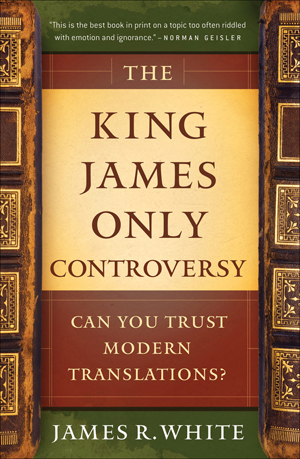 How appropriate that during the year of the quadricentennial of the King James Version of the Bible, a debate on the question of King James Onlyism should be held. Reformed Baptist apologist Dr. James White of Alpha and Omega Ministries is just on his way to London, England. RevelationTV in London is hosting a debate Wednesday night at 9pm GMT (if I’m not mistaken, that should be 3 pm CST), between Dr. White and Dr. Jack Moorman, an American fundamentalist Independent Baptist missionary in England, pastoring Bethel Baptist Church, Wimbeldon, London. The subject of the debate is, “Should we exclusively use the King James Version?” To my knowledge, it has been quite a while since a KJV Onlyist has stepped forward willing to debate Dr. White, author of The King James Only Controversy: Can You Trust Modern Translations?
This should be good. Dr. White never disappoints.
Revisiting “The Right Story”

- (The following was originally posted on March 3, 2006. It reappears here in a slightly edited form.)
“You can’t help nobody if you can’t tell ‘em the right story.” Jack Cash, brother of Johnny Cash, as portrayed in the movie, Walk the Line.
Every story is about fall and redemption in one way or another. There would be no plot if there were no problem to solve or conflict to resolve. The story of the entire human race is that of its fall and redemption. Your story is about your fall and your redemption. The mission of the church is to tell this story; to introduce the characters to the plot: they’ve fallen and they can’t get themselves up on their own, their problem is so bad, they can’t solve it themselves, they need Another to solve it for them, the conflict that has entered their life has killed them, and they need Another to return them to life.
Stories are often considered mere entertainment. And to be sure, the church in this Laodicean (Revelation 3:14-22) generation has caught on to the idea that entertainment will help them tell the Story. Even if at times they’re telling the right story, that of the fall of man into sin and the sinless Christ who was crucified and raised for sinners, they’ve wrapped it up in so much entertainment that many are in danger of overlooking the Gift because they’re so fascinated by the wrapping paper. If sinners are distracted from the Story by trappings geared toward appealing to their interests, or meeting their felt needs, the church can’t help them. At other times, the church forgets to get around to the Story at all because they’re so aware of all the other stories in the Bible. “Christians don’t need to hear the Story this week, they’ve already heard and believed and received it, now they need to hear what they need to do,” and thus the Story is placed on the shelf in the interest of relevance or practicality. But no matter how much they mean to help, they “can’t help nobody if [they ain’t tellin’ ’em] the right story.”
The church seeks to tell a story, but all too often it’s not the Story they were commissioned to tell (Matthew 28:19-20). Many times they tell their own story. A story about how they’ve picked themselves up by their own bootstraps, a story about what a great example they are. When this is the story they tell, the Holy Spirit won’t bring sinners to life, nor will he empower believers to serve. All applications and all examples, and all pastoral autobiography are not to stand alone. They are to be built on the firm foundation of the Story, explicitly told each week.
We’ve fallen into sin so there’s nothing we can do to redeem ourselves:
the sinless Christ was crucified because we are sinners who deserve to die;
Christ rose from the dead on the third day because God has accepted Christ’s death in the place of sinners who come to believe and repent of their sins;
saved sinners are called to be holy and to serve others, which brings them into conflict with the sin that yet remains in their natures and they aren’t always able to be holy and serve others (Romans 7).
That’s why the Right Story must remain central: The Gospel is for Christians, too!
They must be reminded that even though they’ve been saved they still need to hear the Gospel addressed to them (1 John 1:9) to cleanse them so they can progress on the journey to glorification by way of sanctification (Proverbs 4:18).
When the preacher neglects to tell the church the Right Story, he can’t help the church grow in grace.
- (Dr. R. Scott Clark gives a fuller, more Christ-centered summary of the Right Story at Westminster Seminary California’s Valiant for Truth blog. Read his post, “The Christian Life.”)
Bible Questions on the History of the Kings of Judah and Israel, No. 1
 This week, it’s not a “Scripture Enigma,” it’s the first in a series of questions on the history of the kings of Judah and Israel, from The Sunday at Home: A Family Magazine for Sabbath Reading (No. 1028–January 10, 1874). This post will be updated with the answers in one week. By the way, Scripture Enigma, No. 1 has been updated with its answers. Please post any answers or guesses in the comments thread. Or comment on the anxiety such questions give you. You can even feel free to comment asking for hints. Anything! Just comment! 😉
- What reasons did the people of Israel assign for their wish to be governed by kings?
- How had they been previously governed?
- Where do you find that God had anticipated this desire, and what directions had He given with regard to it?
- By whom was the first king of Israel selected? Mention his name—his father—his tribe.
- Describe his personal appearance.
- By who was he anointed? And where? On what errand was he engaged at the time? What change came over him from that time?
- Where was he first proclaimed king? How did God show his displeasure with the people at the time?
- What indications can you find of filial obedience, modesty, and courage in the early history of Saul?
- For what reasons did God take the kingdom from him? When was this first told him, and by whom? How did the tidings affect Samuel?
- Give other passages from God’s Word, which teach us that outward observances of religion have no value with God unless accompanied by a life of obedience.
- Saul professed repentance—but what showed that his repentance was not sincere?
- From this time we see a great change in Saul. What affliction came upon him? How did he obtain relief?
- Have we any indications of a loss of personal courage?
- What aroused his jealousy of David?
- What does the Bible say about envy?
- From this time Saul’s heart was set on David’s death. Mention any occasions on which David narrowly escaped his enemy, and how he was delivered.
- Mention any indications of relenting.
- On what two occasions was Saul’s life spared when he was in David’s power?
- What proofs have we of the tender love between David and Jonathan, Saul’s son? Show that its foundation was laid in true religion.
- Saul was left by God. To whom then did he seek for help? And with what consequences?
- What was his end? Which of his sons died with him? By whom, and where were they buried?
- How long did Saul reign?
- What became of the other sons of Saul?
Answers:
- 1. 1 Sam. 8:5, 20
- 1 Sam. 8:7; 10:19; 12:11-12
- Deut. 17:14-20
- 1 Sam. 9:1, 16, 17
- 1 Sam. 9:2; 10:23
- 1 Sam. 9:3-4, 19-20; 10:1, 9, 11
- 1 Sam. 9:14, 15; 12:16-18
- 1 Sam. 9:5, 21; 10:21-23; 11
- 1 Sam. 13:8-14; 15:23, 28-29, 35; 16:1
- Psa. 1:7-14; Prov. 21:3; Isa. 1;11-17; Jer. 7:21-23; Micah 6:6-8; Matt. 7:21-23
- See his self-justification, 1 Sam. 15:15. His excuses, 5:21. When at last confession was extorted from him, he feard losing the respect of the people, not the favour of God, 5:30.
- 1 Sam. 16:14-18, 23.
- 1 Sam. 17:11; 28:5.
- 1 Sam. 18:8, 9, 15, 29.
- Prov. 14:30; 27:4; S. Song 8:6; Gal. 5:21; Jas. 3:14, 16.
- 1 Sam.19:10-12; 23:26-28; 24:3.
- 1 Sam. 19:6; 24:16-22; 26:21-25.
- 1 Sam. 24:3-7; 26:6-12.
- 1 Sam. 18: 1-4; 19:2; 20:3, 11-17, 34; 23:16-18; 2 Sam. 1:26.
- 1 Sam. 28:6-20.
- 1 Sam. 31:1-6, 8-13.
- Acts 13:21.
- 2 Sam. 4:5-7; 21:5-9.
Listen To This…
Here are the programs I’ve been following this week. If you’ve got the time, it would benefit you to check some of them out:
- “Machen’s Warrior Children” on Christ the Center
- “Gospel-Focused” on White Horse Inn
- January 11 Episode of Dividing Line
- “The Legacy of the King James Bible” on ReformedCast
Did Shakespeare Help Write the King James Bible?
As a child, growing up in an independent Baptist church that used, preached and taught from the King James Bible, I recall occasions in which a relative of ours who did not share our reverence for it, would attempt to undermine our reliance on it by spinning the yarn that William Shakespeare helped translate the KJV, and while doing so, hid some “Easter eggs” in the text of Psalm 46. The phenomenon to which he referred was the fact that the 46th word from the beginning of the psalm is the word “shake” (v. 3) and the 46th word from the end of the psalm is the word “spear” (v. 9). I can’t speak for my parents, but I always found this idea to be ludicrous, even as a child. As much as I’ve searched the internet for explanations, the following from Doug Kutilek makes a few interesting points that demonstrates how far-fetched this religious urban legend is.
The following is from As I See It Volume 5, Number 2, February 2002:
One of the wonders of the internet is how easily it facilitates the dissemination of utterly false and fictitious, or at best highly dubious, information. Whole books have been written about such “urban legends” (you know–the alligators reportedly in the sewers of New York City, and the supposedly “Satanic” nature of the venerable Proctor & Gamble “man in the moon” logo).
Well, not to be out-done by the “children of this world,” Christians also have their “urban legends.” One of these that has been circulating in cyber-space involves the great British playwright William Shakespeare and the famous King James Version of the Bible. The story goes as follows:
The KJV translators reportedly (so this legend has it) consulted Shakespeare, a renowned master of English style, as they were doing their translation work, and to acknowledge surreptitiously, not openly, his part in the work (it would have been scandalous to have a mere actor and author of stage plays participating in the important and sacred work of Bible translation), they translated–or perhaps allowed him to translate (depending on which version of the legend is being told), his complete ignorance of Hebrew notwithstanding–a part of Psalm 46 in a particular way. If one turns to that Psalm, he will discover that the 46th word from the beginning of the Psalm (ignoring the title, which does in fact form a part of the inspired text) is the word “shake.” And if one counts words from the end of the Psalm, the 46th word from the end (ignoring the final word of the Psalm, the Hebrew word selah–again a part of the inspired text) is the word “speare.” So, the 46th word from the beginning and the 46th word from the end of the 46th Psalm are “shake” and “speare.” An apparently remarkable coincidence, to be sure. And the unstated implication is that this somehow adds to the prestige, dignity and authority of the KJV over all other English Bible versions.
But against the theory is the apparent complete absence of any contemporary positive evidence associating the bard of Stratford-on-Avon with the KJV translation committee and its work. Certainly the lengthy account of Shakespeare in the authoritative Dictionary of National Biography, authored by the editor of the work, Sir Sydney Lee, betrays no such knowledge. Nor can I find any reference to the same in several other works on Shakespeare consulted, nor indeed in various standard histories of the English Bible. This is not to say that it is thereby absolutely disproved, though the happenings in Shakespeare’s life in the period 1604 to 1611 (when the KJV was in preparation) are fairly well-known to history, and any part the most famous of English authors might have had in the production of the most famous of English Bible translations could scarcely have gone unnoticed and unreported.
The novelty of the coincidence of the “46s” and “Shakespeare” is not quite so remarkable as it might seem at first blush. The Geneva Bible of 1560 (published 4 years before Shakespeare’s birth and therefore certainly uninfluenced by him in any way–indeed, he was influenced by it) was the Bible most commonly used in the English-speaking world during the far greater part of Shakespeare’s active writing career (he died in 1616, having virtually retired some years earlier; all but 3 of his many plays and the whole of his poetry being commonly ascribed to the years before 1611). It was also the English Bible version most closely followed by the KJV translators in their revision work.
An examination of the Geneva version of Psalm 46 reveals that both words “shake” and “speare” occur in the relevant verses (3 and 9), as in the KJV, though with a slightly different word count. “Shake” is the 48th, rather than 46th, word from the beginning of the Psalm (ignoring the title) and “speare” is the 44th word from the end of the Psalm (or 45th, depending on whether “selah” is excluded from or included in the count). It seems quite probable that the KJV picked up its use of “shake” and “speare” in the 3rd and 9th verses respectively from the prior Geneva Bible (the precise wording of Psalm 46 in the Geneva and the KJV is usually identical, with a relative few differences). Further it is entirely within reason that by merest accident these words ended up 46th from the beginning and end of the Psalm (ignoring the problem counting “selah” causes for the hypothesis).
Since the “official” basis for the KJV revision was the Bishops’ Bible of 1568, a check of the wording and word counts in that version of Psalm 46 would be of interest for comparative purposes, but unfortunately I have no access to it, and must remain in the dark for now as to its precise wording.
If it could actually be established with certainty, or with at least a high degree of probability that the Shakespeare really was “honored” by the translators in the KJV of Psalm 46 in the manner suggested, whether or not he had any part whatsoever in the actual production of that translation, it would make for an interesting footnote. However, until such proof is forthcoming, it is best to leave this with the other “urban legends” of our time.
The Legacy of the King James Bible: Celebrating 400 Years of the Most Influential English Translation
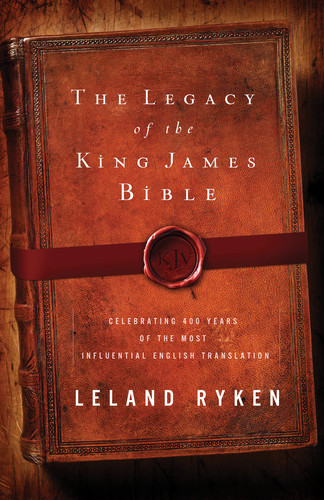 Crossway Books is contributing to this year’s celebration of the 400th anniversary of the publication of the King James Bible with the help of Wheaton College professor of English, Dr. Leland Ryken, author of The Legacy of the King James Bible: Celebrating 400 Years of the Most Influential English Translation. In promotion of this title, Justin Taylor has conducted a concise interview with the author in three parts over at the Crossway Blog. You can watch:
“How Did the King James Bible Come To Be? (Part 1)”
“The Growth of the King James Bible (Part 2)”
“The Influence of the Bible on Literature & Culture (Part 3)”
Don’t miss this opportunity to be reminded of the significance of this venerable Bible translation. As a former radical King James Onlyist who now understands that the world of Bible translation was not supposed to come to a screeching halt with the publication of the KJV, I have often been distressed by the way so many who likewise recognize the need to keep retranslating the Bible would make disrespectful swipes at the KJV. This betrays an arrogance and an ignorance that only the new is worthy of our time. But how much we miss by not familiarizing ourselves with our own history and culture. The fact is that throughout the history and the development of the culture of the English-speaking world, the King James Bible has had a constant and influential presence–and the entire world has been the better for it. Perhaps, too, it’s time that all cultures found something to appreciate in it for a change.
The BBC is celebrating KJV400.
 The BBC is promoting the 400th anniversary of the publication of the Authorized “King James” Version of the Bible. In order to do so, they are airing a series of radio reports entitled, “King James Bible–History and Readings.” Here’s how they introduce the series:
The King James Bible is one of the great English literary works. On the 400th anniversary of its publication, a series of documentaries and readings explore its history and enduring appeal. Features James Naughtie, Simon Schama, Rowan Williams, Emilia Fox, Toby Stephens and others.
The first installment aired today, but you can subscribe to a podcast that follows this series by visiting their site at the link below:
BBC – Podcasts – King James Bible – History and Readings.
For your reading pleasure, peruse this site’s blogs posted under the category of “King James Version.”
Christianity and Liberalism Revisited
Here’s a conference I wish I could attend. Believe it or not, I first discovered J. Gresham Machen’s book Christianity and Liberalism in a catalog for Peter Ruckman’s bookstore in the mid-nineties (see also here and here), but I only read it about two years ago. Growing up I was conscious of my fundamentalist pastor talking about “modernism,” but only had a very vague notion of what that might be. So vague, in fact, I couldn’t then, nor could I now define with any certainty just how much I understood about it then.
It is so important that Christians understand that the most basic and foundational thing about Christianity is not how you live, it is what you believe. This is not a denial of the importance of how you live, just a denial that it is what makes you a Christian. Actually, how you live is the product or fruit of what you believe. If you live the cleanest life in the most loving and charitable way, yet deny the deity of Christ, the trinitarian nature of God, or the virgin birth of Christ, etc., then you are not a Christian. This is what liberalism is, although it is so much more at the same time. It exalts the necessity of works over the necessity of orthodox doctrine. That’s why Machen said liberalism is not another form of Christianity, it is an entirely different religion.
“Bunyan, Brown and Boston”

John Brown's Self-Interpreting Bible (1859)
“For now I’m grown sae cursed douce
I pray and ponder butt the house;
My shins, my lane, I there sit roastin’,
Perusing Bunyan, Brown, an’ Boston,”
These lines are from a Robert Burns poem of 1789 entitled, “Epistle To James Tennant of Glenconner.” (The rest of his poetry is linked to from this page) The final line of this excerpt features the names of three figures from church history: John Bunyan, John Brown, and Thomas Boston. This poem references these writers in passing, highlighting what household names these three were in the eighteenth century.
Many of us are already familiar with the first, John Bunyan, seventeenth century Baptist preacher, who penned Pilgrim’s Progress during a twelve year sabbatical in jail. The third figure, Thomas Boston, may be less familiar nowadays, but he still has currency among readers within the Reformed tradition. He’s the author of The Fourfold State of Man. But the least familiar of these to modern Americans (perhaps even most Presbyterian and Reformed Americans) is the second figure, the Reverend John Brown of Haddington. The volume that elevated John Brown to household name status was his then-widely read Self-Interpreting Bible. Originally published in 1778, it went through at least 26 known editions.
 I recently came into possession of the 1859 edition. It’s in very good shape, and I hope I’m able to preserve that condition as I regulary mine it’s pages for it’s amazing lithographs and it’s even more amazing Reformed study notes, devotional applications and indices. I found it at a local antique store, and purchased it for my wife (and, of course, myself) as a gift for a significant milestone birthday that shall remain confidential. This is an appropriate gift for her because we share a love of old books and lithographs. The extensive study notes are more of interest to me, but she enjoys listening to them as I read them aloud to her on occasion.
So far, I’ve found little online about the book, but there was one very informative article that will make many of you desire along with me that this Reformed study Bible would find a publisher that would reintroduce it to the modern world during this period of renewed interest in Reformed theology. Since I’m not a publisher, and since this book is so old it’s bound to not be under any copyright restrictions, I’ll begin posting freely from it from now on for who knows how long. There’s so much wonderful material in here that I want to share with you, so subscribe to this blog either by email or RSS feed, and keep up with every entry. I know I’m not the most regular blogger, but now that I’ve got an antiquarian Bible full of stuff you’ve likely never read, I’ll be doing so more regularly.
The article “John Brown’s Bibles” may be read at this link; John Brown of Haddington’s Wikipedia entry may be read here, but I’ll be posting even more detailed biographical information about him in the days and weeks to come from the pages of his claim to fame. Banner of Truth Trust sells Life of John Brown with Select Writings.
If you browse through online Reformed booksellers, you will encounter a later theologian named John Brown who wrote many exegetical commentaries. I ordered his commentary on Galatians recently thinking it was the Brown of Haddington, only to be disappointed upon its arrival. But that’s alright, it looks like it’ll be a useful help itself. You can read an interesting article about the later John Brown here.
Understanding KJV-Onlyism
 Understanding Our Times with Kevin Thompson has invited Bob Hayton of the blogs Fundamentally Reformed, KJV-Only Debate, and RE:Fundamentals to guest host the show tomorrow night at 5pm central time. It will be a call-in discussion hosted by Bob and his compatriot in Debating KJV-Onlyism, Damien Garofalo. Bob has been interviewed before about Fundamentalism and his journey to Calvinism on Understanding Our Times as well as Iron Sharpens Iron (a traditional radio show out of Long Island, NY–listen here).
Here’s Bob’s announcement if you desire more information.
Should 1 John 5:7 Be In The Bible?
Interested in learning more? Select from this list of articles relevant to 1 John 5:7 at Bible.org.


 The Misadventures of Captain Headknowledge
Rev. John Brown’s Original Preface
Title Page to Brown's Self-Interpreting Bible
The following is the original preface to Rev. John Brown’s Self-Interpreting Bible, in which he explains the various features he’s included, and shows how they will aid the reader in understanding and profiting spiritually from the Word of God. I’ve highlighted the features as they occur throughout. The rest is original to the editor.
My intention in the coming posts will be to demonstrate to varying degrees, each of these features, along with pictures of the numerous beautiful lithographs that are found along the way.
PREFACE TO THE ORIGINAL EDITION
Not to depreciate the valuable commentaries of Pool, Patrick, Clarke, Henry, Burkitt, Gill, and Doddridge, &c., but to exhibit their principal substance with all possible advantage, in a manner that might best comport with the ability and leisure of the poorer and labouring part of mankind; and especially to render the oracles of God their own interpreter, and enable every serious reader to judge for himself what doctrines ought to be believed, and what duties practiced by the Christian, are the avowed aims of this publication.
In the copious INTRODUCTION, the principal proofs of the Divine Authority of the Old and New Testaments, and the rules necessary to promote the profitable perusal of the oracles of God therein contained, are largely exhibited. The connected scheme of the Hebrew Laws, and their evangelical signification,–and of the fate of nations, narrated or predicted in Scripture, as subservient to the glorious work of our redemption,–together with the large Chronological Index,–form a summary of the most celebrated labours of the learned world on these diversified subjects. An accurate attention thereto will, through the blessing of God, greatly assist in searching the Scriptures with success.
The contents of the sacred books, and their respective chapters, are an accurate, full and explicatory representation of their subject. Properly attending to these, the reader must discern of whom, or of what, the Holy Ghost there speaks, and understand the passage accordingly. He may easily fix in his mind a general, but distinct view of the whole system of inspiration; and thus be capable, with the utmost readiness, to find out or compare whatever passages of Scripture he may desire.
The EXPLANATORY NOTES are chiefly confined to the figurative, the prophetic, and the practical parts. Here the obscurity of Scripture, or the importance of faith and holiness, chiefly required them.
In our Saviour’s delightful discourses, and the epistles of his inspired Messengers, our holy religion is most fully delineated; and there the explication is peculiarly extensive, and attempts to exhibit the substance of many learned and expensive commentaries, in a manner which, attending to the beautiful connexion, clearly unfolds the scope and meaning of the Spirit of God.
A particular and lively application of divine truth to the heart, and an unspotted holiness of conversation, being the immediate end of God’s revelations to men, the contents of each chapter, which are often in an explicatory manner, are in the Reflections practically summed up, and directed home to the reader himself, for enlightening his understanding, awakening his conscience, warming his heart, and for directing and animating his practice.
An exact knowledge of the seasons in which the oracles of God were delivered, or the events mentioned in them took place, being of no small importance for obtaining a distinct perception of their meaning, the dates before and after our Saviour’s incarnation have been adjusted from the best chronologers, and marked in the margin.
Lithograph of the Reverend John Brown of Haddington
But, as every Protestant must allow the Scripture itself to be its own best interpreter—as God, to oblige men to a diligent search of his word, comparing spiritual things with spiritual, has seldom fully unfolded any of his more important truths in one particular passage—the uncommon collection of Parallel Scriptures, such as is not to be found anywhere else that I know of, has formed the most laborious, and will, to the diligent peruser, be found by far the most valuable part of the work. Some of these are similar in phrase, others in meaning, and, in fine, others in their scope and design. In these, and others which may be added, we have a delightful view of the harmony of the Scripture, and multiplied proofs of every article of our Christian faith; we have a real Concordance, which may abundantly furnish preachers and others with their desired quotations; we have, in little room, a large Commentary, infinitely more certain than any dictates of men; and of which the very words are, as nails and as goads, pointed and fastened by the great Master of assemblies. In a truly diligent comparison of them, many texts all at once explain, and are explained by each other. Nor, unless at first, will the careful reader find much trouble in comparing the texts: but the mere view of the marginal quotations will direct his memory to that part of them which corresponds with the sentence to which they are annexed for explication. And, for his encouragement, I can only say, that my labour, in collecting the parallel texts in this work, has afforded me much more pleasant insight into the oracles of God than all the numerous commentaries which I ever perused.
Thus we may listen to, and converse with God, and lay our consciences open to the inspired arrows of our all-conquering Redeemer;–we find his words, and eat them, to the joy and health of our soul; we hide them in our heart, that we may not sin against him; we become mighty in the Scriptures, and expert in handling this sword of the Spirit, in opposition to every enemy of our soul: in fine, we are made wise unto salvation; are reproved, corrected, and instructed in righteousness, and perfectly furnished for every good work. May the Lord himself prosper it for these ends!
J. BROWN
Share this: