Who’s Afraid of the Big, Bad “Beast”?
 Looking back on my years as an Independent Baptist who kept his eye on TBN, and his ear on Christian radio, I must admit that I had always been susceptible to just about every end times related conspiracy theory that came my way. Believe me, if you watch TBN, at least back in the eighties, you learned about a lot of end times related conspiracy theories. When it comes to Independent Baptist church life, however, preaching on the end times can be a mixed bag: some will major on it, others will minor on it and still others may avoid it almost completely, claiming they find no practical application to be had in the preaching of prophecy.
After I discovered Peter Ruckman, whom I affectionately refer to as “The King of the King James Onlyists,” I gained, not only a rich source of bad information regarding biblical textual criticism, but also a rich source of bad information regarding end times related conspiracy theories. Eventually, I discovered that prophecy preacher, Texe Marrs, whose books I sold as a teenager in the Christian bookstore at which I worked as a high school student, was a fellow “Ruckmanite.” Now, this man is a conspiracy theorist par excellence! Like Will Rogers once said about men, Texe Marrs never met a conspiracy theory he didn’t like. You can enjoy this man’s ravings at www.texemarrs.com.
One of the most outstanding conspiracy theories that I recalled hearing about frequently during those years, was the claim that the burgeoning European Union had developed a super-computer in Brussels, Belgium which had the capability of tracking and storing not only the vitals statistics of everyone on the planet, but also their shopping habits. Rumor had it that the “Revived Roman Empire” that was the European Union had further plans to one day see to it that everyone was marked with some sort of electronic device on their forehead or the back of their hand, that featured a number by which the entire population of the world could be catalogued and tracked by this EU super-computer that just happened to be nick-named “The Beast.” This, we were assured, would be the way Revelation’s prophecies regarding the mark of the Beast would be fulfilled in the Great Tribulation period. Oh, the dread that overtook us all as we periodically heard the news of further technological advancements that brought us step by step closer to the eventual unveiling of the New World Order under the seductive, yet tyrannical rule of the Antichrist.
I don’t have the words to describe the paranoia that can develop in one who pays as close attention to such sensationalistic claims as I once paid to end times conspiracy theories. I know what it is to look for and find a demon behind every bush, and under every rock. Such a lifestyle is truly paralyzing. I recall as a Bible College student fearing to so much as throw a paper route just to earn money to live on and with which to put myself through school. I could not, in good conscience, be a party to misinforming my neighbors with the propaganda published by the liberal media who served as the useful idiots of the behind the scenes architects of the New World Order. I guarantee you, that if I still had today the same mindset I had in my early twenties, I would never have sought employment by the federal government in order to print U. S. currency as I now do. Are you kidding? U.S. currency is just riddled with New World Order and masonic symbols! Just what do you think “Novus Ordo Seclorum” means, anyway? New World Order! It’s printed right there on your money! As Randy Newman sings in the theme song for the TV show, Monk, “if you paid attention, you’d be worried, too!”
At long last, freedom from such bondage came to me in the form of…yes, you guessed it! Reformed theology! Specifically, Reformed eschatology (the study of last things, or the end times). At last, I found the courage to divest myself of any and all fear from the countless rumors that swirl about regarding all the things going on behind the scenes about which, “they don’t want you to know!” Man, Reformed air is so refreshing! At last, I can breathe easy.
Last night, I was reminded by a friend of the Belgium-based super-computer called “The Beast.” My friend hears that it can track upwards of 15 billion people, not that the population of the earth is expected to reach that number before the Rapture! But that just goes to show you, folks, how close we are to the Tribulation period! If such rumors are to be believed. When my friend mentioned these things to me, as I politely nodded and grinned, I thought to myself, “I need to check Snopes about ‘The Beast.'” So, check I did. I didn’t find anything about it at www.Snopes.com–it may be there, but I didn’t find it. But my search did lead me to a similar urban legend website called www.TruthOrFiction.com, which did contain an entry which–wonder of wonders!–pronounced “‘The Beast,’ a supercomputer in Belgium, is Being Used To Track Every Human Being On Earth–Fiction!” Whew! What a relief! But the details they provide regarding the origin of the urban legend simply blew my mind. Here’s how the entry reads:
-
Summary of eRumor
A three-story computer in Brussels, Belgium called “The Beast,” is described as being the brain-child of the European Common Market. It is said to be “self programming” and is intended to track the buying and selling activities of every person on earth. Additionally, the system is alleged to depend on invisible tattoos on the forehead or back of the hand of each person for identity purposes. Ominously, the tattoo will be of a unique, personalized number composed of three entries of three digits each.
- The Truth
It’s easy to see how this story would grab the attention of Christians. It’s almost as though it were tailor-made to fit with the book of Revelation. And… it was.
Unlike most urban legends, we have a clear trail that leads to where the story came from. There are various printed versions of the story that date back to 1973, but the most widely circulated early account appeared in Christian Life magazine in August 1976.
Three months after publishing the story, Christian Life received a letter from Christian author Joe Musser. In it, he explained that the Beast Computer of Belgium did not exist in reality, but in fantasy. Musser said that he created the scenario for a novel he wrote, titled Beyond a Pale Horse (actually, it’s Behold, A Pale Horse–jdc), and for a screenplay for the David Wilkerson film, The Rapture. In the letter, Musser said that for three years he had seen the story he had created being passed along as fact.
The possibility for confusing fiction with fact was there from the outset. As a part of the promotion for the David Wilkerson film, some mock newspapers had been printed which had convincing-looking news stories about events that could be associated with the rapture, including the Beast Computer of Belgium. Unless one read the small print next to the copyright notice, there was nothing to indicate that it was fiction.
As with other urban legends, some thoughtful evaluation of the facts would cast doubt on the story. For example, anybody who is savvy enough about computers would know that it’s not going to take a computer occupying three stories of a major building to catalog all the people on the earth. Today’s computers can handle the task in a fraction of that space – assuming there was some way to know who all the people were.
Also, some versions of the story stated that the computer was self-programming, suggesting that perhaps it had a life of its own outside of the humans who programmed it. Artificial intelligence is a fascinating subject, and computers are getting smarter every day, but no computer expert that I know of is worried about whether a database program could become the Antichrist. Additionally, even if a decision were made to track all humans, it is not clear that the European Common Market would be the entity to initiate or control it. (Here’s the source)
My mind was officially blown. I never dreamed that I would learn, not only how it is that Belgian “Beast” Super Computer was a mere urban legend, but the very name of the man who dreamed up the idea in the first place! Let alone my astonishment that it was a fictitious scenario developed for a Christian novel on the end of the world! My adrenaline was flowing, and I couldn’t stop running around telling everyone I thought might have heard about this conspiracy theory, because I had to personally make sure they were utterly divested of any and all anxiety over such a prospect. Was I ever giddy! I didn’t know what to do with myself! But telling a few of my co-workers, both believing and unbelieving, I had to help make sure the world had more access to this information. I must make sure these facts are featured on Wikipedia! The world’s free online encyclopedia! Under the heading of “The Beast (Bible)” on Wikipedia, you will find my first ever contribution to this global pooling of knowledge. In the article, under the sub-topic of “Alternative Views” I found this single sentence referencing “The Beast” supercomputer: “Some identify the Beast with a Super Computer in Brussels, Belgium.” To this, I added the truly “alternative view”: “However, author Joe Musser, attributes the origin of this urban legend to his 1970 novel, Behold, a Pale Horse and the movie The Rapture which is based on his book. (Read the article here)
Finally, a little more surfing of the web produced a more in-depth discussion of this story. Silicon.com, a website featuring writing on all things computer related, interviewed Joe Musser, and the resulting article features what he had to say. I highly recommend that you read this article here.
White Horse Inn Website Redesign
 If you haven’t checked out the newly redesigned website of the White Horse Inn radio show, featuring a panel of two presbyterian-type Reformed minister/scholars (Michael Horton and Kim Riddlebarger, a Calvinistic Baptist pastor (Rev. Ken Jones) and a Lutheran seminary professor (“Dad” Rod Rosenblat), talking about the doctrines of the Reformation and how they apply to current issues in American Evangelicalism, you really ought to check it out. I don’t know how many new resources have been added to the site, but the new format really makes them all a lot more accessible in my opinion. Here’s the outline of tabs, with several links on many of them, that will be at your disposal:
- Home
- White Horse Inn—White Horse Inn, Broadcast Archives, Upcoming Topics, Radio Stations
- Modern Reformation
- First Time Visitors—First Time Visitors, Guest Book, Newsletter
- Support Us
- About Us—Contact Us, Testimonials, Share WHI
- Resources—Resources, News, Events, Free Articles
- Blog
- F.A.Q.
If you’ve never listened to the show, and fear that a theological talk show may go over your head, I ask you to give it a try, and see if the chemistry between these co-hosts doesn’t hook you and keep you coming back. Although the topics are serious theological issues, the way the hosts interact is often light-hearted and entertaining. I think you’ll find it not only a fascinating show, but also an entertaining one.
The image included on this post is a link to the website, and you’ll notice that it may also be found in my sidebar. There it shall remain as a reminder to you to not let a week pass that you do not listen to an episode of the White Horse Inn. A new episode is broadcast every Sunday.
The Agony of the Deceit of the Word of Faith Movement
Just found this great video presentation of Steve Camp’s song “The Agony of Deceit” from his album “Consider the Cost.” Camp’s song applies 2 Peter 2 to today’s Word of Faith movement, and draws it’s title from the book, The Agony of Deceit, edited by Dr. Michael Horton of The White Horse Inn radio show and Modern Reformation Magazine. If you don’t know what the Word of Faith movement is, they’re the guys preaching the health and wealth, name-it-and-claim-it gospel that tends to make Christians more interested in what’s on the Master’s table rather than the Master himself (get a basic intro here). I’ve also included the great testimony by the Pentecostal minister who posted this video to his YouTube page. But best of all is the passage of Scripture on which the song is largely based. It’s simply astounding how well prosperity preachers fulfill the Holy Spirit’s revealed and revealing description of false teachers. This post concludes with Peter’s words inspired by the Holy Spirit.
While feeling called to study to be a missionary at Baptist Bible College back in the early 90’s, my mind was still somewhat confused about what to do with the claims of the Word of Faith and charismatic movements. It wasn’t until 1994, when I discovered a voice on my AM radio that was actually speaking critically of Kenneth Copeland and the others, and heard the speaker mention the release of his new book, Christianity in Crisis, that I was able to see clearly how in error this movement is, and to finally break free from the false notion that God may actually be using this movement. The radio show was The Bible Answer Man, and the host/author was Hank Hanegraaff.
from aflame4God:
“You MUST hear this song! A powerful song and teaching that gives you a serious warning concerning false teachers and their ungodly dangerous doctrines. You should listen to holy men of God who preach the truth from a sincere heart. THIS SONG IS FROM THE CD “CONSIDER THE COST” BY STEVE CAMP.I CONSIDER IT ONE OF HIS BEST. The following book is a very good book to read on the subject it is called “The Agony of Deceit” by Michael Horton. The song is based on this book and 2 Peter 2. You can order this book on Amazon.com or ebay.
If you are a serious Christian and want to know the truth about this Movement consider buying these books.
“You can find these books on amazon.com
1. “A Different Gospel” by D.R. McConnell
2. “The New Charismatics” by Michael Moriarty
3. “Christianity in Crisis” by Hank Hanegraaff
4. “The Seduction of Christianity” by Dave Hunt
5.” The Word-Faith Controversy” by Robert Bowman
6. “The Born Again Jesus of the Word-Faith Teaching” by Judith Matta
7. “The Strange World of Benny Hinn”
8. The Disease of the Wealth and Health Gospel” Gorden Fee (A renown godly Pentecostal Bible scholar).
“If fact there is no church historian or Bible Scholar that would agree with these false teachings. I know this movement well. I graduated from Rhema Bible Training Center in 1979 and spent 12 long years as a part of this movement. I preached in many WOF Churches. I was a devout reader of E.W. Kenyon. I read one of his books over 40 times! I met and heard many of the key figures of this movement in the ’70s and 80s. So I’m not a novice on the subject. God by His grace set me free from these false doctrines in 1988. At the time I was a pastor of a growing church. I recanted before my congregation. The Bible became like a new book to me, so precious, pure and powerful. Since then I’ve been on the narrow road that leads to life. I now preach the Gospel as according to Jesus and the Apostles as inspired by the Holy Spirit. Finally, let it be said that not all pentecostals agree with the Word of Faith Movement. God bless you. . . “
False Prophets and Teachers–2 Peter 2 ESV
2:1 But false prophets also arose among the people, just as there will be false teachers among you, who will secretly bring in destructive heresies, even denying the Master who bought them, bringing upon themselves swift destruction. 2 And many will follow their sensuality, and because of them the way of truth will be blasphemed. 3 And in their greed they will exploit you with false words. Their condemnation from long ago is not idle, and their destruction is not asleep.
4 For if God did not spare angels when they sinned, but cast them into hell [1] and committed them to chains [2] of gloomy darkness to be kept until the judgment; 5 if he did not spare the ancient world, but preserved Noah, a herald of righteousness, with seven others, when he brought a flood upon the world of the ungodly; 6 if by turning the cities of Sodom and Gomorrah to ashes he condemned them to extinction, making them an example of what is going to happen to the ungodly; [3] 7 and if he rescued righteous Lot, greatly distressed by the sensual conduct of the wicked 8 (for as that righteous man lived among them day after day, he was tormenting his righteous soul over their lawless deeds that he saw and heard); 9 then the Lord knows how to rescue the godly from trials, [4] and to keep the unrighteous under punishment until the day of judgment, 10 and especially those who indulge in the lust of defiling passion and despise authority.
Bold and willful, they do not tremble as they blaspheme the glorious ones, 11 whereas angels, though greater in might and power, do not pronounce a blasphemous judgment against them before the Lord. 12 But these, like irrational animals, creatures of instinct, born to be caught and destroyed, blaspheming about matters of which they are ignorant, will also be destroyed in their destruction, 13 suffering wrong as the wage for their wrongdoing. They count it pleasure to revel in the daytime. They are blots and blemishes, reveling in their deceptions, [5] while they feast with you. 14 They have eyes full of adultery, insatiable for sin. They entice unsteady souls. They have hearts trained in greed. Accursed children! 15 Forsaking the right way, they have gone astray. They have followed the way of Balaam, the son of Beor, who loved gain from wrongdoing, 16 but was rebuked for his own transgression; a speechless donkey spoke with human voice and restrained the prophet’s madness.
17 These are waterless springs and mists driven by a storm. For them the gloom of utter darkness has been reserved. 18 For, speaking loud boasts of folly, they entice by sensual passions of the flesh those who are barely escaping from those who live in error. 19 They promise them freedom, but they themselves are slaves [6] of corruption. For whatever overcomes a person, to that he is enslaved. 20 For if, after they have escaped the defilements of the world through the knowledge of our Lord and Savior Jesus Christ, they are again entangled in them and overcome, the last state has become worse for them than the first. 21 For it would have been better for them never to have known the way of righteousness than after knowing it to turn back from the holy commandment delivered to them. 22 What the true proverb says has happened to them: “The dog returns to its own vomit, and the sow, after washing herself, returns to wallow in the mire.”
Derek Thomas on the Regulative Principle of Worship
 Put simply, it’s about worshiping God according to Scripture.
Don’t miss Christ the Center, episode 80, “The Regulative Principle of Worship.”
The Reverend Derek Thomas, Minister of Teaching at First Presbyterian Church, Jackson, Mississippi, first explains the threefold aspects of worship– form, element, and circumstance–then demonstrates that the Reformed emphasis on the Regulative Principle of Worship (RPW) is not merely an invention of the Puritans, as J.I. Packer and others maintain, but is the application of the Reformation ideal of Sola Scriptura. In other words, the final authority of Scripture in the faith and practice of the church is the foundation on which the RPW is built. Rev. Thomas is also very helpful on many debatable issues like the frequency and symbolisms of the Lord’s Supper and the appropriateness of the inclusion of original hymnody and musical instruments in New Covenant worship. Finally, he makes a compelling and edifying case for Sunday evening worship. Would that more churches returned to such a practice in the interests of keeping holy the Lord’s Day.
Listen and learn a little more about what it means to worship God according to Scripture by Reading the Word, Praying the Word, Singing the Word and Hearing the Word Preached.
John Calvin and Michael Servetus
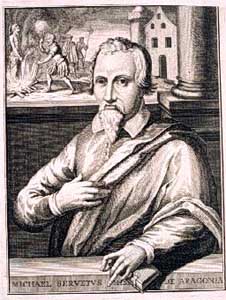 The following is part 7, concluding an excerpt from Presbyterians: Their History and Beliefs by Walter Lingle (John Knox Press, 1950). Click here to read part 1, part 2, part 3, part 4 ,part 5 and part 6.
Calvin and Servetus. It is sometimes said that John Calvin burned Michael Servetus at the stake. Servetus was burned at the stake just outside Geneva on October 27, 1553. John Calvin had some connection with the affair, and the part he played is not excusable in the light of the twentieth century, but it is not accurate to say that Calvin did the burning. Let us look at the facts.
Michael Servetus was a Spaniard with a brilliant but erractic mind. He renounced Roman Catholicism, but did not embrace Protestantism. He was a prolific writer and wrote vehemently against some of the most chedrished doctrines of Christianity. Both Catholics and Protestants considered his writings not only heretical but horribly blasphemous.
In 1553 Servetus was arrested by the Roman Catholic authorities in Vienne, France, and sentenced to be burned. While awaiting execution he escaped, and went direct to Geneva. With all the world before him, why did he go to Geneva when he had been warned to stay away? He knew that Calvin had many bitter enemies, and probably knew that at that particular moment the majority of the City Council were opposed to Calvin. The City Council had banished him once, and might be induced to do it again. Servetus probably went to Geneva to ally himself with the enemies of Calvin and thus help to overthrow Calvin and his work. When Calvin heard of the presence of Servetus in Geneva he reported the matter to the City Council. Bear in mind that Calvin was not a member of the City Council and that the majority of the Council were opposed to him. The Council arrested Servetus and put him on trial for heresy and blasphemy. John Calvin appeard as a witness against him.
After a long trial the City Council found Servetus guilty of heresy and blasphemy, and sentenced him to be burned. Accoring to the Old Testament, blasphemy was punishable with death. John Calvin urged the Council not to burn Servetus, but to take a more humane method of executing him. The Council refused. The whole story is a sad one, and Calvin does not appear at his best in it, but we should judge him by the light of the century in which he lived. The large majority of both Protestants and Catholics in that century approved of the death penalty for heresy and blasphemy.
Notwithstanding this blot and other blots on the name of Calvin which might be mentioned. Ernest Renan, the French skeptic and critic, had this to say aobut Calvin: “He succeeded more than all, in an age and in a country which called for reaction towards Christianity, simply because he was the most Christian man of his century.”
The Closing Years. The trial of Servetus was in reality a contest between Calvin and his enemies. Calvin won. The backbone of the opposition was broken. The last ten years were the most peaceful and in many respects the most fruitful years of his life.
John Calvin died on May 27, 1564, the year in which Willam Shakespeare was born. A noted scoffer intimates, in language which is none too reverent, that it was a blessed exchange for the world. But many informed and thoughtful people, with a full appreciation of Shakespeare, do not agree with the scoffer. Here is what Philip Schaff, the distinguised church historian, says: “Calvin’s moral power extended over all the Reformed Churches, and over several nationalities–Swiss, French, German, Polish, Bohemian, Hungarian, Butch, English, Scottish, and American. His religious influence upon the Anglo-Saxon race of both continents is greater than that of any native Englishman, and continues to this day.”
John Calvin: Christian Education
The following is part 6 of an excerpt from Presbyterians: Their History and Beliefs by Walter Lingle (John Knox Press, 1950). Click here to read part 1, part 2, part 3, part 4 and part 5.
John Calvin believed in Christian education. He believed that religion and learning should always go hand in hand. He accordingly organized a complete system of education in Geneva, beginning with the primary schools for children and ending with the Academy (or University) where young men might be prepared for the ministry and other walks of life. These schools were controlled and supervised by the church. Only Christian teachers were employed. Thus John Calvin set up standards for Christian education which have been admired and followed by Presbyterians from that day to this. Bancroft, the American historian, says: “We boas of our common schools; Calvin was the father of popular education, the inventor of the system of free schools.”
John Calvin: Erecting “the most perfect school of Christ.”
The following is part 5 of an excerpt from Presbyterians: Their History and Beliefs by Walter Lingle (John Knox Press, 1950). Click here to read part 1, part 2, part 3 and part 4.

courtesy of ReformationArt.com
The Consistory. The five pastors in Geneva and the twelve elders were organized into a Consistory. In some respects it was like the session in a modern Presbyterian church; in other respects it was somewhat like presbytery. It was the duty of the Consistory to govern the church and to administer discipline. It is well to keep in mind that Calvin was not able to put into practice his ideal for the free election of elders by the people, as the City Council insisted on having a part in their selection. So in the Consistory we see a mixing of the church and the civil government in a way that would be repugnant to Presbyterians today. But that was four hundred years ago.
The Consistory placed great emphasis upon discipline. Detailed rules for Christian living were drawn up, and it was the duty of the Consistory to see that the people observed these rules. The records show that people were disciplined for various offenses, including these: cursing and swearing, adultery, attempting to commit suicide, for spending their time in taverns, for playing cards on Sunday evenings, for arranging a marriage between a woman of seventy and a man of twenty-five, for singing obscene songs, for wife-beating, for betrothing a daughter to a Papist, and so forth. Thus they were disciplined for gross sins and for some that did not seem so gross.
Church attendance was made compulsory. Excuses given for non-attendance are interesting and some of them sound very modern. One man had to stay at home with a three-year-old child; another was too deaf to hear; another had to work on Sunday; still another had to stay at home and look after the house and cattle.
The Confession of Faith. Calvin and Farel had prepared a Confession of Faith and a Catechism before they were banished. These were revised and enlarged and adopted by the church. In the Confession of Faith and Catechism we have set forth in clear and fairly simple form the Calvinistic system of doctrine. This Confession of Faith was to have a marked influence upon Confessions and Creeds that were formulated later in France, the Netherlands, Scotland and England. While the Presbyterian Church gets its name from its form of government, it also stands for a system of doctrine. Presbyterianism and Calvinism usually go hand in hand.
Reforming Geneva. John Calvin, armed with the Bible as the word of God, the Confession of Faith, and the Form of Government and Discipline, with the Consistory behind him, set out upon the great task of reforming Geneva. In so doing, he started a movement which has profoundly influenced the whole of Christendom.
No man ever worked harder at a task than did John Calvin. He preached several times each week, taught theology, wrote commentaries, superintended a whole system of schools, wrote books and pamphlets, carried on an extensive correspondence with Reformation leaders all over Europe, and took oversight of the Reform movement in Geneva. He was interested in everything that affected the lives and welfare of the people. He believed that Christianity should be carried into every relationship of life. A distinguished historian states it this way:
“The material prosperity of the city was not neglected. Greater cleanliness was introduced, which is next to Godliness, and promotes it. Calvin insisted upon the removal of filth from houses and the narrow and crowded streets. He induced the magistrates to superintend the markets, and to prevent the sale of unhealthy food, which was to be cast into the Rhone. Low taverns and 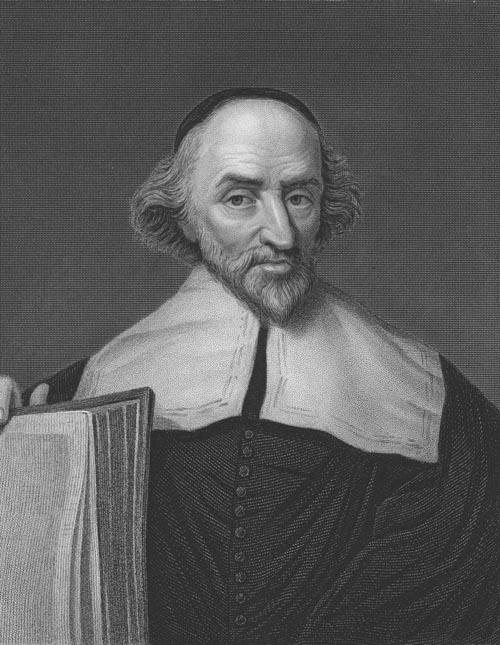 drinking shops were abolished, and intemperance diminished. Mendicancy in the streets was prohibited. A hospital and poor-house were provided and well-conducted. Efforts were made to give useful employment to every man who could work. Altogether Geneva owes her moral and temporal prosperity, her intellectual and literary activity, her social refinement, and her world-wide fame very largely to the reformation and the discipline of Calvin. He set a high and noble example of a model community.”
John Knox, the great Scottish reformer, was a refugee in Geneva during the years 1554-1559. He afterwards gave this testimony concerning the work of Calvin in Geneva:
“It is the most perfect school of Christ that ever was in the earth since the days of the Apostles. In other places I confess Christ to be truly preached; but manners and religion to be so seriously reformed, I have not yet seen in any place besides.”
John Calvin: Back By Popular Demand (Never Thought You’d Hear Those Words, Did You?)

The following is part 4 of an excerpt from Presbyterians: Their History and Beliefs by Walter Lingle (John Knox Press, 1950). Click here to read part 1, part 2 and part 3. Today marks John Calvin’s 500th birthday. May Calvin’s life, piety and ministry serve to reform yours by God’s glorious grace according to the Word of God.
Return to Geneva. After Calvin and Farel were banished, things went badly at Geneva. The immoral element got control, and the moral life of the city became unspeakable. The Roman Catholic Church made a determined effort to overthrow Protestantism. Visitors, strangers, and refugees who had come to Geneva because John Calvin was there ceased to come. The people of Geneva began to realize that John Calvin was a great spiritual, moral, and financial asset. There was a growing sentiment for his return.
In the autumn of 1540 the City Council sent an invitation to Calvin by a special messenger, urging him to return to Geneva. He made a cordial response but declined. They sent him one invitation after another, and brought great pressure to bear upon him. They even had William Farel write one of his characteristic letters pronouncing a curse upon him if he did not return. Feeling that the call must be from God, Calvin yielded and returned to Geneva, arriving September 13, 1541. There was great rejoicing and his friends gave hi a triumphal entrance into the city. But there were still bitter enemies who gave him no end of trouble in the years that followed.
Beginning Anew. John Calvin took up his work in Geneva where he had left off at the time of his banishment, and he did it without apology. Going before the City Council he urged the importance of having a thoroughgoing Form of Government and Discipline for the church and the city. The doctrine of complete separation of the church and the civil government, as held by Presbyterians today, was not held in Geneva, nor anywhere else in those days.
The City Council approved of Calvin’s request and appointed a committee, with Calvin as chairman, to prepare the necessary documents. In due time he presented the City Council with a very complete Form of Government and Discipline for their approval. In this notable document we have what Calvin believed to be the Scriptural principles of church government and discipline.
As stated above, Calvin went back to the bible for everything pertaining to the church–for government, doctrine, worship, discipline, and life. When he studied church government in the Bible he did not find any popes, cardinals, archbishops, and bishops, such as he had known in the Roman Catholic Church from his youth up. Instead he found a church with a very simple form of representative government by elders. He also found in the Bible other church officials called pastors, teachers and deacons. So in the Form of Government drawn up by Calvin there were pastors, elders, deacons, and teachers. When the City Council approved of this Form of Government, the church in Geneva became a Presbyterian church in fact, if not in name. It was called the Reformed Church.
John Calvin: Pastor, Reformer and Husband
The following is part 3 an excerpt from Presbyterians: Their History and Beliefs, by Walter L. Lingle (1950, John Knox Press). Read part one here. And read part two here.
 Begins His Work in Geneva. John Calvin began his work in Geneva on September 1, 1536, by preaching a sermon in St. Peter’s Cathedral. The sermon created a sensation, and the people crowded around him insisting that he must preach again the next day. What was it about the sermon of this twenty-seven-year-old preacher that created such a stir? It was simply an expository sermon on one of Paul’s Epistles. That does not sound very sensational to us, but it was something new to that audience. They had never heard any opening up of the Scriptures like that. This sermon was followed by many more just like it. John Calvin became a great expository preacher and a great interpreter of the Scriptures. It is here that we find the main secret of his power. He went back to the Bible for everything relating to the Christian life and to the church. The Bible was the seat of authority in religion so far as John Calvin was concerned. To the Roman Catholic the church was the seat of authority. The results of the kind of preaching and teaching that John Calvin did were summed up by Thomas Carlyle in the following paragraph: “The period of the Reformation was a judgment day for Europe, when all the nations were presented with an open Bible and all the emancipation of heart and intellect which an open Bible involves.” No man did more to open up the Bible for the people of his generation and all generations than John Calvin did.

Courtesy of ReformationArt.com
The Reformer.
But Calvin was more than a preacher; he was a reformer. He felt called upon to reform the religion and morals of all the people of Geneva. He and Farel accordingly prepared a Confession of Faith, a Catechism, and a Book of Discipline. After these had been approved by the City Council on July 29, 1537, all citizens of Geneva, men and women, were ordered to give their assent to these standards and to live by them. Many gladly gave their assent, but many others refused. A great furor was raised. This opposition grew until it resulted in the banishment of Calvin and Farel from Geneva by the City Council on April 22, 1538. Farel settled in Neuchatel and never returned to Geneva. Calvin went to Strassburg, a Protestant city of Germeny, with no thought of ever returning to Geneva.
Strassburg received Calvin with open arms, and promptly made him assistant professor theology in their new Protestant College. There were many French-speaking, Protestant refugees in Strassburg. Calvin organized them into a church and became the pastor. In this church he was able to put his ideals for a churhc more fully into practice than he had been able to do in Geneva because of the interference of the City Council.
Calvin followed a very simple order of service in his church. Emphasis was placed upon the reading of the Scriptues and prayer. There was congregational singing, which was not usual in the Roman Catholic Church. They sang from a French translation of the Psalms. There were no musical instruments in John Calvin’s church. The sermon occupied the central place. In the Roman Catholic Church the altar was central.
In August, 1540, Calvin married Idelette de Bure, a widow with a small son and daughter. William Farel, in writing to a friend, said that she was “not only good and honorable but also handsome.” She and Calvin seem to have been very happy together. They had one son who died a few hours after birth.
John Calvin: From the Institutes to Geneva
The following is part 2 an excerpt from Presbyterians: Their History and Beliefs, by Walter L. Lingle (1950, John Knox Press). Read part one here.
Publishes His Institutes. In the spring of 1536, Calvin published a profound little book on theology, which he named The Institutes of the Christian Religion. Today we would call it a book on systematic theology. The book created a real sensation, and theologians knew that a new star of the first magnitude had arisen on the theological horizon. Calvin kept on revising this little book for the next twenty-three years, until it grew into two large volumes. He lived to see this work translated into practically every language of Europe. Theologians still study and refer to “Calvin’s Institutes.”
Find His Life Work in Geneva. John Calvin was only twenty-seven years of age when he published his Institutes, but from that time on he was a marked man. The publication of that book probably determined his life work. It came about in this way. As the persecutions of Protestants in France grew more severe, Calvin decided to leave France and pass over into the Protestant part of Germany. The safest journey was through Switzerland. So one hot night in August, 1536, he pulled up at an inn in Geneva to spend the nigh expecting to continue on his journey the next day. But God had other plans for him.
William Farel, a fiery Protestant with red hair, glittering eyes and a thunderous voice, had begun Christian work in Geneva in 1532. Under his preachng a great deal had been accomplished. He had blasted away the debris of centuries and laid the foundation for real constructive leadership. When Farel heard that John Calvin, the author of the Institutes, was in Geneva, he felt that he had come to the kingdom for such a time as this. So he sought him out and invited and implored him to remain in Geneva and help him. Calvin begged to be excused that he might continue on his journey and devote himself to his studies.
Let Calvin tell the rest of his story as recorded in the Preface to his Commentary on the Psalms: “Then Farel, finding he gained nothing by entreaties, besought God to curse my retirement and the tranquility of my studies if I should withdraw and refuse to give assistance when the necessity was so urgent. By this imprecation I was so struck with terror that I desisted from the journeyI had undertaken, but being sensible of my natural timidity, I would not bring myself under obligations to discharge any particular office.” So John Calvin, who had planned to spend only one night in Geneva, spent the rest of his life there, with the exception of about three years which he spent in exile in Germany.
It’s Calvin Week!!!
 As most of my readers are well aware, this Friday marks the Quincentenary of sixteenth century Genevan Reformer, John Calvin. That is, the 500th anniversary of his birth. This week, and some of the next if necessary, I will be featuring a short biographical chapter on John Calvin’s life from a book called Presbyterians: Their History and Beliefs, by Walter L. Lingle, published originally in 1944 by John Knox Press [fourth printing (revised), 1950]. I will feature this primarily in the effort to introduce John Calvin to those of my readers who are not so familiar with his life and ministry, or to reintroduce him to those who suffer from the many misconceptions about his life. For more information about Calvin and the Quincentenary celebration, see Calvin500.org.
Our Debt to Calvin. Presbyterianism is deeply indebted to John Calvin. As we have seen in previous chapters, Presbyterianism is rooted and grounded in the Holy Scriptures. But as we saw in Chapter II, the Presbyterian doctrines and principles that are contained in the Bible became buried beneath centuries of ignorance, superstition, and traditions. John Calvin went beneath all this debris of centuries, resurrected the doctrines and principles of Presbyterianism, and organized the modern Presbyterian Church. That was about four hundred years ago.
We in America are more indebted to John Calvin than most people realize. The doctrines and principles which he released have made a large contribution to our representative form of government and the human freedom which we enjoy. Ranke, the German historian, says: “John Calvin was the virtual founder of America.” D’Aubigne, the French historian, says: “Calvin was the founder of the greatest of republics,” referring to the United States. Bancroft, the American historian, says: “He that will not honor the memory and respect the influence of Calvin knows but little of the origin of American liberty.” Presbyterians should at least know the outline of the life of the man to whom they are so deeply indebted.
Early Years. John Calvin was born in Noyon, a cathedral town of France, fifty miles northeast of Paris, on July 10, 1509, of Roman Catholic parents. His father planned to educate him for the priesthood, and gave him the best education that was obtainable. At the age of fourteen he entered the University of Paris, where he studied Latin, Logic, and Philosophy. Later he decided to study law, and spent several years studying at the Universities of Orleans and Bourges, under the greatest professors of law that could be found in France. It would be interesting to know how much his legal training influenced his theological thinking.
After the death of his father, John Calvin, free to make his own choice, decided to devote himself to the study of literature. His studies included the Latin, Greek, and Hebrew languages and literature. The first book he ever wrote was a commentary on Seneca’s Treatise on Clemency. In this commentary Calvin quotes from fifty-six Latin and twenty-two Greek authors. This gives us some intimation of his familiarity with Latin and Greek literature.
Conversion to Protestantism. We do not know the exact date of his conversion from Roman Catholicism to Protestantism, but it was sometime in the year 1533. His conversion was probably gradual. His study of Latin, Greek, and Hebrew literature led him to the study of the Bible in those languages. These studies also threw him with men and women who were devotees of the New Learning, some of whom had already embraced the Protestant faith. Soon after his conversion to Protestantism he found it necessary to flee from Paris for his life. During the next three years he lived in hiding under an assumed name. Much of this time was spent in the private libraries of friends. He was hard at work, and, best of all, he was thinking and praying.
The “Deformed” Theological Pedigree of Murder
Here’s an interesting article from the Weekly Standard on the theological background of those who believe it’s justifiable to murder abortion doctors. What’s scary about it is how people can get so close to the truth and then twist it to extremes. The other scary thing is how closely tied to Reformed theology this aberration is.
Wake Up, America!
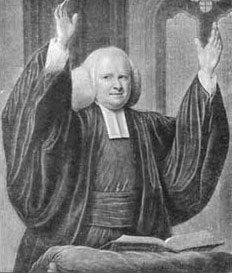 Read Burk Parson’s Tabletalk Magazine article, “A Sower Went Out To Sow . . . ” in which you will be introduced to George Whitefield, the great Calvinistic Methodist evangelist who, along with Jonathan Edwards (of “Sinners in the Hands of an Angry God” fame–aka, “the theologian of revival“), and John Wesley, for whom “the world [was his] parish,” with his earnest and sometimes blunt preaching, was the agent of God in the First Great Awakening.
As I read Parson’s article, it occured to me that I’ve heard evangelicals praying for and even “claiming” revival all of my life, with little to show for it, but a few enthusiastic excesses on the fringe of the charismatic movement. Considering the cultural climate in which we now live, perhaps God is bringing the American people to a greater place of hunger and thirst after righteousness. Pray for revival as we are all providentially confronted with some harsh economic and cultural realities. But, lest another explosion of error results, pray for reformation along with revival. Revival without reformation will bring spiritual life, but can also spread doctrinal error; reformation without revival will improve the church’s theological integrity whether or not spiritual integrity accompanies it. Reformation and revival is what America desparately needs.
Calvinists Make “Craig’s List”
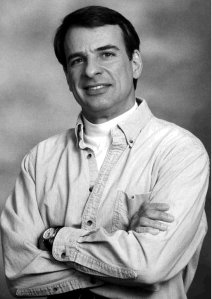
Critic of Calvinism, William Lane Craig
Tuesday on Reformed apologist James White’s webcast, The Dividing Line, Dr. White was playing clips of an interview with evidentialist apologist William Lane Craig in which he discusses how much respect he has for Roman Catholicism, yet why he continues to remain a Protestant. Craig’s language is awash with his politically correct manner as he ever so politely points out that the doctrine of justification by faith alone is “a key Protestant insight.” Insight? Martin Luther called it the doctrine on which the church stands or falls, but Dr. Craig presents it simply as an insight. Well, Dr. Luther–you discovered that the Bible teaches that “The just shall live by faith”? How insightful! Somehow, it just doesn’t seem to work.
At one point in the program, Dr. White takes a call from a man who informs him that he sent Dr. White a disk with a debate between William Lane Craig and arch-atheist, Christopher Hitchens. The caller informed Dr. White that Hitchens asks Craig if there is any Christian group he considers to be truly heretical. Astonishingly, Dr. William Lane Craig, who happens to hold to a doctrine of God’s sovereign election developed by a Jesuit priest (yes, that’s Roman Catholic) named Luis de Molina (the doctrine is called “Molinism“–a doctrine James White considers to be about as realistic as Star Trek), bypasses the Roman Catholic doctrine of justification by faith and works, and pins the heresy tail on that pesky doctrine called Calvinism! Yeah, according to William Lane Craig, there are a lot of born again Roman Catholics running around, but you better watch out for that doctrine that was affirmed by the majority of the earliest Protestants.
It was this little episode that got Angel Contrares’ creative juices flowing. Angel is the professional clown caricaturist who drew my picture of Captain Headknowledge for this blog. You really need to visit James White’s blogpost on this and see Angel’s latest creation! It’s a beaut!


 The Misadventures of Captain Headknowledge
The Apocalyptic Book of Daniel
DANIEL, THE BOOK OF, is the earliest example of apocalyptic literature, and in a great degree the model, according to which all later apocalypses were constructed. In this aspect it stands at the head of a series of writings in which the deepest thoughts of the Jewish people found expression after the close of the prophetic era. The book of Enoch, the Jewish Sibyllines, and the fourth book of Ezra [2 Esdras], carry out with varied success and in different directions, the great outlines of universal history which it (Daniel) contains; and the “Revelation” of Daniel received at last its just completion in the Revelation of St. John. Without an inspired type it is difficult to conceive how the later writings could have been framed; and whatever judgment be formed as to the composition of the book, there can be no doubt that it exercised a greater influence upon the early Christian Church than any other writing of the Old Testament, while in the Gospels it is specially distinguished by the emphatic quotation of the Lord (Matt. 24:15).
Share this: