Rob Bell on the Hot Seat
This week, Bell has been making the national television circuit, being interviewed about his controversial new book, Love Wins: Heaven, Hell and the Fate of Every Person Who Ever Lived (2011, HarperOne). He appeared on Good Morning America, where he was thrown a couple of softballs by George Stephanopolous, but I just watched the YouTube video of his MSNBC interview with Martin Bashir, where he is given a good, tough interview in which many hard questions were asked. Justin Taylor (the one who started all this online controversy) posted the Bashir interview and one of the commenters informs us that Bashir is a member of Redeemer Pres in New York, pastored by Tim Keller. Knowing that, it all makes sense.
Thanks for the smart, tough journalism, Martin Bashir!
Here’s GMA’s puff piece:
And here’s the good interview by Martin Bashir on MSNBC:
James White on the Bad News of Rob Bellion
The following video by Reformed Baptist apologist, Dr. James White of Alpha and Omega Ministries, applies some critical thinking skills, and with a small amount of research, shows how inaccurate and naive Rob Bell is to perpetuate the common skeptical theories about how many aspects of the gospel of Christ are based on pagan mystery religions. He makes several very helpful remarks that will fortify your defense of the reliability and historicity of the New Testament accounts of Christ. Dr. White posted this video here. You may also benefit greatly by any of his other 512 videos uploaded to his YouTube channel, DrOakley1689.
Pirate Christian Radio podcaster Chris Rosebrough treated this same Nooma video by Rob Bell back in July of 2009. His Fighting for the Faith podcast episode was called, “Deconstructing Rob Bell’s False Gospel.” Rosebrough goes into a lot more detail, but both provide fascinating presentations of the sloppy scholarship of the skeptics, and the fact that answers are out there which support the authenticity of the New Testament. Every Christian who interacts with unbelievers needs to prepare himself with these answers so that he might give a sound defense of the hope that is within him with gentleness and respect (1 Peter 3:15).
“Rob Bellion” is as the Sin of Witchcraft!
In past years, one of my children was exposed to the teaching of Rob Bell by means of at least one of his Nooma videos played in my former church’s youth group, and presumably in some ways through his influence on the teacher of that class. Knowing his interest in Bell’s teaching, and being singularly interested in keeping up with who’s teaching what, I urged him a number of times that Bell’s teaching is not good for an orthodox church. The rest of the time I would tease him in a good-natured, but persistent way, that “Rob Bellion” is as the sin of witchcraft! This is my own personal play on the KJV’s translation of Samuel’s words to Saul when he refused to obey the Lord’s commands regarding the spoils of his fight with Amalek, whom he was to wipe out entirely as God’s appointed means of judgment against them for the way they attacked the children of Israel at Rephidim while they were still lead by Moses and the pillar of cloud and fire (1 Samuel 15:23; cf. Ex. 17:8-16; Deut. 25:17-19). Notice from the parallel line of 1 Samuel 15:23, that Saul’s “rebellion” is tantamount to a rejection of the word of the LORD regarding his plans to judge and destroy his enemies (see the whole passage, 1 Samuel 15:1-35). Such is the heresy of the universalist Rob Bell.
Justin Taylor at “Between Two Worlds,” a Gospel Coalition blog, shows Bell’s promotional material related to his latest book, Love Wins: Heaven, Hell and the Fate of Every Person Who Ever Lived, surely not to help sell his book, but to raise our awareness of how Bell’s trajectory towards theological liberalism is becoming more and more apparent in his growing trend of teaching the heresy of universalism. This is the doctrine that, in eternity, regardless of one’s reception or rejection of Christ during his lifetime, everyone will be forgiven and reconciled to God, and none will justly spend eternity hell. It’s funny how so many people who break the law wind up complaining about the fact that they had to suffer the consequences of their crime. This is analogous to the fact that unbelievers find the doctrine of eternal conscious torment in hell so unattractive. Hell, condemnation and the righteous judgment of an infinite, eternal and holy God is bad public relations for Christianity, if you listen to Rob Bell. But compare the concept of universalism with what the Lord Jesus said in John 3:16-21:
“For God so loved the world, that he gave his only Son, that whoever believes in him should not perish but have eternal life. For God did not send his Son into the world to condemn the world, but in order that the world might be saved through him. Whoever believes in him is not condemned, but whoever does not believe is condemned already, because he has not believed in the name of the only Son of God. And this is the judgment: the light has come into the world, and people loved the darkness rather than the light because their works were evil. For everyone who does wicked things hates the light and does not come to the light, lest his works should be exposed. But whoever does what is true comes to the light, so that it may be clearly seen that his works have been carried out in God.”
Here, Christ clearly states that the condition for escaping condemnation is faith in him. Reader, be clear: if you do not trust the Christ of the Scriptures, not the Christ of any cult’s misinterpretation or “reimagining” of him, not the Christ of the Gnostic gospels, but the Jesus Christ of historic, apostolic, catholic, orthodox, evangelical Protestant Christianity, then you are already under the condemnation of God. If you persist in this unbelief, you will not be saved in the end. Your end will be the Lake of Fire (Revelation 20:11-15). Confess that you are indeed a sinner, repent by turning from your sins and cling to Christ (Acts 26:18) who suffered for sinners in every nation, sinners like you (1 John 1:8-10). Reject your false gods and goddesses (you know who you are!), and run to Christ, who lives to justify the wicked who repent and believe.
With Rob Bell, on the issue of universalism, finding the error in his teaching is no longer a matter of reading between the lines. Watch the video below and you will see Bell himself explain how we need to deny the Biblical doctrine of eternal, conscious torment in Hell because it makes people reject Christianity. Apparently, what the world thinks about Christianity is more important to Bell than what God reveals in his Word. Read Taylor’s post, “Rob Bell: Universalist?”
If you find that your church has been, or is being exposed to the teachings of Rob Bell, I would suggest that you present the facts regarding Bell to your pastor and patiently, but persistently, help them see that he is not just an emerging evangelical postmodern hipster, but a theological liberal of the first order whose materials ought to be avoided by every church and Christian that loves the Word of God. This is a process I had the regretful duty of engaging in myself back then.
This article by former co-founder of Brian McLaren’s Emergent Village, Mark Driscoll (who later separated from them when they began showing signs of postmodern liberalism) navigate what he calls “The Emerging Church Highway.” It would also behoove you to read D. A. Carson’s book, Becoming Conversant with the Emerging Church: Understanding a Movement and It’s Implications (2005, Zondervan).
Full Confidence Conference Coming to Fort Worth This Weekend!
Just to give you a heads up, this Friday night, February 18, 2011 (that’s tomorrow night from the time of this posting), my wife and I will be attending the Fort Worth wing of the Full Confidence Conference Tour put on by Westminster Theological Seminary in Philadelphia, Pennsylvania and hosted by Grace Community Presbyterian Church (PCA) with a small group of friends from my church. In the light of many assaults on the inspiration, inerrancy and authority of Scripture in both the broadly evangelical world, and even the Reformed tradition itself in a few cases, WTS has been traveling the country to reaffirm and build up the Body of Christ to have full confidence in the Word of God.
The Fort Worth, Texas conference is going to feature as speakers, Dr. K. Scott Oliphint (elder brother of GCPC’s pastor, Rev. Kyle Oliphint), Dr. Tim Witmer, Dr. David Garner and Dr. John Currie. You can read their bios at the Full Confidence link above. Pastor Kyle Oliphint has been preaching a series on having full confidence in the Word of God for the past three weeks. I’ve been following them and will share the links next week, but if you want to hear them now just find the link to GCPC’s podcast from their church website and listen for yourself. An exciting bonus for my church, Mid-Cities Orthodox Presbyterian Church, in Bedford, Texas, will have the honor of welcoming Dr. Scott Oliphint to preach in our morning service the Lord’s Day following the conference, Sunday, February 20. I’ll post a link to his sermon as it becomes available.
Here’s a video intro of the conference by one of our speakers:
The YouTube Bible
One of my “Featured Sites” (see sidebar) is the King James Bible Trust, an online resource for the ongoing British commemoration of the quadricentennary of the King James Version of the Bible. Check it out, if you haven’t done so already. The King James Bible Trust features a calendar of events taking place around the UK and the US, music and writing competitions, but one of my favorites is their YouTube Bible, “the King James Bible Trust’s ambitious project to create a complete reading of the King James Bible on YouTube. Our readers will comprise of actors, sportsmen and women, musicians, politicians and most importantly … YOU!” Anyone can submit a video of his own reading any chapter from the KJV that has yet to be contributed to the YouTube Bible (see this list). Below is a sample for your enjoyment. Subscribe to the page and watch them as they are added.
I <3 Gravatars!
A couple of weeks ago, I discovered all the extra features available for my “gravatar” and fell in love! If you don’t know what a gravatar is, look down at the “Recent Comments” widget in my sidebar. See the square picture of Captain Headknowledge next to a recent comment? Hover your pointer over it. Did the black box appear with links and a little about me? Now, do you see the recent comments by others at the same spot? A one-color design instead of a picture of themselves. To me, they look like square snowflakes. That means these guys haven’t signed up for a gravatar.
Since I took advantage of all of the gravatar’s features, it now also appears at the bottom of each of my blog posts. See below where it says, “About John D. Chitty?” Then it features my gravatar and to the right it shows my new slogan. If you don’t see it, that means you’re on the home page. Click on this posts link so you see the reply box. Now you should see it.
Watch the following video showing you what a gravatar can do for you, and then sign up at Gravatar.com. I’m tired of looking at those square snowflakes. I want to know more about you!
White/Moorman KJV Only Debate on YouTube!
For those of us who missed the debate live (though not for a lack of trying–my computer is a mess!), the live London debate on the exclusive use of the King James Version between Dr. James White and Dr. Jack Moorman has been posted on YouTube by one viewer. Here it is for your (and my) viewing pleasure:
The Legacy of the King James Bible: Celebrating 400 Years of the Most Influential English Translation
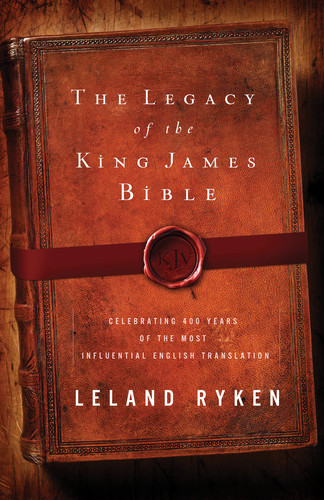 Crossway Books is contributing to this year’s celebration of the 400th anniversary of the publication of the King James Bible with the help of Wheaton College professor of English, Dr. Leland Ryken, author of The Legacy of the King James Bible: Celebrating 400 Years of the Most Influential English Translation. In promotion of this title, Justin Taylor has conducted a concise interview with the author in three parts over at the Crossway Blog. You can watch:
“How Did the King James Bible Come To Be? (Part 1)”
“The Growth of the King James Bible (Part 2)”
“The Influence of the Bible on Literature & Culture (Part 3)”
Don’t miss this opportunity to be reminded of the significance of this venerable Bible translation. As a former radical King James Onlyist who now understands that the world of Bible translation was not supposed to come to a screeching halt with the publication of the KJV, I have often been distressed by the way so many who likewise recognize the need to keep retranslating the Bible would make disrespectful swipes at the KJV. This betrays an arrogance and an ignorance that only the new is worthy of our time. But how much we miss by not familiarizing ourselves with our own history and culture. The fact is that throughout the history and the development of the culture of the English-speaking world, the King James Bible has had a constant and influential presence–and the entire world has been the better for it. Perhaps, too, it’s time that all cultures found something to appreciate in it for a change.
Christianity and Liberalism Revisited
Here’s a conference I wish I could attend. Believe it or not, I first discovered J. Gresham Machen’s book Christianity and Liberalism in a catalog for Peter Ruckman’s bookstore in the mid-nineties (see also here and here), but I only read it about two years ago. Growing up I was conscious of my fundamentalist pastor talking about “modernism,” but only had a very vague notion of what that might be. So vague, in fact, I couldn’t then, nor could I now define with any certainty just how much I understood about it then.
It is so important that Christians understand that the most basic and foundational thing about Christianity is not how you live, it is what you believe. This is not a denial of the importance of how you live, just a denial that it is what makes you a Christian. Actually, how you live is the product or fruit of what you believe. If you live the cleanest life in the most loving and charitable way, yet deny the deity of Christ, the trinitarian nature of God, or the virgin birth of Christ, etc., then you are not a Christian. This is what liberalism is, although it is so much more at the same time. It exalts the necessity of works over the necessity of orthodox doctrine. That’s why Machen said liberalism is not another form of Christianity, it is an entirely different religion.
Balm for Believing Victims of Christianity
The following is a sermon by Lutheran (Missouri Synod) Seminary professor, Dr. Rod Rosenbladt, who is also co-host of The White Horse Inn radio show. The title of the sermon is “The Gospel for Those Broken by the Church.” He addresses two kinds of believers who have given up on going to church: the “sad,” who feel they couldn’t measure up, so they quit trying; and the “mad,” who’ve been “used up and spit out” by the church, or who have been justly scandalized by Christianity’s many historic misdeeds. Dr. Rosenbladt’s premise is that the good news of Christ’s cross and blood shed for sinners will save not only the pagan unbeliever, but also the wounded believer who, for whatever reason, has given up on Christianity.
In some ways, Dr. Rosenbladt’s presentation may come off a bit academic, but if you hang with him, you’ll find that the heart of the message is clear as a bell. If you’ve got friends or relatives who are mad or sad at the church, please forward this post to them.
Did Jesus Even Exist?
There’s a growing trend in the realm of skepticism to claim that there is no historical proof that Jesus ever existed in the first place. They believe the contents of the canonical Gospel narratives to have developed during the century following whatever may have actually happened in the first century that caused a group of men to scatter across the Roman Empire and start claiming that the Jewish Messiah had arrived, bringing the kind of Kingdom no one expected–one that would encompass all nations. Technically, the eyewitness accounts that initially testified of his life, ministry, death, resurrection and ascension are sufficient. But usually, only Christian believers and honest historians accept the four Gospels as historically reliable. Others demand supplementary evidence. There’s plenty. Until the late twentieth century, the evidence that currently stands satisfied the demands of historical scholarship. Now, some radical skeptics have imposed a double standard on Jesus and raised the bar, just so they can feel their arguments have more merit. When one’s argument is weak, sometimes the only way it can survive is by putting down the other side.
Anyway, I found an awesome series of YouTube videos presenting some of the major extra-biblical historical references that have provided the evidence for the existence of Jesus of Nazareth. It also defends these citations against common “skeptical interjections.” I think the man who made these did a terrific job. These videos were apparently produced by the folks who run a website called “The Divine Evidence.” I know little about them other than the good job they did in this video presentation, but you can read their “About Us” on the homepage for more info.
On with the show…
WHI on the Effects of eDistraction
This week’s episode of the White Horse Inn radio show featured an interview with Grove City College Media Ecology professor T. David Gordon. Gordon is the author of two books that are of special interest to this blogger and will be hopefully to his readers also. The books are Why Johnny Can’t Preach (2009) and Why Johnny Can’t Sing Hymns (2010).
Why Johnny Can’t Preach is “an analysis of shifts in dominant media forms and their effects on the sensibilities of the culture as a whole. Many of those shifts have profound, and unfortunate, effects on preaching.” About Gordon’s newer book, Why Johnny Can’t Sing Hymns, the publisher’s website has this to say:
Changes in music have affected the way we think, the way we worship—even the way we are able to worship. We are steeped in a culture of pop music that makes other genres seem strangely foreign and unhelpful. Worship has become a conflict area, rather than a source of unity.
T. David Gordon looks at these changes in worship and not only examines the problems, but also provides solutions. They are solutions of great importance to us all—because how we sing affects how we live. Dr. Gordon not only shows the problems, he also provides solutions – it’s important, because how we sing affects how we live.
The White Horse Inn blog has also posted additional resources on the current phenomenon of media distraction and its effect on our minds, as Christians or otherwise, let alone culture at large (see blogpost here).
Meet the Godfather of Fundamentalism, J. Frank Norris
Fairfax, Virginia Baptist Bible Fellowship local church pastor David Stokes grew up as a member of Detroit’s Temple Baptist Church, not twenty years after J. Frank Norris pastored that church at the same time that he pastored First Baptist Church in Fort Worth, Texas. In his day, Norris was known as the “Texas Tornado,” and the “Pistol-Packing Parson.” The memory of J. Frank Norris casts a long shadow for those whose lives were touched by his sensationalistic and controversial ministry. It must be as true for those like Stokes who grew up in the decades following Norris’ death, as it is for us down here in Fort Worth, who boast of relatives with stories of personal connections to the famous fundamentalist firebrand. For example, my own mother grew up playing with Norris’ grandson, George. He was my mother’s best friend’s boyfriend. My great-grandmother hosted the visiting preacher at her house, where lively discussions are said to have ensued between Norris and my great-great grandmother, charming them with the admission that “the only person who could ever change his mind was Mrs. Freeman.” Not only that, J. Frank Norris even performed the wedding ceremony for my first wife’s grandparents. For better or worse, J. Frank Norris is one of the more colorful cast members in the dramatic history of Fort Worth, Texas. Featuring his battle with the Southern Baptist Convention over Baylor University’s teaching evolution and his own personal war against corruption in local politics as well as the Prohibition-era liquor trade itself, I’ve always said, even as a one-time devoted follower, that the life story of J. Frank Norris would make a great gangster movie!
It looks like the novel on which that movie could be based has just been written by David Stokes. The book is called Apparent Danger: The Pastor of America’s First Megachurch and the Texas Murder Trial of the Decade in the 1920’s. Just a couple of weeks ago, Stokes held a book signing at Barnes and Noble just a few blocks away from the site of FBCFW during Norris’ ministry. On his Facebook page, Stokes reports that about a hundred people turned out for a book and an autograph, and even an unnamed “very nice” 91 year-old former associate of Norris protested his book by passing out a pamphlet with the title “The Real J. Frank Norris.”
My only regret is that I first heard about the book the day after the signing. But now I have my copy, and I’m currently reading it aloud to my wife so that we might enjoy it together. Enjoying it, we are. I let Bob Hayton of the blog Fundamentally Reformed know about it, and he said he plans to review the book on his blog after he reads it, to which I will dutifully link you when it’s posted. But in the meantime, allow me to whet your appetite for the book with the following trailer. If you’ve never heard of him, or if you’ve always known about him–love him or hate him, you’ll be both shocked and in awe of the story of J. Frank Norris and the trial that failed to sentence Norris to “Sparky,” the state of Texas’ newly acquired electric chair for the death of D.E. Chipps.
Jack Chick Earns the Respect of the Underground Comics Industry

Rare photo of the reclusive and elusive Jack Chick
I should probably save this for another time when I’ve got more time to write all that I have to say about Jack Chick and his world famous “Chick tracts,” (see his site, Chick Publications) but I can’t wait to at least show you the trailer for a documentary about Jack Chick and his comic books and comic book-style tracts. As it relates to me, Jack Chick is one of the instrumental causes of my dropping out of Bible College. I didn’t do my homework because I was too busy devouring his comics purchased from a nearby Christian bookstore.
Anyway, the following trailer features mostly the ways Chick’s views are poked fun of in the film, but if you ever get a chance to watch the documentary itself, as I did on the Documentary Channel a few days ago, you would see how much the filmmakers and even some of the non-Christian interviewees have for his comics as works of art. They say his work is even featured in galleries across the country and I think they said it even has a presence at comic book conventions and other such forums in which such material is auctioned. Jack Chick is collectible. All you fundies out there better hold onto at least a few copies of his tracts in case you need to cash them in once the economy completely collapses!
The picture to the right was found on the site of Catholic lay apologist Jimmy Akin’s website. He found it on the church website of an Independent Fundamental Baptist church whose pastor (right) has a testimony similar to that of the “Bad Bob” featured in the Chick tract of the same name held by the author (aka, Jack Chick himself, left). If you want to read about this picture and the hand-drawn portrait of Jack Chick at the Catholic apologist’s website, click here, here, and here. They make for fascinating reading, and serve as a little background info to some things I may share in a future post when I’ve got more time.
Below is the trailer to God’s Cartoonist: The Comic Crusade of Jack T. Chick.
Oh yeah, there are a few bios you will want to read on Jack Chick and his associates at Wikipedia in conjunction with this video:


 The Misadventures of Captain Headknowledge
Should 1 John 5:7 Be In The Bible?
Interested in learning more? Select from this list of articles relevant to 1 John 5:7 at Bible.org.
Share this: