Memoir of the Rev. John Brown, part 1
Brown’s Self-Interpreting Bible (1859) contains an extensive biography of the editor. It’s a great story, but it’s going to take quite a while to get the entire thing transcribed and posted. In the meantime, I’ll be mixing it up a little with other features from my new favorite study Bible. The author of this biography is not credited. But you can download Robert Mackenzie’s 1918 biography, John Brown of Haddington, in a 178 page PDF file from Still Waters Revival Books for 99 cents at this link.
The REV. JOHN BROWN was born in the year 1722, at Carpow, a small village in the parish of Abernethy, and county of Perth. His parents ranked in that class of society who earn their bread by the sweat of their brow. His father could boast of no rent-rolls, nor had he any title of honour, save that of an honest man and an industrious mechanic, who, during the greater part of his life, laboured in the profession of an operative weaver. Though destitute of all the advantages arising from a regular education, he was nevertheless a man of considerable intelligence, moral worth, and Christian sincerity. He made conscience of keeping up the worship of God in his family, and set a Christian example before them, though living in a neighbourhood remarkably careless of these things. His external circumstances were so narrow, that it was little he could afford to promote the intellectual improvement of his son; so that the subject of this momoir found his situation in this respect but little superior to that of his father. He was sent to school; but the time allowed him to acquire the elements of reading, writing, and arithmetic, was so very short, that nothing but an excellent genius, and the most intense application, could have enabled him to attain the ordinary education of the lowest orders in the country. This, however, with one solitary month which he bestowed on the Latin, and that without the consent of his parents, appears to have been all the regular education he ever received, till we find him studying philosophy and divinity under the superintendence of the Rev. Ebenezer Erskine and James Fisher. It does not appear that his father ever intended him for the church, or even contemplated the possibility of his accomplishing such a design; though the strong propensity of his mind to learning, and particularly to that species of learning the nearest allied to divinity, seems to have suggested to his mother the possibility, that the day might come when his literary predilection might find room for its gratification in the service of the church; and often and again has she pictured to herself that happy day, when her darling child should emerge from his obscurity, clothed in the emblems of the most honourable employment—an ambassador of the Prince of Peace. In the mean time, his personal piety, the most important of all the prerequisite qualifications for an office so sacred, afforded her the lively hope that his labours, should her ardent wishes be ever realized would not be in vain in the Lord. In a short narrative of his experiences written by himself, Brown acknowledges the delight which he had while at school, in committing to memory the Catechisms of Vincent, Flaw, and the Westminster Assembly; and the profit he afterwards derived while yet a boy, from the perusal of the Bible, Rutherford’s Letters, and Gouge’s Directions how to Walk with God, His God was preparing him inconsciously for the service of Christ. He had separated him from the womb, and was even now calling him by his grace, (Gal. i. 15.) that he might reveal his Son in him, and send him to preach. In the same memoir he records the solemn impressions made on his young mind, by witnessing the dispensation of the Sacrament, and listening to the addresses delivered during the service; and, from his experience of profit argues against the impropriety of excluding children from witnessing a service so calculated to engage the affections. This exclusion appears to have been practiced in the Church of Scotland at the commencement of last century; and was perhaps a remnant of Episcopal feeling, remaining after the restoration of Presbytery. “About the eighth year of my age,” says he, “I happened, in a crowd, to push into the church at Abernethy, on a sacrament Sabbath. Then it was common for all but intended communicants to be excluded. Before I was excluded I heard one or two tables served by the minister, who spake much to the commendation of Christ, which in a sweet and delightful manner so captivated my young affections, as has since made me think that children should never be kept out of the church on such occasions.”
“Bunyan, Brown and Boston”

John Brown's Self-Interpreting Bible (1859)
“For now I’m grown sae cursed douce
I pray and ponder butt the house;
My shins, my lane, I there sit roastin’,
Perusing Bunyan, Brown, an’ Boston,”
These lines are from a Robert Burns poem of 1789 entitled, “Epistle To James Tennant of Glenconner.” (The rest of his poetry is linked to from this page) The final line of this excerpt features the names of three figures from church history: John Bunyan, John Brown, and Thomas Boston. This poem references these writers in passing, highlighting what household names these three were in the eighteenth century.
Many of us are already familiar with the first, John Bunyan, seventeenth century Baptist preacher, who penned Pilgrim’s Progress during a twelve year sabbatical in jail. The third figure, Thomas Boston, may be less familiar nowadays, but he still has currency among readers within the Reformed tradition. He’s the author of The Fourfold State of Man. But the least familiar of these to modern Americans (perhaps even most Presbyterian and Reformed Americans) is the second figure, the Reverend John Brown of Haddington. The volume that elevated John Brown to household name status was his then-widely read Self-Interpreting Bible. Originally published in 1778, it went through at least 26 known editions.
 I recently came into possession of the 1859 edition. It’s in very good shape, and I hope I’m able to preserve that condition as I regulary mine it’s pages for it’s amazing lithographs and it’s even more amazing Reformed study notes, devotional applications and indices. I found it at a local antique store, and purchased it for my wife (and, of course, myself) as a gift for a significant milestone birthday that shall remain confidential. This is an appropriate gift for her because we share a love of old books and lithographs. The extensive study notes are more of interest to me, but she enjoys listening to them as I read them aloud to her on occasion.
So far, I’ve found little online about the book, but there was one very informative article that will make many of you desire along with me that this Reformed study Bible would find a publisher that would reintroduce it to the modern world during this period of renewed interest in Reformed theology. Since I’m not a publisher, and since this book is so old it’s bound to not be under any copyright restrictions, I’ll begin posting freely from it from now on for who knows how long. There’s so much wonderful material in here that I want to share with you, so subscribe to this blog either by email or RSS feed, and keep up with every entry. I know I’m not the most regular blogger, but now that I’ve got an antiquarian Bible full of stuff you’ve likely never read, I’ll be doing so more regularly.
The article “John Brown’s Bibles” may be read at this link; John Brown of Haddington’s Wikipedia entry may be read here, but I’ll be posting even more detailed biographical information about him in the days and weeks to come from the pages of his claim to fame. Banner of Truth Trust sells Life of John Brown with Select Writings.
If you browse through online Reformed booksellers, you will encounter a later theologian named John Brown who wrote many exegetical commentaries. I ordered his commentary on Galatians recently thinking it was the Brown of Haddington, only to be disappointed upon its arrival. But that’s alright, it looks like it’ll be a useful help itself. You can read an interesting article about the later John Brown here.
R.C. Sproul’s “Throwback Theology” Is Cool Again
The Orlando Sentinel featured the resurging influence of Dr. R. C. Sproul in this era of what Time Magazine called “The New Calvinism.” The “emerging” generation of twenty- and thirty-somethings don’t have to settle for Christianity compromised by postmodern philosophy and innovation…” A generation raised in the come-as-you-are philosophy of religion is returning to the Sunday-best religion of its grandparents.”
Read the Orlando Sentinel’s article entitled “Sanford evangelist Sproul influences a younger generation of conservatives.” Don’t miss the video they included featuring Sproul discussing the theological and practical reasons for worshiping in a gothic church building.
R. C. Sproul’s Ligonier Ministries website may be found here…
Saint Andrews Chapel in Sanford, Floriday may be found here.
A Question for Presuppositionalists
 For those who may not be familiar with what “presuppositionalism” is, it can be described simply as the Reformed approach to apologetics (defense of the Christian faith). The New Dictionary of Theology explains: “The presuppositionalist endeavors to convince the unregenerate first by demonstrating that, on unregenerate presuppositions of chance occurrence in an impersonal universe, one cannot account for any sort of order and rationality. Next, he tries to show that life and reality make sense only on the basis of Christian presuppositions.” (see this link for citation)
I have not studied presuppositional apologetics personally to any extent whatsoever, yet. However, based on short definitions like the ones above, it occurred to me once upon a time, that since Edward F. Hills, author of The King James Version Defended is a graduate, not only of Yale, but also of Westminster Theological Seminary, and that much of Hills’ defense of the Textus Receptus (the popular name of the Greek text that underlies the King James Version New Testament) is written from a characteristically Reformed standpoint, that when he further makes his defense from what he calls “The Logic of Faith,” that this must be his way of applying presuppositional apologetics to the defense of the superiority of the Greek Text underlying the King James Version, as well as that translation itself.
My question for presuppositionalists who’ve read The King James Version Defended, therefore, is: Am I right? Was Hills a presuppositionalist, and is his so-called “Logic of Faith” a fair representation of the presuppositionalist apologetic, and is belief in the inherent superiority of the Textus Receptus therefore the consistently Reformed answer to the question, “Which New Testament text is closest to the original manuscripts?”
My personal short answer is, “I hope not.” I don’t really think the conclusion necessarily follows from the premise. I’m sure most presuppositionalists agree with me on this, and could probably give a better explanation as to why, and I’d like to see what you’d have to say on this topic. I’d also be interested in any King James Onlyist presuppositionalists out there (or perhaps more accurately, Textus Receptus Onlyist) who would answer yes to the question as stated in the previous paragraph.
Independent Baptist defender of the King James Version, Dr. David Cloud, has posted “The Testimony of Dr. Edward F. Hills,” in which Hills explains his journey to the position he defends. He writes that he was puzzled by Dr. B.B. Warfield, who was simultaneously perhaps the premier champion of the Westminster Confession of Faith, and an avid proponent of what Hills considered the textual criticism of theological liberalism. Hills explains that Warfield must have fallen prey to the false dichotomy between faith and reason, which he says Cornelius van Til taught him was begun by the medieval scholastic theologians. In this testimony, Hills does not state explicitly that he applied van Til’s presuppositional apologetic to this question, but what he does state explicitly does seem to say, at least implicitly, in my opinion, that this is just what he did.
What say you, Reformed presuppositionalists? Pro KJV/TR onlyists, or pro-modern textual criticism/modern versionists? I’m ready to learn.
My “Perfect Church” (With Apologies to My Current Church)

Redeemer Pres Exterior
I know the old saying, “If you find the perfect church, it’ll stop being perfect because you’re there,” or something like that. Well, I’ve been around the block a few too many times to think that there is such a thing as a church full of perfectly consistent Christians who always forgive each other, are loving, generous and caring, while at the same time utterly devoted to offering the purest, most biblically ordered and sincere worship of God. I may be a bit naive about some things, but when it comes to church, I’m . . . well, not so naive. But that doesn’t keep me from getting enthusiastic about church from time to time.
Perhaps a little closer to what I have in mind is the way people talk about “your own hell.” You know, some conceptualize hell by making it an infinite and eternal punishment of enduring whatever any given individual finds the most unpleasant or distasteful. Like hell for some people is lying on a bed of nails for eternity, for others it’s having to watch Family Matters reruns (I never did like that show), and still others may dread an eternity of reading poorly written blog posts, or something. But you get the idea. This is more analogous to what I have in mind when I say that this past Sunday, I visited what I consider to be “my perfect church.” It had just about everything I could ever ask for in a church (with very few exceptions).
In the world of debating the Reformed notion of the “Regulative Principle of Worship,” the matters that come under discussion are usually categorized in two ways: elements of worship (mandatory things the Bible requires:preaching, prayer, sacraments, etc.), and circumstances of worship (optional things utilized for practical reasons: choice of musical instruments, sound systems, carpet color, etc.). I think I’ll try to categorize the elements and circumstances of my own personal concept of the perfect church, which I discovered in Overland Park, Kansas at Redeemer Presbyterian Church.

Redeemer's Sanctuary (Not "Auditorium" or "Worship Center")
- Preaching that explicitly centers all exposition and application on the good news of Christ’s life, death and resurrection, with a minimum of autobiography, corny jokes, illustrations and sundry other rabbit trails.
- Weekly communion
- Long-winded prayers full of Scripture
- The predominance of classical, historic hymnody (I can tolerate a dose of contemporary music, as long as it’s done tastefully)
Circumstances (Icing on the Cake!)–
- Big, beautiful church architecture and a really cool pulpit (not a glorified music stand)
- Pipe organ accompaniment of at least the primary psalms and hymns sung by the congregation (okay, there were no pipes–just giant speakers, but the organ had the sound!)
- A book table full of Reformed literature
- A pastor who runs a Reformed blog
- Members who demonstrably care about me
Anyway, that gives you a pretty good idea of what gets me all giddy and makes me start speaking in terms of “the perfect church.” These were all to greater and lesser degrees present at Redeemer Presbyterian. I was even impressed by the hospitality of the couple in the pew in front of us with whom we “passed the peace” (my first time for that practice, but I’d heard of it from an Episcopal friend before). When they learned that we were from out of town to visit our daughter who attends UMKC, they gave us their name, phone number and address with an invitation to crash with them whenever we return to Kansas City.
Then there was the pastor and the preaching. First of all, when I was searching online for a church to visit last Sunday morning, I noticed on Redeemer’s webpage that their pastor is the man who runs the blog called “Reepicheep,” which I’d seen a few times before in the blogrolls of other blogs, but had yet to begin regularly following. Well that’s changed. When I shook his hand at the door on my way out, I told him I’d add him to my blogroll (see sidebar). As for the preaching, a thorough exposition and application of Philippians 2:9-11 on God’s and man’s response to the supreme humility of Christ sealed the deal (listen here). It was obvious by it’s predominance that the gospel is a priority for the preaching ministry of this church. If I lived in Kansas (or Kansas City, this would be the church for me). But I don’t, so it isn’t. But this is the heart of what I consider to be my “perfect” church.
P.S.–I would’ve taken more pictures like the tourist I was, but I was embarrassing my wife. 🙂
Fundamentally Reformed Radio
 Bob Hayton, of the Fundamentally Reformed blog, which is featured in my blogroll, was interviewed yesterday on the Iron Sharpens Iron radio show regarding the theme of his blog, “Reforming Fundamentalism through Reformed theology.” Bod discusses the issues he has with the Independent, Fundamental Baptist movement in general, his experiences within it and as he and his brother were leaving it, and explains the key ingredient that makes Reformed theology such a draw: the gospel of Jesus Christ, not only preached to unbelievers for their justification, but also applied on a consistent basis to believers for their sanctification. The life, death and resurrection of the Lord Jesus Christ is the one thing that will free a believer, not only from the guilt of sin, not only the ongoing power of sin, as the believer is built up in the message of God’s grace in Jesus Christ, but also from the need for legalistic standards and divisive forms of “separatism.”
Also, ten minutes from the end of the show, you’ll be treated to my call-in question, and Bob’s insightful answer. Click on the link below to listen. Don’t be deterred by the Spanish language programming at the beginning of the podcast–Iron Sharpens Iron will begin directly…
\20100308–“Reforming Fundamentalism Through Reformed Theology\”
A Question of Chicken and Egg from John’s First Epistle
First John 5:1 reads “Everyone who believes that Jesus is the Christ has been born of God, and everyone who loves the Father loves whoever has been born of him.” Most contemporary fundamentalist and evangelical Christians miss the implication of the apostle John’s wording “has been born of God” as it relates to those who believe. Does this text imply that those who believe were first born of God? Does it therefore imply that regeneration precedes faith? Or must we deny this implication based on our preconceived notion that regeneration is not possible until after we make the right decision to choose to believe?
Reformed Baptist apologist, Dr. James White, has posted a short video explaining this passage in the light of the apostle John’s repeated use of the language “everyone who _____ has been born of God.” He explains that all agree that in the case of two other texts from the same epistle, 1 John 2:29 and 4:7, the apostle’s clear implication is that the action of the believer is the result, and therefore logically follows, the fact of his having been born of God. In these two passages, the actions are “practicing righteousness” (2:29), and “loving” (4:7). In other words, it’s easy to accept the idea that “everyone who practices righteousness has been born of God” at face value, and it is easy to agree that everyone who loves God and his neighbor is one who has been born of God. No one’s tradition teaches the contrary. However, when it comes to the exact same grammatical structure in the first verse of chapter five, we are told by many that we must not make the same inference that being born of God is the prerequisite of saving faith. Dr. White attempts to make the case that this is no more than reading one’s tradition into the text, rather than basing one’s interpretation of the verse on what the text demonstrably means. I agree with him. Watch the following video, and see if you, too, can agree with the apostle John that “everyone who believes that Jesus is the Christ has been born of God.”
The “Vile Pollution” of the Worship of God
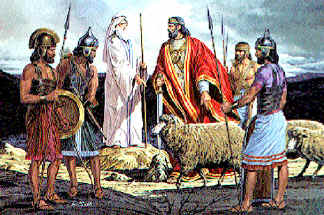
"What then is this bleating of the sheep in my ears...?" 1 Samuel 15:14
Need I point out that the following does not only apply to the sixteenth century Roman Catholic Church?
“Having observed that the Word of God is the test which discriminates between his true worship and that which is false and vitiated, we thence readily infer that the whole form of divine worship in general use in the present day is nothing but mere corruption. For men pay no regard to what God has commanded, or to what he approves, in order that they may serve him in a becoming manner, but assume to themselves a licence of devising modes of worship, and afterwards obtruding them upon him as a substitute for obedience. If in what I say I seem to exaggerate, let an examination be made of all the acts by which the generality suppose that they worship God. I dare scarcely except a tenth part as not the random offspring of their own brain. What more would we? God rejects, condemns, abominates all fictitious worship, and employs his Word as a bridle to keep us in unqualified obedience. When shaking off this yoke, we wander after our own fictions, and offer to him a worship, the work of human rashness, how much soever it may delight ourselves, in his sight it is vain trifling, nay, vileness and pollution. The advocates of human traditions paint them in fair and gaudy colours; and Paul certainly admits that they carry with them a show of wisdom (Colossians 2:23); but as God values obedience more than all sacrifices (1 Samuel 15:22), it ought to be sufficient for the rejection of any mode of worship, that it is not sanctioned by the command of God.” (emphasis added)
John Calvin, in his tract, “The Necessity of Reforming the Church” (cited from page 132 of Selected Works of John Calvin: Tracts and Letters, edited by Henry Beveridge and Jules Bonnet; Volume 1: Tracts, Part 1)
Better Than Thanksgiving Day Football (If You’re Me, That Is…)!

Dr. James R. White's Reformed Twin
As many of you know, and a few others may be disappointed to learn, I’m a life-long Independent Baptist (though currently a member of a Southern Baptist church, by God’s wise and inscrutable providence) who has adopted Presbyterian views. That includes the Presbyterian view of infant baptism. Ever since having adopted this view, in the interests of “givning God a chance” to “make my life easier,” I’ve from time to time done a little more reading on the case for believer’s baptism (aka, credobaptism) as opposed to the Reformed doctrine of infant baptism (aka, paedobaptism). I’ve done so with an open mind, knowing that I’m not the most brilliant theologian in the world, being, after all, an IFB Bible college drop-out. I may just want to believe in paedobaptism, because there’s so much I disagree with (and/or dislike) about the Baptist tradition, so if I’m going to expect my wife and kids to adopt the Reformed view of paedobaptism (which they’ve yet to do, again in God’s wise and inscrutable and gracious wisdom), I’d better be right. So far, every time I’ve entered into this debate with an open mind, I find myself

Dr. R. Scott Clark's Baptist Twin
becoming more and more thoroughly convinced that the Reformed view of paedobaptism is the more biblically consistent view. But, I keep reminding myself, I’ve yet to listen to one of my favorite Reformed Baptists, Dr. James White, debate the subject. Dr. White is one of the more relentless, aggressive and capable apologists and debaters I’ve ever seen. If anyone could dissuade me from the case for paedobaptism, it would likely be him.
It looks like I may soon get my chance.
I just finished reading Dr. James White’s post, entitled “R. Scott Clark and ‘Reformed,'” and Dr. Clark’s response, “Post-Thanksgiving Cartoons: Reply to James White.” White attempted to demonstrate the fallacy of Clark’s refusal to accept Baptists under the umbrella “Reformed” on the basis of his contention that paedobaptism is essential to being Reformed. Naturally, White believes for obvious reasons that he’s more thoroughly Reformed than his Presbyterian and Continental Reformed brethren. Clark believes Baptists may have an affinity for “the five heads of doctrine of the Synod of Dort” (popularly known as the five points of Calvinism), but denies they’re Reformed. For the record, having heard Dr. Clark’s teaching and gotten a glimpse of his personality from interviews and his Facebook page (for example, his status update at one point yesterday read, “I’m not passive-aggressive, I’m just aggressive”), leads me to believe that Dr. R. Scott Clark may just be Dr. James R. White’s Reformed twin (I’ve always contended that my friend, Gage Browning, is White’s Presbyterian twin–there is a difference). It’s all about personality and hairdo. I guess that would make Gage Dr. Clark’s Presbyterian twin, too–but I digress.
Anyway, having read both of these esteemed theologians’ posts, I just wanted to put out there that my appetite is officially whetted for a new debate on credobaptism versus paedobaptism between Drs. James R. White and R. Scott Clark. Who’s with me?
When “Whosoever” Misseth the Point

Some of us think the chorus in "Whosoever Meaneth Me" sounds like the theme to Hogan's Heroes. Visit http://free-loops.com/download-free-loop-3481.html to listen and compare to the hymn's midi below!
For God so loved the world, that he gave his only begotten Son, that whosoever believeth in him, should not perish, but have everlasting life. (John 3:16 KJV)
For God so loved the world, that he gave his only Son, that whoever believes in him should not perish, but have eternal life (ESV)
For God loved the world in this way: He gave his one and only Son, so that everyone who believes in him will not perish but have eternal life. (HCSB)
The first citation of John 3:16 is from the King James Version, which contains—and established—the traditional wording of this verse, no less in the case of the highlighted phrase in question, “whosoever believeth.” The second updates, but carries this traditional translation forward, while the third, from the Holman Christian Standard Bible (HCSB), seems to have come a little closer to the literal meaning of the verse.
This can be seen by examining the original Greek, from which all three versions are translated: pas o pisteuo. Pas means “all,” “any,” “each,” “everyone,” “all things,” etc., in individual contexts like this one, but it is usually found in collective contexts, where it means “some of all sorts.” This is the word that is translated “whosoever” in the King James Version, “whoever” in many modern translations like the ESV, and “everyone” in the HCSB. The NET Bible has some helpful notes in this regard, which may be accessed here.
In the great debate between Calvinists and Arminians about the extent of Christ’s atonement, the latter camp has, in an effort to emphasize the fact that Jesus died for everyone without distinction, turned the KJV’s “whosoever” into three words: “For God so loved the world, that he gave his only begotten Son, that Who … So … Ever (!). With often little regard for the context of this verse, Arminians will focus on this one little three letter Greek word, and seemingly make it the point of the passage, which it is not.
Pas is not the only word in this phrase. “Everyone” in this context does not stand alone. It is modified by the action taken by each member in the group of people so identified. The action they take is pisteuo: “believing.” So, the first thing we must clarify is that this verse is not intended to state or imply the number of people for whom Christ died; it merely expresses the purpose behind the Father’s giving of the Son to the world: to grant eternal life to pas (everyone) o (who, or that) pisteuo (believes).
On the Nov. 17 episode of The Dividing Line, Dr. James White explained why “whosoever,” “whoever,” and “everyone” are used to translate pas. He said that when pas is used with a singular participle (in this case, “believes”), what is being communicated is a group that is defined by the action in that participle. Since the emphasis of the verse is on the mutual activity of the group, rather than the indistinct universality of the group itself, perhaps it may help direct our attention to “believes” if translators rendered pas o pisteuo as “all those who believe,” or just “those who believe.” But I’m no scholar.
Therefore, pas o piteuo makes neither of the following Arminian emphases:
- It does not mean that God sent Jesus to propitiate the Father in his death for everyone indiscriminately;
- It does not mean that everyone indiscriminately has the inherent moral ability to believe.
What this phrase does mean, though, is that God loved the world by sending his only Son in order to grant eternal life to those, and only those, who actually come to faith. If God sent his only Son to die for everyone indiscriminately, then everyone indiscriminately would come to faith, for he would have, with the atonement, granted faith to everyone indiscriminately. If everyone indiscriminately had the inherent moral ability to obey the command to believe, then God’s Word would be untrue (Romans 8:7; Ephesians 2:8,9).
Let us not read things into the Word of God which are not there. John 3:16 is not a proof text for general redemption (the doctrine that Christ died for everyone indiscriminately), nor a view of human sinfulness that leaves room for some amount of inherent righteousness that enables the self-determining sinner (which creature does not exist) the ability “of his own free will” to “decide to follow Jesus” without the prior work of the Holy Spirit’s effectual calling (Romans 8:30).
Are you one of those who’ve come to believe in the one and only Son of God? Then you have received the Father’s saving love in the gift of his Son who became incarnate for you, obeyed God’s Law perfectly for you, died suffering the consequences of your sin, and rose on the third day that you also might be raised up to eternal life spiritually now (regeneration), and physically upon his return (resurrection). I urge you to do what you can to reciprocate his love by Spirit-empowered love for him and your neighbor. We love because he first loved us.
“Whosoever Meaneth Me?” (audio) “Whosoever” means all those, and only those, who believe.
The Masculine Mandate, part 3
In this post, Richard Phillips gets into the details of his exposition and application of the “masculine mandate” in Genesis 2:15.
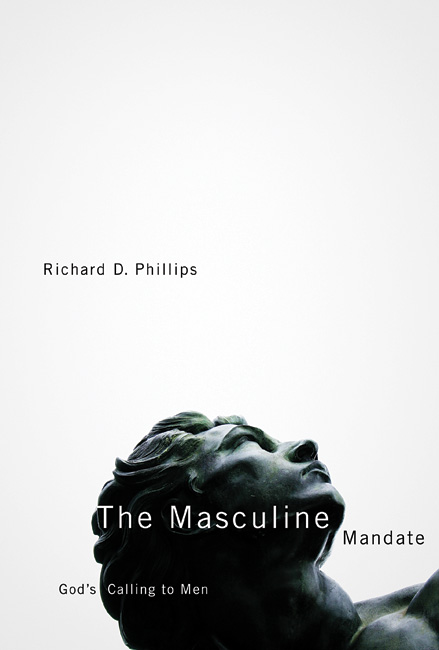 Host: I was in a church where home men’s groups were reading this book (Wild at Heart) and going off on men’s trips. I remember thinking, “Well, what is distinctively Christian about this? I mean, it’s good that we want men to be men, and to be tough, and I actually expected to have more of that in your book since you’re a tank commander. And, you know, to have more of this emphasis on men being manly men, and that’s a good emphasis, and it’s right, but, I really liked how in the book you bring out the story of the professional dirt bike racer . . . Brian Deacon . . . talked about doing all of that before he was in Christ. He was doing all of those manly things, but that’s not what made him a man, but knowing what God’s will for him and knowing the Lord is.
Richard Phillips: A couple of years ago, I was speaking at a men’s conference. So I’m sitting at a barber shop, and I’m reading ESPN Magazine. They have an article about Brian Deacon, this hooligan, X-game, trick-bike jumper. He’s like the Michael Jordan of that quasi-sport. He has a near-death crash. He got his girlfriend pregnant, and she’s off living with her parents. Meanwhile, he has this nationally televised crash, and he loses half his blood, and he goes to his girlfriend’s house to be medically rehabilitated. Meanwhile, she’s been converted to Christ at her parents’ church. He starts going to the parents’ church, and he gets converted. He heals up, and he comes back to the Metal Militia and starts leading a Bible study, and, one by one, leads most of these guys … he leads them all, one by one, to Christ.
Then I read another interview, where the typical thing’s happening: some guys saying, you know, “Dude, you’ve change! What happened to you? You’re Brian Deacon!” And Deacon says, “You know what? I’ve realized that I’ve got to become a man.” Now, the last thing this guy needs to be told is that being a man is going off on ego trips (see parts 1 & 2). You know, what he needs to be told is what his duty is as a husband and father biblically and what biblical love is. And biblically, what it means to be a covenantally faithful man. And I’m reading all this stuff, and I’m thinking, “I gotta write a book on this.”
Host: So let’s talk about that. The mandate involves two aspects, working and keeping; that’s what man was placed in the garden to do. Could you help us to understand what you mean by “work”? What is man’s specific duty in working, and what is he supposed to do?
Richard Phillips: Yeah, thanks. The two in the Hebrew, the two verbs are abad and shamar. Very simple, basic Hebrew words appear hundreds of times in the Old Testament. They’re kind of, you know, building block common verbs.
Abad, in a construction context, means “to build.” In a Temple context, it’s used of the priests serving the Temple. And in an agricultural setting, such as the garden, it’s used as farming. You know, cultivating, causing things to grow. And, what we see is, the man is given the mandate by God–and this is all in the agricultural meaning–what God calls a man to do. The first thing is, that he is to engage in labor that is to have the result of causing good things to grow. Now that alone is paradigm shifting.
Now one thing that strikes me is that in American culture, we don’t think of the man as the nurturer. Biblically he is. I’m not saying women aren’t nurturers. But I am saying that it is the role of a man in a relationship to grow and cultivate and engage in activity and ministry and labor that will cause others to grow. It may be to cause a business to grow. In marriage, it means your job is to, your wife’s heart is the garden in which you’re to have a spade and you’re to minister in that garden so that she grows spiritually.
I mean, you know, as a pastor, how often do I have someone come into my office and say, “Help, pastor. I’ve got a lot of problems in my relationship with my mother.” The answer is, virtually never. It may happen once or twice, you know. But how often do I have someone come and say, “Oh, my relationship with my dad…” All the time. Why? Because the father is the one through whose ministry we gain so much of our identity and who we are, and the cultivation of character and faith and all those things result from the man’s role.
And so, it’s enormously helpful for Brian Deacon to be told, “Hey, Brian, if you want to be a man now, what you are to do is, like Adam, you’re put by God to work the garden. To engage in sacrifical ministry that would cause us to grow. You’re to do that in all your relationships. And so the book works that out. First in principle, that in various relationships–marriage, fatherhood, church, friendship, those kinds of things.
The other verb is shamar. Another very common word. It means “to watch over and protect.” In Psalm 121, “the LORD will keep you.” The LORD watches over you, he neither slumbers nor sleeps. He will keep your life. That’s shamar. And so, Adam was placed by God into his covenantal world of relationships and duties, to cause the garden to grow and to keep the garden safe. And likewise, godly men are to engage in a life of labor, the effect of which is that those under our care are to be kept safe, and their growth will be nurtured by our ministry.
That’s it. Isn’t that beautifully simple?
Host: It is. It’s profound as well….
Richard Phillips: Profoundly simple, but it requires the redeeming work of Jesus Christ in my life fully expressing itself for me to do it. It’s anything but easy. But to me that is so helpfully clear: I’m a husband–what am I to do? My wife is to feel safe in our relationship, and I’m to make her–I’m to make her safe, to promote her safety, and I am to engage in ministry to her so that she grows.
Now you read Ephesians 5:22 and following and 1 Peter 3:1-6 and that is a good summary of what the apostles are teaching. So it’s a profoundly simple, but powerful paradigm.
Listen to Christ the Center episode #87 on The Masculine Mandate today!
Daniel’s Place in the Canon and Among the Prophets
4. The position which the book of Daniel occupies in the Hebrew Canon seems at first sight remarkable. It is placed among the Holy writings between Esther and Ezra, or immediately before Esther (cf. Hody, De Bibl. Text. p. 614, 645), and not among the prophets. This collocation, however, is a natural consequence of the right apprehension of the different functions of the prophet and seer. It is not, indeed, certain at what time the triple division of the Scriptures which is preserved in the Hebrew Bibles was first made; but the characteristics of the classes show that it was not based on the supposed outward authority, but on the inward composition of the books. Daniel, as the truth has been well stated, had the spirit but not the work of a prophet; and as his work was a new one, so was it carried out in a style of which the Old Testament offers no other example. His Apocalypse is as distinct from the prophetic writings as the Apocalypse of St. John from the apostolic epistles. The heathen court is to the one seer what the isle of Patmos is to the other, a place of exile and isolation, where he stands alone with his God, and is not like the prophet active in the midst of a struggling nation (Auberlen, p. 34).
From, Daniel, Book of.
Dr. William Smith’s Dictionary of the Bible (Link on editor; Link on Dictionary)
Comprising its
ANTIQUITIES, BIOGRAPHY, GEOGRAPHY, AND NATURAL HISTORY.
Revised and Edited by Professor H. B. Hackett, D. D.
with the cooperation of Ezra Abbot, LL. D., Assistant Librarian of Harvard College
Copyright, 1868 and 1896, by HURD AND HOUGTON and HOUGHTON, MIFFLIN & CO.
Reprinted 1981 by Baker Book House Company
Four-volume Set ISBN: 0-8010-8211-0
The Masculine Mandate, part 2
The following is Q&A #2 from Christ the Center, episode 87 on Richard Phillips’ soon-to-be-released title The Masculine Mandate, published by Reformation Trust. In this discussion, Phillips explains the difference between his approach to applying Genesis 2:15 and that of John Eldridge in his best-selling book, Wild at Heart.
Host: I was intrigued by how you unpacked the mandate given to Adam to dress and keep the garden and how they work out in the physical realm of work and whatever labor you’re doing and in regard to your wife and children. It reminded me of the way Murray goes back in Principles of Conduct and roots everything in the creation ordinance. I had never heard that developed as much. Were these things you were reading, or was it just from your own study of Scripture that you were thinking about what was the principal work–what made a man a man, out of Genesis?
Richard Phillips: Well, you know, I mean, for the sake of the people who haven’t read the unpublished book, in Genesis 2:15, God says he placed Adam in the garden, and charged him to work it and keep it, and this book is an exposition of Genesis 2:15, which I’m describing as the masculine mandate. God put him in the garden to work it and keep it.
You know, what got me going on this was the book Wild at Heart. Because the first time I was asked to speak on this stuff, I got a copy of Wild at Heart, because I knew it was a massive best-seller, and I was absolutely mortified to read the first couple of chapters. He actually makes the statement that man was made out of the garden, and so he is undomesticated, and a male’s life is a life long quest to get in touch with your masculine side. Can you imagine Ronald Reagan making a statement like that?
No real men talk that way! “I’m on a quest for my masculinity.” That what life is, because Genesis 2:15 says–this is what he actually says–it’s a classic example of Bizarro hermeneutics–dominating today: God placed him in the garden, therefore he belongs out of the garden! And the way to get in touch with your masculine self is to get out of the place where God put you, and, as I put it in the book–I think you gotta think in these terms–you know, God placed Adam in the created, covenantal world with God-given relationships, duties and obligations. And Eldridge says, no no, you gotta go on a wilderness quest–ego trips, basically–self-quest. He actually goes so far as to say that Jesus’ forty days’ fast in the wilderness was Jesus seeking his masculine identity. I was just utterly horrified!
Well, I started reflecting on it, and I started thinking well he is right that this verse is paradigmatic. But it’s the exact opposite of what he’s teaching.
And I think, you know, two or three years ago, I did some men’s conferences, I just said, “Hey, let’s look at Genesis 2:15.” And I’m well aware that people are reading this book. I got my first copy of Wild at Heart, when an elder at my church (not this church) handed me a copy–how great the book was, and we need to buy the DVD curriculum of Wild at Heart to show all of our men.
Well, I read the book, and I go ballistic! But it occurs to me that he’s right that Genesis 2:15 is a very important statement. That’s what got me going in this direction. . .
. . . to be continued.
The Masculine Mandate, part 1
Episode #87 of Christ the Center, podcast by the Reformed Forum featured an interview with Dr. Richard Phillips regarding his new book The Masculine Mandate. Dr. Phillips says it’s primarily an exposition and application of Genesis 2:15, which reads, “The LORD God took the man and put him in the Garden of Eden to work it and keep it.” This verse, he says, is the foundational paradigm of the Scripture’s entire revelation of the male’s, or husband’s, role.
Since whenever I link to programs such as this, almost no one takes the time to go and listen, I’m transcribing the interview in a series of blog posts because I find this material to be especially needful for everyone. In this first post in the series, Dr. Phillips explains his reasons for writing the book.
Host: What did you see in men’s lives that needed to be addressed, which lead you to write this book? (Summary of the host’s actual wording)
Dr. Phillips: As is usually the case with books, there are several reasons why I wrote this book: one is, I was frustrated by the low quality of many evangelical books dealing with masculinity. Most especially, John Eldridge’s mega best-seller Wild at Heart, which is just unbiblical.
I was actually having dinner with Jerry Bridges, probably three or four years ago—and he lives out there in Colorado Springs—and we were lamenting this. I said, “Jerry, you ought to write a book on this.” And he didn’t have time, or whatever.
Meanwhile, I was asked by several conferences to speak on things like this. There was a group in Georgia two years ago who asked me to do a multi-day men’s conference.
Lig Duncan had me out to Jackson last year, to the Mid-South Men’s Rally. And so I was needing just for ministry requests, to put together biblical material. My own approach is always to exposit the Word, so if I’m asked to do a men’s conference, I’m going to exposit the Word. That got me dealing with these things.
And also, just as a pastor, I’m well aware, just as everybody is, today we’ve got a real masculinity problem in the culture and in the church. I mean, it is my view that, we talk about feminism, and all of those problems—look, we’ve got a far bigger problem with godly masculinity. In many of our churches we’ll have tlots more available, godly, marriageable women. Then we have . . . men in the church, but they’re not as mature so often. And I do believe that we have a great need for biblical instruction on masculinity.
Now, you start working on this stuff, and you start thinking about it, and you start becoming very impressed with the power of what the Bible says. As I say early on in the book, we know that when it comes to marriage and men in ministry and these sorts of things, that the New Testament directs us back to the early chapters of Genesis. If we’re going to say, “What does it mean to be a man? What is my calling as a man? What am I supposed to do to be a godly man? The answer is, go back and read Genesis 2. And what we’ll find is biblical teaching that is, in fact, a biblical paradigm.
What we read in Genesis 2 about God’s calling to Adam as the man, does in fact, have a paradigmatic influence that we will see pervading all of Scripture. And yet there’s very little teaching about the masculine mandate—that’s what I call Genesis 2:15. That there is a clear calling given to men, that will be seen playing out through the book of Proverbs, playing out through biblical examples of fatherhood, husband and Christian leadership. And it plays straight into the New Testament teaching. And I just came to believe that there is a need for some clear biblical teaching on this.
To be honest with you, it was a hard book to write, because most of my books will come out of my pulpit ministry. My working life is geared that way. I do a sermon on Sunday morning, I preach Sunday evening, I teach Wednesday night. I don’t have a lot of free time beyond that. So this book killed me. I mean, to write a book on the side—most of my books are biblical exposition flowing out of my pulpit ministry-but this one was a labor of love, because I just felt I had to get it done. Not that the world needs my book, but, I just felt an obligation to write this book.
It was not a book that I had time to do, but I just felt that there’s a great need for this, and I’m hopeful the Lord will bless it. You know, I ended up getting in about a year late, because you want to do it right.
But that’s why I wrote the book, just out of my own experiences, being asked to do work in it, and a profound sense that this material has to get out there.


 The Misadventures of Captain Headknowledge
Rev. John Brown’s Original Preface
Title Page to Brown's Self-Interpreting Bible
The following is the original preface to Rev. John Brown’s Self-Interpreting Bible, in which he explains the various features he’s included, and shows how they will aid the reader in understanding and profiting spiritually from the Word of God. I’ve highlighted the features as they occur throughout. The rest is original to the editor.
My intention in the coming posts will be to demonstrate to varying degrees, each of these features, along with pictures of the numerous beautiful lithographs that are found along the way.
PREFACE TO THE ORIGINAL EDITION
Not to depreciate the valuable commentaries of Pool, Patrick, Clarke, Henry, Burkitt, Gill, and Doddridge, &c., but to exhibit their principal substance with all possible advantage, in a manner that might best comport with the ability and leisure of the poorer and labouring part of mankind; and especially to render the oracles of God their own interpreter, and enable every serious reader to judge for himself what doctrines ought to be believed, and what duties practiced by the Christian, are the avowed aims of this publication.
In the copious INTRODUCTION, the principal proofs of the Divine Authority of the Old and New Testaments, and the rules necessary to promote the profitable perusal of the oracles of God therein contained, are largely exhibited. The connected scheme of the Hebrew Laws, and their evangelical signification,–and of the fate of nations, narrated or predicted in Scripture, as subservient to the glorious work of our redemption,–together with the large Chronological Index,–form a summary of the most celebrated labours of the learned world on these diversified subjects. An accurate attention thereto will, through the blessing of God, greatly assist in searching the Scriptures with success.
The contents of the sacred books, and their respective chapters, are an accurate, full and explicatory representation of their subject. Properly attending to these, the reader must discern of whom, or of what, the Holy Ghost there speaks, and understand the passage accordingly. He may easily fix in his mind a general, but distinct view of the whole system of inspiration; and thus be capable, with the utmost readiness, to find out or compare whatever passages of Scripture he may desire.
The EXPLANATORY NOTES are chiefly confined to the figurative, the prophetic, and the practical parts. Here the obscurity of Scripture, or the importance of faith and holiness, chiefly required them.
In our Saviour’s delightful discourses, and the epistles of his inspired Messengers, our holy religion is most fully delineated; and there the explication is peculiarly extensive, and attempts to exhibit the substance of many learned and expensive commentaries, in a manner which, attending to the beautiful connexion, clearly unfolds the scope and meaning of the Spirit of God.
A particular and lively application of divine truth to the heart, and an unspotted holiness of conversation, being the immediate end of God’s revelations to men, the contents of each chapter, which are often in an explicatory manner, are in the Reflections practically summed up, and directed home to the reader himself, for enlightening his understanding, awakening his conscience, warming his heart, and for directing and animating his practice.
An exact knowledge of the seasons in which the oracles of God were delivered, or the events mentioned in them took place, being of no small importance for obtaining a distinct perception of their meaning, the dates before and after our Saviour’s incarnation have been adjusted from the best chronologers, and marked in the margin.
Lithograph of the Reverend John Brown of Haddington
But, as every Protestant must allow the Scripture itself to be its own best interpreter—as God, to oblige men to a diligent search of his word, comparing spiritual things with spiritual, has seldom fully unfolded any of his more important truths in one particular passage—the uncommon collection of Parallel Scriptures, such as is not to be found anywhere else that I know of, has formed the most laborious, and will, to the diligent peruser, be found by far the most valuable part of the work. Some of these are similar in phrase, others in meaning, and, in fine, others in their scope and design. In these, and others which may be added, we have a delightful view of the harmony of the Scripture, and multiplied proofs of every article of our Christian faith; we have a real Concordance, which may abundantly furnish preachers and others with their desired quotations; we have, in little room, a large Commentary, infinitely more certain than any dictates of men; and of which the very words are, as nails and as goads, pointed and fastened by the great Master of assemblies. In a truly diligent comparison of them, many texts all at once explain, and are explained by each other. Nor, unless at first, will the careful reader find much trouble in comparing the texts: but the mere view of the marginal quotations will direct his memory to that part of them which corresponds with the sentence to which they are annexed for explication. And, for his encouragement, I can only say, that my labour, in collecting the parallel texts in this work, has afforded me much more pleasant insight into the oracles of God than all the numerous commentaries which I ever perused.
Thus we may listen to, and converse with God, and lay our consciences open to the inspired arrows of our all-conquering Redeemer;–we find his words, and eat them, to the joy and health of our soul; we hide them in our heart, that we may not sin against him; we become mighty in the Scriptures, and expert in handling this sword of the Spirit, in opposition to every enemy of our soul: in fine, we are made wise unto salvation; are reproved, corrected, and instructed in righteousness, and perfectly furnished for every good work. May the Lord himself prosper it for these ends!
J. BROWN
Share this: