P.R.O.P.I.T.I.A.T.I.O.N.
You’d be amazed at the kinds of useless stuff that passes through my mind. Today I’m going to punish you with it. It’s just one of my little tests of friendship. Today, I wondered if I could come up with an acronym for the word “Propitiation.” You know, this year in AWANA, I’m teaching through Romans 3:21-26, which includes the gospel-rich terms “redemption,” “justification,” and “propitiation.” No, I haven’t come up with any for the other two terms, but here’s what I got for “propitiation.” I’m afraid it doesn’t help with the meaning of the term or anything, but it made me chuckle.
Presbyterians
Rarely
Ordain
People
Into
The
Institution
After
They
Invalidate
Old
Notions . . .
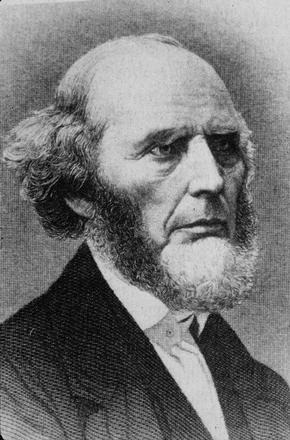
. . . Charles Finney excepted.
Yes, Charles Finney was ordained by the Presbyterian church, and yes, he did “invalidate old notions.” What old notions, you ask? Only biblical things like . . .
Original Sin . . . “The doctrine of original sin, or of a sinful constitution, and of necessary sinful actions, represents the whole moral government of God, the plan of salvation by Christ, and indeed every doctrine of the gospel, as a mere farce. Upon this supposition the law is tyranny, and the gospel an insult to the unfortunate.” (Systematic Theology, Lecture 24 on “Moral Depravity”)
Penal-Substitutionary Atonement of Christ . . . Finney’s invalidation of the old notion: the Moral Government theory–“Consequently, we find that, in this atonement, God has expressed His high regard for His law and for obedience to it. The design of executing the penalty of the law was to make a strong impression of the majesty, excellence, and utility of the law. Anything may answer as a substitute, which will as thoroughly demonstrate the mischief and odiousness of sin, God’s hatred to it, and His determination to carry out His law in all its demands. Especially may the proposed substitute avail if it shall also make a signal manifestation of God’s love to sinners.” (Charles Finney on the Atonement see also, Theopedia: Governmental Theory of the Atonement)
Imputation . . . “The doctrine of imputed righteousness, or that Christ’s obedience to the law was accounted as our obedience, is founded on a most false and nonsensical assumption.” (Horton, Michael: “The Disturbing Legacy of Charles Finney,” the quote may be found under the heading, “Distorting the Cardinal Doctrine of Justification.”)
Justification by Grace Alone through Faith Alone . . . “That gospel justification is not to be regarded as a forensic or judicial proceeding. Dr. Chalmers and those of his school hold that it is. But this is certainly a great mistake, as we shall see.” (Systematic Theology, Lecture 36, “Justification” )
The Miraculous Nature of Revival . . . “It is not a miracle, or dependent on a miracle, in any sense. It is a purely philosophical result of the right use of the constituted means—as much so as any other effect produced by the application of means. There may be a miracle among 13its antecedent causes, or there may not. The apostles employed miracles, simply as a means by which they arrested attention to their message, and established its divine authority. But the miracle was not the revival. The miracle was one thing; the revival that followed it was quite another thing. The revivals in the apostles’ days were connected with miracles, but they were not miracles.” (Lectures on Revivals of Religion, Lecture 1, “What a Revival of Religion Is“)
But, after all this, if what you really want is some good reading on “propitiation,” then check out the Wikipedia article.
A Life Remembered
from the Haven Today Program Archives for Wednesday, September 12, 2007:
He was all about truth. And the number one truth was God’s grace and that led the late D. James Kennedy to found Evangelism Explosion, a program that taught others how to share their faith in Christ alone. On the day before his memorial service, don’t miss the next HAVEN Today with Charles Morris and a program called “A Life Remembered”.
Also, don’t miss the Live Webcast of Dr. Kennedy’s funeral which will take place at 1pm Eastern, 12pm Central.
Update
Christianity Today has posted an article on the ministry and impact of Dr. D. James Kennedy, including links to many sites around the web regarding his life and his death.
D. James Kennedy Dies
FT. LAUDERDALE, Sept. 5 – Dr. D. James Kennedy, founder and senior pastor for 48 years of Coral Ridge Presbyterian Church (CRPC) in Fort Lauderdale, Fla., passed away peacefully in his sleep at approximately 2:15 a.m. at his home with his wife and daughter by his bedside, following complications from a cardiac event last December. He was 76. Dates and times for a public viewing and funeral and private interment will be released when available. “There are all kinds of wonderful things I could say about my dad,” said daughter Jennifer Kennedy Cassidy. “But one that stands out is his fine example. He ‘walked the walk’ and ‘practiced what he preached.’ His work for Christ is lasting – it will go on and on and make a difference for eternity.”
Dr. Kennedy, who is survived by Anne, his wife of 51 years, and his daughter Jennifer (Kennedy) Cassidy, preached his last sermon from the pulpit of Coral Ridge Presbyterian Church on Christmas Eve Sunday 2006. He suffered a cardiac arrest four days later on Dec. 28, and has since been unable to return to the pulpit. The church announced his retirement on Aug. 26, beginning a process to choose his successor, and had planned a tribute worship service honoring the extensive ministry of Dr. Kennedy on Sept. 23.
“I would like to thank all of you for your prayers, cards, kindnesses and encouragement over the past nine months,” Mrs. Cassidy said during the retirement announcement. “Our family knows that we have come through this difficult time because of God’s grace and your faithful prayers, and it has brought joy to us to see God’s faithfulness in all of this.”
While hindered by persistent health problems that included asthma, as well as chronic and often severe physical pain from compressed vertebrae due to an injury suffered as a young man, Dr. Kennedy was indefatigable in his ministry work. He said on several occasions how much he looked forward to being free from pain in heaven. He was one of the nation’s leading Christian broadcasters and a vigorous and articulate advocate for Christian involvement in public life.
Regardless of one’s opinion of the amount of politics that comprised Dr. Kennedy’s preaching ministry, we should be grateful for his leadership in lending credibility to the idea that Calvinists can be great evangelists, in his writing Evangelism Explosion, currently used by probably more denominations than any other method of evangelism, from what I’ve heard, anyway. I’m glad they’re continuing to air the broadcasts of the church services–I love the music at the beginning and do appreciate some of the informative programs on current events and issues political and religious.
My Newest “Study Bible”!
 This one is definitely an “easy-to-read” Bible! Not only that, there are pictures on every page! What can be learned from this “study Bible” is not what the Greek word for so-and-so means, there are no charts of the Kings of Israel or anything like that, this study Bible teaches the reader that among the other popular and overused and often abused interpretations of Scripture, the main reason the stories of the Bible are written is to teach us about the One God promised to send to crush the Serpent’s head. And that’s all it teaches.
That’s also what preachers are supposed to base all their practical application and character studies on, too. How easy it is to forget. I can testify just in trying to write Sunday School and AWANA lessons for elementary age children. How much more is it necessary to keep in mind when the moms and dads are being preached to by the “teaching elder” (Ephesians 4:11; 1 Timothy 5:17).
Modern Christians have plenty of the other kinds of “headknowledge” about dates, locations, and name meanings, but most forget (in word and action, which are the ways that count), no, neglect, that which is “of first importance” according to Paul (1 Corinthians 15:3-4).
Bob Hayton of Fundamentally Reformed, in his post, “The Storybook for Preachers,” quotes Dr. Tim Keller as saying, ““I’d urge ministers to buy it and read it for themselves. It will improve their preaching.” That’s what hooked me, and that’s why I bought it. Sure, I’ll probably tackle one or two of my younger children (who are well into chapter books by now) and force them to listen to one or more of these stories on occasion, and any grandchildren the Lord may send my way someday will certainly benefit from it, but in the meantime this children’s book is mine! I’m also going to buy a copy and donate it to my church library, and I suggest you do the same. But some of you more daring (yet gentle and respectful–see 1 Peter 3:15) sorts may like to sweetly give a copy to your pastor with a copy of Keller’s quote tucked in as a bookmark.
One of my new favorite old radio shows is Haven Today, featuring the warm, fuzzy and comforting tone of Reformed radio man, Charles Morris (think Steve Brown, but not as funny), features a few recordings of Jesus Storybook Bible author, Sally Lloyd-Jones (I wonder if there’s any relation to D. Martyn? I suppose if there were, it would have come up), reading her Christ-centered children’s Bible stories. There are a lot of other interesting videos and links related to Sally and her book on the “Going Deeper” section of Haven Today’s homepage (on the right sidebar toward the bottom). Check out The Jesus Storybook Bible Sampler, and buy a few copies. We need to encourage Christ-centeredness in Christian publishing!
A Primer for Fantasy-Phobes

End Time Redux

Kingdom Coffers: "Flat Tax" or "Love Offering"? Part 3

The History of the Relationship Between Church, State and Tithing
I highly recommend that everyone read the Wikipedia entry on the Tithe. It gave me some very interesting insight into the way in which the historically blurred line between church and state has helped to seal in our minds the assumption that giving ten percent of one’s income (at least) is a New Covenant principle.
It seems that the Roman Catholic Church adopted tithing from the Old Testament as a workable, pragmatic model to ensure a regular income for their growing heirarchy. As you know, Rome during the middle ages exerted enormous influence over the nations of Europe, during which millennium, the concept of tithing became well ingrained. Thus, when the Reformation began, the governments of Europe seized the opportunity to protect themselves from similar influence from the diverse Protestant churches, by themselves exerting influence over the church, rather than allowing the status quo to continue at the hands of these upstart Protestants.
Part of this influence was in the various ways the governments of Europe extracted “tithes” from the people and supported their various state churches (Lutheran, Reformed, Anglican, etc.), which trend has just in the past couple of hundred years begun to diminish. Here’s an example of how America “dun good!” (for once, if you consider Americanism’s various other less than fortunate influences on American Christianity–no nation is exempt from syncretism) in refusing to take money from the church and give money to the church (the current President excepted–I wonder what other Presidents have likewise contradicted this national emphasis in other ways? That would be an interesting history lesson . . . ). Another way the government prevented complete Reformation was on the issue of the Lord’s Supper (at least in “Calvin’s Geneva”). But I’m done with that topic for now, but the comments apparently keep rolling in, much to my glee!
More on the government’s ability to inhibit Reformation later . . .
Kingdom Coffers: “Flat Tax” or “Love Offering”? Part 2
 Abram, Melchizedek and “Christian Tithing”
Is it, or is it not, appropriate to call our giving to God in the church “the tithe,” applying Mosaic principles regulating the giving of it (“Will a man rob God?”), and stressing its importance (“The tithe is the LORD’s!!!”), or would it be more biblical to simply “purpose” in one’s own heart how much he ought to give, in order to ensure that it is given with love (1 Corinthians 13:3) or, as Paul wrote in his second letter to the Corinthians, as a “cheerful giver?”
It is held by many that tithing is only a part of the civil/ceremonial aspect of the Mosaic Law and it is, therefore, assumed to be abrogated in the New Testament, in which Paul gives a New Covenant principle of “cheerful giving.” In light of this argument, Christian tithing is defended on the grounds that Abram’s tithing to Melchizedek (Genesis 14:20b) precedes the Mosaic Law and thus ought to be retained after the civil/ceremonial parts of the Mosaic Law are abrogated. For example, consider the Statement of Faith of the World Baptist Fellowship, International. In Section 20 on “The Grace of Giving,” it reads, Under grace we give, and do not pay, the tithe – “Abraham GAVE a tenth part of all” – “Abraham GAVE the tenth of the spoils” – Hebrews 7:2-4 – and this was four hundred years before the law, and is confirmed in the New Testament; Jesus said concerning the tithe, “These ye ought to have done” – Matt. 23:23.
This was the view with which I had been raised. In fact, the Statement of Faith I just cited was the one adopted by the church in which I was saved and baptized. Ever since I’ve been earning money, I’ve been striving to be faithful to this principle. My current church is the first to which I have belonged which specifically denies this concept of some kind of eternal principle about tithing that ought to be retained, even though the civil and ceremonial aspects of the Law have been abrogated. I have been considering the relative merits of both views for the last few years.
If tithing is an eternal principle which transcends the Mosaic administration of the covenant of grace by virtue of Abram’s tithing to Melchizedek, then tithing ought to be retained in Christian worship, further informed, I would say, above and beyond the letter of tithing by Paul’s teaching on evidencing one’s love for the Lord and the people of God by the cheerful giving of that which the believer purposes in his heart in gratitude for the Lord’s blessings (2 Corinthians 8-9).
But if it is a mere aspect of the temporary civil/ceremonial laws, then it is abrogated by Christ and the Pauline giving principle is the only rule for the people of God today. So the challenge for me has been to evaluate whether or not the Abram/Melchizedek tithe in Genesis 14 and Hebrews 7 is a valid basis for the idea that tithing is demanded outside the Mosaic Law.
One of the points that got me thinking about this issue is the claim that the New Testament does not expressly command tithing, therefore it ought not be retained. This argument that there is no explicit New Testament command to tithe was coming off as another application of the same argument invalidly used (in my mind, with all due respect) by Baptists when they argue against pedobaptism. It did not sit well with me to hear pedobaptists using this line of reasoning. So the question is raised in my mind as to just what it is about the New Testament that abrogates the practice of tithing?
There are New Testament Scriptures abrogating everything from sacrificing animals (Hebrews 10:9) to eating unclean animals (Acts 10:9-16); but nothing was surfacing as I searched the Scriptures in my mind that explicitly abrogates the principle of giving ten percent of one’s income to the church. In my mind, this pointed to the perpetuity of tithing as a New Covenant principle.
So that’s what helped me think to scrutinize the Abram/Melchizedek tithing account. How does the New Testament treat this passage? Does its treatment affect the tithing question? Simple answers:
The New Testament treats the Abram/ Melchizedek tithing account as a type fulfilled by Christ. The very same New Testament book which gives the apostolic interpretation also warns us against reinstating Christ-fulfilled types and shadows. So if the account of Abram tithing to Melchizedek typifies the superiority of Christ to the Levitical priesthood, then this Old Testament passage is irrelevant to the question of giving in Christian worship. Therefore, I conclude that the New Testament treatment of that Old Testament account does affect the tithing question by taking this event off the table as a passage to be considered in the context of Christian giving. To do so would be tantamount to returning to Old Testament types and shadows.
Therefore, it is not a misguided baptistic argument to say that New Covenant believers don’t tithe because the new Testament doesn’t command us to tithe but does command us to give cheerfully that which we purpose in our hearts to give as we have been blessed. This is an offering made in the context of New Covenant worship that is pleasing to the Lord!
An IFB associate pastor friend of mine counters this argument with the principle, “There is one interpretation, but there are many applications,” as justification to take this passage about how much greater Christ is than Levi and apply it to the doctrines of giving in New Covenant worship. While it may be true that there are (at least some of them) many applications, those applications are accountable to the one interpretation, rightly exegeted. Does the application of the Abram/Melchizedek type to “Christian tithing” meet this exegetical standard?
Kingdom Coffers: "Flat Tax" or "Love Offering"? Part 1

Why Weekly Communion?

While the weekly celebration of the Lord’s Supper is not common in Protestant churches, we at Arlington Presbyterian believe it to be the biblical and preferred practice for the following reasons:
THE PRACTICE OF THE FIRST CENTURY CHURCH
Although we do not have any clear-cut command, the New Testament evidence does seem to point in the direction of weekly communion, especially if one understands “the breaking of bread” to be a reference to the Lord’s Supper (Acts 2:42; 20:7; 1 Cor. 11:17-20; cf. 14:26).
EVIDENCE FROM CHURCH HISTORY
There are very clear and early (second century) allusions to the practice in the Didache and Justin Martyr’s The First Apology. While the history of the Church does not have the authority of God’s Word, it at least ought to interest us that the Christian community observed this practice, apparently without much discussion, so shortly after the time of the Apostles.
CONSISTENCY WITH OUR USE OF OTHER ELEMENTS OF WORSHIP
Why should the Lord’s Supper be the only regular element of worship which does not find a place in each Lord’s Day worship service? To be consistent, any argument against weekly communion would be an equally valid argument against weekly hymn-singing, weekly praying, weekly preaching, and so on.
BRINGING US BACK TO BASICS
Regardless of the sermon text or topic, the congregation is always brought back to the fundamentals—the death and resurrection of Christ (Matthew 26:26-28).
APPEAL TO THE WHOLE MAN
Since the Lord’s Supper is the only element of worship that appeals to all five senses, its weekly observance helps to prevent an “intellectualizing” of the worship service. If we do not celebrate the Sacrament frequently, we should not be surprised when our members leave Reformed worship for something more “stimulating.”
OPPORTUNITY FOR COVENANT RENEWAL
The Lord’s Supper is the ideal means of meditating on God’s Word and renewing our faith and repentance so that we may serve the Lord in the upcoming week (Acts 20:7).
PROVIDING ASSURANCE, PERSONALIZING THE GOSPEL
Every week the believer receives tangible and visible assurance that Christ died for him (Matthew 26:28).
IDENTIFICATION WITH THE PEOPLE OF GOD
This Sacrament stresses the corporate dimension of the Church, thereby promoting unity and the restoration of broken relationships. Don’t we need this every week (1 Cor. 10:16-17)?
One of the stages of discipline in many Reformed churches is suspension from the Lord’s Table. One of the purposes of this is to make the unrepentant sinner aware of his sin that he might be restored. But how effective can this be if the Lord’s Supper is not celebrated frequently? Even once a month would not seem to constitute effective suspension (1 Cor. 5:11-13).
VISIBLE MARK OF A DISCIPLE OF CHRIST
There is always the need to distinguish believer from unbeliever (Eph. 5:6-8). Since one of the purposes of the Sacraments is to make this difference visible, we should produce this visible difference often.
NATURAL PROCLAMATION OF THE GOSPEL TO UNBELIEVERS
By setting forth so plainly the work of Christ on the cross, and especially by fencing the table, any unbelievers present are called to faith and repentance. Weekly communion thus provides a natural and regular opportunity to present the claims of Christ to visitors.
SPIRITUAL NOURISHMENT
Since the Lord’s Supper is a means of grace, through faith it provides us with what we need to grow in grace. Thus, the frequent partaking of the bread and the wine for our spiritual nourishment is as necessary as the frequent partaking of food for our physical nourishment (1 Cor. 10:16).
CALL TO SELF-EXAMINATION AND REPENTANCE
Such should be our daily practice. Weekly communion reminds us of this and gives us opportunity to actually do so on a regular basis (1 Cor. 11:27-32).
REALISTIC EXPECTATIONS
One of the problems with an infrequent celebration of the Lord’s Supper is that it tends to produce unrealistically high expectations as to what should “happen.” People expect something magical and exciting to happen at quarterly communion, but are often disappointed; they go away wondering what they missed and why they missed it. By celebrating the Lord’s Supper each week our expectations become realistically high; we look forward to and enjoy it much as we do prayer, preaching, singing, and the other elements of Christian worship.
TASTE AND SEE THAT THE LORD IS GOOD!
Prepared by the Staff and Session of Arlington Presbyterian Church
1320 West Pioneer Parkway, Arlington, Texas 76103
Phone 817-261-8938; Fax 817-459-1136; Email mailto:info@apcweb.org
Observant Protestantism and "True Christianity"

Keeping the Feast as Often as Prescribed

30:1 Hezekiah sent to all Israel and Judah, and wrote letters also to Ephraim and Manasseh, that they should come to the house of the Lord at Jerusalem to keep the Passover to the Lord, the God of Israel. 2 For the king and his princes and all the assembly in Jerusalem had taken counsel to keep the Passover in the second month— 3 for they could not keep it at that time because the priests had not consecrated themselves in sufficient number, nor had the people assembled in Jerusalem— 4 and the plan seemed right to the king and all the assembly. 5 So they decreed to make a proclamation throughout all Israel, from Beersheba to Dan, that the people should come and keep the Passover to the Lord, the God of Israel, at Jerusalem, for they had not kept it as often as prescribed. 6 So couriers went throughout all Israel and Judah with letters from the king and his princes, as the king had commanded, saying, “O people of Israel, return to the Lord, the God of Abraham, Isaac, and Israel, that he may turn again to the remnant of you who have escaped from the hand of the kings of Assyria. 7 Do not be like your fathers and your brothers, who were faithless to the Lord God of their fathers, so that he made them a desolation, as you see. 8 Do not now be stiff-necked as your fathers were, but yield yourselves to the Lord and come to his sanctuary, which he has consecrated forever, and serve the Lord your God, that his fierce anger may turn away from you. 9 For if you return to the Lord, your brothers and your children will find compassion with their captors and return to this land. For the Lord your God is gracious and merciful and will not turn away his face from you, if you return to him.”
Let Us Break Bread Together

For the past several days, I’ve been engaged in a discussion about the frequency of the Lord’s Supper over at Post Tenebras Lux (Why Weekly Communion Part 1, Part 2, Part 3). If you’d like to interact with our conversation, you are cordially invited. The homework I’ve been doing in preparation for my comments over there has been very enlightening. I’ve learned that the “proof texts” which I continually use to support the notion that Christian churches should always celebrate the Lord’s Supper every Sunday following the sermon do not miss the mark when considered in the light of postapostolic practice and the Reformation’s purification of the corruptions which crept in during the medieval era of the church.
“And they devoted themselves to the apostles’ teaching and the fellowship, to the breaking of bread and the prayers” (Acts 2:42).
“On the first day of the week, when we were gathered together to break bread . . . ” (Acts 20:7).
It seems to be difficult for many to see that the church is to engage each time they gather in all of the items listed in the first verses cited above, and have a hard time accepting that one statement like the one in the second verse above actually reflects the weekly practice, rather than merely recording a one-time event with little to no prescriptive significance for the life of the church today. But the more I read from Calvin and others about how the church has historically interpreted verses like these and a few others from 1 Corinthians 10 and 11, the more convinced I am that we do an injustice to our worship of the Lord by our setting the Supper aside so often to focus on other things, fearing some Roman Catholic spirit of ritualism to overcome us, dared we to partake too frequently.
Consider the following passages from Calvin’s Institutes of the Christian Religion (Battles translation, pages 1422, 1424):
44. The Lord’s Supper should be celebrated frequently
What we have so far said of the Sacrament abundantly shows that it was not ordained to be received only once a year –and that, too, perfunctorily, as now is the usual custom. Rather, it was ordained to be frequently used among all Christians in order that they might frequently return in memory to Christ’s Passion, by such remembrance to sustain and strengthen their faith, and urge themselves to sing thanksgiving to God and to proclaim his goodness; finally, by it to nourish mutual love, and among themselves give witness to this love, and discern its bond in the unity of Christ’s body. For as often as we partake of the symbol of the Lord’s body, as a token given and received, we reciprocally bind ourselves to all the duties of love in order that none of us may permit anything that can harm our brother, or overlook anything that can help him, where necessity demands and ability suffices.
Luke relates in The Acts that this was the practice of the apostolic church, when he says that believers ” . . . continued in the apostles’ teaching and fellowship, in the breaking of bread and in prayers” (Acts 2:42). Thus it became the unvarying rule that no meeting of the church should take place without the Word, prayers, partaking of the Supper, and almsgiving. That this was the established order among the Corinthians also, we can safely infer from Paul (cf. 1 Cor. 11:20). And it remained in use for many centuries after.
46. Communicating only once a year condemned
Plainly this custom which enjoins us to take communion once a year is a veritable invention of the devil, whoever was instrumental in introducing it. They say that Zephyrinus was the author of this decree, although it is not believable that it was in the form in which we now have it. For perhaps by his ordinance he did not provide too badly for the church, as times were then. For there is not the least doubt that the Sacred Supper was in that era set before the believers every time they met together; and there is no doubt that a majority of them took communion; but since all scarcely ever happened to take communion at once, and since it was necessary for those who were mingled with profane and idolatrous men to attest their faith by some outward sign–the holy man, for the sake of order and polity, appointed that day on which all Christian people should, by partaking of the Lord’s Supper, make a confession of faith. Posterity wickedly distorted Zephyrinus’ otherwise good ordinance, when a definite law was made to have communion once a year. (Fourth Lateran Council, canon 21). By this it has come about that almost all, when they have taken communion once, as though they have beautifully done their duty for the rest of the year, go about unconcerned. It should have been done far differently: the Lord’s Table should have been spread at least once a week for the assembly of Christians, and the promises declared in it should feed us spiritually. None is indeed to be forcibly compelled, but all are to be urged and aroused; also the inertia of indolent people is to be rebuked. All, like hungry men, should flock to such a bounteous repast. Not unjustly, then, did I complain at the outset that this custom was thrust in by the devil’s artifice, which, in prescribing one day a year, renders men slothful all the rest of the year. Indeed, we see that already in Chrysostom’s day this degrading abuse had crept in; but we can see at the same time how much it displeased him. For in the passage which I just quoted he sadly complains of great inequality in this matter; at some times of the year they often did not come even when they were clean, but came at Easter, even when they were unclean. Then he exclaims: “O custom, O presumption! In vain, therefore, is a daily offering made; in vain we stand before the altar; there is no one who will partake along with us.” So far is Chrysostom from having approved this by lending it his authority!
It appears to me that the work of Reformation is not done. Begin a conversation with your pastor about this topic, and encourage him to examine the Scriptures in the light of the history of the issue of the frequency of the Supper and see what the Lord may work in the life of your church!
The Next Study Bible To Join My Collection

Case in point, Leland Ryken. Dr. Ryken is the father of Dr. Phillip Ryken, the successor to James Montgomery Boice at Tenth Presbyterian Church in Philadelphia, Pennsylvania, who is the late successor to the even more late Donald Gray Barnhouse. Read about Tenth’s august roll of influential pastors since its early years. Dr. Leland Ryken’s credentials include a Ph.D. from the University of Oregon and he is professor of English at Wheaton College in Illinois, where he has twice received the “teacher of the year” award. He served as Literary  Chairman on the Translation Oversight Committee for the English Standard Version of the Bible, and authored a wonderful book entitled, The Word of God in English, in which he explains the thinking behind what the ESV crowd has begun calling “essentially literal” translation, as opposed to “literal” (formal equivalence) and “thought-for-thought” (dynamic equivalence). As you may perceive, it sounds like a happy medium, and I think it is definitely a worthwhile achievement.
Leland Ryken also contributed to a good book by a group of evangelical scholars on the Origin of the Bible. But there are yet many others of his books around to which I’ve yet to get. But coming this September, his study Bible will be released. The Literary Study Bible!
from the ESV Blog’s post on the Literary Study Bible:
About The Literary Study Bible
A literary study Bible—what a great idea! Who better to conceive of such a Bible and to provide the notes than Dr. Leland Ryken, author and editor of numerous books explaining the literary forms manifest in the Bible and encouraging us to pay special attention to these forms. The Literary Study Bible represents the culmination of his efforts to aid all who read, study, preach, and teach the Bible. Find your understanding of Scripture improved and your appreciation for its literary beauty heightened.
“Any piece of writing needs to be assimilated and interpreted in terms of the kind of writing that it is,” write the coeditors. “The Bible is a literary book in which theology and history are usually embodied in literary forms. Those forms include genres, the expression of human experience in concrete form, stylistic and rhetorical techniques, and artistry. . . . [The use of these forms] has been inspired by God and [they] need to be granted an importance in keeping with that inspiration.”
I believe a resource such as this will help the evangelical church regain much ground lost since the fundamentalist-modernist controversy, when Dispensational hermeneutics misinformed the last several generations of evangelicals that “literal” interpretation should mean something more akin to “anti-figurative interpretation.” J. Ligon Duncan writes, “Secondly, Dispensationalists speak in terms of a literal interpretation of the Bible. This is a major rhetorical thing that you hear in discussion with Dispensationalist friends. ‘We interpret the Bible literally.’ Of course, the implication being that you don’t. We interpret the Bible literally, you don’t. You do something else to it. Whereas Covenant Theologians would argue, ‘We interpret the Bible literally, but, we believe that the New Testament interprets the Old Testament.’ We believe that the New Testament is the hermeneutical manual for the Old Testament. And Dispensationalists are suspicious of that. When you say that the New Testament must interpret the Old Testament, Dispensationalists get a little bit edgy, because they feel you are about to spiritualize something that the Old Testament has said for them very clearly. So that is a fundamental difference. The Covenant Theologian believes the New Testament has the final word as the meaning of that passage, whereas the Dispensationalist tends to want to interpret the Old Testament and then go to the New Testament and attempt to harmonize the particular teaching of the New Testament with their previous interpretation of that Old Testament passage, rather than allowing the New Testament fundamental hermaneutical control.”
Historically, literal interpretation meant “literary.” In other words, interpret the Bible according to the common rules which apply to whichever kind of literature you are reading. If we can get this understanding corrected on a grassroots level, the Light of the Gospel would shine all the brighter.
P&W Music


 The Misadventures of Captain Headknowledge