Michael Horton on Rightly Divided
Here is Lane Chaplin’s video interview of Dr. Michael Horton on his new book, The Gospel Commission (2011, Baker Book House)—part three of a series starting with Christless Christianity, followed by The Gospel-Driven Life. I’d also like to direct you to the Riddleblog, where Dr. Kim Riddlebarger has provided a nice launch pad to read all seven parts of Dr. Horton’s lengthy and informative review of Rob Bell’s Love Wins.
The Bible’s Inconvenient Truth

Dr. K. Scott Oliphint (left) with Rev. Joe Troutman (right)
The following was preached on March 6, 2011 by Rev. Joe Troutman, pastor of Mid Cities Presbyterian Church, in Bedford, Texas. This just happened, in the providence of God, to be the weekend after the controversy about which I’ve been posting for the past couple of weeks. The heresy of some becomes an opportunity for the orthodox to proclaim the truths of the Bible with all the more clarity. I hope you find the following words at the same time edifying and challenging.
“Again, the kingdom of heaven is like a net that was thrown into the sea and gathered fish of every kind. When it was full, men drew it ashore and sat down and sorted the good into containers but threw away the bad. So it will be at the close of the age. The angels will come out and separate the evil from the righteous and throw them into the fiery furnace. In that place there will be weeping and gnashing of teeth.” (Matthew 13:47-50 ESV)
The third parable, which is found in verses 47-50, is the longest of the four. There is some similarity here to the first two, but overall it is different. Some commentators group it with the parable of the wheat and the tares because it describes a harvest–a harvest of the sea, as opposed to a harvest of the field. In this parable, Jesus says again, “The Kingdom of heaven is like a net that was thrown into the sea, and gathered fish of every kind. Like the second parable, there is a great search taking place. But instead of a search for a precious pearl, it is a search for fish. This search is being done, it says, by angels.
The first two parables describe men who find the Kingdom, but this parable is about the Kingdom finding men. We may think we found God. We may think that in some way we stumbled across him; that in our search in the marketplace, we have found the pearl of great price. But in reality, the parable shows, Jesus is continuing to tell us that it is God who found us. It is God, the Lord Jesus Christ himself—who sought us out. Jesus said in Luke 19:10, “The Son of Man came to seek and to save the lost.” The value of God’s Kingdom, and the place of God’s elect in it, are so great that the purchase price was nothing less than Jesus Christ himself. It is, in fact, more than you and I could pay. More than we could ever pay. It is a debt that is too great for us. Because God made a covenant with himself to save a people for himself, he was willing to go to any length to procure his people’s salvation. He was willing to give his Son as a ransom for lost sinners like you and me. This is what the Lord was willing to do for all who truly believe.
In this parable, the Kingdom of heaven is compared to a net. Don’t think of a fishing net, don’t think of a net that’s at the end of a pole, that people use to scoop up a fish at the end of a fishing line. Don’t necessarily even think of a net that is cast out into the water. This is a large net. This is a dragnet. This is what may be termed a seine. One of the things my dad, my grandfather, my brother and I would do when we were younger, we had a creek running through the property of our farm, and every so often we would take a seine and we would go, men on one side and men on the other, and go up the creek and catch whatever we could find–turtles, snakes, fish–whatever it was, we would try to catch it. This is the kind of thing that Jesus is describing here in this parable. The angels, the reapers, are catching whatever they can get, and the sorting of the good fish from the bad ones would take place on the shore, which is what Jesus says in verse 48. He says, “When it was full, men drew it ashore, and sat down and sorted the good into containers, and threw away the bad.”
Then he explains this part of the parable in verses 49-50. He says, “So it will be at the close of the age. The angels will come out and separate the evil from the righteous, and throw them into the fiery furnace. In that place there will be weeping and gnashing of teeth.” What is Jesus talking about? He’s talking about the final judgment. He’s talking about when he returns; when he returns as the Savior of his people and the Judge of those who have rejected him. What is he saying will happen? He is saying that some will be kept, and some will be thrown away. There will be a final sorting that takes place: some will be welcomed into glory by their Savior, and others will be cast into hell by their Judge.
This is what Jesus is teaching. Yet if we affirm this, we are in danger, we need to know, as being regarded as radical fundamentalists by most of the people in our society–even by fellow evangelicals. Yet there is an inconvenient truth for those who would deny the existence of hell and eternal punishment in it by the Lord. And this is it: Scripture says it exists! Scripture repeatedly talks about the existence of hell. The weeping and the gnashing of teeth, the casting of those who refuse to believe into hell, Jesus himself–regarded by many on the more liberal side of the church as just a friendly and nice guy, a lovable teddy-bear type of Savior–Jesus himself talks about hell. It is inescapable.
Now we are not to revel in it; it should sadden us that some are lost. And yet, in God’s casting unbelievers into hell, he is glorified. This may be difficult for us, but just because it is difficult does not give us the right to throw this doctrine away. In so doing, we are throwing portions of Scripture away. In Matthew 10:28, Jesus warned his followers not to fear someone who could kill the body but not the soul; he says instead to fear him who can destroy both the body and the soul in hell. In other words, fear God.
The book of Revelation also has something to say about that. It is the place where Satan and his angels and everyone whose name is not written in the Lamb’s Book of Life. It is described in Revelation 21:8 as the lake that burns with fire and sulfur, which is the Second Death. There are many today who are challenging Jesus’ teaching in our passage, and many others that say he will save some and send others to hell, but they are denying God’s Word. If they’re denying that he sends some to hell, they are denying his Word, and they have nothing left to stand on when they make their own pronouncements.
In the photo above, Rev. Troutman is posing with Dr. K. Scott Oliphint, professor of Apologetics and Systematic Theology at Westminster Theological Seminary in Philadelphia, Pennsylvania. He came to town as a speaker at the recent Full Confidence Conference, about which I posted a few weeks ago. In the Q & A Session at the end of the conference, Dr. Oliphint concludes the entire event with some very compelling words on the nature of hell as eternal, conscious torment. I highly recommend you give it a listen as well.
Full Confidence Audio

I can't wait to load these messages on my iPod!
At last we are able to download the lectures delivered at the recent Full Confidence Conference at Grace Community Presbyterian Church in Ft. Worth, Texas. A link to the messages may be found on GCPC’s home page, or you can simply link to the messages from the list below.
Having heard the lectures in person myself, I must say that I was awed by Dr. Oliphint’s ability to make the point of his messages (both the one at the conference, and his Sunday morning sermon at Mid Cities OPC, which I will provide in a future post) very powerfully by presenting opposing viewpoints, effectively dismantling them, and then so unpacking the truth of God’s Word in such a way, that the hearer (at least, I was) has such a clear concept in his mind of the given topic that it is simply overwhelming, effectively prompting a spontaneous response of worship of the Lord.
Also, don’t miss Dr. Oliphint’s remarks about hell at the end of the Q&A session. It’ll prove a helpful defense of the orthodox doctrine of eternal conscious torment in hell in the light of the current controversy with Rob Bell.
Likewise, Dr. David Garner’s communication skills shone through in his messages. He is a genuine word smith.
I’m sure that you, too, will find much to admire and learn from each of the three conference speakers.
Session 1: The Context for Confidence (Dr. K. Scott Oliphint)
Session 2: the Gospel from Above (Dr. David Garner–not recorded due to technical difficulties)
Session 3: Who Says? (Dr. Timothy Witmer)
Session 4: Vital Inspiration in a Virtual World and Q&A Session (Dr. David Garner/All of the above)
RAPechism

I just went to the Sovereign Grace Ministries website and downloaded yet another rap written by “The Voice” Curtis Allen, who previously was challenged to rap on the Heidelberg Catechism in honor of Kevin DeYoung’s recent book on it, and now, for reasons I’ve yet to read, if not only because of popular demand due to it’s novelty, a rap on the Westminster Shorter Catechism, accompanied, and containing commentary and instruction, by Dr. D. A. Carson.
When you get your bottom jaw off the floor, you can visit both posts here and here. You can download each song if you please, and read the lyrics (some of us need to read the lyrics). After I downloaded them, I put them together in a playlist with an album name of my own invention, “RAPechism.”
Looks like those Baptistic, charismatic Calvinists are good for something after all 🙂
Emerging Monastic Transformationalism versus Biblical Christianity

How timely. The March/April 2011 issue of Modern Reformation magazine has arrived, featuring an article related to the postmodern liberal (aka, “emerging”) emphasis on being “missional.” Editor-in-Chief Dr. Michael Horton attempts to demonstrate how this emphasis tends to emphasize certain aspects of medieval monasticism in his piece called, “Missional Church or New Monasticism?“.
Medieval monasticism was divided between those who prized the contemplative life (spiritual ascent to heaven through private disciplines of the mind) and those who gave priority to the active life (spiritual ascent through good works, especially for the poor). Francis of Assisi–and the Franciscan Order named after him–emphasized the latter.
First, today we see a revival of contemplative spirituality. It is a traditional evangelical emphasis on personal piety: discipleship as inner transformation through spiritual disciplines. Richard Foster’s Celebration of Discipline (1979) introduced many evangelicals to the medieval mystics and contemplative writers. From The Divine Conspiracy (1998) to The Great Omission: Reclaiming Jesus’ Essential Teachings on Discipleship (2006), Dallas Willard has repeated this call to discipleship: inner transformation through the spiritual disciplines.
Next, Horton explains how contemplative and postmodern liberal writers tend to confuse Scriptural gospel indicatives with sin-exposing legal imperatives of Scripture, tending to warp the gospel into how one lives, rather than the message Christ sent ambassadors to proclaim.
Both contemplative (“spiritual disciplines”) and active (Emergent) writers tend to blur and merge commands and promises, indicativees and imperatives. That is, there is a strong tendency to identify the gospel with what we do rather than with what God has done for us–and the world–in Jesus Christ. We are active agents more than beneficiaries and witnesses of God’s reconciling work, building his kingdom through our efforts more than receiving a kingdom that expands through preaching and Sacrament. . . . (emphasis mine)
Although the Emergent movement reflects a more communal emphasis on social transformation, it shares the medieval, Anabaptist, and Pietist emphasis on deeds over creeds. Brian McLaren explains, “Anabaptists see the Christian faith primarily as a way of life,” focusing on Jesus’ Sermon on the Mount rather than on Paul and doctrines concerning personal salvation [Brian McLaren, A Generous Orthodoxy (Grand Rapids: Zondervan: 2004), 206.] More than proclaiming Christ’s finished work of reconciling sinners to the Father, the focus is on completing Christ’s redeeming work of social transformation. Tony Jones, another leader in this movement, relates: “In an emergent church, you’re likely to hear a phrase like ‘Our calling as a church is to partner with God in the work that God is already doing in the world–to cooperate in the building of God’s Kingdom.'” Trying to anticipate Reformed objections he notes, “Many theological assumptions lie behind this statement,” although “the idea that human beings con ‘cooperate’ with God is particularly galling to conservative Calvinists, who generally deny the human ability to participate with God’s work” [Tony Jones, The New Christian: Dispatches from the Emergent Frontier (New York: Jossey-Bass, 2009), 72].
According to McLaren, being “missional” means that we encourage Buddhists, Muslims, and Jews to become better Buddhists, Muslims, and Jews to become better Buddhists, Muslims, and Jews as followers of Jesus’ example. It is not what we proclaim but how we live that transforms the world. McLaren writes, “To say that Jesus is Savior is to say that in Jesus, God is intervening as Savior in all of these ways, judging (naming evil as evil), forgiving (breaking the vicious cycle of cause and effect, making reconciliation possible), and teaching (showing how to set chain reactions of good in motion)” [McLaren, 96]. There is no mention of Christ bearing God’s wrath in our place–in fact, no mention of the cross having any impact on the vertical (God-human) relationship. “Then, because we are so often ignorantly wrong and stupid, Jesus comes with saving teaching, profound yet amazingly compact: Love God with your whole heart, soul, mind, and strength, Jesus says, and love your neighbor as yourself, and that is enough.” This is what it means to say that “Jesus is saving the world” [McLaren, 97]. Although Jesus called this the summary of the law (Matt. 22:37-40, citing Deut. 6:5) for McLaren it becomes the summary of the gospel.
Horton then goes on to constructively explain the proper distinction between law and gospel:
First, “living the gospel” is a category mistake. By definition, the gospel is news (euangelion, “good news”). You don’t “do” news: you do law and you hear gospel. Second, the specific content of this good news is the forgiveness of sins through faith in Christ’s saving life, death, and resurrection. We are beneficiaries of this action, not active participants. Scripture certainly teaches that we live in view of God’s mercies, in a manner worthy of the gospel we profess, and so forth. However, it represents our lives and good works as the fruit of the faith created by the gospel, not as part of the gospel itself. (emphasis mine)
Third, the Scriptures teach consistently that faith comes through the proclamation of the gospel, not through good works. Christ himself was not arrested and arraigned because he was trying to restore family values or feed the poor. Even his miraculous signs were not by themselves offensive, except as they were signs testifying to his claims about himself. The mounting ire of the religious leaders toward Jesus coalesced around him making himself equal with God (John 5:18) and forgiving sins in his own person, directly, over against the temple and its sacrificial system (Mark 2:7). In fact, at his trial he was chared by the Jewish Council with announcing the destruction of the temple. When the high priest asked, “Are you the Christ, the Son of the Blessed?” Jesus answered: “I am, and you will see the Son of Man seated at the right hand of Power, and coming with the clouds of heaven.” With that, “the high priest tore his garments and said, ‘What further witnesses do we need? You have heard his blasphemy. What is your decision?” And they all condemned him as deserving death” (Mark 14:53-64).
Jesus was never charged on the grounds of trying to bring world peace: quite the contrary (Matt. 10:34-37). Jesus’ opponents never included a revolutionary blueprint for improving world conditions among the indictments against him. In fact, his mission was an utter failure for those who saw him as a leader of political revolution. He will return in glory to judge, to deliver, and to make all things new in a global political kingdom of righteousness and blessing. However, between his advents is the space in history for repentance and faith.
Thus, Horton contrasts the Jesus of the Bible and the Christianity of the Bible with the Jesus of postmodern liberalism and it’s appropriation of medieval contemplative spiritual disciplines and politically liberal social justice activism. The simple fact is that the Christian is not the gospel, and his Christian obedience is not the gospel (but rather its result)–the gospel of Jesus Christ will be heard each Lord’s Day at a church that is committed to proclaiming it, and that is likewise committed to doctrinal (doctrines like the deity of Christ, his virgin birth, his penal-substitutionary atonement, etc.) as well as practical discipleship in Christian obedience that leaves Christians to work this out in the various vocations to which the Lord may call his people, not specifically the favored social agenda of any local church, be it a liberal or conservative agenda. Here is the context in which true liberty in Christ will emerge, in a spirituality that will gradually, neither instantaneously nor holistically (in this age before Christ’s return to glorify his people) see Christians growing in love for God and neighbor in response to the preached gospel of the grace and forgiveness of God in the Lord Jesus Christ.
A Review of Dr. John Fesko’s Lecture on Word, Water and Spirit, part 3

In Part II of Dr. John Fesko’s book, Word, Water and Spirit: A Reformed Perspective on Baptism (2010, Reformation Heritage Books), he, in 3 chapters deals with the Biblical data related to baptism as “New Creation” (chapter 8), “Covenant Judgment” (9) and as “Eschatalogical Judgment” (10). The following is my summary of his remarks on this material at the Christ Reformed Church Friday Night Author’s Forum in Anaheim, California last Friday, January 21, 2011.
When you look at New Testament texts that teach about baptism, not merely the occurrences of the event, but which present the theology behind the event, the passages tend to point back to Old Testament passages and concepts. In 1Peter 3, the apostle shows the correspondence between the flood and baptism:
For Christ also suffered once for sins, the righteous for the unrighteous, that he might bring us to God, being put to death in the flesh but made alive in the spirit, in which he went and proclaimed to the spirits in prison, because they formerly did not obey, when God’s patience waited in the days of Noah, while the ark was being prepared, in which a few, that is, eight persons, were brought safely through water. Baptism, which corresponds to this, now saves you, not as a removal of dirt from the body but as an appeal to God for a good conscience, through the resurrection of Jesus Christ, who has gone into heaven and is at the right hand of God, with angels, authorities, and powers having been subjected to him.(1 Peter 3:18-22).
Elsewhere, the apostle Paul mentions the Israelites were baptized while crossing the Red Sea.
For I want you to know, brothers, that our fathers were all under the cloud, and all passed through the sea, and all were baptized into Moses in the cloud and in the sea, and all ate the same spiritual food, and all drank the same spiritual drink. For they drank from the spiritual Rock that followed them, and the Rock was Christ. Nevertheless, with most of them God was not pleased, for they were overthrown in the wilderness (1 Corinthians 10:1-5).
Notice that not only did the adults of the nation of Israel cross the sea and so become baptized into Moses, but so did the entire households of those adults, which necessarily includes any and all infants that were present at the time. Even the cloud, we learn, typifies the Holy Spirit in 1 Corinthians 10, says Dr. Fesko (see Isaiah 63:10-14).
Colossians 2:11-12 has been the field of a pitched battle between credobaptists and paedobaptists:
In him also you were circumcised with a circumcision made without hands, by putting off the body of the flesh, by the circumcision of Christ, having been buried with him in baptism, in which you were also raised with him through faith in the powerful working of God, who raised him from the dead (Colossians 2:11-12).
Critical of the paedobaptist appeal to such a correspondence between circumcision and baptism based on this text, some Baptists argue that circumcision is a physical, national rite–the “Jewish passport,” if you will–whereas baptism is entirely spiritual. To this, Fesko responds by pointing out that water of baptism is physical. Old Testament circumcision had spiritual connotations as well as baptism. For example, in Deuteronomy 10:16, the Israelites are commanded to circumcise their hearts. “Circumcise therefore the foreskin of your heart, and be no longer stubborn” (Deuteronomy 10:16). Later, we find that in chapter 30, this command becomes a promise, when Moses proclaims that the LORD will circumcise their hearts. “And the LORD your God will circumcise your heart and the heart of your offspring, so that you will love the LORD your God with all your heart and with all your soul, that you may live” (Deuteronomy 30:6). Paul in Romans 2:28-29 says the true Jew has had his heart circumcised.
“For no one is a Jew who is merely one outwardly, nor is circumcision outward and physical. But a Jew is one inwardly, and circumcision is a matter of the heart, by the Spirit, not by the letter. His praise is not from man but from God (Romans 2:28-29).
Thus Fesko describes the spiritual referent of circumcision.
But why was the act of circumcision chosen to serve as the sign of the covenant in the first place? Remember the first gospel promise in Genesis 3:15?
“And I will put enmity between you and the woman, and between your seed and her seed; he shall bruise you on the head, and you shall bruise him on the heel” (Genesis 3:15 NASB).
It is the seed of the woman who will bruise the serpent’s head. Elsewhere in the Old Testament, it is the seed of Abraham who will be “cut off.” The prophets applies the terminology of circumcision to the cross of Christ. Consider Isaiah’s great 53rd chapter alludes to circumcision in the sacrificial death of the Servant of the LORD: “By oppression and judgment he was taken away; and as for his generation, who considered that he was cut off out of the land of the living, stricken for the transgression of my people?” (Isaiah 53:8)
In Genesis 17, those who are circumcised are included in the covenant, and those who are not are said to be “cut off” from covenantal relationship with the LORD.
He who is eight days old among you shall be circumcised. Every male throughout your generations, whether born in your house or bought with your money from any foreigner who is not of your offspring, both he who is born in your house and he who is bought with your money, shall surely be circumcised. So shall my covenant be in your flesh an everlasting covenant. Any uncircumcised male who is not circumcised in the flesh of his foreskin shall be cut off from his people; he has broken my covenant” (Genesis 17:12-14).
Finally, the sex of the recipient of circumcision was significant in its allusion to the fact that the Seed of Abraham to come, who would be cut off for his people, would be a male—the Lord Jesus Christ. These are some of the reasons that the act of circumcision is the appropriate sign of the Covenant of Grace. Therefore it makes sense that when we go to the New Testament, we find in Colossians 2 that when Paul makes reference to the “circumcision of Christ,” it is to his crucifixion, when Christ was cut off for his people, that he refers.
But why is it, then, that circumcision is replaced as the sign of the Covenant of Grace by a rite such as water baptism? What is it about the application of water that so well fulfills in the New Testament the significance of Old Testament circumcision? In the opening of the Gospels, John the Baptist announces:
“I baptize you with water for repentance, but he who is coming after me is mightier than I, whose sandals I am not worthy to carry. He will baptize you with the Holy Spirit and fire. His winnowing fork is in his hand, and he will clear his threshing floor and gather his wheat into the barn, but the chaff he will burn with unquenchable fire” (Matthew 3:11-12).
Did John simply pull this ceremony out of thin air? Did he appropriate the immersion ceremonies of the Qumran community with whom he is considered to have possibly resided for a time? Was he simply applying Jewish proselyte baptism to repentant Jews? In the case of Jewish proselyte baptism, Dr. Fesko’s research seemed to indicate that, in fact, this baptism may have been devised only sometime after Christians began baptizing in the name of Jesus, and it may have been that they did so in imitation of Christian baptism. Instead, Dr. Fesko affirms that the true point of origin of John’s baptism is found in the Old Testament itself.
Joel refers to an outpouring of the Spirit (Joel 2:28); again, the Genesis flood corresponds to baptism in Peter (1 Peter 3:18-22); Ezekiel’s vision of the Temple features water flowing out from underneath it which makes fruitful everything it touches (Ezekiel 47:1-12); in Isaiah, the Spirit is poured out, making the desert bloom like the garden of Eden (Isaiah 51:3; cf. 35:5-7). John, then, would have concluded from passages like these that the Messiah would come and would baptize his people in the Spirit. Therefore, now, under the New Covenant, we baptize young and old, male and female to testify to the fact that the Christ has come and fulfilled circumcision by being cut off for his people and he has baptized his people in the Spirit.
For the most part, baptism is presented as a blessing, but what about the baptized who apostatize? Is baptism somehow neutralized, or rendered ineffective? Dr. Fesko declares that there are no neutral encounters with the living God, according to the Word of God. You do not enter God’s presence and leave unchanged. The professing believer, and his household, receives the visible sign of the baptism of the Spirit either to their blessing or to their cursing. When Christ was crucified between two thieves, was the thief who asked him to remember him the only one affected by his encounter with the Son of God? No, the other thief, who mocked Christ, went to his doom. Scripture identifies Christ either as the Rock on which the believing fall upon, or he is the Rock which crushes those on whom it falls (Matthew 21:44). Thus, the revelation of Christ is double-edged.
Ministers often fear that when they see no tangible results to their preaching in terms of conversion, that perhaps the preaching of the Word is an ineffective enterprise. But the faithful minister who sees no results isn’t a failure, for the unresponsive will be judged. Just as the Old Testament prophets preached with no prospect of positive response. Isaiah was called to preach a message of judgment. Paul, in 2 Corinthians 2:14-16 says that ministers are either the fragrance of life to some, and the fragrance of death to others. Consider the warnings for unworthy reception of the Lord’s Supper—Paul indicated that for this reason, some were sick and dead among the Corinthians (1 Corinthians 11:27-32). Likewise, water baptism is either the water of new creation, or it is the water of judgment. Again, during the flood, those sealed in the ark were saved through the waters (1 Peter 3:20), while those outside of the ark were lost in judgment. Similarly, the Israelites in the exodus were saved through their Red Sea baptism, while their Egyptian pursuers were drowned (Exodus 14:26-29).
Subjecting the New Testament doctrine of baptism to the classical Protestant hermeneutic of the analogy of faith, by interpreting unclear passages in light of the clear parallel passages, demonstrates how it corresponds in many of its particulars to circumcision. I find it especially helpful to see how the connection between the two is found ultimately in the Lord Jesus Christ himself. The Great Seed of Abraham has been cut off from the covenant for the transgressions of his people, and he now baptizes his redeemed with cleansing influence of the Holy Spirit, but false professors who receive the sign of the Spirit’s cleansing will instead be burned with unquenchable fire (Matthew 3:11b-12).
A Review of Dr. John Fesko’s Lecture on Word, Water and Spirit, part 2
In an attempt to explain why he wrote such an extensive presentation of the development of the doctrine of baptism in Word, Water and Spirit: A Reformed Perspective on Baptism, Dr. John Fesko paints a picture of a pair of believers who begin discussing their differences on a given theological issue, and the lively conversation lasts a number of hours. When a third party approaches and asks what they’ve been talking about, they are faced with the daunting task of rehearsing the entire track of the conversation. On a broader scale, just such a conversation has been going on, not just for a few hours, but for nearly two thousand years. Getting his readers caught up on this conversation was Dr. Fesko’s goal for the historical-theological section of his book, which makes up roughly half of the book. This is intended to help the reader see that what the Roman Catholic believes about baptism differs from what the Reformed Protestant believes and teaches, and also the differences between Reformed and Lutheran, as well as Anabaptist and Baptist.
In Part I: “The History of the Doctrine,” Dr. Fesko covers early church witnesses such as Augustine and what the medieval church thought about Augustine’s doctrine of baptism. There is also a presentation of medieval theologians such as Bonaventure, Peter Lombard, and Thomas Aquinas. The bulk of the historical section covers Reformation views, with a chapter on the view of Luther and the later Lutherans. He also brings us through the developments of figures like John Calvin and Ursinus, with the contributions of the venerable Three Forms of Unity. His description of this development progresses on from the writers between the time of the Reformation and the production of the Westminster Confession of Faith, through the later development of the London Baptist Confession. Sketching the history up to the present day, theologians such as Moltmann and Karl Barth are treated.
Dr. Fesko introduces the Roman Catholic teaching that baptism literally cleanses the recipient of sin, introducing what is known as the “created grace” of God into him. He explains that uncreated grace is the Holy Spirit’s incommunicable power; created grace is created by God and infused into the recipient at baptism. This is said to then create a “habit,” the newly formed ability to do good works.
On the other end of the spectrum, Dr. Fesko describes how that the Anabaptists in Zurich, Switzerland developed the unintended consequences of Ulrich Zwingli’s doctrine of baptism. Zwingli did accept the term sacrament, but he emphasized the term’s patristic-era usage as an oath taken by a Roman soldier who swears loyalty to his commanding officer. From this, he concluded that baptism was no more than one’s pledge of allegiance to the Lord. While Zwingli did include more nuance than this in his own teaching, the first Anabaptists reduced his argument and developed a doctrine that featured exclusively this oath-taking emphasis. For the Anabaptists, baptism became no more than the believer’s pledge of fidelity to the Lord. In this view, there was no grace attached at all to the rite.
Thus, whereas the Roman Catholic formulates an undue admixture of grace and the water of baptism, the Anabaptist radically separates the water of baptism from almost any reference to the grace of God, making it merely a believer’s pledge and in no way God’s pledge. Insofar as modern Baptists generally tend to appear to hold a view that appears to broadly coincide with this Anabaptistic kind of emphasis, Dr. Fesko assures his Baptist friends that he understands that they teach what man is doing in baptism, but he would ask them what they believe that God is dong in baptism, if anything. Why water? Why not some other substance? Or, why not some other ceremony? Even Charles Ryrie, he indicates, suggested a non-water ceremony would be just as acceptable. Maybe this could be a viable option, if baptism is all about what the believer is doing, but the historical Reformed tradition calls baptism a sign and a seal. It signifies Christ, not a thing or a substance, but Christ himself. Dr. Fesko says that what he likes about the historical Reformed view is that it reflects the ancient view that baptism is the visible Word: that which is heard in preaching is seen, felt and tasted in the sacraments—baptism, no less than the Lord’s Supper—making them what some have called “the double preaching of the Word.” In this regard, the sacrament is dependant upon the presence of the Word preached for its efficacy. The Word preached may stand alone and retain its efficacy apart from the sacrament, but the sacrament has no efficacy apart from the Word preached and so cannot stand alone.
According to Dr. Fesko, contemporary theologians are trying to run as far away from tradition as fast as they possibly can. They’ll claim that previous ages engaged too much in bad philosophy, and simply desired to defend “the traditional view.” But to these innovators, Dr. Fesko says our generation was not the first to open the Bible. For example, the middle ages are maligned as always and only engaged in extra-biblical, or even unbiblical philosophical speculation. But consider, for example, the case of Aquinas, who, before he taught theology, was first required to teach exegesis, and wrote a number of Biblical commentaries. This does not mean we must uncritically accept everything he wrote, but it at least indicates that medieval theologians were not utterly disengaged from the text of Scripture, and many of their writings do contain Scripturally-based insights from which the church in all ages can benefit.
Next time, we’ll review Dr. Fesko’s description of Part II: Biblical-Theological Survey of the Doctrine.
A Review of Dr. John Fesko’s Lecture on Word, Water and Spirit, part 1
 On Friday, January 21st, 2011, Dr. John Fesko, Academic Dean and Associate Professor of Systematic Theology at Westminster Seminary California, was the featured speaker at Christ Reformed Church in Anaheim, California, pastored by Dr. Kim Riddlebarger. He was invited to speak on his comprehensive new book, Word, Water and Spirit: A Reformed Perspective on Baptism (© 2010 by J. V. Fesko, published by Reformation Heritage Books). The link to Dr. Fesko’s lecture may be downloaded from this post at the Riddleblog. First, Dr. Fesko describes the background to his book, then he summarizes respectively the history of the doctrine of infant baptism (paedobaptim–Part I of his book), the Biblical-Theological Survey of the Doctrine (Part II), and finally he briefly describes Part III: Systematic-Theological Construction of the Doctrine. This first in a series of posts will review Dr. Fesko’s discussion of the background to his writing of the book.
The background, we learn, is ultimately connected to his upbringing. As an infant, Dr. Fesko was baptized in the mainline denomination of the Presbyterian Church (USA). His parents apparently held nominal ties to this Reformed heritage, and the Fesko family wound up attending a number of churches over the years, landing among the Baptists in the end. While in college, Dr. Fesko listened to R. C. Sproul tapes on his Walkman, which lead him to realize that he was more Reformed than he was Baptist, and so he resolved to examine the outstanding Reformed doctrines he’d yet to deal with to be sure they were true–issues like infant baptism, so that, were he to minister in a Reformed church one day, he would not have to “hold his breath” as he administered the sacrament.
After seminary, while attending the University of Aberdeen in Scotland, Dr. Fesko read a book by Paul Jewett which he says is called, A Case Against Infant Baptism, which inadvertently impressed upon him the indispensability of covenant theology and laid the groundwork to his finally embracing paedobaptism. In searching the web for this title, however, I was unsuccessful in tracking it down, but found instead a book by the same author called Infant Baptism and the Covenant of Grace: An Appraisal of the Argument That As Infants Were Once Circumcised, So They Should Now Be Baptized, which apparently argues for the practice. Unfortunately, Dr. Fesko has a little trouble with recall on this and another title below, but, we can afford to forgive him this minor oversight. I share a marginally similar experience to the one Dr. Fesko describes, in my own examination of the issues related to the biblical doctrine of baptism. Over the past several years since my transition to theologically Reformed convictions, including the truth of infant baptism, I would periodically revisit the case for the Baptist view of believer’s baptism (credobaptism). Each time, after re-exposing my newfound paedobaptistic persuasion to the critique of the Baptist doctrine, I would come away with new reasons to believe that Scripture in fact does command and exemplify infant baptism, although not in a manner that satisfies the Baptistic hermeneutic (method of interpretation) which emphasizes as central the differences between the Mosaic Covenant and the New Covenant, rather than their points of continuity.
The Reformed covenantal hermeneutic emphasizes how the nature, promises and signs of the Covenant of Grace outweigh the various administrative changes between the Mosaic and New Covenants. Big-picture issues like these bring into sharper relief the seemingly unclear Biblical testimony to infant baptism. In other words, with all due respect to my Baptist friends, when it comes to the Mosaic and New Covenant administrations of the overarching Covenant of Grace, they seem unable to see the whole covenantal forest for the New Covenant trees.
The second element in the background to Dr. Fesko’s writing of Word, Water and Spirit comes from his ministerial environment in the South. He says, “if you cannot throw a rock in the Bible without hitting a covenant, in the South, you cannot throw a rock without hitting a Baptist church.” Many Baptists, who, in the providence of God, come to embrace Reformed theology and appreciate so much about the doctrine and practice of a Reformed Presbyterian church will hold out on the Reformed practice of infant baptism. In his ministry to such believers in his congregation, Dr. Fesko tried to provide comprehensive evidence to help his converted Baptist congregants understand and believe in infant baptism, and the degree to which he would prepare such material for their benefit also facilitated his desire to publish on the subject of the Biblical and historical case for infant baptism.
Dr. Fesko was also interested in making sure his congregants understood the Biblical doctrine of baptism as a whole, not just the aspect of it that related to its administration to the infant children of believers. He observes that there is a troubling trend toward church growth by downplaying more objectionable doctrines, like paedobaptism. He desired not only to help people understand infant baptism, he wants them to understand what a sacrament is, what Biblical covenants are, and even the true nature of God’s grace itself. Many struggle to understand what grace is. I, too, struggled to understand the classical definition of grace as “unmerited favor” until I was introduced to the Reformed doctrines of grace. Once I came to grips with the fact that a sinner is unwilling to believe because as one who is dead in sin, he cannot (“Total Depravity”); that God’s election of him is not conditioned on God’s foreknowing or foreseeing that he would receive Christ (“Sovereign Election”); that the atonement of Christ for the elect in particular is properly understood in terms of his mercy, rather than his resentfully seeing such an act as inherently unjust of God’s part (“Particular Redemption”); that when the Holy Spirit enables a sinner who was dead in sin to believe and to willingly embrace Christ as his own crucified and risen Lord (“Effectual Calling”); and that God will not only prevent me from “losing my salvation,” but will graciously preserve me in such a way that I will, by his grace, persevere in my faith in him (“Perseverance of the Saints”–for more biblical testimony on these doctrines of grace, see the link in my Featured Sites widget in the sidebar), then and only then did it make sense to me how it is that grace is God’s favor for me which I in no way earned. It is in this way that God’s grace is truly unmerited favor. Just as Reformed theology helps one truly understand the nature of grace, so does Reformed covenant theology as a whole help the believer understand the Bible’s full teaching on the significance, proper candidates and proper attitude toward the mode of baptism.
God’s progressive revelation of his redemption of the elect in Christ was something Dr. Fesko often found insufficiently treated in the typical book or essay promoting the Reformed doctrine of baptism. Why is redemptive history important in relation to baptism? It helps us to better understand the nature of circumcision and baptism, the connection between the two, and why the sign of the Covenant of Grace is changed from the former to the latter with the transition from the Mosaic to the New Covenant at the first advent of Christ. Dr. Fesko finds that Reformed presentations of infant baptism often focus more on the New Testament in defense of infant baptism, and not quite enough on the Old Testament revelation of the subject. He would remind his readers that as important as the New Testament witness to infant baptism is, Christians ought not to build their doctrines on only half of the Bible, but on the entirety of the Scriptures. Too many do not realize that indeed the doctrine of baptism is, in fact, found in the Old Testament. Pierre Marcel’s book, Baptism and the Covenant of Grace (actually, Marcel wrote Biblical Doctrine of Infant Baptism), which was possibly re-titled Infant Baptism (again, we’re apparently relying on Dr. Fesko’s memory), writes, for example, that for Karl Barth, the Old Testament matters little when it comes to most doctrines, with the possible exception of the doctrine of the atonement.
Dr. Fesko finds that theological journals provide perhaps some of the most helpful information on any doctrinal question, baptism among them. He therefore desired the readers of Word, Water and Spirit, who ordinarily have no access to such information, to benefit from such journals and show them where they can go to learn more on the subject of baptism. This was another compelling reason for him to write the book.
In the next post, we’ll follow Dr. Fesko’s summary of the historical-theological section of the book, which makes up roughly half of its contents.
Revisiting “The Right Story”

- (The following was originally posted on March 3, 2006. It reappears here in a slightly edited form.)
“You can’t help nobody if you can’t tell ‘em the right story.” Jack Cash, brother of Johnny Cash, as portrayed in the movie, Walk the Line.
Every story is about fall and redemption in one way or another. There would be no plot if there were no problem to solve or conflict to resolve. The story of the entire human race is that of its fall and redemption. Your story is about your fall and your redemption. The mission of the church is to tell this story; to introduce the characters to the plot: they’ve fallen and they can’t get themselves up on their own, their problem is so bad, they can’t solve it themselves, they need Another to solve it for them, the conflict that has entered their life has killed them, and they need Another to return them to life.
Stories are often considered mere entertainment. And to be sure, the church in this Laodicean (Revelation 3:14-22) generation has caught on to the idea that entertainment will help them tell the Story. Even if at times they’re telling the right story, that of the fall of man into sin and the sinless Christ who was crucified and raised for sinners, they’ve wrapped it up in so much entertainment that many are in danger of overlooking the Gift because they’re so fascinated by the wrapping paper. If sinners are distracted from the Story by trappings geared toward appealing to their interests, or meeting their felt needs, the church can’t help them. At other times, the church forgets to get around to the Story at all because they’re so aware of all the other stories in the Bible. “Christians don’t need to hear the Story this week, they’ve already heard and believed and received it, now they need to hear what they need to do,” and thus the Story is placed on the shelf in the interest of relevance or practicality. But no matter how much they mean to help, they “can’t help nobody if [they ain’t tellin’ ’em] the right story.”
The church seeks to tell a story, but all too often it’s not the Story they were commissioned to tell (Matthew 28:19-20). Many times they tell their own story. A story about how they’ve picked themselves up by their own bootstraps, a story about what a great example they are. When this is the story they tell, the Holy Spirit won’t bring sinners to life, nor will he empower believers to serve. All applications and all examples, and all pastoral autobiography are not to stand alone. They are to be built on the firm foundation of the Story, explicitly told each week.
We’ve fallen into sin so there’s nothing we can do to redeem ourselves:
the sinless Christ was crucified because we are sinners who deserve to die;
Christ rose from the dead on the third day because God has accepted Christ’s death in the place of sinners who come to believe and repent of their sins;
saved sinners are called to be holy and to serve others, which brings them into conflict with the sin that yet remains in their natures and they aren’t always able to be holy and serve others (Romans 7).
That’s why the Right Story must remain central: The Gospel is for Christians, too!
They must be reminded that even though they’ve been saved they still need to hear the Gospel addressed to them (1 John 1:9) to cleanse them so they can progress on the journey to glorification by way of sanctification (Proverbs 4:18).
When the preacher neglects to tell the church the Right Story, he can’t help the church grow in grace.
- (Dr. R. Scott Clark gives a fuller, more Christ-centered summary of the Right Story at Westminster Seminary California’s Valiant for Truth blog. Read his post, “The Christian Life.”)
Listen to This. . .
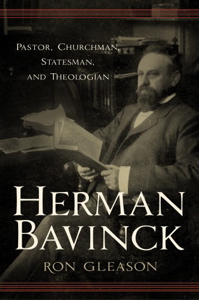
Cover of Herman Bavink: Pastor, Churchman, Statesman, and Theologian by Ron Gleason
Don’t miss these great podcasts this week.
- The White Horse Inn— “Exile, Exodus and Conquest“: On this program the hosts will explore the themes of exile, exodus and conquest showing how they each culminate in the great announcement that Jesus Christ has been given “all authority in heaven and earth” to judge, to save, and to reign forever.
- Christ the Center— “The Life and Thought of Herman Bavink“: Dr. Ron Gleason discusses his new intellectual biography, Herman Bavink: Pastor, Churchman, Statesman, and Theologian.
- Mid-Cities OPC Sermon—“Cleaning House in the Family of God” (Matthew 12:43-50). Preached by Pastor Joe Troutman on January 16, 2011. This is the church plant my family is visiting. I think you’ll appreciate Rev. Troutman’s preaching.
Meet Dr. Liam Goligher
Tenth Presbyterian Church is truly one of the flagship churches of the Reformed tradition in America. Two especially prominent ministers have pastored it, namely, Donald Grey Barnhouse, more recently James Montgomery Boice and finally, Dr. Philip Ryken, who has recently moved to the presidency of Wheaton College. If you’ve never heard any of these men preach, you have missed a great blessing.
Justin Taylor blogged on the announcement of the new candidate to follow in these great preachers’ footsteps, Glasgow, Scotland native, Dr. William “Liam” Goligher. You can read his post here, and the announcement published by the Pastoral Selection Committee of Tenth Presbyterian may be found at the following link here.
The Masculine Media Considered

Hope you’ve all had a merry Christmas, and I hope you all have a happy new year. During my Christmas vacation between these holidays, I’m currently reading (finally!) T. David Gordon’s Why Johnny Can’t Preach: The Media Have Shaped the Messengers. It’s an awesome little volume (maybe too little, but I suppose it packs enough of a wallop that were it longer it might border on the uncharitable or abusive–something the author was concerned about, and which delayed his writing of it). I’m a slow reader, so I haven’t finished it yet. I just finished chapter two, “Why Johnny Can’t Preach, Part 1: Johnny Can’t Read (Texts),” and one passage in this chapter led me to consider something about the scriptural mandate that men (specifically, males) are God’s appointed medium in preaching. Concluding chapter two, Gordon writes:
In a sense, then, the few conversations there have been about preaching and preachers in the last generation have been relatively pointless. Whether a sermon is preached by a man or a woman is comparatively unimportant; whether it encourages a liberal or conservative sociopolitical agenda is comparatively inconsequential; whether its “how-to” advice or pop psychology is helpful or not makes little difference. What would make a difference would be Christian proclamation that is consequential, that is concerned less with current events than with the history-encompassing events of creation, fall, and redemption. What would make a difference would be Christian proclamation that did not panic every time a court rendered a decision on some pet geopolitical concern, but called our attention instead to the certain judgment of God, with whom we have to do. What would make a difference would be Christian proclamation that was less concerned with “how-to” and more concerned with “why-to,” why humans are fearfully and wonderfully made in the image of God. What might make a difference would be Christian proclamation that was less concerned with the latest news from the Beltway, and more concerned with the stunning and perennial good news that God in Christ is reconciling sinners to himself. But any one of these preferred alternatives requires a sensiblilty for the significant; a capacity to distinguish the weighty from the light, and the consequential from the trivial (pp. 59-60; emphasis mine).
Perhaps I didn’t need to transcribe the entire paragraph, but it’s all such sorely-needed information, I decided not to resist the temptation. The main point of the paragraph is beside the point of this post. Like a poorly expounded text of Scripture, I’m going to launch off onto a question raised by only one minor aspect of the paragraph mentioned only in passing, and as only one item in a long list of other items. My question is raised by the highlighted reference at the beginning of the paragraph to the comparative unimportance of whether a sermon is preached by a man or a woman.
I, and most of my readers, are well aware that Scripture certainly does prescribe that in corporate Christian worship, a male is the appropriate kind of person ordained by God to preach. Gordon’s point is not to deny this divine prescription, but to argue that the content of the sermon is much more important than the sex of the preacher, as important as that is. This point, made this way by Gordon, moved me to consider the reason behind God’s stated reason (a dangerous exercise, I’m sure) for the command that women are to neither teach nor usurp authority from the man (1 Timothy 2:12). Verse thirteen of 1 Timothy 2 appeals to the fall of Adam and Eve, and hence ultimately to the roles of husbands and wives and their typifying of the hierarchy of roles between Christ and his Bride, the Church (cf. Ephesians 5:22-33).
Perhaps my question is simply an unnecessary reduction of the husband/wife hierarchy, but, is it simply that males are God’s ordained medium for preaching because of the authority which males inherently and by Scriptural injunction represent? R. C. Sproul in his series on Recovering the Beauty of the Arts explains the basic principle that “all forms are art forms, and all art forms communicate something.” Sproul makes this his fundamental point in arguing for the benefit of many of the traditional forms that have come down to us from previous generations in the context of corporate worship–for example, pulpits and other aspects of traditional church architecture. Thinking in terms of the communicative nature of forms, am I getting off track to ponder whether it is basically the authority a man conveys by virtue of his sex in the act of preaching that God has in mind when he prescribes specifically men to serve in the office of elder/pastor/preacher?
I assume that many who are conditioned by modern egalitarian sensibilities regarding the inherent nature of males versus that of females would challenge this whole line of reasoning. But consider another medium and its use of male and female images: television commercials. I’m convinced that it is safe to say that the vast majority of commercials advertizing, say, board games, portray the female winning a game played against a male. This image is just one of many ways the classic motif of David vs. Goliath plays out in probably all art, literature, television and movies. The “little guy” wins out over “the big guy.” I submit that the drama inherent in this simple motif is there because, among other reasons, males inherently represent authority or superordinate roles, whereas females inherently represent subordinate roles.
Although matriarchal cultures do exist, they are the exception, rather than the rule, and I think if the anthropologist were to examine such cultures to their foundations, he would find a point in their histories at which the matriarch replaced the patriarch as the head of those cultures. This is the case of at least one native American tribe in the Southwest. My family toured a village populated by this tribe (whose name eludes me), and the tour guide explained that this tribe was matriarchal, and that it wasn’t always so, but became so due to a lack of provision on the part of the males in that tribe. This also reminds me of the origin of the Full Gospel denomination, but that is a subject better taken up by Robert Godfrey of Westminster Seminary California.
Perhaps it’s going “beyond what is written” to ponder such things, but considering the reasons stated above, I hope you understand where I’m coming from.
Balm for Believing Victims of Christianity
The following is a sermon by Lutheran (Missouri Synod) Seminary professor, Dr. Rod Rosenbladt, who is also co-host of The White Horse Inn radio show. The title of the sermon is “The Gospel for Those Broken by the Church.” He addresses two kinds of believers who have given up on going to church: the “sad,” who feel they couldn’t measure up, so they quit trying; and the “mad,” who’ve been “used up and spit out” by the church, or who have been justly scandalized by Christianity’s many historic misdeeds. Dr. Rosenbladt’s premise is that the good news of Christ’s cross and blood shed for sinners will save not only the pagan unbeliever, but also the wounded believer who, for whatever reason, has given up on Christianity.
In some ways, Dr. Rosenbladt’s presentation may come off a bit academic, but if you hang with him, you’ll find that the heart of the message is clear as a bell. If you’ve got friends or relatives who are mad or sad at the church, please forward this post to them.
“Extent”
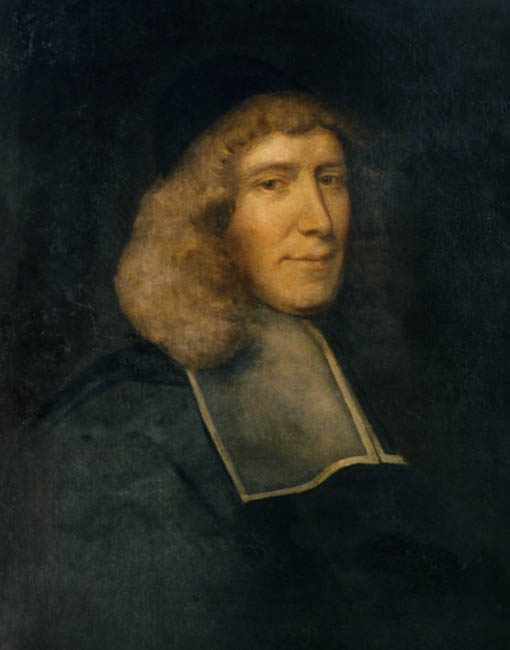
John Owen (1616-1683), thanks to ReformationArt.com
Time for our first break from Brown’s Self-Interpreting Bible. How about if we dabble in the doctrine of particular redemption?
I ran across, once again, the famous quote by Puritan theologian par excellence, John Owen (1616-1683), from his book, The Death of Death in the Death of Christ. Among statements in defense of the Reformed doctrine of particular redemption, this one is literally viral in the Reformed blogosphere. This quote is Owen’s logical critique of general redemption, and is worth thinking through and searching the Scriptures about if you’ve never taken the time.
Anyway, here’s a breakdown of his complex argument from Reformed.org:
The Father imposed His wrath due unto, and the Son underwent punishment for, either:
- All the sins of all men.
- All the sins of some men, or
- Some of the sins of all men.
In which case it may be said:
- That if the last be true, all men have some sins to answer for, and so, none are saved.
- That if the second be true, then Christ, in their stead suffered for all the sins of all the elect in the whole world, and this is the truth.
- But if the first be the case, why are not all men free from the punishment due unto their sins?
You answer, “Because of unbelief.”
I ask, Is this unbelief a sin, or is it not? If it be, then Christ suffered the punishment due unto it, or He did not. If He did, why must that hinder them more than their other sins for which He died? If He did not, He did not die for all their sins!”
I’ve looked at this many times and have until now always had trouble keeping the whole train of thought on the rails in my head, if you know what I mean. Finally, the other day, I decided I’m going to have to do with this what I do with Scripture verses and catechism questions that I want to memorize–put it to music!
The following is the result. It’s roughly based on the tune to the children’s song “I’m in the Lord’s Army,” although there are some divergences. Do what you will with it. So, without further ado, I give you . . .
Extent
by John D. Chitty
Did Christ die for
all sins of all men
or all sins of some men
or some sins of all men?
If Christ died for
some sins of all men,
then all die
for those he did not.
But if Christ died for
all sins of some men,
that’s what we believe,
all th’elect of all the nations!
But if Christ died for
all sins of all men,
why are not
all men saved?
You will answer
“Because of unbelief”–
Is unbelief a sin or not?
If not, why then,
for it give account?
Either for it
Christ was punished, or not!
If he was, then,
why does unbelief
prevent salvation
more than other sins he died for?
But if he did not
die for unbelief,
then for all sins of all men
Christ did not die!
So Christ died for
all sins of some men,
those the Father
gave to His Son!
I’m from Geneva, and I’m here to help!


 The Misadventures of Captain Headknowledge
Michael Card on the Misadventure of Mere Head Knowledge
Michael Card‘s latest album, Luke: A World Turned Upside Down, features a song called “The Bridge,” based on the parable of the Good Samaritan, demonstrating just what kind of misadventure mere head knowledge of the Word of God can be. I just heard last night that he’ll be conducting his current Biblical Imagination Conference an hour away from my home, down at Waxahachie Bible Church on April 8-9. Don’t know if I can make Friday, don’t know if I can make the conference all day Saturday, but some of us may attend the concert Saturday night. I’ll keep you posted if it does happen. Anyway, I wanted to share this song with you, since it’s so consistent with the theme of this blog. But first, the passage from God’s Word which inspired the song:
THE BRIDGE (click here to listen to song)
Michael Card
There was a legal-minded man
Intellectually inclined
But the facts just seemed to pile up
And fester in his mind
So he asked a twisted question
“What am I supposed to do?”
His heart said he should love
But his mind still wondered, “who?”
From the head to the heart
From the heart to the mind
The Truth must make a journey
If we ever hope to find
You can see it as a bridge
Or as a narrow, winding road
The fact is Truth must travel
If it ever will be told
Then the answer came concealed
In the story Jesus told
Of a lonely, outcast traveler
Upon a dangerous road
When men with all the answers
Left the wounded man to die
While the lonely clueless stranger
Refused to pass him by
The answer’s not an answer
If it’s for the mind alone
It’s the orchard in the apple seed
It’s the seed that must be sown
It has to do with loving
And giving all you have to give
But only those who cross the bridge
Can ever hope to live.
2010 Covenant Artists ASCAP
piano, Vance Taylor
bass, Norbert Putnam
drums, Chester Thompson
vocals, Scott Roley, Michael Card
percussion, Ken Lewis
Share this: