Dad Rod on Repentance
Lutheran professor of Systematic Theology and Christian Apologetics, Dr. Rod Rosenbladt, co-host of The White Horse Inn radio show, was interviewed yesterday,
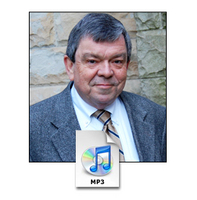
Rod is rad, he's our dad!
Thursday, February 4th, on “Lutheran Public Radio,” a show called Issues, Etc. on the topic of repentance. Dr. Rosenbladt’s WHI co-hosts, Mike Horton and Kim Riddlebarger, began calling him “Dad Rod,” chiefly, I think, because it was his sense of urgency that American Evangelicalism needs to be reintroduced to the gospel, that drives the vision of their show. Among other things, revivalism has transformed American Protestant Christianity into something more akin to the medieval Roman Catholic spirituality and Anabaptistic enthusiasm (don’t ignore this link!) than anything produced by the Protestant Reformation of the Magisterial Reformers, Martin Luther, John Calvin and Ulrich Zwingli. One of the things that revivalism has “De-formed” in America is the doctrine of repentance.
The revivalist version of the doctrine of repentance is one which puts all the emphasis on the work of the believer to be sorry or contrite enough, really mean it when he repents, and shows that he’s really repented because he has actually ceased and desisted of any recurrence of the particular sinful behavior repented of. “Dad Rod” clearly and simply summarized the Reformation view of repentance from the believer’s perspective when he said . . .
“Our repentance is always imperfect and always half-hearted. . . This is preparation for believing the gospel promise (of forgiveness). . . and we do that half-heartedly, too. But God saves us in Jesus anyway.”
If you didn’t just breathe a sigh of relief, watch out! You may just be one of those dishonest people who thinks they’ve got this obedience to the Law thing down.
By the way, you can learn more pearls of wisdom from our Lutheran Dad Rod at his very own website, New Reformation Press.
Riddlebarger on the Necessity of Church Discipline
I just wanted to post my “Amen!” to Dr. Kim Riddlebarger’s recent post which emphasizes the logical conclusion of an absence of church discipline.
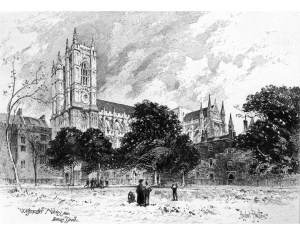
Westminster Abbey, thanks to reformationart.com
In chapter 30 of the Westminster Confession of Faith, “Of Church Censures,” a good summary of the biblical case for church discipline is outlined.
I. The Lord Jesus, as king and head of His Church, has therein appointed a government, in the hand of Church officers, distinct from the civil magistrate. (Isaiah 9:6-7; 1 Timothy 5:17; 1 Thessalonians 5:12; Acts 20:17-18; Hebrews 13:7, 17, 24; 1 Corinthians 12:28; Matthew 28:18-24)
II. To these officers the keys of the kingdom of heaven are committed; by virtue whereof, they have power, respectively, to retain, and remit sins; to shut that kingdom against the impenitent, both by the Word, and censures; and to open it unto penitent sinners, by the ministry of the Gospel; and by absolution from censures, as occasion shall require. (Matthew 16:19; 18:17-18; John 20:21-23; 2 Corinthians 2:6-8 )
III. Church censures are necessary, for the reclaiming and gaining of offending brethres, for deterring of others from the like offenses, for purging out of that leaven which might infect the whole lump, for vindicating the honor of Christ, and the holy profession of the Gospel, and for preventing the wrath of God, which might justly fall upon the Church, if they should suffer His covenant, and the seals thereof, to be profaned by notorious and obstinate offenders. (1 Corinthians 5; 1 Timothy 5:20; Matthew 7:6; 1 Timothy 1:20; 1 Corinthians 11:27-34; Jude 23)
IV. For the better attaining of these ends, the officers of the Church are to proceed by admonition; suspension from the sacrament of the Lord’s Supper for a season; and by excommunication from the Church; according to the nature of the crime, and demerit of the person. (1 Thessalonians 5:12; 2 Thessalonians 3:6, 14-15; 1 Corinthians 5:4, 13; Matthew 18:17; Titus 3:10).
Labels, Labels, Labels!
 Many Christians decry the use of “labels” to identify one’s distinctive beliefs and/or practices. I find this attitude intellectually
  dishonest. Everyone’s belief and practice, or approach to determining his own autonomous belief and practice, is learned either consciously or unconciously from some prior group’s or individual’s belief and practice. Being able to identify these is not some attack on the unity we have in Christ, but when used with a good and accepting attitude, it’s a way to know your brother or sister in Christ. And if you know your friend, you can love him better.
My personal attitude about labels can be likened to the way all you sports fans out there view your teams. Sure, there’s a little competition between teams, and maybe an animated discussion about your team’s strengths and the other teams’ weaknesses, but it’s all in fun. That’s the attitude I like to retain about our various distinctives. Everyone should just relax, and have a good time in the Lord, for cryin’ out loud!
Anyway, I bring all of this up simply to introduce one of R. Scott Clark’s entries in his live blogging of the Calvin’s Legacy Conference from Westminster Seminary California. Dr. Clark answers a question about the difference between the labels “Calvinist” and “Reformed.” You can read his interesting answer here. ” But in the meantime, he shares some history that reveals the origin and significance of other labels like “Lutheran,” “Evangelical,” and “Protestant.” It’s a good, short read.
 Now all you guys who admit to your own labels, remember to play fair! 🙂 If you like what you read, there’s plenty more where that came from. You can subscribe to the Calvin’s Legacy Conference RSS Feed and it’ll come to you, you won’t have to go get it!
Live Blogging 3
for more info on this conference see: http://kimriddlebarger.squarespace.com/the-latest-post/2009/1/8/a-video-conference-on-eschatology-and-live-blogging-of-a-wes.html and follow the links.
10:41AM
Wow! New term from Voythress: protology–the study of first things, as opposed to eschatology, the study of last things. Stick that in your theological glossary.
Waldron’s now affirming that eschatology comes before soteriology in Scripture. Think Gen. 3.
Riddlebarger explained that a regenerate believer is not taken to the condition Adam was in before the fall, but that he is redeemed to the state Adam would have been in, had he been confirmed in righteousness, having succeeded in obeying the command to not eat the forbidden fruit.
Notes on Gaffin’s comments on “Get the Garden right, get Christ right.”1 Cor. 15 Resurrection hope of the church. Christ compares resurrected Christ with Adam before the fall. vs. 45, 47, Christ called the “Second Man.” The deepest perspective Paul provides on redemptive history. There’s no one between Adam, the first and Christ, the Second. Noah, Abraham, Moses, David are below the horizon of Paul’s concern in this chapter, Christ is literally the “eschatological one.” When you understand who Christ is as the esc. Adam, then everything else between Adam and Christ in redemptive history must fit into that.
Poythress: Both kinds of imagery are in Rev. 22. 22:1 shows a final garden, heightened from the original (Gen.3) and the language of the Bride of Christ. Here you have a connection of both “bridal and garden” in Gen 2.
Eph. 5:28ff . . . Was Eve typological of the Church in this passage? Riddlebarger says simply “clearly [she is]” but that he wouldn’t press it too far. Missed Waldron’s reply, but Poythress says there’s a comparison with Eve. Waldron asked if this connection somehow contributes to Mariology? I don’t get it. Anyone out there have a comment?
11:00AM
Moving on to questions about the competing attitudes about the world between dispensationalism and covenantal theology. Should we be optimistic about the success of the gospel, or pessimistic about any need to “polish the brass on a sinking ship?”
Gaffin speaks to the application of this question to suffering. We can be confident that Christ is now healing (I think he said healing) the earth with the gospel. References Mark 10:29-30. Promise of blessings with persecution to followers of Christ. References some passage in the “T books.” With many tribulations we must enter the kingdom of God. Opposition to the gospel results in suffering. There is a positive role of suffering in the church–“filling up the sufferings of Christ”
A short plug for Last Things First: Unlocking Genesis with the Christ of Eschatology.”
Poythress suspects that a hundred years ago, amillers didn’t have Vos’ and Gaffin’s “already/not yet” structure. This is optimistic in a way older amillers didn’t have the benefit of. Christ’s Body is the first fruits of the new heavens and earth. If we participate in that, it’s a spiritual optimism, looking forward to that which is yet to come.
Riddlebarger: the charge that amillers are pessimistic was made by Bahnsen. That amil is escapist like premil, says Bahnsen. Post mil Bahnsen would define optimism/pessimism differently. No economic, cultural, religious transformation before the Return. Optimistic about what God does through Ministry of the Word and administration of the sacraments. Not pessimistic about the gospel, but about human institutions.
Poythress believes it all will be thoroghly transformed in the new heavens and new earth. Amils aren’t giving up on transformation of the world, but don’t expect it until after the consummation. No guarantee to be successful in worldly terms, but should try to think and act Christianly in our worldly context. A Christianized society is not the atmosphere of the New Testament.
Waldron argues for optimism about the spread of the gospel. Optimistic about what? Matt. 16, Lk 13 parable of mustard seed teaches growth of gospel. Mt. 16 shows the church thoroughly on the attack, not under attack by Satan. (?) The gates of hell won’t prevail against the spread of the gospel. Parable of weeds show that good and evil grow together until the end. Not good to emphasize that as good grows, evil shrinks, or vice versa, but that they grow concurrently until the Return of Christ.
11:16AM
Ezk. 40-48 When does a biblical theology of the millennial Temple begin, and what does it look like?
Waldron: Doesn’t teach reinstitution of Old Testament ceremonial, sacrifical system in the Millennial Age.
Riddlebarger: see Beale’s book on the Temple. Hard to unlearn the wooden literal, dispensational interpretation. But it undercuts the beauty of what God is describing.
Poythress: The Temple theme is present by implication in the Garden of Eden. God communes with Adam and Eve as he does with Israel in the Temple. Jacob at Bethel–no physical structure, but a mediation of the presence of God is the point. Ezk. Temple is symbolic of God’s communion with his people. It shouldn’t be astonishing that John 2 indicates that Jesus spoke of his own body in speaking of the Temple. A vision is not a photograph. The Temple is the medium for speaking these concepts of mediated communion with God. You can’t dictate the details of final realities by looking at the type. The reality always exceeds the type.
Barcellos: Angels ascending, descending on the Son of Man?
Poythress: Seen carefully, the Son of Man is the ladder, a mediator between heaven and earth.
Gaffin: Related to the larger question of the biblical theology of the Temple, as you look at Ez 40-48 in its visionary and prophetic character, that whole chunk focuses on what Christ said about whatever promises held out in Old Testament Scriptures, they have their Amen (fulfillment) in Christ. 1 Cor. 3:9–We’re God’s fellow-workers, you’re God’s field/building. Is this an arbitrary connection? It’s a reference to the Garden (field) and the building (New Jerusalem). The New Jerusalem is a consummated Garden of Eden.
(Wow!jdc)
11:30
Supersuccessionism/Replacement theology:
Waldron: The idea that amil says the church replaces Israel as the people of God. It’s a pejorative label.
Poythress: Not replacement, but fulfillment. Christ is the true Israel (Matt. 2). Israel the Son in a subordinate sense. Jesus the heir of the promises made to both Abraham and David. Gal. 3:16 argues that Gentiles and Jews alike participate in these promises. If Christ’s, Abraham’s offspring–heirs according to promise. Jews don’t cease to participate in the promise, but the Gentiles are included. Jewish disbelief is what gets them cut off the tree (Rom 11).
Riddlebarger: Is OT “Judeocentric”? I’m unashamedly a Christian and not a Jew. But I’m reading the OT looking for Christ. Isa 53 and related passages are clear if looking for Christ in the OT.
Gaffin: What is OT Israel typological of? Israel’s God’s chosen Son. Christ is the true Israel. Every promise given to Israel has its focus in Christ and his work. Acts 1:6 asks a Jewish oriented question about the Kingdom of God. Jesus corrects the terms of the question. It’s not is Kingdom being restored to Israel, but will Israel be restored to the Kingdom? In Rom 9-11, Paul sets terms at beginning. 9:6 who is Israel? Not all Israel are Israel, but those who believe, whether Jew or Gentile. Gaffin accepts term supersession in sense of fulfillment not replacement.
Waldron: If Christianity is not the fulfillment of the Old Testament, then what is Christianity?
Poythress: Gal. 4 Jerusalem above is free. She’s our mother. Isa 54 about the expansion of the people of God. Christ is the heir and if you’re in Christ, then you’re the heir. Gal. 3 means you can’t divide Christ into eschatological and political.
Gotta bug out early, but here’s plenty to chew on. Hope some of my notes make sense.
Live Blogging TCTE, part 2
10:29AM
Dr. Poythress advises that the question of the millennium is complex, because it does not simply deal with the interpretation of Revelation 20 alone, but involves “a large swath of Old Testament” prophetic Scriptures.
Pastor Waldron’s emphasizes that little progress is made by Amillennialists in saying that they affirm a “literal interpretation.” This makes sense to me because there is a gap in understanding between Dispensationalists and Covenant theologians about what it means to interpret Scripture literally. The term “literal” was coined by Luther in the Latin phrase “sensus literalis” which means “the sense of the words” not “anti-figurative sense everywhere possible, regardless of the rules of the given type of literature in question.”
10:35AM
Helpful sound byte from Dr. Gaffin: “Soteriology is eschatological, and eschatology is soteriological.” The first coming of Christ inaugurates the “last things.”
Live Blogging “Then Comes the End”
Forgive my amateurish first attempt at live blogging, but I’m following online a web conference called “Then Comes the End” put on by the Midwest Center for Theological Studies.
It’s 10:15AM central time, and the host is just introducing the participants and waiting for others to log in, I suppose. So far, we’ve got Dr. Vern Poytress, R. Gaffin and Dr. Sam Waldron, and will have Dr. Kim Riddlebarger.
Some of us viewers had a little fun in the chat room early on, but we were cleared and summarily instructed to reserve our comments for questions to the professors.
more to come . . .
Rest, Renew, Rely

Living the Cross Centered Life by CJ Mahaney
I loaned my copy of C. J. Mahaney’s incredible book,
Living the Cross-Centered Life, to a co-worker who is a young believer trying to grow out of a severly sinful lifestyle. Bemoaning his lack of reading comprehension at times, he asked me what Mahaney meant when he wrote somewhere in the book (I haven’t seen the quote) something to the effect of, “even though I’m living in the flesh, I choose to live by faith.” Unclear as he was to the meaning of this statement, I told him I could only guess that the author meant that he was not going to rely on his own moral fortitude to be godly, but he was going to rely on God’s grace to empower him to obey his commands. He asked me to write something down about that, and the following is what came out of that effort. Hope you find it edifying, if not instructive in any way.
Rest in the Gospel–The Right Basis
The basis for your acceptance by God is the active and passive obedience of Christ. His active obedience is his 33 years of sinless obedience by which he earned eternal life for you; his passive obedience is his suffering and death on the cross, facing for you the consequences of your sin. Therefore, the basis for your acceptance by God is not your behavior. If the basis of your acceptance by God was your behavior, then you would be trying to earn some reward from God and you would be trying to avoid some punishment from God. The right motive for your behavior as a Christian is gratitude for Christ’s work for you.
Renew Your Gratitude–The Right Motive
Fear of punishment and hope of reward is the wrong motive for your behavior as a Christian; gratitude for Christ’s work is the right motive for your behavior as a Christian. Gratitude is what you feel when you are given a gift. When you earn what you have, you’re only thankful to yourself, and that’s not what glorifies God. Both the basis of your acceptance by God, the gospel of Christ’s death and resurrection, and your response characterized by grateful behavior are given to you freely by God’s grace, not procured by your own strength.
Rely on Grace–The Right Source
Grace is not a force like electricity which makes our appliances work, it’s God’s good attitude toward you based on his satisfaction with the obedience and death of his Son, the Lord Jesus Christ. When you successfully resist temptation, and successfully obey his commands, he has granted this success to you as a gift of his gracious disposition toward you because of Christ.
Does “Every Member Ministry” Contribute to “Christless Christianity”?
An “every member ministry.” The name should be self-explanatory. This is a staple of modern American Evangelical and Fundamentalist discipleship, and likely of the Reformed, as well. We probably all can hear the echoes of pastors past and present who’ve clearly proclaimed that they are not the only “ministers” in the local church. Every member, not just the pastor, is here to exercise his gifts for the building up of the body of Christ. Might this be a “fifth rail” of American Christianity that the believer in his right mind dare not touch, lest he be accused of attempting to take us back to Roman Catholicism with its clearly defined gap between the clergy and the laity? Don’t worry, my personal intention is not to state anything to the contrary of those who believe they are gifted to perform any of a myriad of tasks in the local church. Some of us are gifted to teach, though we’re not ordained pastor/teachers; some are gifted to serve the physical needs of the least of the congregation; some are gifted to aid in the musical operation of the local church; some are gifted to do any myriad of other things that are indded vital activities that ought to take place in the context of the local church, and by the members of the congregation, not just the ordained pastors, elders and deacons. I’m not out to overturn the apple cart of an “every member ministry” as it happens to currently be manifest in American churches. But I would like to address, or rather, cite Michael Horton’s remarks regarding, one passage of Scripture that is famously associated with the idea of an every member ministry, and in fact, serves as part of the Scriptural basis for such activity.
But first, let’s look at the passage: Ephesians 4:1-16, as it is translated in the King James Version. And let us pay special attention to where the punctuation falls in verse twelve, which I’ve highlighted.
1I therefore, the prisoner of the Lord, beseech you that ye walk worthy of the vocation wherewith ye are called, 2With all lowliness and meekness, with longsuffering, forbearing one another in love; 3Endeavouring to keep the unity of the Spirit in the bond of peace.
4There is one body, and one Spirit, even as ye are called in one hope of your calling; 5One Lord, one faith, one baptism, 6One God and Father of all, who is above all, and through all, and in you all. 7But unto every one of us is given grace according to the measure of the gift of Christ.
8Wherefore he saith, When he ascended up on high, he led captivity captive, and gave gifts unto men. 9(Now that he ascended, what is it but that he also descended first into the lower parts of the earth? 10He that descended is the same also that ascended up far above all heavens, that he might fill all things.)
11And he gave some, apostles; and some, prophets; and some, evangelists; and some, pastors and teachers; 12For the perfecting of the saints, for the work of the ministry, for the edifying of the body of Christ: 13Till we all come in the unity of the faith, and of the knowledge of the Son of God, unto a perfect man, unto the measure of the stature of the fulness of Christ: 14That we henceforth be no more children, tossed to and fro, and carried about with every wind of doctrine, by the sleight of men, and cunning craftiness, whereby they lie in wait to deceive; 15But speaking the truth in love, may grow up into him in all things, which is the head, even Christ: 16From whom the whole body fitly joined together and compacted by that which every joint supplieth, according to the effectual working in the measure of every part, maketh increase of the body unto the edifying of itself in love.
Now let us see what Michael Horton has said about this passage in his latest book, Christless Christianity, on pages 248-249, in the final chapter, “A Call to the Resistance.”
And now, as we are reminded in Ephesians 4:8-16, the ascended King moves his gifts of this subversive revolution down to us; we do not have to climb up to him. Here the apostle Paul teaches that the same one who descended to the uttermost depths for us and ascended “far above all the heavens, that he might fill all things” (v. 10), does not keep the treasures of his conquest to himself but liberally distributes them to his liberated captives below. The original Greek emphasizes, “The gifts that he himself gave . . . .” They originate with Christ, not with individual members or the body as a whole. The gifts he gives are apostles, prophets, evangelists, pastors, and teachers (v. 11). They are not given as a hierarchy of control, like “the rulers of the Gentiles” who “lord it over” their subjects instead of serving (Matt. 20:25; see vv. 25-28). Rather, Paul says they are given . . . (here he cites Ephesians 4:12-15, which we’ve just read above). More recent translations typically render the clasuse in verse 12, “to equip the saints for the work of ministry” (e.g., ESV, NRSV, RSV), which has been used as the chief proof-text for every member ministry. For various reasons, I am persuaded that the older translations (especially of verse 12) are more accurate and also capture better the logic of the argument.
This does not mean, of course, that the official ministry of the Word (now exercised by pastors and teachers) is the only gift or that ministers rank higher in the kingdom of Christ than everyone else. Rather, this gift of the ministry of the Word is given so that the whole body may be gifted: brought together in the unity of the faith and of the knowledge of the Son of God. Only then can each member receive the additional gifts that make them function together as one mature body with Christ as its living Head (Eph. 1:15-16). The gifts flow down from Christ; the Great Shepherd serves his flock through undershepherds who minister his gospel through preaching and sacrament. Of course in other places Paul expands the list of gifts that are exercised by the wider body (see Rom. 12:3-8; 1 Cor. 12). A church that is lacking in generosity, hospitality, and other gifts of mutual edification is unhealthy; a church that lacks the Word is not a church. Therefore we come to church first of all to receive these gifts, realizing more and more our communion with Christ and therefore with each other as his body. (emphasis mine)
I always wondered if there was something up with this difference in punctuation between the KJV and many, if not all, modern translations (I haven’t checked). I know just bringing up the matter will draw criticism as if I’m out to tell everyone in the church to stop doing stuff for Christ, and just sit and listen to the preacher. This is the great fear of those who zealously proclaim this passage as it is translated and punctuated in modern translations (even if they’re KJV onlyists!) Rather, the point I want to make is the same simple point I always make. For ministry to be Christ-centered, the cart must not go before the horse. The Law and Gospel preached and the sacraments properly administered is the horse, and this and only this, is what makes the cart of our fruitful service go. The Law and Gospel preached and the sacraments properly administered turns some goats into sheep, and then the same Law and Gospel preached also feeds the sheep and strengthens them to love one another, not only as a congregation, but also as sojourners and strangers among our unbelieving neighbors in the world. Profound in its simplicity; simple in its profundity!
The cart may be getting put before the horse sometimes when our focus on the “priesthood of the believer” somehow turns into the “ministryhood” of the believer, as Horton frequently says. Hear me clearly, brethren: don’t give up your Sunday School class, don’t drop out of the choir or praise band (or whatever your church calls it), don’t stop helping in all the little, unnoticed ways you do. Just don’t make your primary focus–don’t make these activities your main purpose for being there. If you do, you may be living a Christless Christianity, intending to earn God’s grace by your good works. Rather, first look to being served by Christ through the ordained ministry of Word (Law & Gospel! Not just Law and not just Gospel!) and sacrament as your source of grace and faith and strength . . .
13 until we all attain to the unity of the faith and of the knowledge of the Son of God, to mature manhood, to the measure of the stature of the fullness of Christ, 14 so that we may no longer be children, tossed to and fro by the waves and carried about by every wind of doctrine, by human cunning, by craftiness in deceitful schemes. 15 Rather, speaking the truth in love, we are to grow up in every way into him who is the head, into Christ, 16 from whom the whole body, joined and held together by every joint with which it is equipped, when each part is working properly, makes the body grow so that it builds itself up in love. (Ephesians 4:13-16, ESV).
Pecuniary Satisfaction and Peculiar People, part 2
All I want to do today to complete this focus on the contrivance of “applications” based on the misinterpretation of an archaic translation of a Scriptural word is to show the definition of “peculiar” as presented in Noah Webster’s 1828 American Dictionary of the English Language. The choice of this dictionary is significant in that it is this volume which is recommended to advocates of the superiority of the King James Version of the Bible to all modern translations. It often features the biblical usage of words, with numerous quotations from Scripture as well as classic English literature. You’d think such a resource would irradicate foibles like the one under consideration, but tradition dies hard!
PECU’LIAR, a. [L. peculiaris, from peculium, one’s own property, from pecus, cattle.]
- Appropriate; belonging to a person and to him only. Almost every writer has a peculiar style. Most men have manners peculiar to themselves.
- Singular; particular. The man has something peculiar in his deportment.
- Particular; special. “My fate is Juno’s most peculiar care.” Dryden.
Definition 1 is the relevant definition. Considering the given usages, when it comes to 1 Peter 2:9, God has a people that is peculiar to himself, as opposed to being the people of any other god or ruler. I repeat, the church is to be peculiar to God, not peculiar to the world. That means we are his and only his. This simply cannot legitimately “apply” to how strange believers ought to seem to the world. Granted, the immediate context of the passage does explicitly include some imperatives (that is, “applications”) that are to be performed because of the fact that we are peculiarly the Lord’s people, and I submit these are the imperatives intended by the human and divine authors of Scripture to be applied to believers.
“They stumble because they disobey the word, as they were destined to do. (Notice the reference to God’s sovereign reprobation of those who never come to faith–that was for free!)
“9 But you are a chosen race, a royal priesthood, a holy nation,a people for his own possession, that you may proclaim the excellencies of him who called you out of darkness into his marvelous light. 10 Once you were not a people, but now you are God’s people; once you had not received mercy, but now you have received mercy.
“11 Beloved, I urge you as sojourners and exiles to abstain from the passions of the flesh, which wage war against your soul. 12 Keep your conduct among the Gentiles honorable, so that when they speak against you as evildoers, they may see your good deeds and glorify God on the day of visitation.” 1 Peter 2:8b-12.
The imperatives we have are based on the indicative of believers in Christ being a people who are peculiarly God’s, as opposed to any other god or ruler. Here’s where Christ-centeredness enters the picture. No exposition of the text is genuinely made in light of the full context, if the work of Christ for sinners is passed over and given little attention. It’s the indicatives of the Gospel, what God says about what he’s done for us in the death, burial and resurrection of the Lord Jesus Christ, and about how it has affected us by his grace alone, that contains the power to call people out of darkness into his marvelous light. To focus the majority of our attention on the behavior that is to result from Scripture’s Christ-centered, Gospel cause is to miss the power to live out the behavior and actually perform the “application.”
So here are the results of God’s showing mercy to us, calling sinners from every nation, race and class out of the darkness and into the marvelous light, making us who were not a people a chosen generation and a holy nation and a people for his own possession–a people who are peculiarly his and no one else’s:
- proclaim the excellencies of him who brought us out of darkness into his marvelous light. Then Peter inserts another indicative statement that builds on and emphasizes on our being peculiarly God’s–once we weren’t a people, but now we are God’s people by virtue of his having shown us his mercy.
- Therefore, since we are citizens of God’s nation, we should view ourselves as exiles who are merely sojourning through this world (in the world, not of it), and we should abstain from fleshly passions, which wage war against our souls.
- In addition, since we are God’s people, our conduct (behavior) should be honorable (not “peculiar” or strange or goofy) as we sojourn among the “Gentiles” (unbelievers who are citizens of the world, rather than citizens of God’s kingdom), our motive being that when we are falsely accused of evil-doing, others will realize the falsity of such accusations and God will be glorified.
See? There’s plenty of application, explicitly given by the apostle. There’s no call for intentionally misinterpreting one word in the indicative portion of the passage in order to turn it into an imperative to “look goofy to the world.” Rather, proclaim the excellency of Christ as you abstain from fleshly passions and otherwise conduct yourself in an honorable manner as you continue to sojourn in this lost and dying world for the glory of God. Now that’s preaching that will strengthen the faith of believers! Thanks for spelling it out for us, Peter!
Now, going back to the Bible study at which I originally brought up this topic. You know how after you have a conversation, you think of things you should have, or could have said? Well, after I made my comments in the Q&A session after the lesson, the teacher thanked me for “showing us how much smarter I am than the rest of us.” If I’d had the presence of mind at the time, I would have, or could have, and indeed, should have, replied that it’s not about how smart I am; it’s about whether or not the minister of the Word is actually communicating what God is saying in the text.
Mega-Churches Respond to Reveal Study
This week on the White Horse Inn, the topic is the response of American mega-churches to the survey conducted by Willow Creek’s leadership (REVEAL) which concluded that the solution to dissatisfaction among faithful church members is less dependence on the organized church’s ministries, focusing on making individual Christians self-feeders.
For the record, here and here were my responses back when the survey originally made the headlines.
Listen to The White Horse Inn: learn what you believe and why you believe it.
Baptists & them “Whiskeypalians”
Sorry, Anglicans. Just a little Baptist humor, there. Just wanted to bring to the attention of my readers a couple of interesting psots: one by R. Scott Clark on the fallout from the SBC’s recent “John 3:16 Conference,” and another from Christianity Today with an update on the continuing drama in the schism of the Anglican Communion over the ordination of openly unrepentant “homosexuals.”
Commentary on “The First Prohibition”
The following is an addendum to Theological & Doxological Meditation #47, containing commentary on the Scripture proofs which provide the basis for the answers to the questions of the Westminster Shorter Catechism. From now on, each Theological & Doxological Meditation will contain such commentary. They are offered with a view to the edification and instruction of believers and the calling of unbelievers to repentance and faith.
47. Q. What is forbidden in the first commandment?
A. The first commandment forbids the denying (Psalm 14:1), or not worshiping and glorifying the true God as God (Romans 1:21), and our God (Psalm 81:10-11); and the giving of that worship and glory to any other, which is due to him alone (Romans 1:25-26).
Question #47 of the Westminster Shorter Catechism focuses on the prohibitions implied by the first commandment, “You shall have no other gods before me.” Here’s what answer #47 looks like when you break down the various concepts and pair them up with the Scripture proofs provided, on which the language is based:
1. The first commandment forbids the denying . . . the true God . . . . (Psalm 14:1);
2. The first commandment forbids not worshiping and glorifying the true God as God (Romans 1:21);
3. The first commandment forbids the denying, or not worshipping the true God as God, and our God (Psalm 81:10-11);
4. The first commandment forbids . . . the giving of that worship and glory to any other, which is due to him alone (Romans 1:25-26)
Denying the True God
Psalm 14:1 – “The fool says in his heart, ‘There is no God.’ They are corrupt, they do abominable deeds, there is none who does good.”
The fool of verse one is the one who not only does not call upon the Lord (v.4), but he is also an “evildoer” who actively opposes those who do acknowledge the only true God. The fuller description of the fool of verse one is contained in verses two and three, which the Apostle Paul would quote in Romans 3 as a general description of all, whether Jew or Gentile, who are “under sin” (Romans 3:9), having not been justified by God’s grace alone, through faith alone, because of Christ alone to the glory of God alone.
Not Worshiping and Glorifying the True God as God
Romans 1:21 – “For although they knew God, they did not honor him as God or give thanks to him, but they became futile in their thinking, and their foolish hearts were darkened.”
Fools who deny and refuse to worship and glorify the true God know that he exists, and that they ought to worship and glorify him; but knowing this with futile minds and darkened hearts, they were unwilling and unable to express gratitude and honor to him. This is what happens when “head knowledge” and “heart knowledge” are not informed by, and obediently mindful of, God’s revelation. God reveals himself in the world and in his Word, and with darkened hearts and futile minds, Jew and Gentile alike does that which is prohibited by the first commandment—he does not worship and glorify the true God as God.
Our God
Psalm 81:10 – “I am the Lord your God, who brought you up out of the land of Egypt . Open your mouth wide, and I will fill it. 11 “But my people did not listen to my voice; Israel would not submit to me.”
As initiator of the covenant, God embraces the Israelites as “his people” and calls on them to “receive the covenant as an expression of his grace, believe in him and live as he directs (ESV Study Bible note on Ps. 81:8-10), embracing him as “our God.” This clearly implies the exclusivity which is so unpopular in pluralistic societies such as ours—such exclusivity is the solemn command of God. As Christians, if the Lord is our God, then the gods of non-Christian religions are to be excluded as “legitimate object(s) of worship” (Williamson, The Westminster Confession of Faith; Presbyterian & Reformed Publishers).
The Worship and Glory of Other Gods
Romans 1:25 – “because they exchanged the truth about God for a lie and worshiped and served the creature rather than the Creator, who is blessed forever! Amen. 26 For this reason God gave them up to dishonorable passions. For their women exchanged natural relations for those that are contrary to nature;”
Finally, the crass outward exchanging of the only true God for false gods, or rather, in the terms of the catechism, “the giving of that worship and glory to any other, which is due to him alone.” Each command of the Decalogue (the “Ten Words”, aka, Ten Commandments) is written in terms of the most harmful outward expression of a whole range of sins, all of which are violations of the spirit, if not the letter, of the Law. Such a range is partly what the Westminster Shorter Catechism seems intending to convey in its repeated examination (as we shall notice in the weeks to come)of that which each command prescribes and prohibits.
As our Lord demonstrates in his commentary regarding some of God’s commands in the Sermon on the Mount, there are more ways than one to violate the commandments of God. Reformed theologians tend to categorize these ways in the following terms: each command implies the opposite prohibition, and vice versa (which the catechism expressly spells out); and every day we break God’s Law in thought, word and deed. Truly, God’s commands condemn us all in ways we will never be able to fully comprehend.
This is the reason it was necessary for God to take on a human nature untainted by the curse of original sin, that he might keep all of the commands and their implied prohibitions (and vice versa) in thought, word and deed perfectly every day of his life. This is called “the active obedience of Christ.” Christ obeyed the Law perfectly, which the first man, Adam, failed to do, and thus Christ earned eternal life by his flawless works. The righteousness accrued by the active obedience of Christ is freely available and offered to all who will believe, for when Christ was crucified, his unjust death was a sacrifice that propitiated, or turned away God’s furious wrath onto himself from the sins of all those God the Father gave to him before the world was made.
“So then, the law was our guardian until Christ came, in order that we might be justified by faith” (Galatians 3:24). Trust Christ today, and be saved from God’s wrath against all sins, chief among them being the giving of worship and glory to any other, that is due to him alone!
Misadventures Around the Blogosphere
 Attention: Commenter Kevin Moon–You’ve recently been expressing a serious desire (here and here)to observe me handle a blog topic with Scripture. Well, here you go, Brother! Whaddaya think?
In other news, I had a thing or two to say about the validity, or lack thereof, of Henry Morris’ brand of evangelical scientific creationism over at Fundamentally Reformed. Some of you may find this exchange challenging. If so, be sure to let me hear about it.
Theological & Doxological Meditation #47
The First Prohibition
Q. What is forbidden in the first commandment?
A. The first commandment forbids the denying (Psalm 14:1), or not worshiping and glorifying the true God as God (Romans 1:21), and our God (Psalm 81:10-11); and the giving of that worship and glory to any other, which is due to him alone (Romans 1:25-26).
As With Gladness, Men Of Old
#226, Trinity Hymnal (© 1990)
William C. Dix, 1860
As with gladness, men of old
Did the guiding star behold
As with joy they hailed its light
Leading onward, beaming bright
So, most glorious Lord, may we
Evermore be led to Thee.
As with joyful steps they sped
To that lowly manger bed
There to bend the knee before
Him Whom Heaven and earth adore;
So may we with willing feet
Ever seek Thy mercy seat.
As they offered gifts most rare
At that manger rude and bare;
So may we with holy joy,
Pure and free from sin’s alloy,
All our costliest treasures bring,
Christ, to Thee, our heavenly King.
Holy Jesus, every day
Keep us in the narrow way;
And, when earthly things are past,
Bring our ransomed souls at last
Where they need no star to guide,
Where no clouds Thy glory hide.
In the heavenly country bright,
Need they no created light;
Thou its Light, its Joy, its Crown,
Thou its Sun which goes not down;
There forever may we sing
Alleluias to our King!
FBC Dallas Gets “Politically Incorrect”
Dr. Robert Jeffress is the pastor of the historic First Bapitst Church of Dallas. He has made the news this  week for beginning a sermon series called “Politically Incorrect.” At least the first two sermons will touch on the issue of homosexuality. Last Sunday, Dr. Jeffress corrected some commonly promoted myths that undermine Scripture’s teaching about the subject. Here’s the outline. About 100 protestors gathered outside the building during the three worship services. You can read the report here.
Thank God for the leadership and courage of a local prominent minister in this time when such a controversial topic would be easier to ignore. He provides an example of how believers will begin having to count the cost of faithfulness to Christ in the very forseeable future.


 The Misadventures of Captain Headknowledge