Memoir of the Rev. John Brown, part 2
 About the eleventh year of his age his father was removed by death; and in some short time after, his loss was doubled in the death of his mother, and he left a poor orphan, without friends who could render him any essential service in his forlorn situation. But another ingredient was still wanting to fill up the bitter cup of adversity. About four months after the death of his mother, he was seized with a fever, four attacks of which rapidly succeeding each other, rendered his recovery almost hopeless: but his Master had employment assigned for him in his church; and having, by a series of afflicting circumstances, impressed his mind with the ineffable importance of eternal things, and rescued him from the jaws of the grave, provided the homeless orphan with a friend and protector. An elder in the parish of Abernethy—an aged shepherd and an eminent Christian, respectable also for his intelligence, though so destitute of education that he could not so much as read—cheerfully embraced the opportunity of supplying the deficiency under which he laboured, by engaging the homeless orphan, to assist him in tending his flock, and in reading for him as opportunity allowed. It will appear strange to many, that men, of considerable talents and religious intelligence, should have been so utterly neglected in their education, particularly in a country so famed for her public seminaries as Scotland has long been. To account for this, we have only to consult the history of the reigns of Charles II and his brother James, where we find that, during that persecuting period, the laws and social regulations of the country were greatly deranged; and that, under the then prelatic ascendancy, the parochial schools, established by our forefathers, were utterly neglected—a fact which shows how nearly allied the prelacy of the times was to popery—nor were they restored by law till eight years after the Revolution of 1688. The young generations, rising during that long period, must, therefore, have been either partially or totally deficient in point of instruction, with the exception merely of those who could afford a very uncommon expense. John Ogilvie, the elder, whose kindness to young Brown we have just mentioned, had felt the privation of parochial instruction. But the connexion with the orphan boy was peculiarly advantageous to both parties, who, well pleased with one another, set to work and constructed a small hut amongst the hills, to protect them from the rain and the storm, where they read and conversed with one another, and sent up their joint supplications to him who fills the hungry with good things, while the rich are sent empty away. During this reciprocity of kind offices and congenial feelings, by a strict attention to the dispensations of Providence, by pondering over the books he read, and the sermons he heard, the young man was brought under very impressive apprehensions of the majesty of God, the hatefulness of sin, the love of Christ, and the utter insignificance of all earthly enjoyments, when contrasted with the glories of heaven; so that the pleasure of his secret devotions was greatly augmented, while he felt his conscience daily becoming more tender, and his walk and conversation more assimilated to that of his Lord and Master. His mountain was now strong, and his state prosperous; but sun and shade are not more vacillating, in the natural world, than hope and fear, joy and sorrow, are in that of the spiritual. His pastoral friend and companion relinquished his mountain occupation, and settling in Abernethy, Mr. Brown was again out of employment; and wishing to provide for himself things honest in the sight of all men, he found it necessary to enter into the service of a neighbouring farmer, whose premises were much more extensive, and his domestics more numerous, and, as it would appear, whose lives were less exemplary than that of his former friend. Here he soon began to feel a sensible decline in his spiritual attainments, and a general lukewarmness and indifference in the exercise of religious duties, though his external deportment was still distinguished by manifold virtues, and particularly by the ornamental grace of meekness, patience, and Christian forbearance, under the most irritating provocations, with a spirit of Christian charity, ever ready to forgive.—A fellow shepherd, who, in his youthful gaiety, had taken a malicious pleasure in ridiculing and otherwise annoying the young man in his devotions, after observing for some time the unalterable serenity and interminable patience with which he endured the unprovoked insult, blushed himself into repentance; nor could he find rest in his own mind till he had acknowledged his fault, expressed the shame and sorrow he felt for what he had done, and had received an assurance of a frank forgiveness. This led to an intimate and cordial friendship, which lasted during life; and the same individual, when on his death-bed, declared that the admonitions and religious instructions he received from Mr. Brown, during their intercourse as fellow-servants, had laid him under obligations which no language could express.
Memoir of the Rev. John Brown, part 1
Brown’s Self-Interpreting Bible (1859) contains an extensive biography of the editor. It’s a great story, but it’s going to take quite a while to get the entire thing transcribed and posted. In the meantime, I’ll be mixing it up a little with other features from my new favorite study Bible. The author of this biography is not credited. But you can download Robert Mackenzie’s 1918 biography, John Brown of Haddington, in a 178 page PDF file from Still Waters Revival Books for 99 cents at this link.
The REV. JOHN BROWN was born in the year 1722, at Carpow, a small village in the parish of Abernethy, and county of Perth. His parents ranked in that class of society who earn their bread by the sweat of their brow. His father could boast of no rent-rolls, nor had he any title of honour, save that of an honest man and an industrious mechanic, who, during the greater part of his life, laboured in the profession of an operative weaver. Though destitute of all the advantages arising from a regular education, he was nevertheless a man of considerable intelligence, moral worth, and Christian sincerity. He made conscience of keeping up the worship of God in his family, and set a Christian example before them, though living in a neighbourhood remarkably careless of these things. His external circumstances were so narrow, that it was little he could afford to promote the intellectual improvement of his son; so that the subject of this momoir found his situation in this respect but little superior to that of his father. He was sent to school; but the time allowed him to acquire the elements of reading, writing, and arithmetic, was so very short, that nothing but an excellent genius, and the most intense application, could have enabled him to attain the ordinary education of the lowest orders in the country. This, however, with one solitary month which he bestowed on the Latin, and that without the consent of his parents, appears to have been all the regular education he ever received, till we find him studying philosophy and divinity under the superintendence of the Rev. Ebenezer Erskine and James Fisher. It does not appear that his father ever intended him for the church, or even contemplated the possibility of his accomplishing such a design; though the strong propensity of his mind to learning, and particularly to that species of learning the nearest allied to divinity, seems to have suggested to his mother the possibility, that the day might come when his literary predilection might find room for its gratification in the service of the church; and often and again has she pictured to herself that happy day, when her darling child should emerge from his obscurity, clothed in the emblems of the most honourable employment—an ambassador of the Prince of Peace. In the mean time, his personal piety, the most important of all the prerequisite qualifications for an office so sacred, afforded her the lively hope that his labours, should her ardent wishes be ever realized would not be in vain in the Lord. In a short narrative of his experiences written by himself, Brown acknowledges the delight which he had while at school, in committing to memory the Catechisms of Vincent, Flaw, and the Westminster Assembly; and the profit he afterwards derived while yet a boy, from the perusal of the Bible, Rutherford’s Letters, and Gouge’s Directions how to Walk with God, His God was preparing him inconsciously for the service of Christ. He had separated him from the womb, and was even now calling him by his grace, (Gal. i. 15.) that he might reveal his Son in him, and send him to preach. In the same memoir he records the solemn impressions made on his young mind, by witnessing the dispensation of the Sacrament, and listening to the addresses delivered during the service; and, from his experience of profit argues against the impropriety of excluding children from witnessing a service so calculated to engage the affections. This exclusion appears to have been practiced in the Church of Scotland at the commencement of last century; and was perhaps a remnant of Episcopal feeling, remaining after the restoration of Presbytery. “About the eighth year of my age,” says he, “I happened, in a crowd, to push into the church at Abernethy, on a sacrament Sabbath. Then it was common for all but intended communicants to be excluded. Before I was excluded I heard one or two tables served by the minister, who spake much to the commendation of Christ, which in a sweet and delightful manner so captivated my young affections, as has since made me think that children should never be kept out of the church on such occasions.”
Reformation Day is Coming
A few years ago, I was invited to speak on Martin Luther at church. The following link is a Power Point presentation I made for the event. In the sidebar you can find the audio if you’d like to listen and follow along. Just right click on the slideshow link to open it in another tab or window so you can keep this window open to hear the audio, too. I’d make a bigger deal about it, but this being Calvin’s 500th anniversary year, I’m actually a little done with Reformer retrospectives. But I hope you enjoy mine!
If you prefer, however, you can view the slides and read the text here, and here.
Or just click on Luthermania in the category cloud in the sidebar and browse all my Luther posts and read whichever you prefer.
Happy Reformation Day!
“Prescriptive Retrospective”: Finding Your Way Forward By Looking Back
 “And what you have heard from me in the presence of many witnesses entrust to faithful men who will be able to teach others also.” 2 Timothy 2:2.
History lovers have to appreciate a book that charts the evangelical future by looking back on the life and legacy of a great theologian. Of course, such a strategy of turning back to find your way forward perfectly suits J. I. Packer. As an accomplished historian and theologian, Packer finds cures for what ails contemporary evangelicalism by exploring the contributions of spiritual giants such as the Puritans. So we expect nothing less than prescriptive retrospective from J. I. Packer and the Evangelical Future: The Impact of His Life and Thought, a new book edited by Timothy George.
Christian History Blog: J. I. Packer, Man of God’s Word
Posted using ShareThis
This opening paragraph of a post on the Christian History Blog is the kind of thing I’m all about. I’ve always said, “You can’t know where you are going until you learn where you’ve come from.” The state of the church can always benefit when her members learn that the name of the game is taking what was left them by previous generations and building on it–not in ways that will radically change and leave behind the sacred deposit of the truth of God’s Word (hello, theological liberalism and some emerging churches and other wayward brethren), but in ways that teach us to preserve the essentials of the faith on which we all stand (“catholicity”), while gaining deeper insight into the issues that divide us, that we might at least come to understand each other better, if not come to a place of outward confessional unity around agreement on the non-essentials of the faith.
Respect the faithfulness of past generations by allowing yourself to be guided by their light. Yes, that includes the ever-present call to be “Bereans,” always searching the Scriptures to see whether the things they taught are so.
“If You Want To Lead, You Must Read”
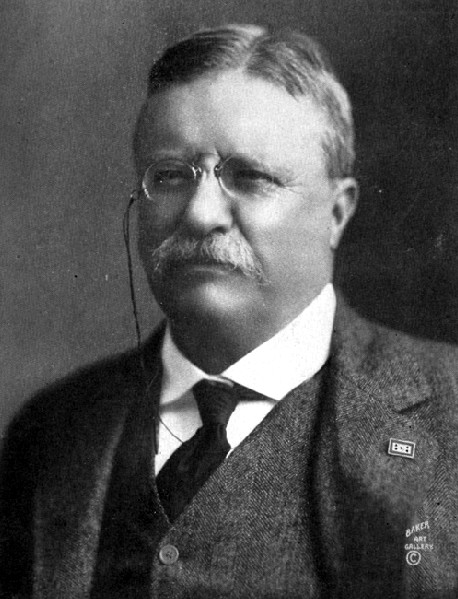 Just wanted to share this August 31 entry from George Grant’s Christian Almanac. Although most of us will never accomplish what today’s subject did, his example will benefit us all. May we all, grateful for the grace of God in Christ, strive to love him with our minds all the more (Matthew 22:37; Mark 12:30; Luke 10:27).
Theodore Roosevelt was a voracious learner and an avid reader throughout his extraordinary life. It is hard to imagine though, when he might have found the time–his record of public service and his private interests were astonishingly diverse. How he possibly squeezed reading into the crowded hours of his life was a matter of some substantial speculation among those that observed him flash across the stage of history.
Among his friends he counted the greatest writers, thinkers, scholars, and scientists of his day. And by all accounts he was the best read of them all–being readily conversant on everything from the traditional classics to the most recent philosophical, sociological, or technological musings. He usually read at least five books a week–unless he wasn’t too busy, in which case, he read more. And yet his attitude toward the torrid pace of his intellectual pursuit was refreshingly relaxed: “I am old-faschioned, or sentimental, or something about books. Whenever I read one I want, in the first place, to enjoy myself, and, in the next place, to feel that I am a little better and not a little worse for having read it.”
His son Quentin claimed that he read every book received at the Library of Congress–which of course, he surely did not. But many of his friends testified that however new the volume they recommended to him, he had always read it already. “His range of reading is amazing,” wrote the science fiction writer H. G. Wells. “He seems to be echoing with all the thought of the time, and he has receptivity to the pitch of genius.” Guglielmo Marconi, the great Italian physicist and inventor, was amazed by his knowledge in the specialized field of Italian history and literature. “That man actually cited book after book that I’ve never heard of, much less read. He’s going to keep me busy for some time just following his Italian reading.” And the English diplomat Lord Charnwood asserted, “No statesman for centuries has had his width of intellectual range.”
 As a result of his relentless studies and his near-perfect recall, his knowledge was highly integrated, and he was continually crossing boundaries, moving back and forth from one area of human knowledge to another. He was thus able to make connections that mere specialists were unable to make.
According to Viscount Lee, “Whether the subject of the moment was political economy, the Greek drama, tropical fauna or flora, the Irish sagas, protective coloration in nature, metaphysics, the technique of football, or post-futurist painting, he was equally at home with the experts and drew out the best that was in them.” Indeed, “In one afternoon,” said his son Archie, “I have heard him speak to the foremost Bible student of the world, a prominent ornithologist, an Asian diplomat, and a French general, all of whom agreed that Father knew more about the subjects on which they had specialized than they did.”
“If you want to lead, you must read,” was a maxim that Roosevelt took seriously. It was merely an extension of his whole philosophy of life: making the most of his mind was of a piece with making the most of his body. It was merely an exercise of good stewardship.
John Calvin and Michael Servetus
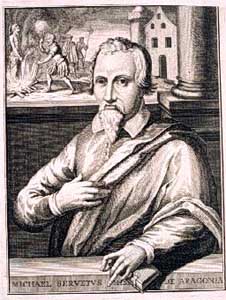 The following is part 7, concluding an excerpt from Presbyterians: Their History and Beliefs by Walter Lingle (John Knox Press, 1950). Click here to read part 1, part 2, part 3, part 4 ,part 5 and part 6.
Calvin and Servetus. It is sometimes said that John Calvin burned Michael Servetus at the stake. Servetus was burned at the stake just outside Geneva on October 27, 1553. John Calvin had some connection with the affair, and the part he played is not excusable in the light of the twentieth century, but it is not accurate to say that Calvin did the burning. Let us look at the facts.
Michael Servetus was a Spaniard with a brilliant but erractic mind. He renounced Roman Catholicism, but did not embrace Protestantism. He was a prolific writer and wrote vehemently against some of the most chedrished doctrines of Christianity. Both Catholics and Protestants considered his writings not only heretical but horribly blasphemous.
In 1553 Servetus was arrested by the Roman Catholic authorities in Vienne, France, and sentenced to be burned. While awaiting execution he escaped, and went direct to Geneva. With all the world before him, why did he go to Geneva when he had been warned to stay away? He knew that Calvin had many bitter enemies, and probably knew that at that particular moment the majority of the City Council were opposed to Calvin. The City Council had banished him once, and might be induced to do it again. Servetus probably went to Geneva to ally himself with the enemies of Calvin and thus help to overthrow Calvin and his work. When Calvin heard of the presence of Servetus in Geneva he reported the matter to the City Council. Bear in mind that Calvin was not a member of the City Council and that the majority of the Council were opposed to him. The Council arrested Servetus and put him on trial for heresy and blasphemy. John Calvin appeard as a witness against him.
After a long trial the City Council found Servetus guilty of heresy and blasphemy, and sentenced him to be burned. Accoring to the Old Testament, blasphemy was punishable with death. John Calvin urged the Council not to burn Servetus, but to take a more humane method of executing him. The Council refused. The whole story is a sad one, and Calvin does not appear at his best in it, but we should judge him by the light of the century in which he lived. The large majority of both Protestants and Catholics in that century approved of the death penalty for heresy and blasphemy.
Notwithstanding this blot and other blots on the name of Calvin which might be mentioned. Ernest Renan, the French skeptic and critic, had this to say aobut Calvin: “He succeeded more than all, in an age and in a country which called for reaction towards Christianity, simply because he was the most Christian man of his century.”
The Closing Years. The trial of Servetus was in reality a contest between Calvin and his enemies. Calvin won. The backbone of the opposition was broken. The last ten years were the most peaceful and in many respects the most fruitful years of his life.
John Calvin died on May 27, 1564, the year in which Willam Shakespeare was born. A noted scoffer intimates, in language which is none too reverent, that it was a blessed exchange for the world. But many informed and thoughtful people, with a full appreciation of Shakespeare, do not agree with the scoffer. Here is what Philip Schaff, the distinguised church historian, says: “Calvin’s moral power extended over all the Reformed Churches, and over several nationalities–Swiss, French, German, Polish, Bohemian, Hungarian, Butch, English, Scottish, and American. His religious influence upon the Anglo-Saxon race of both continents is greater than that of any native Englishman, and continues to this day.”
John Calvin: Erecting “the most perfect school of Christ.”
The following is part 5 of an excerpt from Presbyterians: Their History and Beliefs by Walter Lingle (John Knox Press, 1950). Click here to read part 1, part 2, part 3 and part 4.

courtesy of ReformationArt.com
The Consistory. The five pastors in Geneva and the twelve elders were organized into a Consistory. In some respects it was like the session in a modern Presbyterian church; in other respects it was somewhat like presbytery. It was the duty of the Consistory to govern the church and to administer discipline. It is well to keep in mind that Calvin was not able to put into practice his ideal for the free election of elders by the people, as the City Council insisted on having a part in their selection. So in the Consistory we see a mixing of the church and the civil government in a way that would be repugnant to Presbyterians today. But that was four hundred years ago.
The Consistory placed great emphasis upon discipline. Detailed rules for Christian living were drawn up, and it was the duty of the Consistory to see that the people observed these rules. The records show that people were disciplined for various offenses, including these: cursing and swearing, adultery, attempting to commit suicide, for spending their time in taverns, for playing cards on Sunday evenings, for arranging a marriage between a woman of seventy and a man of twenty-five, for singing obscene songs, for wife-beating, for betrothing a daughter to a Papist, and so forth. Thus they were disciplined for gross sins and for some that did not seem so gross.
Church attendance was made compulsory. Excuses given for non-attendance are interesting and some of them sound very modern. One man had to stay at home with a three-year-old child; another was too deaf to hear; another had to work on Sunday; still another had to stay at home and look after the house and cattle.
The Confession of Faith. Calvin and Farel had prepared a Confession of Faith and a Catechism before they were banished. These were revised and enlarged and adopted by the church. In the Confession of Faith and Catechism we have set forth in clear and fairly simple form the Calvinistic system of doctrine. This Confession of Faith was to have a marked influence upon Confessions and Creeds that were formulated later in France, the Netherlands, Scotland and England. While the Presbyterian Church gets its name from its form of government, it also stands for a system of doctrine. Presbyterianism and Calvinism usually go hand in hand.
Reforming Geneva. John Calvin, armed with the Bible as the word of God, the Confession of Faith, and the Form of Government and Discipline, with the Consistory behind him, set out upon the great task of reforming Geneva. In so doing, he started a movement which has profoundly influenced the whole of Christendom.
No man ever worked harder at a task than did John Calvin. He preached several times each week, taught theology, wrote commentaries, superintended a whole system of schools, wrote books and pamphlets, carried on an extensive correspondence with Reformation leaders all over Europe, and took oversight of the Reform movement in Geneva. He was interested in everything that affected the lives and welfare of the people. He believed that Christianity should be carried into every relationship of life. A distinguished historian states it this way:
“The material prosperity of the city was not neglected. Greater cleanliness was introduced, which is next to Godliness, and promotes it. Calvin insisted upon the removal of filth from houses and the narrow and crowded streets. He induced the magistrates to superintend the markets, and to prevent the sale of unhealthy food, which was to be cast into the Rhone. Low taverns and 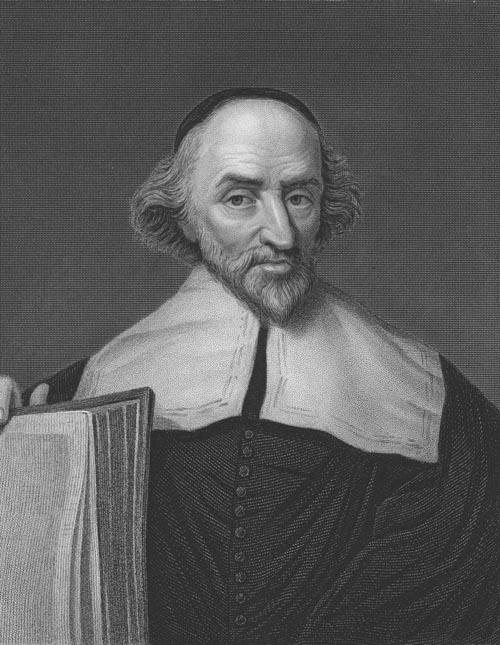 drinking shops were abolished, and intemperance diminished. Mendicancy in the streets was prohibited. A hospital and poor-house were provided and well-conducted. Efforts were made to give useful employment to every man who could work. Altogether Geneva owes her moral and temporal prosperity, her intellectual and literary activity, her social refinement, and her world-wide fame very largely to the reformation and the discipline of Calvin. He set a high and noble example of a model community.”
John Knox, the great Scottish reformer, was a refugee in Geneva during the years 1554-1559. He afterwards gave this testimony concerning the work of Calvin in Geneva:
“It is the most perfect school of Christ that ever was in the earth since the days of the Apostles. In other places I confess Christ to be truly preached; but manners and religion to be so seriously reformed, I have not yet seen in any place besides.”
John Calvin: Pastor, Reformer and Husband
The following is part 3 an excerpt from Presbyterians: Their History and Beliefs, by Walter L. Lingle (1950, John Knox Press). Read part one here. And read part two here.
 Begins His Work in Geneva. John Calvin began his work in Geneva on September 1, 1536, by preaching a sermon in St. Peter’s Cathedral. The sermon created a sensation, and the people crowded around him insisting that he must preach again the next day. What was it about the sermon of this twenty-seven-year-old preacher that created such a stir? It was simply an expository sermon on one of Paul’s Epistles. That does not sound very sensational to us, but it was something new to that audience. They had never heard any opening up of the Scriptures like that. This sermon was followed by many more just like it. John Calvin became a great expository preacher and a great interpreter of the Scriptures. It is here that we find the main secret of his power. He went back to the Bible for everything relating to the Christian life and to the church. The Bible was the seat of authority in religion so far as John Calvin was concerned. To the Roman Catholic the church was the seat of authority. The results of the kind of preaching and teaching that John Calvin did were summed up by Thomas Carlyle in the following paragraph: “The period of the Reformation was a judgment day for Europe, when all the nations were presented with an open Bible and all the emancipation of heart and intellect which an open Bible involves.” No man did more to open up the Bible for the people of his generation and all generations than John Calvin did.

Courtesy of ReformationArt.com
The Reformer.
But Calvin was more than a preacher; he was a reformer. He felt called upon to reform the religion and morals of all the people of Geneva. He and Farel accordingly prepared a Confession of Faith, a Catechism, and a Book of Discipline. After these had been approved by the City Council on July 29, 1537, all citizens of Geneva, men and women, were ordered to give their assent to these standards and to live by them. Many gladly gave their assent, but many others refused. A great furor was raised. This opposition grew until it resulted in the banishment of Calvin and Farel from Geneva by the City Council on April 22, 1538. Farel settled in Neuchatel and never returned to Geneva. Calvin went to Strassburg, a Protestant city of Germeny, with no thought of ever returning to Geneva.
Strassburg received Calvin with open arms, and promptly made him assistant professor theology in their new Protestant College. There were many French-speaking, Protestant refugees in Strassburg. Calvin organized them into a church and became the pastor. In this church he was able to put his ideals for a churhc more fully into practice than he had been able to do in Geneva because of the interference of the City Council.
Calvin followed a very simple order of service in his church. Emphasis was placed upon the reading of the Scriptues and prayer. There was congregational singing, which was not usual in the Roman Catholic Church. They sang from a French translation of the Psalms. There were no musical instruments in John Calvin’s church. The sermon occupied the central place. In the Roman Catholic Church the altar was central.
In August, 1540, Calvin married Idelette de Bure, a widow with a small son and daughter. William Farel, in writing to a friend, said that she was “not only good and honorable but also handsome.” She and Calvin seem to have been very happy together. They had one son who died a few hours after birth.
John Calvin: From the Institutes to Geneva
The following is part 2 an excerpt from Presbyterians: Their History and Beliefs, by Walter L. Lingle (1950, John Knox Press). Read part one here.
Publishes His Institutes. In the spring of 1536, Calvin published a profound little book on theology, which he named The Institutes of the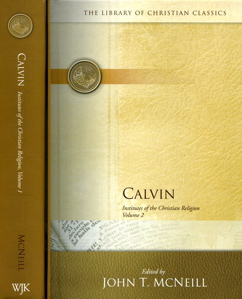 Christian Religion. Today we would call it a book on systematic theology. The book created a real sensation, and theologians knew that a new star of the first magnitude had arisen on the theological horizon. Calvin kept on revising this little book for the next twenty-three years, until it grew into two large volumes. He lived to see this work translated into practically every language of Europe. Theologians still study and refer to “Calvin’s Institutes.”
Find His Life Work in Geneva. John Calvin was only twenty-seven years of age when he published his Institutes, but from that time on he was a marked man. The publication of that book probably determined his life work. It came about in this way. As the persecutions of Protestants in France grew more severe, Calvin decided to leave France and pass over into the Protestant part of Germany. The safest journey was through Switzerland. So one hot night in August, 1536, he pulled up at an inn in Geneva to spend the nigh expecting to continue on his journey the next day. But God had other plans for him.
William Farel, a fiery Protestant with red hair, glittering eyes and a thunderous voice, had begun Christian work in Geneva in 1532. Under his preachng a great deal had been accomplished. He had blasted away the debris of centuries and laid the foundation for real constructive leadership. When Farel heard that John Calvin, the author of the Institutes, was in Geneva, he felt that he had come to the kingdom for such a time as this. So he sought him out and invited and implored him to remain in Geneva and help him. Calvin begged to be excused that he might continue on his journey and devote himself to his studies.
Let Calvin tell the rest of his story as recorded in the Preface to his Commentary on the Psalms: “Then Farel, finding he gained nothing by entreaties, besought God to curse my retirement and the tranquility of my studies if I should withdraw and refuse to give assistance when the necessity was so urgent. By this imprecation I was so struck with terror that I desisted from the journeyI had undertaken, but being sensible of my natural timidity, I would not bring myself under obligations to discharge any particular office.” So John Calvin, who had planned to spend only one night in Geneva, spent the rest of his life there, with the exception of about three years which he spent in exile in Germany.
It’s Calvin Week!!!
 As most of my readers are well aware, this Friday marks the Quincentenary of sixteenth century Genevan Reformer, John Calvin. That is, the 500th anniversary of his birth. This week, and some of the next if necessary, I will be featuring a short biographical chapter on John Calvin’s life from a book called Presbyterians: Their History and Beliefs, by Walter L. Lingle, published originally in 1944 by John Knox Press [fourth printing (revised), 1950]. I will feature this primarily in the effort to introduce John Calvin to those of my readers who are not so familiar with his life and ministry, or to reintroduce him to those who suffer from the many misconceptions about his life. For more information about Calvin and the Quincentenary celebration, see Calvin500.org.
Our Debt to Calvin. Presbyterianism is deeply indebted to John Calvin. As we have seen in previous chapters, Presbyterianism is rooted and grounded in the Holy Scriptures. But as we saw in Chapter II, the Presbyterian doctrines and principles that are contained in the Bible became buried beneath centuries of ignorance, superstition, and traditions. John Calvin went beneath all this debris of centuries, resurrected the doctrines and principles of Presbyterianism, and organized the modern Presbyterian Church. That was about four hundred years ago.
We in America are more indebted to John Calvin than most people realize. The doctrines and principles which he released have made a large contribution to our representative form of government and the human freedom which we enjoy. Ranke, the German historian, says: “John Calvin was the virtual founder of America.” D’Aubigne, the French historian, says: “Calvin was the founder of the greatest of republics,” referring to the United States. Bancroft, the American historian, says: “He that will not honor the memory and respect the influence of Calvin knows but little of the origin of American liberty.” Presbyterians should at least know the outline of the life of the man to whom they are so deeply indebted.
Early Years. John Calvin was born in Noyon, a cathedral town of France, fifty miles northeast of Paris, on July 10, 1509, of Roman Catholic parents. His father planned to educate him for the priesthood, and gave him the best education that was obtainable. At the age of fourteen he entered the University of Paris, where he studied Latin, Logic, and Philosophy. Later he decided to study law, and spent several years studying at the Universities of Orleans and Bourges, under the greatest professors of law that could be found in France. It would be interesting to know how much his legal training influenced his theological thinking.
After the death of his father, John Calvin, free to make his own choice, decided to devote himself to the study of literature. His studies included the Latin, Greek, and Hebrew languages and literature. The first book he ever wrote was a commentary on Seneca’s Treatise on Clemency. In this commentary Calvin quotes from fifty-six Latin and twenty-two Greek authors. This gives us some intimation of his familiarity with Latin and Greek literature.
Conversion to Protestantism. We do not know the exact date of his conversion from Roman Catholicism to Protestantism, but it was sometime in the year 1533. His conversion was probably gradual. His study of Latin, Greek, and Hebrew literature led him to the study of the Bible in those languages. These studies also threw him with men and women who were devotees of the New Learning, some of whom had already embraced the Protestant faith. Soon after his conversion to Protestantism he found it necessary to flee from Paris for his life. During the next three years he lived in hiding under an assumed name. Much of this time was spent in the private libraries of friends. He was hard at work, and, best of all, he was thinking and praying.
Twenty-first Century New Testament Textual Criticism
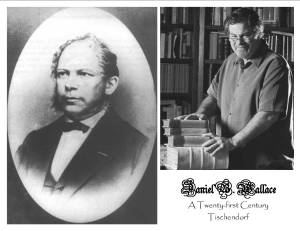
Constantin Von Tischendorf (r); Daniel B. Wallace (l)
Will the 21st century go down as another great age of discovery when it comes to our knowledge of the transmission of the text of the Greek New Testament? While many skeptical and liberal scholars like Bart Ehrman are busy using their expertise in the Biblical Studies to destroy faith in God’s revealed Word in the Scriptures, others, like Dr. Daniel B. Wallace of Dallas Theological Seminary, founder of The Center for the Study of New Testament Manuscripts, is using modern technology to “discover” ancient manuscripts which have until now been inaccessible due to their fragile condition. According to an interview of him on Friday’s edition of Christ the Center, in the past year, about 36 manuscripts have been discovered and are in line behind about 75 others to be catalogued at the place in Munster, Germany where the knowledge of such manuscripts are warehoused for use by scholars the world over.
No time to finish this post. But I want you to listen to the program. Here’s the link: http://reformedforum.org/ctc70/
From “Freedom” to Bondage?

Thomas Chalmers by ReformationArt.com
Considering the recent controversy over ordaining an openly gay minister to a congregation in the Free Church of Scotland (see Iain Campbell’s post at Ref21), I found it interesting that it was on this day, May 18, 1843, that Thomas Chalmers led four hundred ministers out of the established church of Scotland in reaction to its trend toward “liberal formalism” to found the Free Church of Scotland. How ironic that liberalism is now catching up with them.
It was at the end of his life, when his reputation was well established, his contribution to the life of Scotland, England and Ireland fully recognized, and his fame spread around the world that the greatest test came to Thomas Chalmers (1780-1847). During the course of his long and storied career the great Scottish Reformer had served as the pastor of three congregations, taught in three colleges, published more than thirty-five best-selling books, and helped to establish more than a hundred charitable relief and missions organizations. He practically reinvented the Scottish parish system as well as the national social welfare structure. He counted such luminaries as the Duke of Wellington, Sir Walter Scott, King William IV, Thomas Carlyle, William Wilberforce, and Robert Peel as his friends and confidants. Indeed, he was among the most influential and highly regarded men of his day. Even so, he did not hesitate to involve himself in–and ultimately lead–a movement that was to set him in apparent disregard of the authority of the highest civil court in the land.
With the disappearance of Catholic authority in Scotland, Reformers worked hard to replace it with a faithful national church. Their struggle for spiritual independence had been a long and costly one under the leadership of John Knox and Andrew Melville among others. At long last, in 1690, their Reformed Church was legally recognized by the Crown as the established Church of Scotland. The danger of such an establishment was that the state might attempt to manipulate the internal affairs of the church.
That danger was realized when Parliament imposed conformity with the standards of English patronage upon the Scottish church. In reality, patronage was hardly different from the medieval practice of lay investiture–it gave landowners the right to appoint to a parish a minister who might or might not be biblically qualified for the post or acceptable to the elders of the congregation. The patronage conflict came to a head in 1838 when several ministers were forced on congregations opposed to their settlement. Many, including Chalmers, believed that the integrity of the gospel was at stake.
At about the same time, it was decided by Parliament that the church did not have the power to organize new parishes or to give the ministers there the status of clergy of the church. It had no authority to receive again clergy who had left it. And perhaps worst of all, a creeping liberal formalism was slowly smothering the evangelical zeal of the whole land–in large part due to the assumption of pastoral duties by men altoghether unfit for such a solemn vocation.
After a ten-year struggle to regain the soul of the church, the evangelical wing, led by Chalmers, laid a protest on the table of the assembly, and some four hundred ministers left the established Church of Scotland on this day in 1843, to form the Free Church. When the new church was constituted that grave morning, Thomas Chalmers was, of course, called to be its moderator. He was the man whose reputation in the Christian world was the highest; he was also the man whose influence had been greatest in directing the events that led to what would eventually be called the “Disruption.” (George Grant& Gregory Wilbur; The Christian Almanac: A Book of Days Celebrating History’s Most Significant People & Events, page 296; Cumberland House, Nashville, Tennessee–buy it real cheap from Christianbook.com or Amazon.com)
James White on Faithful Scholarship
Here’s the video of Dr. White’s call for “believing Biblical Studies.” In case you had any trouble following my transcription of his monologue in the previous post, now you can watch it and hear it as well. Using as many senses as possible will always help your comprehension. If there were some way we could touch, taste and smell it, I’d post that, too, but for now the technology remains limited. Of course, if you really want to touch your monitor screen be my guest, just don’t press too hard if you’ve got one of those gel screen type set ups.
Also worthy of note is how Dr. White is sporting the sharp “Sola Conference” shirt that he mentioned in the previous video of him I posted. Like the Bible says, “You have not because you ask not.” If you like to see more videos by Dr. James White, Reformed Baptist apologist extraordinaire, you can view his YouTube page here.
Dad Rod on Repentance
Lutheran professor of Systematic Theology and Christian Apologetics, Dr. Rod Rosenbladt, co-host of The White Horse Inn radio show, was interviewed yesterday,
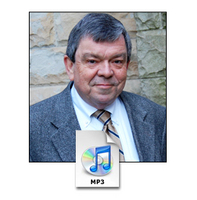
Rod is rad, he's our dad!
Thursday, February 4th, on “Lutheran Public Radio,” a show called Issues, Etc. on the topic of repentance. Dr. Rosenbladt’s WHI co-hosts, Mike Horton and Kim Riddlebarger, began calling him “Dad Rod,” chiefly, I think, because it was his sense of urgency that American Evangelicalism needs to be reintroduced to the gospel, that drives the vision of their show. Among other things, revivalism has transformed American Protestant Christianity into something more akin to the medieval Roman Catholic spirituality and Anabaptistic enthusiasm (don’t ignore this link!) than anything produced by the Protestant Reformation of the Magisterial Reformers, Martin Luther, John Calvin and Ulrich Zwingli. One of the things that revivalism has “De-formed” in America is the doctrine of repentance.
The revivalist version of the doctrine of repentance is one which puts all the emphasis on the work of the believer to be sorry or contrite enough, really mean it when he repents, and shows that he’s really repented because he has actually ceased and desisted of any recurrence of the particular sinful behavior repented of. “Dad Rod” clearly and simply summarized the Reformation view of repentance from the believer’s perspective when he said . . .
“Our repentance is always imperfect and always half-hearted. . . This is preparation for believing the gospel promise (of forgiveness). . . and we do that half-heartedly, too. But God saves us in Jesus anyway.”
If you didn’t just breathe a sigh of relief, watch out! You may just be one of those dishonest people who thinks they’ve got this obedience to the Law thing down.
By the way, you can learn more pearls of wisdom from our Lutheran Dad Rod at his very own website, New Reformation Press.


 The Misadventures of Captain Headknowledge
Rev. John Brown’s Original Preface
Title Page to Brown's Self-Interpreting Bible
The following is the original preface to Rev. John Brown’s Self-Interpreting Bible, in which he explains the various features he’s included, and shows how they will aid the reader in understanding and profiting spiritually from the Word of God. I’ve highlighted the features as they occur throughout. The rest is original to the editor.
My intention in the coming posts will be to demonstrate to varying degrees, each of these features, along with pictures of the numerous beautiful lithographs that are found along the way.
PREFACE TO THE ORIGINAL EDITION
Not to depreciate the valuable commentaries of Pool, Patrick, Clarke, Henry, Burkitt, Gill, and Doddridge, &c., but to exhibit their principal substance with all possible advantage, in a manner that might best comport with the ability and leisure of the poorer and labouring part of mankind; and especially to render the oracles of God their own interpreter, and enable every serious reader to judge for himself what doctrines ought to be believed, and what duties practiced by the Christian, are the avowed aims of this publication.
In the copious INTRODUCTION, the principal proofs of the Divine Authority of the Old and New Testaments, and the rules necessary to promote the profitable perusal of the oracles of God therein contained, are largely exhibited. The connected scheme of the Hebrew Laws, and their evangelical signification,–and of the fate of nations, narrated or predicted in Scripture, as subservient to the glorious work of our redemption,–together with the large Chronological Index,–form a summary of the most celebrated labours of the learned world on these diversified subjects. An accurate attention thereto will, through the blessing of God, greatly assist in searching the Scriptures with success.
The contents of the sacred books, and their respective chapters, are an accurate, full and explicatory representation of their subject. Properly attending to these, the reader must discern of whom, or of what, the Holy Ghost there speaks, and understand the passage accordingly. He may easily fix in his mind a general, but distinct view of the whole system of inspiration; and thus be capable, with the utmost readiness, to find out or compare whatever passages of Scripture he may desire.
The EXPLANATORY NOTES are chiefly confined to the figurative, the prophetic, and the practical parts. Here the obscurity of Scripture, or the importance of faith and holiness, chiefly required them.
In our Saviour’s delightful discourses, and the epistles of his inspired Messengers, our holy religion is most fully delineated; and there the explication is peculiarly extensive, and attempts to exhibit the substance of many learned and expensive commentaries, in a manner which, attending to the beautiful connexion, clearly unfolds the scope and meaning of the Spirit of God.
A particular and lively application of divine truth to the heart, and an unspotted holiness of conversation, being the immediate end of God’s revelations to men, the contents of each chapter, which are often in an explicatory manner, are in the Reflections practically summed up, and directed home to the reader himself, for enlightening his understanding, awakening his conscience, warming his heart, and for directing and animating his practice.
An exact knowledge of the seasons in which the oracles of God were delivered, or the events mentioned in them took place, being of no small importance for obtaining a distinct perception of their meaning, the dates before and after our Saviour’s incarnation have been adjusted from the best chronologers, and marked in the margin.
Lithograph of the Reverend John Brown of Haddington
But, as every Protestant must allow the Scripture itself to be its own best interpreter—as God, to oblige men to a diligent search of his word, comparing spiritual things with spiritual, has seldom fully unfolded any of his more important truths in one particular passage—the uncommon collection of Parallel Scriptures, such as is not to be found anywhere else that I know of, has formed the most laborious, and will, to the diligent peruser, be found by far the most valuable part of the work. Some of these are similar in phrase, others in meaning, and, in fine, others in their scope and design. In these, and others which may be added, we have a delightful view of the harmony of the Scripture, and multiplied proofs of every article of our Christian faith; we have a real Concordance, which may abundantly furnish preachers and others with their desired quotations; we have, in little room, a large Commentary, infinitely more certain than any dictates of men; and of which the very words are, as nails and as goads, pointed and fastened by the great Master of assemblies. In a truly diligent comparison of them, many texts all at once explain, and are explained by each other. Nor, unless at first, will the careful reader find much trouble in comparing the texts: but the mere view of the marginal quotations will direct his memory to that part of them which corresponds with the sentence to which they are annexed for explication. And, for his encouragement, I can only say, that my labour, in collecting the parallel texts in this work, has afforded me much more pleasant insight into the oracles of God than all the numerous commentaries which I ever perused.
Thus we may listen to, and converse with God, and lay our consciences open to the inspired arrows of our all-conquering Redeemer;–we find his words, and eat them, to the joy and health of our soul; we hide them in our heart, that we may not sin against him; we become mighty in the Scriptures, and expert in handling this sword of the Spirit, in opposition to every enemy of our soul: in fine, we are made wise unto salvation; are reproved, corrected, and instructed in righteousness, and perfectly furnished for every good work. May the Lord himself prosper it for these ends!
J. BROWN
Share this: