Live Blogging 3
for more info on this conference see: http://kimriddlebarger.squarespace.com/the-latest-post/2009/1/8/a-video-conference-on-eschatology-and-live-blogging-of-a-wes.html and follow the links.
10:41AM
Wow! New term from Voythress: protology–the study of first things, as opposed to eschatology, the study of last things. Stick that in your theological glossary.
Waldron’s now affirming that eschatology comes before soteriology in Scripture. Think Gen. 3.
Riddlebarger explained that a regenerate believer is not taken to the condition Adam was in before the fall, but that he is redeemed to the state Adam would have been in, had he been confirmed in righteousness, having succeeded in obeying the command to not eat the forbidden fruit.
Notes on Gaffin’s comments on “Get the Garden right, get Christ right.”1 Cor. 15 Resurrection hope of the church. Christ compares resurrected Christ with Adam before the fall. vs. 45, 47, Christ called the “Second Man.” The deepest perspective Paul provides on redemptive history. There’s no one between Adam, the first and Christ, the Second. Noah, Abraham, Moses, David are below the horizon of Paul’s concern in this chapter, Christ is literally the “eschatological one.” When you understand who Christ is as the esc. Adam, then everything else between Adam and Christ in redemptive history must fit into that.
Poythress: Both kinds of imagery are in Rev. 22. 22:1 shows a final garden, heightened from the original (Gen.3) and the language of the Bride of Christ. Here you have a connection of both “bridal and garden” in Gen 2.
Eph. 5:28ff . . . Was Eve typological of the Church in this passage? Riddlebarger says simply “clearly [she is]” but that he wouldn’t press it too far. Missed Waldron’s reply, but Poythress says there’s a comparison with Eve. Waldron asked if this connection somehow contributes to Mariology? I don’t get it. Anyone out there have a comment?
11:00AM
Moving on to questions about the competing attitudes about the world between dispensationalism and covenantal theology. Should we be optimistic about the success of the gospel, or pessimistic about any need to “polish the brass on a sinking ship?”
Gaffin speaks to the application of this question to suffering. We can be confident that Christ is now healing (I think he said healing) the earth with the gospel. References Mark 10:29-30. Promise of blessings with persecution to followers of Christ. References some passage in the “T books.” With many tribulations we must enter the kingdom of God. Opposition to the gospel results in suffering. There is a positive role of suffering in the church–“filling up the sufferings of Christ”
A short plug for Last Things First: Unlocking Genesis with the Christ of Eschatology.”
Poythress suspects that a hundred years ago, amillers didn’t have Vos’ and Gaffin’s “already/not yet” structure. This is optimistic in a way older amillers didn’t have the benefit of. Christ’s Body is the first fruits of the new heavens and earth. If we participate in that, it’s a spiritual optimism, looking forward to that which is yet to come.
Riddlebarger: the charge that amillers are pessimistic was made by Bahnsen. That amil is escapist like premil, says Bahnsen. Post mil Bahnsen would define optimism/pessimism differently. No economic, cultural, religious transformation before the Return. Optimistic about what God does through Ministry of the Word and administration of the sacraments. Not pessimistic about the gospel, but about human institutions.
Poythress believes it all will be thoroghly transformed in the new heavens and new earth. Amils aren’t giving up on transformation of the world, but don’t expect it until after the consummation. No guarantee to be successful in worldly terms, but should try to think and act Christianly in our worldly context. A Christianized society is not the atmosphere of the New Testament.
Waldron argues for optimism about the spread of the gospel. Optimistic about what? Matt. 16, Lk 13 parable of mustard seed teaches growth of gospel. Mt. 16 shows the church thoroughly on the attack, not under attack by Satan. (?) The gates of hell won’t prevail against the spread of the gospel. Parable of weeds show that good and evil grow together until the end. Not good to emphasize that as good grows, evil shrinks, or vice versa, but that they grow concurrently until the Return of Christ.
11:16AM
Ezk. 40-48 When does a biblical theology of the millennial Temple begin, and what does it look like?
Waldron: Doesn’t teach reinstitution of Old Testament ceremonial, sacrifical system in the Millennial Age.
Riddlebarger: see Beale’s book on the Temple. Hard to unlearn the wooden literal, dispensational interpretation. But it undercuts the beauty of what God is describing.
Poythress: The Temple theme is present by implication in the Garden of Eden. God communes with Adam and Eve as he does with Israel in the Temple. Jacob at Bethel–no physical structure, but a mediation of the presence of God is the point. Ezk. Temple is symbolic of God’s communion with his people. It shouldn’t be astonishing that John 2 indicates that Jesus spoke of his own body in speaking of the Temple. A vision is not a photograph. The Temple is the medium for speaking these concepts of mediated communion with God. You can’t dictate the details of final realities by looking at the type. The reality always exceeds the type.
Barcellos: Angels ascending, descending on the Son of Man?
Poythress: Seen carefully, the Son of Man is the ladder, a mediator between heaven and earth.
Gaffin: Related to the larger question of the biblical theology of the Temple, as you look at Ez 40-48 in its visionary and prophetic character, that whole chunk focuses on what Christ said about whatever promises held out in Old Testament Scriptures, they have their Amen (fulfillment) in Christ. 1 Cor. 3:9–We’re God’s fellow-workers, you’re God’s field/building. Is this an arbitrary connection? It’s a reference to the Garden (field) and the building (New Jerusalem). The New Jerusalem is a consummated Garden of Eden.
(Wow!jdc)
11:30
Supersuccessionism/Replacement theology:
Waldron: The idea that amil says the church replaces Israel as the people of God. It’s a pejorative label.
Poythress: Not replacement, but fulfillment. Christ is the true Israel (Matt. 2). Israel the Son in a subordinate sense. Jesus the heir of the promises made to both Abraham and David. Gal. 3:16 argues that Gentiles and Jews alike participate in these promises. If Christ’s, Abraham’s offspring–heirs according to promise. Jews don’t cease to participate in the promise, but the Gentiles are included. Jewish disbelief is what gets them cut off the tree (Rom 11).
Riddlebarger: Is OT “Judeocentric”? I’m unashamedly a Christian and not a Jew. But I’m reading the OT looking for Christ. Isa 53 and related passages are clear if looking for Christ in the OT.
Gaffin: What is OT Israel typological of? Israel’s God’s chosen Son. Christ is the true Israel. Every promise given to Israel has its focus in Christ and his work. Acts 1:6 asks a Jewish oriented question about the Kingdom of God. Jesus corrects the terms of the question. It’s not is Kingdom being restored to Israel, but will Israel be restored to the Kingdom? In Rom 9-11, Paul sets terms at beginning. 9:6 who is Israel? Not all Israel are Israel, but those who believe, whether Jew or Gentile. Gaffin accepts term supersession in sense of fulfillment not replacement.
Waldron: If Christianity is not the fulfillment of the Old Testament, then what is Christianity?
Poythress: Gal. 4 Jerusalem above is free. She’s our mother. Isa 54 about the expansion of the people of God. Christ is the heir and if you’re in Christ, then you’re the heir. Gal. 3 means you can’t divide Christ into eschatological and political.
Gotta bug out early, but here’s plenty to chew on. Hope some of my notes make sense.
Live Blogging TCTE, part 2
10:29AM
Dr. Poythress advises that the question of the millennium is complex, because it does not simply deal with the interpretation of Revelation 20 alone, but involves “a large swath of Old Testament” prophetic Scriptures.
Pastor Waldron’s emphasizes that little progress is made by Amillennialists in saying that they affirm a “literal interpretation.” This makes sense to me because there is a gap in understanding between Dispensationalists and Covenant theologians about what it means to interpret Scripture literally. The term “literal” was coined by Luther in the Latin phrase “sensus literalis” which means “the sense of the words” not “anti-figurative sense everywhere possible, regardless of the rules of the given type of literature in question.”
10:35AM
Helpful sound byte from Dr. Gaffin: “Soteriology is eschatological, and eschatology is soteriological.” The first coming of Christ inaugurates the “last things.”
Rest, Renew, Rely

Living the Cross Centered Life by CJ Mahaney
I loaned my copy of C. J. Mahaney’s incredible book,
Living the Cross-Centered Life, to a co-worker who is a young believer trying to grow out of a severly sinful lifestyle. Bemoaning his lack of reading comprehension at times, he asked me what Mahaney meant when he wrote somewhere in the book (I haven’t seen the quote) something to the effect of, “even though I’m living in the flesh, I choose to live by faith.” Unclear as he was to the meaning of this statement, I told him I could only guess that the author meant that he was not going to rely on his own moral fortitude to be godly, but he was going to rely on God’s grace to empower him to obey his commands. He asked me to write something down about that, and the following is what came out of that effort. Hope you find it edifying, if not instructive in any way.
Rest in the Gospel–The Right Basis
The basis for your acceptance by God is the active and passive obedience of Christ. His active obedience is his 33 years of sinless obedience by which he earned eternal life for you; his passive obedience is his suffering and death on the cross, facing for you the consequences of your sin. Therefore, the basis for your acceptance by God is not your behavior. If the basis of your acceptance by God was your behavior, then you would be trying to earn some reward from God and you would be trying to avoid some punishment from God. The right motive for your behavior as a Christian is gratitude for Christ’s work for you.
Renew Your Gratitude–The Right Motive
Fear of punishment and hope of reward is the wrong motive for your behavior as a Christian; gratitude for Christ’s work is the right motive for your behavior as a Christian. Gratitude is what you feel when you are given a gift. When you earn what you have, you’re only thankful to yourself, and that’s not what glorifies God. Both the basis of your acceptance by God, the gospel of Christ’s death and resurrection, and your response characterized by grateful behavior are given to you freely by God’s grace, not procured by your own strength.
Rely on Grace–The Right Source
Grace is not a force like electricity which makes our appliances work, it’s God’s good attitude toward you based on his satisfaction with the obedience and death of his Son, the Lord Jesus Christ. When you successfully resist temptation, and successfully obey his commands, he has granted this success to you as a gift of his gracious disposition toward you because of Christ.
Does “Every Member Ministry” Contribute to “Christless Christianity”?
An “every member ministry.” The name should be self-explanatory. This is a staple of modern American Evangelical and Fundamentalist discipleship, and likely of the Reformed, as well. We probably all can hear the echoes of pastors past and present who’ve clearly proclaimed that they are not the only “ministers” in the local church. Every member, not just the pastor, is here to exercise his gifts for the building up of the body of Christ. Might this be a “fifth rail” of American Christianity that the believer in his right mind dare not touch, lest he be accused of attempting to take us back to Roman Catholicism with its clearly defined gap between the clergy and the laity? Don’t worry, my personal intention is not to state anything to the contrary of those who believe they are gifted to perform any of a myriad of tasks in the local church. Some of us are gifted to teach, though we’re not ordained pastor/teachers; some are gifted to serve the physical needs of the least of the congregation; some are gifted to aid in the musical operation of the local church; some are gifted to do any myriad of other things that are indded vital activities that ought to take place in the context of the local church, and by the members of the congregation, not just the ordained pastors, elders and deacons. I’m not out to overturn the apple cart of an “every member ministry” as it happens to currently be manifest in American churches. But I would like to address, or rather, cite Michael Horton’s remarks regarding, one passage of Scripture that is famously associated with the idea of an every member ministry, and in fact, serves as part of the Scriptural basis for such activity.
But first, let’s look at the passage: Ephesians 4:1-16, as it is translated in the King James Version. And let us pay special attention to where the punctuation falls in verse twelve, which I’ve highlighted.
1I therefore, the prisoner of the Lord, beseech you that ye walk worthy of the vocation wherewith ye are called, 2With all lowliness and meekness, with longsuffering, forbearing one another in love; 3Endeavouring to keep the unity of the Spirit in the bond of peace.
4There is one body, and one Spirit, even as ye are called in one hope of your calling; 5One Lord, one faith, one baptism, 6One God and Father of all, who is above all, and through all, and in you all. 7But unto every one of us is given grace according to the measure of the gift of Christ.
8Wherefore he saith, When he ascended up on high, he led captivity captive, and gave gifts unto men. 9(Now that he ascended, what is it but that he also descended first into the lower parts of the earth? 10He that descended is the same also that ascended up far above all heavens, that he might fill all things.)
11And he gave some, apostles; and some, prophets; and some, evangelists; and some, pastors and teachers; 12For the perfecting of the saints, for the work of the ministry, for the edifying of the body of Christ: 13Till we all come in the unity of the faith, and of the knowledge of the Son of God, unto a perfect man, unto the measure of the stature of the fulness of Christ: 14That we henceforth be no more children, tossed to and fro, and carried about with every wind of doctrine, by the sleight of men, and cunning craftiness, whereby they lie in wait to deceive; 15But speaking the truth in love, may grow up into him in all things, which is the head, even Christ: 16From whom the whole body fitly joined together and compacted by that which every joint supplieth, according to the effectual working in the measure of every part, maketh increase of the body unto the edifying of itself in love.
Now let us see what Michael Horton has said about this passage in his latest book, Christless Christianity, on pages 248-249, in the final chapter, “A Call to the Resistance.”
And now, as we are reminded in Ephesians 4:8-16, the ascended King moves his gifts of this subversive revolution down to us; we do not have to climb up to him. Here the apostle Paul teaches that the same one who descended to the uttermost depths for us and ascended “far above all the heavens, that he might fill all things” (v. 10), does not keep the treasures of his conquest to himself but liberally distributes them to his liberated captives below. The original Greek emphasizes, “The gifts that he himself gave . . . .” They originate with Christ, not with individual members or the body as a whole. The gifts he gives are apostles, prophets, evangelists, pastors, and teachers (v. 11). They are not given as a hierarchy of control, like “the rulers of the Gentiles” who “lord it over” their subjects instead of serving (Matt. 20:25; see vv. 25-28). Rather, Paul says they are given . . . (here he cites Ephesians 4:12-15, which we’ve just read above). More recent translations typically render the clasuse in verse 12, “to equip the saints for the work of ministry” (e.g., ESV, NRSV, RSV), which has been used as the chief proof-text for every member ministry. For various reasons, I am persuaded that the older translations (especially of verse 12) are more accurate and also capture better the logic of the argument.
This does not mean, of course, that the official ministry of the Word (now exercised by pastors and teachers) is the only gift or that ministers rank higher in the kingdom of Christ than everyone else. Rather, this gift of the ministry of the Word is given so that the whole body may be gifted: brought together in the unity of the faith and of the knowledge of the Son of God. Only then can each member receive the additional gifts that make them function together as one mature body with Christ as its living Head (Eph. 1:15-16). The gifts flow down from Christ; the Great Shepherd serves his flock through undershepherds who minister his gospel through preaching and sacrament. Of course in other places Paul expands the list of gifts that are exercised by the wider body (see Rom. 12:3-8; 1 Cor. 12). A church that is lacking in generosity, hospitality, and other gifts of mutual edification is unhealthy; a church that lacks the Word is not a church. Therefore we come to church first of all to receive these gifts, realizing more and more our communion with Christ and therefore with each other as his body. (emphasis mine)
I always wondered if there was something up with this difference in punctuation between the KJV and many, if not all, modern translations (I haven’t checked). I know just bringing up the matter will draw criticism as if I’m out to tell everyone in the church to stop doing stuff for Christ, and just sit and listen to the preacher. This is the great fear of those who zealously proclaim this passage as it is translated and punctuated in modern translations (even if they’re KJV onlyists!) Rather, the point I want to make is the same simple point I always make. For ministry to be Christ-centered, the cart must not go before the horse. The Law and Gospel preached and the sacraments properly administered is the horse, and this and only this, is what makes the cart of our fruitful service go. The Law and Gospel preached and the sacraments properly administered turns some goats into sheep, and then the same Law and Gospel preached also feeds the sheep and strengthens them to love one another, not only as a congregation, but also as sojourners and strangers among our unbelieving neighbors in the world. Profound in its simplicity; simple in its profundity!
The cart may be getting put before the horse sometimes when our focus on the “priesthood of the believer” somehow turns into the “ministryhood” of the believer, as Horton frequently says. Hear me clearly, brethren: don’t give up your Sunday School class, don’t drop out of the choir or praise band (or whatever your church calls it), don’t stop helping in all the little, unnoticed ways you do. Just don’t make your primary focus–don’t make these activities your main purpose for being there. If you do, you may be living a Christless Christianity, intending to earn God’s grace by your good works. Rather, first look to being served by Christ through the ordained ministry of Word (Law & Gospel! Not just Law and not just Gospel!) and sacrament as your source of grace and faith and strength . . .
13 until we all attain to the unity of the faith and of the knowledge of the Son of God, to mature manhood, to the measure of the stature of the fullness of Christ, 14 so that we may no longer be children, tossed to and fro by the waves and carried about by every wind of doctrine, by human cunning, by craftiness in deceitful schemes. 15 Rather, speaking the truth in love, we are to grow up in every way into him who is the head, into Christ, 16 from whom the whole body, joined and held together by every joint with which it is equipped, when each part is working properly, makes the body grow so that it builds itself up in love. (Ephesians 4:13-16, ESV).
Pecuniary Satisfaction and Peculiar People, part 2
All I want to do today to complete this focus on the contrivance of “applications” based on the misinterpretation of an archaic translation of a Scriptural word is to show the definition of “peculiar” as presented in Noah Webster’s 1828 American Dictionary of the English Language. The choice of this dictionary is significant in that it is this volume which is recommended to advocates of the superiority of the King James Version of the Bible to all modern translations. It often features the biblical usage of words, with numerous quotations from Scripture as well as classic English literature. You’d think such a resource would irradicate foibles like the one under consideration, but tradition dies hard!
PECU’LIAR, a. [L. peculiaris, from peculium, one’s own property, from pecus, cattle.]
- Appropriate; belonging to a person and to him only. Almost every writer has a peculiar style. Most men have manners peculiar to themselves.
- Singular; particular. The man has something peculiar in his deportment.
- Particular; special. “My fate is Juno’s most peculiar care.” Dryden.
Definition 1 is the relevant definition. Considering the given usages, when it comes to 1 Peter 2:9, God has a people that is peculiar to himself, as opposed to being the people of any other god or ruler. I repeat, the church is to be peculiar to God, not peculiar to the world. That means we are his and only his. This simply cannot legitimately “apply” to how strange believers ought to seem to the world. Granted, the immediate context of the passage does explicitly include some imperatives (that is, “applications”) that are to be performed because of the fact that we are peculiarly the Lord’s people, and I submit these are the imperatives intended by the human and divine authors of Scripture to be applied to believers.
“They stumble because they disobey the word, as they were destined to do. (Notice the reference to God’s sovereign reprobation of those who never come to faith–that was for free!)
“9 But you are a chosen race, a royal priesthood, a holy nation,a people for his own possession, that you may proclaim the excellencies of him who called you out of darkness into his marvelous light. 10 Once you were not a people, but now you are God’s people; once you had not received mercy, but now you have received mercy.
“11 Beloved, I urge you as sojourners and exiles to abstain from the passions of the flesh, which wage war against your soul. 12 Keep your conduct among the Gentiles honorable, so that when they speak against you as evildoers, they may see your good deeds and glorify God on the day of visitation.” 1 Peter 2:8b-12.
The imperatives we have are based on the indicative of believers in Christ being a people who are peculiarly God’s, as opposed to any other god or ruler. Here’s where Christ-centeredness enters the picture. No exposition of the text is genuinely made in light of the full context, if the work of Christ for sinners is passed over and given little attention. It’s the indicatives of the Gospel, what God says about what he’s done for us in the death, burial and resurrection of the Lord Jesus Christ, and about how it has affected us by his grace alone, that contains the power to call people out of darkness into his marvelous light. To focus the majority of our attention on the behavior that is to result from Scripture’s Christ-centered, Gospel cause is to miss the power to live out the behavior and actually perform the “application.”
So here are the results of God’s showing mercy to us, calling sinners from every nation, race and class out of the darkness and into the marvelous light, making us who were not a people a chosen generation and a holy nation and a people for his own possession–a people who are peculiarly his and no one else’s:
- proclaim the excellencies of him who brought us out of darkness into his marvelous light. Then Peter inserts another indicative statement that builds on and emphasizes on our being peculiarly God’s–once we weren’t a people, but now we are God’s people by virtue of his having shown us his mercy.
- Therefore, since we are citizens of God’s nation, we should view ourselves as exiles who are merely sojourning through this world (in the world, not of it), and we should abstain from fleshly passions, which wage war against our souls.
- In addition, since we are God’s people, our conduct (behavior) should be honorable (not “peculiar” or strange or goofy) as we sojourn among the “Gentiles” (unbelievers who are citizens of the world, rather than citizens of God’s kingdom), our motive being that when we are falsely accused of evil-doing, others will realize the falsity of such accusations and God will be glorified.
See? There’s plenty of application, explicitly given by the apostle. There’s no call for intentionally misinterpreting one word in the indicative portion of the passage in order to turn it into an imperative to “look goofy to the world.” Rather, proclaim the excellency of Christ as you abstain from fleshly passions and otherwise conduct yourself in an honorable manner as you continue to sojourn in this lost and dying world for the glory of God. Now that’s preaching that will strengthen the faith of believers! Thanks for spelling it out for us, Peter!
Now, going back to the Bible study at which I originally brought up this topic. You know how after you have a conversation, you think of things you should have, or could have said? Well, after I made my comments in the Q&A session after the lesson, the teacher thanked me for “showing us how much smarter I am than the rest of us.” If I’d had the presence of mind at the time, I would have, or could have, and indeed, should have, replied that it’s not about how smart I am; it’s about whether or not the minister of the Word is actually communicating what God is saying in the text.
“Those who don’t learn the lessons of history . . . “
Back on December 3rd, Todd Wilken interviewed Dr. Larry Rast, of Concordia Theological Seminary in Fort Wayne, Indiana  on the Lutheran radio show, “Issues, Etc.” Dr. Rast explains that American Evangelicalism ascribes little relevance to the lessons of Church history, or the wisdom of building theologically on the efforts of those who’ve gone before us in the faith. Please listen and consider Dr. Rast’s words, and learn the lessons of history, lest you, too, join the ranks of those who are “doomed to repeat them.” He also reinforces the axiom that is sometimes repeated on this blog: “If you don’t know where you come from, then you don’t know where you are, and you can’t see where you’re going.”
Listen to “American Evangelicalism: Ahistorical.”
Pecuniary Satisfaction and Peculiar People, part 1
A week ago, on Dr. James White’s The Dividing Line webcast, I was listening to his coverage of the SBC’s John 3:16 conference, the effort of “moderate Calvinists” or perhaps more accurately, four point Arminians, to combat the rising tide of five point Calvinists who are graduating from SBC seminaries and ministering in SBC churches. Some discussion was made about a “pecuniary debt” being paid by Christ on the cross for every individual, as distinguished in the lecture being discussed, a “moral debt” which is paid by the believer who receives Christ by his own free will. This is only the second time since I’ve become a five point Calvinist myself, that I’ve heard reference made to this concept of “pecuniary debt.” Previous to this, I had a discussion with a few four-point Calvinists (which are predestinarians who deny that Christ died only for the elect) at Contend Earnestly. The term came up then, too, but, the discussion never moved toward exploring all the ins and outs of the concept. Indeed, the “pecuniary” view of Christ’s atonement, is a concept begging for my attention in the future. The reason I bring it up is to simply point out the fact that the word “pecuniary” was freshly bouncing around in my head before one Southern Baptist Bible study I attended last week.
In this Bible study, we happen to be studying Romans 12. But as is so often the case in Southern Baptist Bible study, the subject at hand often yields to the current events of the church, whether they have any bearing on the passage being studied or not. In this case, the current event under consideration was the semi-contemporary praise chorus, “A Chosen Generation,” which is a musical version of 1 Peter 2:9. This verse is very well-known even among Christians who generally deny the Calvinistic emphasis on God’s sovereign choice in election, or the covenantal unity of Israel and the Gentile Church as one chosen people, contrary to the dispensational “wrongly dividing” of the two groups into two separate chosen peoples. The thing that endears this verse to non-Reformed Southern Baptists is one particular phrase: “a peculiar people.” The King James Version translates the verse this way, and given the tendency to read the KJV in terms of today’s definitions and connotations, rather than remaining carefully on the look-out for archaisms, the phrase, “peculiar people,” lends itslef to a deeply engrained tradition of springboarding past exegetically-informed exposition to practical, relevant application to the Christian life.
I can’t reproduce verbatim what was said about the phrase, but I can characterize it or at least summarize it. God, in calling us a “peculiar people,” is implying that the church is different from the world; indeed, at times, the world may even consider what the church believes and does “peculiar,” or strange. This is the traditional moderate Calvinistic Baptist commentary on this whole verse. Rarely does anyone hear anything different in my experience. As I sat through the recitation of this unwritten creed, it struck me that the root word for “peculiar” is similar, if not the same as, the root for “pecuniary.” If pecuniary is associated with money or commerce, or wealth, it seemed possible that in the KJV of 1 Peter 2:9, we have another case of an archaic word being misread according to the twentieth century meaning of the word “peculiar.”
I held my tongue through the remainder of the class, but raised my hand to comment when so invited to at the end of the hour. I prefaced my concerns in my usual, self-depracating manner, telling the teacher I’m going to “nit pick” the word “peculiar.” Then I stated my concerns that when compared to the modern translation of 1 Peter 2:9, the traditional interpretation and application of “peculiar people” doesn’t seem to be the point of the text. Modern translations render the Greek here, “a people for his own possession,” so it’s not about believers seeming odd to the world, but rather about believers being God’s property. It’s not an imperative to be obeyed, but an indicative to be believed: the church is God’s possession.
. . . to be continued . . .
Mega-Churches Respond to Reveal Study
This week on the White Horse Inn, the topic is the response of American mega-churches to the survey conducted by Willow Creek’s leadership (REVEAL) which concluded that the solution to dissatisfaction among faithful church members is less dependence on the organized church’s ministries, focusing on making individual Christians self-feeders.
For the record, here and here were my responses back when the survey originally made the headlines.
Listen to The White Horse Inn: learn what you believe and why you believe it.
Are you a populist, or cosmopolitan?
Those are the categories utilized by Michael Lindsay, assistant professor of sociology at Rice University,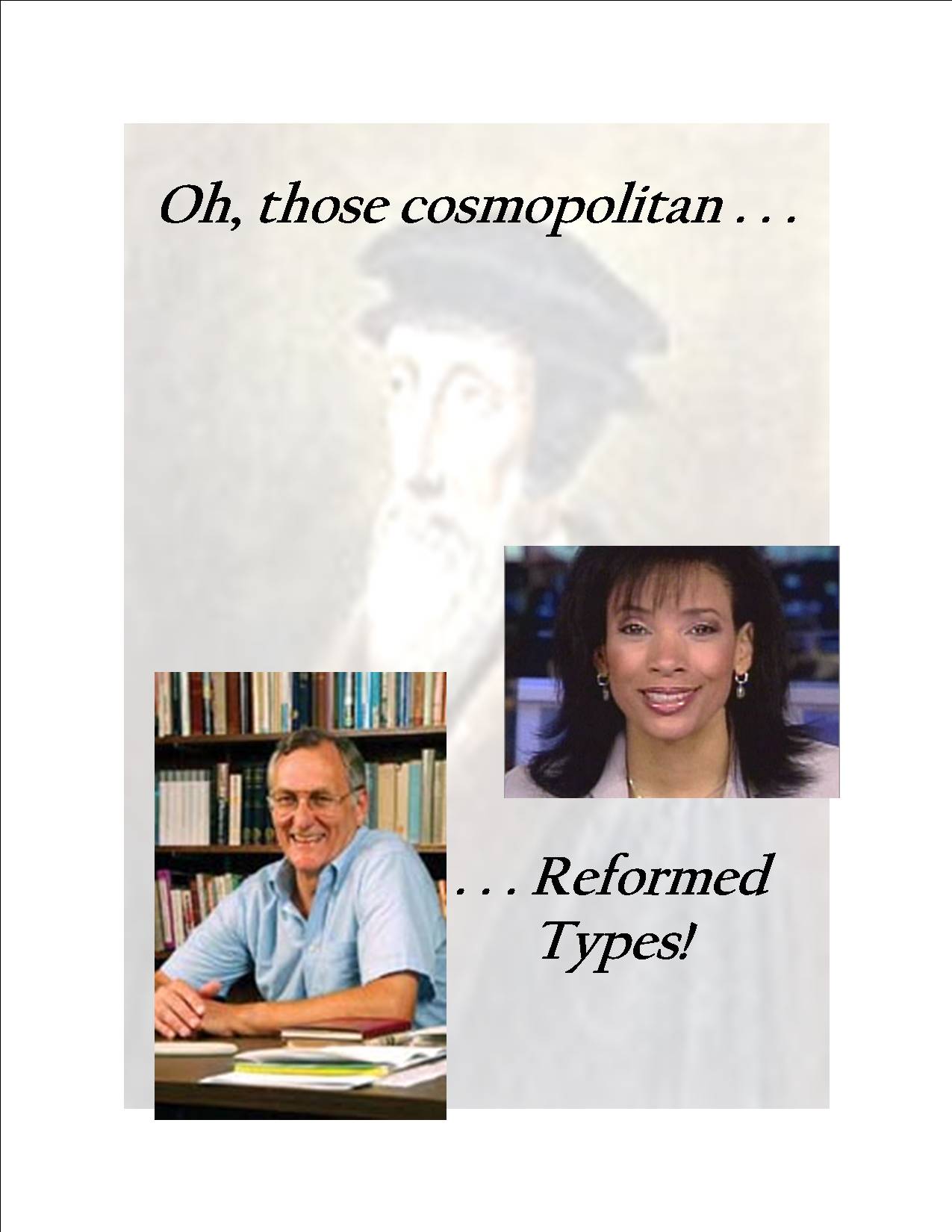 and author of Faith in the Halls of Power: How Evangelicals Joined the American Elite. When Lindsay spoke recently at the Pew Forum’s semi-annual Faith Angle Conference on religion, politics and public life, he used these categories to describe the division in the ranks of politically active American evangelicals.
Lindsay on Populists: “You see, populist evangelicals are what we oftentimes think about evangelicals. These are the folks who are culture warriors, who say that they want to take back the country for their faith. They see themselves as embattled against secular society. They are very much concerned that they are in a minority position, and they’ve got to somehow use very strong-arm tactics to win the day.”
Lindsay on Cosmopolitans: “They are less interested in taking back the country for their faith. They really are more interested in their faith being seen as authentic, reasonable, and winsome. So they still have an evangelistic impulse, but their whole modus operandi looks quite different. Because of that they have different ultimate goals of what they are actually trying to achieve. They want to have a seat at the table. They want to be seen as legitimate. They are concerned about what The New York Times or TIME magazine thinks about evangelicals because they [the cosmopolitan evangelicals] are concerned about cultural elites. They want legitimacy. Legitimacy is actually more important to them than necessarily taking back the country.”
Notable among the cosmopolitan group were Reformed Christians. Here’s what he said about them.
“There are some theologically literate cosmopolitan evangelicals, people who are able to articulate how their faith matters and drives them to particular positions, but the interesting thing about that is that almost all of them come from the Reformed tradition. The rise of Presbyterian kind of theology has been very interesting to observe. Abraham Kuyper has been one of the figures that is oftentimes cited among the people I interviewed.”
Then Lindsay mentions one significant Reformed theologian who is partly to be credited with the emergence of Reformed theology in the American evangelical community. David Wells. “I got in touch with a theologian named David Wells who has just written a book. I’ll promote his book since I don’t have one of my own. His book is The Courage to be Protestant: Truth Lovers, Marketers, and Emergents in the Postmodern World. And he has a different dichotomy of the outlook of the evangelical landscape.” So Lindsay explains Wells’ breakdown. But I don’t want to spoil it for you. I want you to go read the whole transcript. It will give you a good idea of what is going on among us voting evangelicals.
Normally, I don’t post on politics, but politics is only one factor. I’m interested in this also for the historical and theological associations. If you want my views on politics, you’ll have to email me or send me a message at my Facebook page.
Finally, there was another Reformed individual, who, in her vocation, is associated with all of this. The chief religion correspondent from FOXNews Channel, Lauren Green, happened to be in attendance at the conference and piped up with some questions when she heard her church referenced. That church would be Redeemer Presbyterian in New York City. I found that interesting. It’s nice to learn about the faith of the talking heads you listen to. So now Lauren is “outed” if you will as Reformed!
Live Chat with Michael Horton on “Christless Christianity”
 Back on Reformation Day, aka Halloween, aka October 31st, the Washington Post hosted a Live Web Chat with Michael Horton (White Horse Inn, Modern Reformation) helping to promote the release of his new book, Christless Christianity. The title of this book was also the focus of the programs during the past year on the White Horse Inn radio show. Horton attained a bit of media attention because of his recent statements critical of Joel Osteen’s theology, who serves as a good poster boy for what Horton calls “Christless Christianity,” but his book and the topic is far more extensive than a mere attempt to pull Osteen off of his pedastal. According to Horton, we all have the natural bent toward some form of Christless Christianity. We all tend to some degree to focus on ourselves and what we do at the expense of God and what he does for us in Christ. But to paraphrase the emphasis of Horton both on the radio and in his book(s), the grace and faith and love to serve Christ comes from the same source as the grace and faith and love that moved us to receive Christ in the first place: the good news of the sinless life, sacrifical death, glorious resurrection of the Lord Jesus Christ.
Our problem is, we keep falling back on focusing on the Law of God or the various commands of Scripture, to such a degree that we forget it’s primary use is to expose our sin while its secondary use is to only guide believing obedience. It doesn’t impart the grace and faith and love to obey, it merely charts out for the believer what obedience ought to look like. The grace and faith and love to obey, again, comes from the gospel. So any exposition of Scripture that never gets around to the Person and Work of Christ, won’t convey to us the power to live the Christian life by the Spirit.
The Morning After Reformation Day
R. Scott Clark, Professor of Church History and Historical Theology at Westminster Seminary California, and Associate Pastor at Oceanside United Reformed Church, splashes a little water in the faces of those of us who get excited about the Reformation on Halloween. If you want your Reformation myths challenged (if they are myths), then read his post at the Heidelblog entitled, “What Reformation Day Really Is.” But be of good cheer, true believer–the doctor not only invalidates the legends, he bestows a sharper knowledge of the true Reformation! Read, and rejoice in the truth!
Does Lack of Perseverance Imply Limited Atonement?
21 And you, who once were alienated and hostile in mind, doing evil  deeds, 22 he has now reconciled in his body of flesh by his death, in order to present you holy and blameless and above reproach before him, 23 if indeed you continue in the faith, stable and steadfast, not shifting from the hope of the gospel that you heard, which has been proclaimed in all creation [1] under heaven, and of which I, Paul, became a minister. (Colossians 1:21-23)
This passage clearly implies the doctrine of the Perseverance of the Saints, or as I renamed it, Persevering Grace for the Saints. It basically says that Jesus actually reconciled a professing believer if he continues, or perseveres, in the faith. Simple enough, those who persevere are the ones who were truly reconciled to the Father in Christ’s death on the cross.
But look what happens when you read its opposite:
if you shift from the hope of the gospel that you heard, are unstable, waver and do not continue in the faith, then Christ has not reconciled you in his body of flesh by his death in order to present you holy and blameless and above reproach before him.
Do you read what I read? When I think of it in this way, my logic tells me that lack of perseverance may be evidence for limited atonement. In other words, if you don’t persevere in the faith, then Jesus didn’t die for you.
What say you? Am I reading limited atonement into this passage, or am I properly drawing limited atonement out of the text? Eisegesis or exegesis? You be the judge (That means post your opinion!).
You Just Gotta Check Out The ESV Study Bible!
You just gotta see this! If you don’t own a study Bible yet, don’t bother shopping around. The ultimate study Bible is going to be released on October 15, 2008. Many of my Reformed blogging buddies are already aware of this monumental achievement, and most are undoubtedly awaiting it’s arrival as eagerly as I am, even though we’ve already got a shelf full of various study Bibles. But for those of you who are shy of solid resources that can help you understand the meaning of Scripture, the backgrounds of the places in the Bible, even instruction on Christian living, ethics and material that can clue you in on what many of the major world religions believe as compared with what the Bible teaches (and who knows what else?), your search need go no further. The ESV Study Bible will provide all of this for you, and then some, with full color maps and illustrations all over the place!
I just watched some of the promotional videos describing the project, the vision behind it and the contents of the product, and it is intended to be the equivalent of a miniature version of a multi-volume library on a broad cross-section of information vital to not only learning the Word of God, but also to personal growth in grace, and even to aid in the work of gospel ministry. The ESV Study Bible promises to be useful to layman, teacher and pastor alike.
Take a look at the following videos, hosted by PCA pastor and grandson to Billy Graham, Tullian Tchividjian , in which he will introduce the purpose of the ESV Study Bible and then take you on a guided tour of the contents. Seeing is believing . . .
If you’d like to see more of the videos, they are available at the Video Resources page of the ESV Study Bible website, which you can access by clicking on the colorful button near the top of the sidebar, just under the portrait of our blog mascot and namesake.
Even though the ESV Study Bible will come in a variety of bindings including the traditional leather, it’s so chock full of amazing resources that it may prove a bit cumbersome, were one wanting to carry it to church. In my opinion, this isn’t that kind of Bible. It’s a study resource, not a tag along Sunday-go-to-meetin’ Bible. For that reason, I’m getting the hardback edition, which comes with the additional feature of being the least expensive of all the varieties. But I must confess, that when, Lord willing, I obtain my copy, I may not be able to part with it for a few weeks, so it may in fact tag along with me to church now and then. But I’ll try to pay attention to the sermon, anyway. 😉
Why Your Next Pastor Should Be A Calvinist
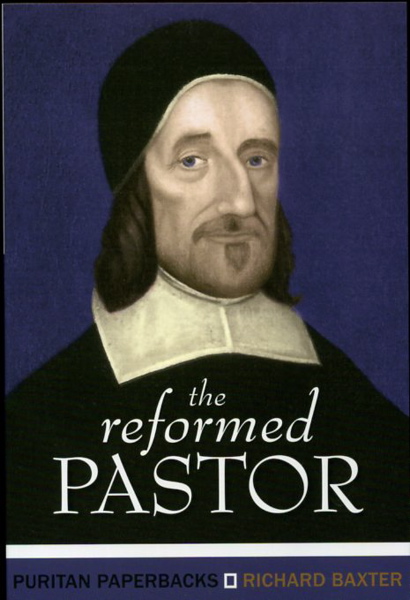
Click to buy from WTS Books
I found an interesting article that I strongly recommend my Southern Baptist readers should carefully consider. Here’s an excerpt–the link to the article will follow:
If pulpit committees and churches would look below the facade of scare-tactic accusations and warnings being rolled out like taffy at the Mississippi State Fair, they would discover something healthy and very desirable in the men and the message preached of those against whom they are warned. The twentieth-century slide into liberalism rode on the back of a growing indifference to the doctrines of grace, because the doctrines of grace are tied vitally to more biblical doctrines than just perseverance of the saints. The recovery of a fully salubrious evangelical preaching ministry depends largely on the degree to which the doctrines of grace are recovered and become the consciously propagated foundation of all gospel truth.
If a church, therefore, gets a Calvinist preacher, she will get a good thing. Several issues will be settled forever and the church will not have to wonder about the soundness of her preacher on these items of biblical truth and their soul-nurturing power. Calvinists have stood for more than just their distinguishing doctrines, but have held steadfastly to other doctrines that are essential for the health of Baptist churches in our day.
Read the entire article here.
Here are some online resources for Reforming a Baptist Church
The Baptist Confession of Faith
Trinity Hymnal (Baptist Edition)
Association of Reformed Bapitst Churches of America
Salvation Full and Free
A couple of years ago, I tried to put Ephesians 1:3-14 to music. But nothing ever came that enabled me to carry the ESV translation of this great passage on the joint sovereign work of God the Father, Son and Holy Spirit over into a singable tune. But I did come up with the following little ditty that is more inspired by the passage than it is based on it’s text. I don’t have a recording of this song, even though I did sing it at church once.
I don’t know how it reads without knowing the tune, but, believe me, it may not read well as a simple poem, but it does work as a song. It’s short enough, and the tune is lively enough, that I actually kind of consider this my one praise chorus. Hope it doesn’t ruin it for you, but it’s kind of got that feel when you sing it, only it’s a little more raw and doesn’t sound quite like a commercial jingle like so much “P & W music.”
Salvation Full and Free
Slaves to sin/no good within/to merit our Father’s electing love
Redeemed in Christ/our sin debt paid/forgiven freely by God’s grace
Called to new life (by grace)/By the Spirit’s power (through faith)/Sealed to guarantee our inheritance in Christ
Salvation full and free!
If I ever get a recording of it, I’ll post it. Tomorrow I’ll post another song which I’ve never sung in worship yet, and as of yet have no prospects of doing so.


 The Misadventures of Captain Headknowledge