Shooting Salvationist Author on Book-TV

David R. Stokes speaks before his book signing at the Fort Worth Sundance Square Barnes& Noble two blocks from the site of Norris' shooting of Chipps
This weekend C-SPAN2 is airing a speech delivered by David R. Stokes, the author of The Shooting Salvationist: J. Frank Norris and the Murder Trial that Captivated America (©2011 Steerforth Press) at a recent book signing in Austin, TX. It played last night at 9pm (Eastern), it has replayed once this morning, but you can still catch it one final time this afternoon at 3pm (Eastern).
The program has already been added to the BookTV online archive, so it may be accessed there if you miss this afternoon’s showing.
Don’t forget to purchase your copy of The Shooting Salvationist at Amazon.com or from the book’s official website.
This Is No Texas Tall Tale
“J. Frank Norris Week” continues! Last night I joined David R. Stokes, author of The Shooting Salvationist: J. Frank Norris and the Murder Trial that Captivated America at the Fort Worth Sundance Square Barnes & Noble Bookstore, where he spoke for a few minutes before sitting down to sign books. The pictures in this post are from last night’s signing. The text is my semi-formal, though concise, review of the book, which has also been posted at the book’s Amazon.com page. As emotionally dependent as I have become on this book, it was hard for me to step back and write an objective review that is comparable to a professional, or at least experienced, reviewer’s work until I decided to recommend the book in an email to another writer, who shall remain nameless. I gave him the following summary, and decided that this is about as good a review as anyone’s ever going to get out of me. Hope you find it helpful, and feel free to help us spread the word about this story that has been gratefully recovered from historical obscurity.
David R. Stokes speaks before his book signing at the Fort Worth Sundance Square Barnes& Noble two blocks from the site of Norris' shooting of Chipps
David R. Stokes is a columnist for Townhall.com. He is also a pastor of a non-denominational church in Fairfax, VA. He studied for the ministry at the same Missouri Bible College from which the late Jerry Falwell got his Bachelors degree before he moved on to bigger and better things. This Bible College, Baptist Bible College, to be precise, has its roots in the ministry of the man who is the subject of the book he is now promoting, The Shooting Salvationist: J. Frank Norris and the Murder Trial That Captivated America (2011 Steerforth Press).
Norris was the pastor of the First Baptist Church of Fort Worth Texas between the years 1909 and 1952 (the year of his death). In the early years of his ministry, he ditched the tame, sane, responsible approach to ministry in which one makes an effort to get along with everyone, for an approach that would generate so much heat it would draw huge crowds to him so he could introduce them to the Light, if you know what I mean. In the process, he was a self-appointed thorn in the side of the underground liquor and gambling interests in Texas, the budding theological liberalism in his alma mater, Baylor, the mayor of Ft. Worth and Star-Telegram founder and all-around entrepreneur Amon G. Carter. This got Norris in hot water with one of the mayor’s friends, another Ft. Worth business leader, Dexter Elliot Chipps, who stormed into Norris’ office one day, threatened to kill him, then walked out. Chipps’ mistake was that he didn’t keep going. He turned for some unknown reason and attempted to reenter the pastor’s office and was met with three or four bullets in the chest. The resulting 1926 murder trial was as big of a media circus as Norris’ hero, William Jennings Bryan’s, recent Skopes Monkey Trial had been, or for those of us in the 21st century, Casey Anthony’s.

Yours truly (left); David R. Stokes (right)
The book is a narrative non-fiction work. It reads somewhat like a novel, but all the dialogue, and much of the narration, even, is directly lifted from his sources which include not only older bios of Norris (pro and con), but much of the most prominent journalistic accounts, legal transcripts and records, as well as personal archives of Norris, Meacham and Carter. The outrageous tactics of Norris in his early ministry make for quite a train wreck, and the history is fascinating, but for folks like myself who grew up in Fort Worth, it gives a lot of new information to an old legend that has lingered in the background of all of our lives, and provides quite a bit of closure as well. I’d like to share with you this fascinating tale that we could only wish were nothing more than a “Texas Tall Tale.”
Politics, Religion and a Gun

David Stokes’ interview with 90.1FM KERA host Krys Boyd on her D/FW local NPR talk show, Think with Krys Boyd, has been uploaded. You can listen to it here.
And so, J. Frank Norris week continues at The Misadventures of Captain Headknowledge! Just wait until tomorrow…
The Shooting Salvationist Released Today!

2011 Steerforth Press--Foreword by Bob Scieffer of CBS News
Join me next Wednesday night, July 20 at the Barnes and Noble in Sundance Square in Fort Worth to meet the author of The Shooting Salvationist, David R. Stokes, get his autograph and/or a pic. I’m planning to post a review of the book just as soon as I finish my Advance Reading Copy. Probably next week.
PS–As an added bonus, you’ll probably also get to meet Rev. Roy E. Falls of The J. Frank Norris Historical Society protesting out front. When Stokes met him last year, he said he was sweet. A good time should be had by all (with the possible exception of Rev. Falls)!
Date: Wednesday, July 20, 2011
Start Time: 6:00 pm End Time: 8:00 pm
(Time Zone: US/Central)
Location: Barnes and Noble – Sundance Square
Category: The Shooting Salvationist Book Tour
Description
Phone: (817) 332-7178
Contact: Debby White
Email: debby@theshootingsalvationist.com
More Info: http://store-locator.barnesandnoble.com/store/2788
Barnes and Noble – Sundance Square
401 Commerce Street
Fort Worth TX 76102
Shooting Salvationist Author’s Video Interview
2011 Steerforth Press--Foreword by Bob Scieffer of CBS News
You’ll see in my blogroll a link to The Shooting Salvationist Blog. In case you missed my post a few weeks ago, there’s a book on the verge of being released focusing on the murder trial of Texas Independent Fundamental Baptist leader and former pastor of First Baptist Church of Fort Worth, J. Frank Norris. My faith in Christ began and was early nurtured in a church founded by a pastor who studied under Norris, and so did David Stokes, the author of the upcoming The Shooting Salvationist–I here in Ft. Worth, and Stokes up in Detroit, Michigan, where Norris would eventually co-pastor Temple Baptist Church with Baptist Bible College founder G. Beauchamp Vick.
Anyway, I just noticed at The Shooting Salvationist site that author David Stokes has posted a video interview about his book. This post is primarily to share the link to this interview which may be watched here. Stokes also just posted today that on July 18, just a few days after the book is released on July 12, 2011, he will be at Book People in Austin for a speaking/signing event which will be broadcast on C-SPAN Book TV (I’ll update this post when I get a date for the broadcast).
This book had been previously released under a different title, which is no longer available. But if you’d like to see what I wrote about Norris and the story of his notorious public ministry (celebrated by many “Old Fashioned Fundamental Baptists”) and murder trial, click on the category “J. Frank Norris” in my sidebar or here.
How “Doctrinal Indifferentism” Leads to Works Righteousness
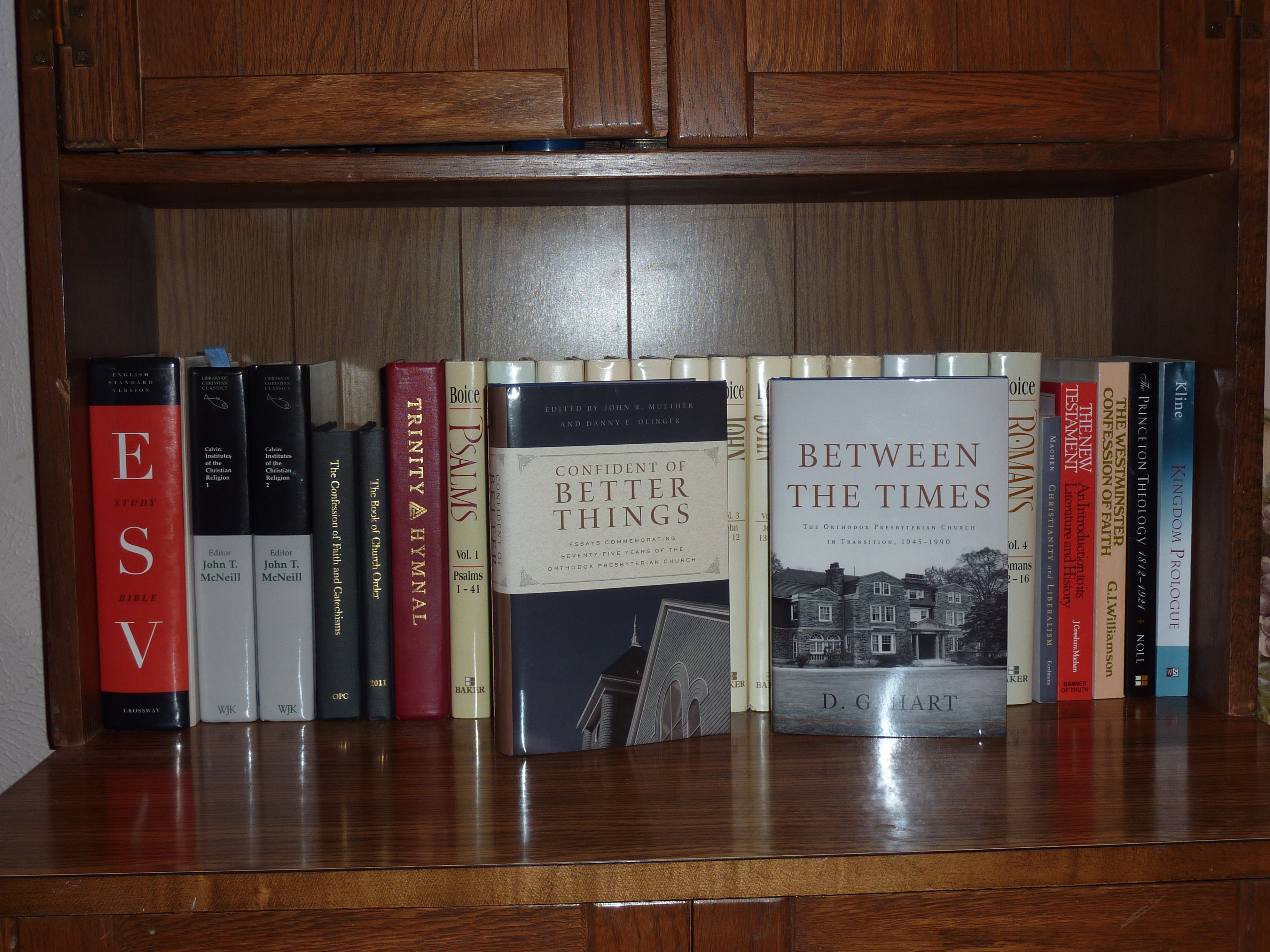
OPC 75 Titles--Confident of Better Things/Between the Times
Here’s a helpful paragraph from D. G. Hart’s new history of the Orthodox Presbyterian Church (OPC), released at the 78th General Assembly of the OPC two weeks ago in celebration of the OPC’s 75th anniversary. Here, Hart describes J. Gresham Machen’s reasons for objecting to Princeton Seminary President, J. Ross Stevensons proposal at the 1920 General Assembly of the PCUSA “for a grand plan to unite the largest Protestant denominations into one denomination” (p. 16). Hart writes:
The disadvantage of the plan for union, as Machen and most of his Princeton colleagues pointed out, was that by entering into a united church, Presbyterians would be abandoning those aspects of Protestantism that made them Presbyterian. If predestination, infant baptism, and Presbyterian polity, for instance, were actually revealed in God’s word as true and necessary for faithful witness, how could Presbyterians give away their teaching and practice to join with Baptists, Methodists, Lutherans, and Episcopalians in a generic Protestant church? The other problem with organic union, as Machen argued in a series of articles for church periodicals, was that it was based upon doctrinal indifferentism. Union turned away from serious doctrinal and ecclesiastical differences among Protestants and implied that these were less important than the greater good that a united church could achieve by transforming American society. Opposition to this sort of ecumenism, which was directly linked to the Social Gospel’s goal of ushering in the kingdomof God, was precisely the impetus for Machen’s important book, Christianity and Liberalism (1923). Not only did he argue that Christianity and liberalism were two different religions, and so liberalism needed to be excluded from the church. Machen also showed how American Protestant interdenominational cooperation stemmed from an indifference to Christian teaching and so distorted the gospel into a message of works righteousness.
D. G. Hart, Between the Times: The Orthodox Presbyterian Church in Transition, 1945-1990 (2011, The Committee for the Historian of the Orthodox Presbyterian Church,Willow Grove,PA), pp. 16-17. opc.org/publications.html Check out Hart’s blog, Old Life: Reformed Faith and Practice.
The Reformed Approach to Holidays
As my family experiences its first Easter together as regular attenders of a Reformed church, we are experiencing a distinct difference from the approach our former non-Reformed fundamentalist and evangelical churches have approached it. Following is a couple of paragraphs from an entry on Calvinism from the Encyclopedia of the Early Modern World, by the Gale Group, Inc. This should help us (and you) put the Reformed approach to holidays in general into historical context.
This morning our family is celebrating the resurrection of the Lord Jesus Christ. May this Easter Sunday find you worshiping the risen Lord in your house of worship.
Another distinctive feature of Reformed Protestantism was its remarkably small number of official holidays. Calvin himself saw no need and no scriptural basis for any holiday other than Sunday, and Reformed Protestants usually celebrated extremely few of them. Their most austere churches,GenevaandScotland(or seventeenth-centuryNew England), observed none at all—not untilGeneva’s magistrates overruled their pastors and finally declared Christmas an official holiday in 1694. Such situations were, however, exceptional. The mainstream of established Calvinism, the Reformed churches ofZurich,Bern,France, theNetherlands, and thePalatinate, celebrated four holidays besides Sundays: Christmas, Easter, Ascension Day, and Pentecost; the Dutch and thePalatinatealso added New Year’s Day. Keeping only a handful of holy days marked an enormous departure from Catholic practices, which in most places celebrated anywhere from forty to sixty holidays each year. Other mainstream Protestants were far less radical than Calvinists: Lutherans kept a large number of holy days, while the Church of England became a target for Puritan scorn by observing a total of twenty-seven holidays. Early Massachusetts went further and took the most extreme Calvinist position about the Christian calendar: not only did the colony ban all holidays, but its General Court briefly reformed the “pagan” names of the months as well, dating by “first month,” “second month,” and so forth.
Many Calvinists compensated for this paucity or absence of other holidays with a strict observance of Sunday, almost in an exact correlation.ScotlandbecameEurope’s most notorious example in 1579, when serious punishments were first threatened for Sabbath-breakers; by 1649, they had forbidden such practices as fishing on Sunday.Scotland’s extremely rigid taboos about Sabbath observance lasted far into modern times; it has been suggested that “Thou Shalt Not” made the best title for a history ofScotland, with its longest chapter called “Never on Sunday.” Another specifically Calvinist ritual was the special day of community fasting, proposed by pastors and decreed by secular authorities, usually intended to divert God’s wrath at times of extraordinary danger. We find fast days observed as early as the 1560s by the beleaguered churches of theLow CountriesorFrance, and later in seventeenth-centuryNew England; they remained a feature of Genevan life until the nineteenth century.
Interviewing the Interviewer and “Heaven & Hell”

Martin Bashir
You just have to listen to this program. Martin Bashir, the MSNBC journalist who gave Rob Bell a challenging interview about the contents of his new book Love Wins, was interviewed himself on the Paul Edwards Program about that interview. Edwards not only wanted to know how Bashir prepared for his interview with Bell, but also wanted him to confirm or squash the rumor that’s been going around that he is himself a Christian and a member of Redeemer PCA in New York City. Bashir explains his own motives and methods for his Bell interview.
It’s an awesome program! Gene Veith or someone else well versed in the Protestant doctrine of vocation should interview him further as an example of a Christian pursuing excellence in his journalistic vocation for the glory of God. I think that would be an interesting discussion.
Listen to “MSNBC’s Martin Bashir on the Paul Edwards Program.”
Also listen to this special episode of the White Horse Inn, “Heaven and Hell,” in which the “usual cast of characters” discuss Rob Bell and Love Wins with Kevin DeYoung, a leader of the so-called “New Calvinism,” or “The Young, Restless and Reformed” movement, the orthodox alternative to the postmodern liberalism of Rob Bell, Brian McLaren, Doug Pagitt, etc.
Emerging Monastic Transformationalism versus Biblical Christianity

How timely. The March/April 2011 issue of Modern Reformation magazine has arrived, featuring an article related to the postmodern liberal (aka, “emerging”) emphasis on being “missional.” Editor-in-Chief Dr. Michael Horton attempts to demonstrate how this emphasis tends to emphasize certain aspects of medieval monasticism in his piece called, “Missional Church or New Monasticism?“.
Medieval monasticism was divided between those who prized the contemplative life (spiritual ascent to heaven through private disciplines of the mind) and those who gave priority to the active life (spiritual ascent through good works, especially for the poor). Francis of Assisi–and the Franciscan Order named after him–emphasized the latter.
First, today we see a revival of contemplative spirituality. It is a traditional evangelical emphasis on personal piety: discipleship as inner transformation through spiritual disciplines. Richard Foster’s Celebration of Discipline (1979) introduced many evangelicals to the medieval mystics and contemplative writers. From The Divine Conspiracy (1998) to The Great Omission: Reclaiming Jesus’ Essential Teachings on Discipleship (2006), Dallas Willard has repeated this call to discipleship: inner transformation through the spiritual disciplines.
Next, Horton explains how contemplative and postmodern liberal writers tend to confuse Scriptural gospel indicatives with sin-exposing legal imperatives of Scripture, tending to warp the gospel into how one lives, rather than the message Christ sent ambassadors to proclaim.
Both contemplative (“spiritual disciplines”) and active (Emergent) writers tend to blur and merge commands and promises, indicativees and imperatives. That is, there is a strong tendency to identify the gospel with what we do rather than with what God has done for us–and the world–in Jesus Christ. We are active agents more than beneficiaries and witnesses of God’s reconciling work, building his kingdom through our efforts more than receiving a kingdom that expands through preaching and Sacrament. . . . (emphasis mine)
Although the Emergent movement reflects a more communal emphasis on social transformation, it shares the medieval, Anabaptist, and Pietist emphasis on deeds over creeds. Brian McLaren explains, “Anabaptists see the Christian faith primarily as a way of life,” focusing on Jesus’ Sermon on the Mount rather than on Paul and doctrines concerning personal salvation [Brian McLaren, A Generous Orthodoxy (Grand Rapids: Zondervan: 2004), 206.] More than proclaiming Christ’s finished work of reconciling sinners to the Father, the focus is on completing Christ’s redeeming work of social transformation. Tony Jones, another leader in this movement, relates: “In an emergent church, you’re likely to hear a phrase like ‘Our calling as a church is to partner with God in the work that God is already doing in the world–to cooperate in the building of God’s Kingdom.'” Trying to anticipate Reformed objections he notes, “Many theological assumptions lie behind this statement,” although “the idea that human beings con ‘cooperate’ with God is particularly galling to conservative Calvinists, who generally deny the human ability to participate with God’s work” [Tony Jones, The New Christian: Dispatches from the Emergent Frontier (New York: Jossey-Bass, 2009), 72].
According to McLaren, being “missional” means that we encourage Buddhists, Muslims, and Jews to become better Buddhists, Muslims, and Jews to become better Buddhists, Muslims, and Jews as followers of Jesus’ example. It is not what we proclaim but how we live that transforms the world. McLaren writes, “To say that Jesus is Savior is to say that in Jesus, God is intervening as Savior in all of these ways, judging (naming evil as evil), forgiving (breaking the vicious cycle of cause and effect, making reconciliation possible), and teaching (showing how to set chain reactions of good in motion)” [McLaren, 96]. There is no mention of Christ bearing God’s wrath in our place–in fact, no mention of the cross having any impact on the vertical (God-human) relationship. “Then, because we are so often ignorantly wrong and stupid, Jesus comes with saving teaching, profound yet amazingly compact: Love God with your whole heart, soul, mind, and strength, Jesus says, and love your neighbor as yourself, and that is enough.” This is what it means to say that “Jesus is saving the world” [McLaren, 97]. Although Jesus called this the summary of the law (Matt. 22:37-40, citing Deut. 6:5) for McLaren it becomes the summary of the gospel.
Horton then goes on to constructively explain the proper distinction between law and gospel:
First, “living the gospel” is a category mistake. By definition, the gospel is news (euangelion, “good news”). You don’t “do” news: you do law and you hear gospel. Second, the specific content of this good news is the forgiveness of sins through faith in Christ’s saving life, death, and resurrection. We are beneficiaries of this action, not active participants. Scripture certainly teaches that we live in view of God’s mercies, in a manner worthy of the gospel we profess, and so forth. However, it represents our lives and good works as the fruit of the faith created by the gospel, not as part of the gospel itself. (emphasis mine)
Third, the Scriptures teach consistently that faith comes through the proclamation of the gospel, not through good works. Christ himself was not arrested and arraigned because he was trying to restore family values or feed the poor. Even his miraculous signs were not by themselves offensive, except as they were signs testifying to his claims about himself. The mounting ire of the religious leaders toward Jesus coalesced around him making himself equal with God (John 5:18) and forgiving sins in his own person, directly, over against the temple and its sacrificial system (Mark 2:7). In fact, at his trial he was chared by the Jewish Council with announcing the destruction of the temple. When the high priest asked, “Are you the Christ, the Son of the Blessed?” Jesus answered: “I am, and you will see the Son of Man seated at the right hand of Power, and coming with the clouds of heaven.” With that, “the high priest tore his garments and said, ‘What further witnesses do we need? You have heard his blasphemy. What is your decision?” And they all condemned him as deserving death” (Mark 14:53-64).
Jesus was never charged on the grounds of trying to bring world peace: quite the contrary (Matt. 10:34-37). Jesus’ opponents never included a revolutionary blueprint for improving world conditions among the indictments against him. In fact, his mission was an utter failure for those who saw him as a leader of political revolution. He will return in glory to judge, to deliver, and to make all things new in a global political kingdom of righteousness and blessing. However, between his advents is the space in history for repentance and faith.
Thus, Horton contrasts the Jesus of the Bible and the Christianity of the Bible with the Jesus of postmodern liberalism and it’s appropriation of medieval contemplative spiritual disciplines and politically liberal social justice activism. The simple fact is that the Christian is not the gospel, and his Christian obedience is not the gospel (but rather its result)–the gospel of Jesus Christ will be heard each Lord’s Day at a church that is committed to proclaiming it, and that is likewise committed to doctrinal (doctrines like the deity of Christ, his virgin birth, his penal-substitutionary atonement, etc.) as well as practical discipleship in Christian obedience that leaves Christians to work this out in the various vocations to which the Lord may call his people, not specifically the favored social agenda of any local church, be it a liberal or conservative agenda. Here is the context in which true liberty in Christ will emerge, in a spirituality that will gradually, neither instantaneously nor holistically (in this age before Christ’s return to glorify his people) see Christians growing in love for God and neighbor in response to the preached gospel of the grace and forgiveness of God in the Lord Jesus Christ.
Mary’s Declaring Women’s Liberation from Feminism!

There’s another great post I am compelled to share with you over at the Gospel Coalition. Dr. Mary Kassian, Distinguished Professor of Women’s Studies at Southern Baptist Theological Seminary is the author of Girls Gone Wise and The Feminist Mistake (I love that title! In case you missed the in-your-face pun, there was a leading feminist book of bygone days called The Feminine Mystique). Dr. Kassian says we’re in a “Post-Feminist” society. But don’t rejoice yet–unlike Francis Schaeffer’s past declaration that America has moved into the “Post-Christian” era, this does not mean that Feminism has lost its influence. It’s simply moved from a movement to an institution. Says Kassian,
“Virtually everyone is a feminist. Yet virtually no one would identify him/herself as such. Feminism has seeped into people’s systems like intravenous drugs into the veins of an unconscious patient. The majority of people in today’s churches are feminists—and they don’t even know it.”
If this doesn’t ring true to you, you’re not paying attention. Our endemic feminism has taken a toll on American local church ministry and American marriages in the past several decades. In the shameful “glory days” when feminism was a movement, all the ideals of feminism were heralded by activists and educators in a counter-cultural push toward so-called “progress,” and not without resistance from the establishment culture. In other words, back then it had to be taught. Nowadays, we and our children of both sexes are so regularly exposed to feminist ideals that feminism is simply caught. Today, it’s the Biblical ideal of manhood and womanhood that has to be purposefully and energetically cultivated.
But thank the Lord that a new counter-cultural movement has arisen in the American church to do just that, teach the complementarian nature of Biblical manhood and womanhood. Feminism has brought America into an age of what is called “egalitarianism,” where the most obvious distinctions between men and women are no longer assumed. Professor Kassian heralds this positive trend and appears resolved to promote it, but not without a caveat. The last thing we need, according to Kassian, and I agree, is to move from this lifestyle of feminist license, declare liberty from feminism for the sake of the Christian family’s faithfulness to God’s Word, and allow it to degenerate into a legalism in which our focus is removed from the cross and onto an over-emphasis on the Biblical roles of manhood and womanhood that would inevitably facilitate yet another swing of the pendulum back in the direction of the radical anti-Scriptural feminism of the 1960’s and ’70’s.
Christian ladies, and gentlemen, check out the Gospel Coalition’s interview with Professor Kassian and learn that more and more Christian women are breathing the air of liberation from the cultural tyranny of feminism!
Listen to This. . .
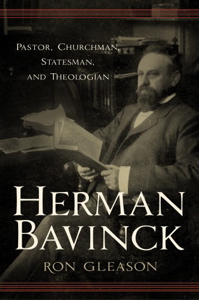
Cover of Herman Bavink: Pastor, Churchman, Statesman, and Theologian by Ron Gleason
Don’t miss these great podcasts this week.
- The White Horse Inn— “Exile, Exodus and Conquest“: On this program the hosts will explore the themes of exile, exodus and conquest showing how they each culminate in the great announcement that Jesus Christ has been given “all authority in heaven and earth” to judge, to save, and to reign forever.
- Christ the Center— “The Life and Thought of Herman Bavink“: Dr. Ron Gleason discusses his new intellectual biography, Herman Bavink: Pastor, Churchman, Statesman, and Theologian.
- Mid-Cities OPC Sermon—“Cleaning House in the Family of God” (Matthew 12:43-50). Preached by Pastor Joe Troutman on January 16, 2011. This is the church plant my family is visiting. I think you’ll appreciate Rev. Troutman’s preaching.
Christianity and Liberalism Revisited
 This past weekend, Westminster Seminary California’s (WSC) annual conference was held. It was called, “Christianity and Liberalism Revisited,” referring to the title of a book by the founder of Westminster Theological Seminary in Philadelphia, PA, and “the principal figure in the founding” of the Orthodox Presbyterian Church (OPC) in 1936, which in 2011 is celebrating its 75th anniversary. This conference is WSC contribution toward that celebration.
The conference was webcast live on Ustream and the videos are still posted there for your viewing pleasure, and audio is posted at the WSC Resource Center, but I’ll link to them below for your convenience.
- Christianity and Liberalism Today “Michael Horton shows the prophetic insight of Machen’s most famous book in Christianity today.”
- The Perennial (Problem with) Machen “Daryl Hart critiques evangelicals’ use of Machen today.”
- Machen and the Bible “Joel Kim explains the relevance of Machen’s view of the inspiration and authority of the Bible.”
- Machen and the Gospel “J. V. Fesko gives a summary of Machen’s view of the gospel and its relevance today.”
- Machen and Ethics “David VanDrunen explains how Liberalism, in its day, was fundamentally dishonest.”
- Machen, Christianity and the Church “W. Robert Godfrey explains how the church is the mission of God to carry his doctrines to the ends of the earth.”
- Question and Answer Session “The question and answer session from the 2011 Conference ‘Christianity and Liberalism Revisited’”
Bonus! If you’d like to know more about J. Gresham Machen and the Orthodox Presbyterian Church (a local congregation of which denomination my family is currently attending, Mid-Cities OPC), then start with conference speaker Daryl Hart’s page at the OPC website, called, “Machen and the OPC.”
Also, the Rev. Jason Stellman has posted a thought-provoking reflection on Hart’s lecture at his blog Creed, Code, Cult, called, “Catholicity and Liberalism.”
Sister Aimee and the “Anabaptist Nation”

"Sister Aimee" McPherson
I heard an interesting description of how American Christianity effectively developed into a form of Anabaptism. Dr. R. Scott Clark, Professor of Church History and Historical Theology at Westminster Seminary California (WSC), was interviewed this past week on Christ the Center podcast episode #157 regarding his contribution to Always Reformed, a festschrift that has recently been published in honor of WSC President and Professor of Church History, Dr. Robert Godfrey (see Dr. Clark’s post here). From what I’ve been able to gather over the past couple of years, Dr. Godfrey is an earnest student of the phenomenon of Sister Aimee McPherson’s ministry in the 1920’s, and holds her up as an example of what American Christianity is. Clark’s chapter is entitled, “Magic and Noise: Reformed Christianity in Sister’s America.” To some extent, it seems that this very subject of the Anabaptistic flavor of American Christianity is at the heart of this chapter, as may be inferred by the chapter’s title itself.
About twenty-two minutes into the interview, Clark introduces this topic by urging the study of “Sister” (as she is wont to be called) on Reformed believers. He does this because, according to Clark, in many ways McPherson’s type of Christianity is more indicative of the nature of American Christianity than the Reformed faith can lay claim to anymore. America has come a long way since the faith of the pilgrims of Plymouth Rock and the Salem witch trials (which is probably all Americans remember about those early Christian settlers (for help with that, listen to this and this). Clark believes that the Reformed would be aided in reaching America for Christ, and American evangelicals for the Reformed faith if they would see themselves more as cross-cultural missionaries, rather than natives.
Dr. Clark offers the disclaimer that his Anabaptist diagnosis of American Christianity is largely due to the fact that his primary field of research is the sixteenth and seventeenth century Reformation, rather than early twentieth century Christianity. He admits that in part he is interpreting the McPherson phenomenon and the nature of “native” American Christianity in the light of the sixteenth century Anabaptist movement, but he does attempt to support his conclusion with appeals to others who have written more extensively on Christianity in the nineteenth and twentieth centuries.
There are parallels between the Anabaptist movement of the sixteenth century and current American Christianity. Clark explains that people tend to think of the Anabaptist movement as just another facet of the Protestant Reformation, but he points out that the Anabaptists (also known as “Radical Reformers”) more or less “rejected all of the key doctrinal commitments” of the Protestant Reformation in favor of much more radical positions. Clark’s thesis is that the way American Christians commonly think about the nature of authority, epistemology (how we know what we know), Scripture and its authority, the church and eschatology (the doctrine of the end times) often bears strong resemblance to sixteenth and seventeenth century Anabaptism. Dr. Clark goes into a little more detail on this in the interview between minutes 33:15 and 42:06.
This portion of the interview caught my attention because Clark’s comparison is consistent with a conclusion I came to in my own personal pilgrimage from independent Baptist fundamentalism to Reformed theology and practice. After learning that the ultimate source of the bulk of historic Baptist theology comes from the Reformed Westminster Confession of Faith (see my newly updated “Creeds, etc.” page), and the parallels I saw between Baptist distinctives and the historic Anabaptist movement, I concluded that everything that’s right in the Baptist tradition was learned from the Reformed tradition, and everything that’s wrong in the Baptist tradition was learned, or “caught,” if you will, from Anabaptism. I realize that the 1689 Baptist Confession disclaims any formal connection between their doctrines and those of the Anabaptists, but the parallels are just too striking to Reformed paedobaptists.
This is why I encourage you to take time to listen to at least this section of the interview, if you don’t have the time or inclination to enjoy all of it. It’ll be thought-provoking time well-spent, if you ask me.
The Legacy of the King James Bible: Celebrating 400 Years of the Most Influential English Translation
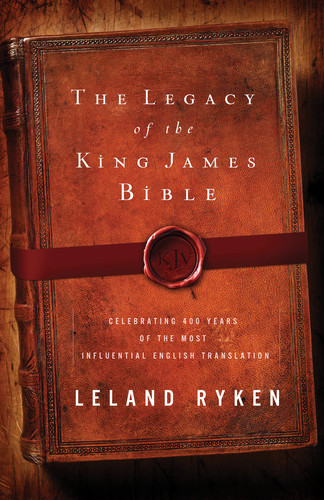 Crossway Books is contributing to this year’s celebration of the 400th anniversary of the publication of the King James Bible with the help of Wheaton College professor of English, Dr. Leland Ryken, author of The Legacy of the King James Bible: Celebrating 400 Years of the Most Influential English Translation. In promotion of this title, Justin Taylor has conducted a concise interview with the author in three parts over at the Crossway Blog. You can watch:
“How Did the King James Bible Come To Be? (Part 1)”
“The Growth of the King James Bible (Part 2)”
“The Influence of the Bible on Literature & Culture (Part 3)”
Don’t miss this opportunity to be reminded of the significance of this venerable Bible translation. As a former radical King James Onlyist who now understands that the world of Bible translation was not supposed to come to a screeching halt with the publication of the KJV, I have often been distressed by the way so many who likewise recognize the need to keep retranslating the Bible would make disrespectful swipes at the KJV. This betrays an arrogance and an ignorance that only the new is worthy of our time. But how much we miss by not familiarizing ourselves with our own history and culture. The fact is that throughout the history and the development of the culture of the English-speaking world, the King James Bible has had a constant and influential presence–and the entire world has been the better for it. Perhaps, too, it’s time that all cultures found something to appreciate in it for a change.


 The Misadventures of Captain Headknowledge
Horton on Modern Israel
Don’t miss Dr. Michael Horton’s great blog post responding to many Evangelicals’ negative reaction to President Obama’s recent comments about the borders of Israel. Many Evangelicals react negatively because, due to a largely Dispensationalist method of interpreting Scripture, they see the modern state of Israel in identical terms as the Bible views ancient Israel back when they were actually in covenant with God. Dr. Horton presents a more biblical approach to what happened with ancient Israel and the Mosaic covenant, and applies it to how we ought to view modern Jews in modern Israel in light of the cross of Christ. Read, “Biblical Foreign Policy?“
By the way, I dug Benjamin Netanyahu’s speech before both houses of Congress yesterday!
Share this: