Reformation Day is Coming
A few years ago, I was invited to speak on Martin Luther at church. The following link is a Power Point presentation I made for the event. In the sidebar you can find the audio if you’d like to listen and follow along. Just right click on the slideshow link to open it in another tab or window so you can keep this window open to hear the audio, too. I’d make a bigger deal about it, but this being Calvin’s 500th anniversary year, I’m actually a little done with Reformer retrospectives. But I hope you enjoy mine!
If you prefer, however, you can view the slides and read the text here, and here.
Or just click on Luthermania in the category cloud in the sidebar and browse all my Luther posts and read whichever you prefer.
Happy Reformation Day!
“Prescriptive Retrospective”: Finding Your Way Forward By Looking Back
 “And what you have heard from me in the presence of many witnesses entrust to faithful men who will be able to teach others also.” 2 Timothy 2:2.
History lovers have to appreciate a book that charts the evangelical future by looking back on the life and legacy of a great theologian. Of course, such a strategy of turning back to find your way forward perfectly suits J. I. Packer. As an accomplished historian and theologian, Packer finds cures for what ails contemporary evangelicalism by exploring the contributions of spiritual giants such as the Puritans. So we expect nothing less than prescriptive retrospective from J. I. Packer and the Evangelical Future: The Impact of His Life and Thought, a new book edited by Timothy George.
Christian History Blog: J. I. Packer, Man of God’s Word
Posted using ShareThis
This opening paragraph of a post on the Christian History Blog is the kind of thing I’m all about. I’ve always said, “You can’t know where you are going until you learn where you’ve come from.” The state of the church can always benefit when her members learn that the name of the game is taking what was left them by previous generations and building on it–not in ways that will radically change and leave behind the sacred deposit of the truth of God’s Word (hello, theological liberalism and some emerging churches and other wayward brethren), but in ways that teach us to preserve the essentials of the faith on which we all stand (“catholicity”), while gaining deeper insight into the issues that divide us, that we might at least come to understand each other better, if not come to a place of outward confessional unity around agreement on the non-essentials of the faith.
Respect the faithfulness of past generations by allowing yourself to be guided by their light. Yes, that includes the ever-present call to be “Bereans,” always searching the Scriptures to see whether the things they taught are so.
Derek Thomas on the Regulative Principle of Worship
 Put simply, it’s about worshiping God according to Scripture.
Don’t miss Christ the Center, episode 80, “The Regulative Principle of Worship.”
The Reverend Derek Thomas, Minister of Teaching at First Presbyterian Church, Jackson, Mississippi, first explains the threefold aspects of worship– form, element, and circumstance–then demonstrates that the Reformed emphasis on the Regulative Principle of Worship (RPW) is not merely an invention of the Puritans, as J.I. Packer and others maintain, but is the application of the Reformation ideal of Sola Scriptura. In other words, the final authority of Scripture in the faith and practice of the church is the foundation on which the RPW is built. Rev. Thomas is also very helpful on many debatable issues like the frequency and symbolisms of the Lord’s Supper and the appropriateness of the inclusion of original hymnody and musical instruments in New Covenant worship. Finally, he makes a compelling and edifying case for Sunday evening worship. Would that more churches returned to such a practice in the interests of keeping holy the Lord’s Day.
Listen and learn a little more about what it means to worship God according to Scripture by Reading the Word, Praying the Word, Singing the Word and Hearing the Word Preached.
John Calvin and Michael Servetus
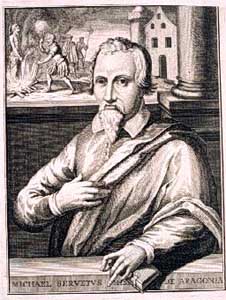 The following is part 7, concluding an excerpt from Presbyterians: Their History and Beliefs by Walter Lingle (John Knox Press, 1950). Click here to read part 1, part 2, part 3, part 4 ,part 5 and part 6.
Calvin and Servetus. It is sometimes said that John Calvin burned Michael Servetus at the stake. Servetus was burned at the stake just outside Geneva on October 27, 1553. John Calvin had some connection with the affair, and the part he played is not excusable in the light of the twentieth century, but it is not accurate to say that Calvin did the burning. Let us look at the facts.
Michael Servetus was a Spaniard with a brilliant but erractic mind. He renounced Roman Catholicism, but did not embrace Protestantism. He was a prolific writer and wrote vehemently against some of the most chedrished doctrines of Christianity. Both Catholics and Protestants considered his writings not only heretical but horribly blasphemous.
In 1553 Servetus was arrested by the Roman Catholic authorities in Vienne, France, and sentenced to be burned. While awaiting execution he escaped, and went direct to Geneva. With all the world before him, why did he go to Geneva when he had been warned to stay away? He knew that Calvin had many bitter enemies, and probably knew that at that particular moment the majority of the City Council were opposed to Calvin. The City Council had banished him once, and might be induced to do it again. Servetus probably went to Geneva to ally himself with the enemies of Calvin and thus help to overthrow Calvin and his work. When Calvin heard of the presence of Servetus in Geneva he reported the matter to the City Council. Bear in mind that Calvin was not a member of the City Council and that the majority of the Council were opposed to him. The Council arrested Servetus and put him on trial for heresy and blasphemy. John Calvin appeard as a witness against him.
After a long trial the City Council found Servetus guilty of heresy and blasphemy, and sentenced him to be burned. Accoring to the Old Testament, blasphemy was punishable with death. John Calvin urged the Council not to burn Servetus, but to take a more humane method of executing him. The Council refused. The whole story is a sad one, and Calvin does not appear at his best in it, but we should judge him by the light of the century in which he lived. The large majority of both Protestants and Catholics in that century approved of the death penalty for heresy and blasphemy.
Notwithstanding this blot and other blots on the name of Calvin which might be mentioned. Ernest Renan, the French skeptic and critic, had this to say aobut Calvin: “He succeeded more than all, in an age and in a country which called for reaction towards Christianity, simply because he was the most Christian man of his century.”
The Closing Years. The trial of Servetus was in reality a contest between Calvin and his enemies. Calvin won. The backbone of the opposition was broken. The last ten years were the most peaceful and in many respects the most fruitful years of his life.
John Calvin died on May 27, 1564, the year in which Willam Shakespeare was born. A noted scoffer intimates, in language which is none too reverent, that it was a blessed exchange for the world. But many informed and thoughtful people, with a full appreciation of Shakespeare, do not agree with the scoffer. Here is what Philip Schaff, the distinguised church historian, says: “Calvin’s moral power extended over all the Reformed Churches, and over several nationalities–Swiss, French, German, Polish, Bohemian, Hungarian, Butch, English, Scottish, and American. His religious influence upon the Anglo-Saxon race of both continents is greater than that of any native Englishman, and continues to this day.”
John Calvin: Christian Education
The following is part 6 of an excerpt from Presbyterians: Their History and Beliefs by Walter Lingle (John Knox Press, 1950). Click here to read part 1, part 2, part 3, part 4 and part 5.
John Calvin believed in Christian education. He believed that religion and learning should always go hand in hand. He accordingly organized a complete system of education in Geneva, beginning with the primary schools for children and ending with the Academy (or University) where young men might be prepared for the ministry and other walks of life. These schools were controlled and supervised by the church. Only Christian teachers were employed. Thus John Calvin set up standards for Christian education which have been admired and followed by Presbyterians from that day to this. Bancroft, the American historian, says: “We boas of our common schools; Calvin was the father of popular education, the inventor of the system of free schools.”
John Calvin: Erecting “the most perfect school of Christ.”
The following is part 5 of an excerpt from Presbyterians: Their History and Beliefs by Walter Lingle (John Knox Press, 1950). Click here to read part 1, part 2, part 3 and part 4.

courtesy of ReformationArt.com
The Consistory. The five pastors in Geneva and the twelve elders were organized into a Consistory. In some respects it was like the session in a modern Presbyterian church; in other respects it was somewhat like presbytery. It was the duty of the Consistory to govern the church and to administer discipline. It is well to keep in mind that Calvin was not able to put into practice his ideal for the free election of elders by the people, as the City Council insisted on having a part in their selection. So in the Consistory we see a mixing of the church and the civil government in a way that would be repugnant to Presbyterians today. But that was four hundred years ago.
The Consistory placed great emphasis upon discipline. Detailed rules for Christian living were drawn up, and it was the duty of the Consistory to see that the people observed these rules. The records show that people were disciplined for various offenses, including these: cursing and swearing, adultery, attempting to commit suicide, for spending their time in taverns, for playing cards on Sunday evenings, for arranging a marriage between a woman of seventy and a man of twenty-five, for singing obscene songs, for wife-beating, for betrothing a daughter to a Papist, and so forth. Thus they were disciplined for gross sins and for some that did not seem so gross.
Church attendance was made compulsory. Excuses given for non-attendance are interesting and some of them sound very modern. One man had to stay at home with a three-year-old child; another was too deaf to hear; another had to work on Sunday; still another had to stay at home and look after the house and cattle.
The Confession of Faith. Calvin and Farel had prepared a Confession of Faith and a Catechism before they were banished. These were revised and enlarged and adopted by the church. In the Confession of Faith and Catechism we have set forth in clear and fairly simple form the Calvinistic system of doctrine. This Confession of Faith was to have a marked influence upon Confessions and Creeds that were formulated later in France, the Netherlands, Scotland and England. While the Presbyterian Church gets its name from its form of government, it also stands for a system of doctrine. Presbyterianism and Calvinism usually go hand in hand.
Reforming Geneva. John Calvin, armed with the Bible as the word of God, the Confession of Faith, and the Form of Government and Discipline, with the Consistory behind him, set out upon the great task of reforming Geneva. In so doing, he started a movement which has profoundly influenced the whole of Christendom.
No man ever worked harder at a task than did John Calvin. He preached several times each week, taught theology, wrote commentaries, superintended a whole system of schools, wrote books and pamphlets, carried on an extensive correspondence with Reformation leaders all over Europe, and took oversight of the Reform movement in Geneva. He was interested in everything that affected the lives and welfare of the people. He believed that Christianity should be carried into every relationship of life. A distinguished historian states it this way:
“The material prosperity of the city was not neglected. Greater cleanliness was introduced, which is next to Godliness, and promotes it. Calvin insisted upon the removal of filth from houses and the narrow and crowded streets. He induced the magistrates to superintend the markets, and to prevent the sale of unhealthy food, which was to be cast into the Rhone. Low taverns and 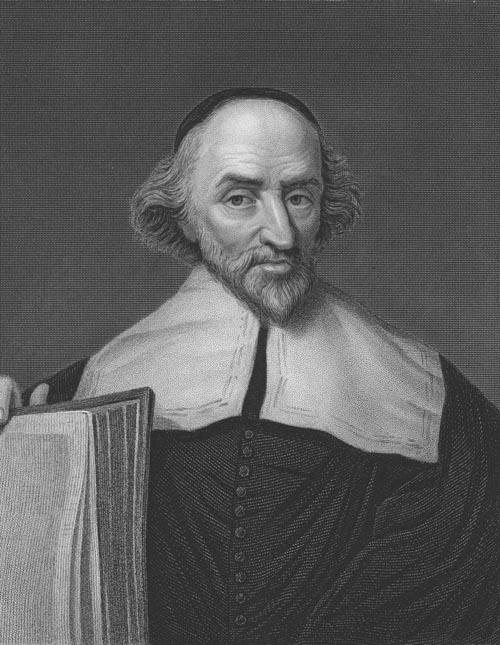 drinking shops were abolished, and intemperance diminished. Mendicancy in the streets was prohibited. A hospital and poor-house were provided and well-conducted. Efforts were made to give useful employment to every man who could work. Altogether Geneva owes her moral and temporal prosperity, her intellectual and literary activity, her social refinement, and her world-wide fame very largely to the reformation and the discipline of Calvin. He set a high and noble example of a model community.”
John Knox, the great Scottish reformer, was a refugee in Geneva during the years 1554-1559. He afterwards gave this testimony concerning the work of Calvin in Geneva:
“It is the most perfect school of Christ that ever was in the earth since the days of the Apostles. In other places I confess Christ to be truly preached; but manners and religion to be so seriously reformed, I have not yet seen in any place besides.”
John Calvin: Back By Popular Demand (Never Thought You’d Hear Those Words, Did You?)

The following is part 4 of an excerpt from Presbyterians: Their History and Beliefs by Walter Lingle (John Knox Press, 1950). Click here to read part 1, part 2 and part 3. Today marks John Calvin’s 500th birthday. May Calvin’s life, piety and ministry serve to reform yours by God’s glorious grace according to the Word of God.
Return to Geneva. After Calvin and Farel were banished, things went badly at Geneva. The immoral element got control, and the moral life of the city became unspeakable. The Roman Catholic Church made a determined effort to overthrow Protestantism. Visitors, strangers, and refugees who had come to Geneva because John Calvin was there ceased to come. The people of Geneva began to realize that John Calvin was a great spiritual, moral, and financial asset. There was a growing sentiment for his return.
In the autumn of 1540 the City Council sent an invitation to Calvin by a special messenger, urging him to return to Geneva. He made a cordial response but declined. They sent him one invitation after another, and brought great pressure to bear upon him. They even had William Farel write one of his characteristic letters pronouncing a curse upon him if he did not return. Feeling that the call must be from God, Calvin yielded and returned to Geneva, arriving September 13, 1541. There was great rejoicing and his friends gave hi a triumphal entrance into the city. But there were still bitter enemies who gave him no end of trouble in the years that followed.
Beginning Anew. John Calvin took up his work in Geneva where he had left off at the time of his banishment, and he did it without apology. Going before the City Council he urged the importance of having a thoroughgoing Form of Government and Discipline for the church and the city. The doctrine of complete separation of the church and the civil government, as held by Presbyterians today, was not held in Geneva, nor anywhere else in those days.
The City Council approved of Calvin’s request and appointed a committee, with Calvin as chairman, to prepare the necessary documents. In due time he presented the City Council with a very complete Form of Government and Discipline for their approval. In this notable document we have what Calvin believed to be the Scriptural principles of church government and discipline.
As stated above, Calvin went back to the bible for everything pertaining to the church–for government, doctrine, worship, discipline, and life. When he studied church government in the Bible he did not find any popes, cardinals, archbishops, and bishops, such as he had known in the Roman Catholic Church from his youth up. Instead he found a church with a very simple form of representative government by elders. He also found in the Bible other church officials called pastors, teachers and deacons. So in the Form of Government drawn up by Calvin there were pastors, elders, deacons, and teachers. When the City Council approved of this Form of Government, the church in Geneva became a Presbyterian church in fact, if not in name. It was called the Reformed Church.
John Calvin: Pastor, Reformer and Husband
The following is part 3 an excerpt from Presbyterians: Their History and Beliefs, by Walter L. Lingle (1950, John Knox Press). Read part one here. And read part two here.
 Begins His Work in Geneva. John Calvin began his work in Geneva on September 1, 1536, by preaching a sermon in St. Peter’s Cathedral. The sermon created a sensation, and the people crowded around him insisting that he must preach again the next day. What was it about the sermon of this twenty-seven-year-old preacher that created such a stir? It was simply an expository sermon on one of Paul’s Epistles. That does not sound very sensational to us, but it was something new to that audience. They had never heard any opening up of the Scriptures like that. This sermon was followed by many more just like it. John Calvin became a great expository preacher and a great interpreter of the Scriptures. It is here that we find the main secret of his power. He went back to the Bible for everything relating to the Christian life and to the church. The Bible was the seat of authority in religion so far as John Calvin was concerned. To the Roman Catholic the church was the seat of authority. The results of the kind of preaching and teaching that John Calvin did were summed up by Thomas Carlyle in the following paragraph: “The period of the Reformation was a judgment day for Europe, when all the nations were presented with an open Bible and all the emancipation of heart and intellect which an open Bible involves.” No man did more to open up the Bible for the people of his generation and all generations than John Calvin did.

Courtesy of ReformationArt.com
The Reformer.
But Calvin was more than a preacher; he was a reformer. He felt called upon to reform the religion and morals of all the people of Geneva. He and Farel accordingly prepared a Confession of Faith, a Catechism, and a Book of Discipline. After these had been approved by the City Council on July 29, 1537, all citizens of Geneva, men and women, were ordered to give their assent to these standards and to live by them. Many gladly gave their assent, but many others refused. A great furor was raised. This opposition grew until it resulted in the banishment of Calvin and Farel from Geneva by the City Council on April 22, 1538. Farel settled in Neuchatel and never returned to Geneva. Calvin went to Strassburg, a Protestant city of Germeny, with no thought of ever returning to Geneva.
Strassburg received Calvin with open arms, and promptly made him assistant professor theology in their new Protestant College. There were many French-speaking, Protestant refugees in Strassburg. Calvin organized them into a church and became the pastor. In this church he was able to put his ideals for a churhc more fully into practice than he had been able to do in Geneva because of the interference of the City Council.
Calvin followed a very simple order of service in his church. Emphasis was placed upon the reading of the Scriptues and prayer. There was congregational singing, which was not usual in the Roman Catholic Church. They sang from a French translation of the Psalms. There were no musical instruments in John Calvin’s church. The sermon occupied the central place. In the Roman Catholic Church the altar was central.
In August, 1540, Calvin married Idelette de Bure, a widow with a small son and daughter. William Farel, in writing to a friend, said that she was “not only good and honorable but also handsome.” She and Calvin seem to have been very happy together. They had one son who died a few hours after birth.
John Calvin: From the Institutes to Geneva
The following is part 2 an excerpt from Presbyterians: Their History and Beliefs, by Walter L. Lingle (1950, John Knox Press). Read part one here.
Publishes His Institutes. In the spring of 1536, Calvin published a profound little book on theology, which he named The Institutes of the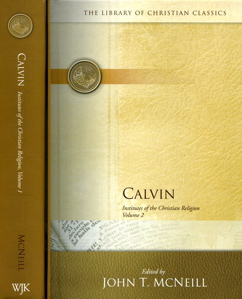 Christian Religion. Today we would call it a book on systematic theology. The book created a real sensation, and theologians knew that a new star of the first magnitude had arisen on the theological horizon. Calvin kept on revising this little book for the next twenty-three years, until it grew into two large volumes. He lived to see this work translated into practically every language of Europe. Theologians still study and refer to “Calvin’s Institutes.”
Find His Life Work in Geneva. John Calvin was only twenty-seven years of age when he published his Institutes, but from that time on he was a marked man. The publication of that book probably determined his life work. It came about in this way. As the persecutions of Protestants in France grew more severe, Calvin decided to leave France and pass over into the Protestant part of Germany. The safest journey was through Switzerland. So one hot night in August, 1536, he pulled up at an inn in Geneva to spend the nigh expecting to continue on his journey the next day. But God had other plans for him.
William Farel, a fiery Protestant with red hair, glittering eyes and a thunderous voice, had begun Christian work in Geneva in 1532. Under his preachng a great deal had been accomplished. He had blasted away the debris of centuries and laid the foundation for real constructive leadership. When Farel heard that John Calvin, the author of the Institutes, was in Geneva, he felt that he had come to the kingdom for such a time as this. So he sought him out and invited and implored him to remain in Geneva and help him. Calvin begged to be excused that he might continue on his journey and devote himself to his studies.
Let Calvin tell the rest of his story as recorded in the Preface to his Commentary on the Psalms: “Then Farel, finding he gained nothing by entreaties, besought God to curse my retirement and the tranquility of my studies if I should withdraw and refuse to give assistance when the necessity was so urgent. By this imprecation I was so struck with terror that I desisted from the journeyI had undertaken, but being sensible of my natural timidity, I would not bring myself under obligations to discharge any particular office.” So John Calvin, who had planned to spend only one night in Geneva, spent the rest of his life there, with the exception of about three years which he spent in exile in Germany.
It’s Calvin Week!!!
 As most of my readers are well aware, this Friday marks the Quincentenary of sixteenth century Genevan Reformer, John Calvin. That is, the 500th anniversary of his birth. This week, and some of the next if necessary, I will be featuring a short biographical chapter on John Calvin’s life from a book called Presbyterians: Their History and Beliefs, by Walter L. Lingle, published originally in 1944 by John Knox Press [fourth printing (revised), 1950]. I will feature this primarily in the effort to introduce John Calvin to those of my readers who are not so familiar with his life and ministry, or to reintroduce him to those who suffer from the many misconceptions about his life. For more information about Calvin and the Quincentenary celebration, see Calvin500.org.
Our Debt to Calvin. Presbyterianism is deeply indebted to John Calvin. As we have seen in previous chapters, Presbyterianism is rooted and grounded in the Holy Scriptures. But as we saw in Chapter II, the Presbyterian doctrines and principles that are contained in the Bible became buried beneath centuries of ignorance, superstition, and traditions. John Calvin went beneath all this debris of centuries, resurrected the doctrines and principles of Presbyterianism, and organized the modern Presbyterian Church. That was about four hundred years ago.
We in America are more indebted to John Calvin than most people realize. The doctrines and principles which he released have made a large contribution to our representative form of government and the human freedom which we enjoy. Ranke, the German historian, says: “John Calvin was the virtual founder of America.” D’Aubigne, the French historian, says: “Calvin was the founder of the greatest of republics,” referring to the United States. Bancroft, the American historian, says: “He that will not honor the memory and respect the influence of Calvin knows but little of the origin of American liberty.” Presbyterians should at least know the outline of the life of the man to whom they are so deeply indebted.
Early Years. John Calvin was born in Noyon, a cathedral town of France, fifty miles northeast of Paris, on July 10, 1509, of Roman Catholic parents. His father planned to educate him for the priesthood, and gave him the best education that was obtainable. At the age of fourteen he entered the University of Paris, where he studied Latin, Logic, and Philosophy. Later he decided to study law, and spent several years studying at the Universities of Orleans and Bourges, under the greatest professors of law that could be found in France. It would be interesting to know how much his legal training influenced his theological thinking.
After the death of his father, John Calvin, free to make his own choice, decided to devote himself to the study of literature. His studies included the Latin, Greek, and Hebrew languages and literature. The first book he ever wrote was a commentary on Seneca’s Treatise on Clemency. In this commentary Calvin quotes from fifty-six Latin and twenty-two Greek authors. This gives us some intimation of his familiarity with Latin and Greek literature.
Conversion to Protestantism. We do not know the exact date of his conversion from Roman Catholicism to Protestantism, but it was sometime in the year 1533. His conversion was probably gradual. His study of Latin, Greek, and Hebrew literature led him to the study of the Bible in those languages. These studies also threw him with men and women who were devotees of the New Learning, some of whom had already embraced the Protestant faith. Soon after his conversion to Protestantism he found it necessary to flee from Paris for his life. During the next three years he lived in hiding under an assumed name. Much of this time was spent in the private libraries of friends. He was hard at work, and, best of all, he was thinking and praying.
The “Deformed” Theological Pedigree of Murder
Here’s an interesting article from the Weekly Standard on the theological background of those who believe it’s justifiable to murder abortion doctors. What’s scary about it is how people can get so close to the truth and then twist it to extremes. The other scary thing is how closely tied to Reformed theology this aberration is.
Wake Up, America!
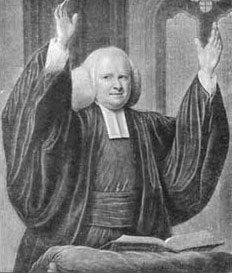 Read Burk Parson’s Tabletalk Magazine article, “A Sower Went Out To Sow . . . ” in which you will be introduced to George Whitefield, the great Calvinistic Methodist evangelist who, along with Jonathan Edwards (of “Sinners in the Hands of an Angry God” fame–aka, “the theologian of revival“), and John Wesley, for whom “the world [was his] parish,” with his earnest and sometimes blunt preaching, was the agent of God in the First Great Awakening.
As I read Parson’s article, it occured to me that I’ve heard evangelicals praying for and even “claiming” revival all of my life, with little to show for it, but a few enthusiastic excesses on the fringe of the charismatic movement. Considering the cultural climate in which we now live, perhaps God is bringing the American people to a greater place of hunger and thirst after righteousness. Pray for revival as we are all providentially confronted with some harsh economic and cultural realities. But, lest another explosion of error results, pray for reformation along with revival. Revival without reformation will bring spiritual life, but can also spread doctrinal error; reformation without revival will improve the church’s theological integrity whether or not spiritual integrity accompanies it. Reformation and revival is what America desparately needs.
Twenty-first Century New Testament Textual Criticism
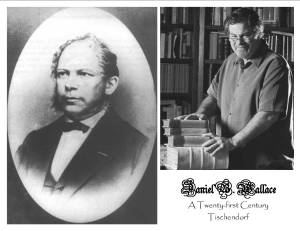
Constantin Von Tischendorf (r); Daniel B. Wallace (l)
Will the 21st century go down as another great age of discovery when it comes to our knowledge of the transmission of the text of the Greek New Testament? While many skeptical and liberal scholars like Bart Ehrman are busy using their expertise in the Biblical Studies to destroy faith in God’s revealed Word in the Scriptures, others, like Dr. Daniel B. Wallace of Dallas Theological Seminary, founder of The Center for the Study of New Testament Manuscripts, is using modern technology to “discover” ancient manuscripts which have until now been inaccessible due to their fragile condition. According to an interview of him on Friday’s edition of Christ the Center, in the past year, about 36 manuscripts have been discovered and are in line behind about 75 others to be catalogued at the place in Munster, Germany where the knowledge of such manuscripts are warehoused for use by scholars the world over.
No time to finish this post. But I want you to listen to the program. Here’s the link: http://reformedforum.org/ctc70/
From “Freedom” to Bondage?

Thomas Chalmers by ReformationArt.com
Considering the recent controversy over ordaining an openly gay minister to a congregation in the Free Church of Scotland (see Iain Campbell’s post at Ref21), I found it interesting that it was on this day, May 18, 1843, that Thomas Chalmers led four hundred ministers out of the established church of Scotland in reaction to its trend toward “liberal formalism” to found the Free Church of Scotland. How ironic that liberalism is now catching up with them.
It was at the end of his life, when his reputation was well established, his contribution to the life of Scotland, England and Ireland fully recognized, and his fame spread around the world that the greatest test came to Thomas Chalmers (1780-1847). During the course of his long and storied career the great Scottish Reformer had served as the pastor of three congregations, taught in three colleges, published more than thirty-five best-selling books, and helped to establish more than a hundred charitable relief and missions organizations. He practically reinvented the Scottish parish system as well as the national social welfare structure. He counted such luminaries as the Duke of Wellington, Sir Walter Scott, King William IV, Thomas Carlyle, William Wilberforce, and Robert Peel as his friends and confidants. Indeed, he was among the most influential and highly regarded men of his day. Even so, he did not hesitate to involve himself in–and ultimately lead–a movement that was to set him in apparent disregard of the authority of the highest civil court in the land.
With the disappearance of Catholic authority in Scotland, Reformers worked hard to replace it with a faithful national church. Their struggle for spiritual independence had been a long and costly one under the leadership of John Knox and Andrew Melville among others. At long last, in 1690, their Reformed Church was legally recognized by the Crown as the established Church of Scotland. The danger of such an establishment was that the state might attempt to manipulate the internal affairs of the church.
That danger was realized when Parliament imposed conformity with the standards of English patronage upon the Scottish church. In reality, patronage was hardly different from the medieval practice of lay investiture–it gave landowners the right to appoint to a parish a minister who might or might not be biblically qualified for the post or acceptable to the elders of the congregation. The patronage conflict came to a head in 1838 when several ministers were forced on congregations opposed to their settlement. Many, including Chalmers, believed that the integrity of the gospel was at stake.
At about the same time, it was decided by Parliament that the church did not have the power to organize new parishes or to give the ministers there the status of clergy of the church. It had no authority to receive again clergy who had left it. And perhaps worst of all, a creeping liberal formalism was slowly smothering the evangelical zeal of the whole land–in large part due to the assumption of pastoral duties by men altoghether unfit for such a solemn vocation.
After a ten-year struggle to regain the soul of the church, the evangelical wing, led by Chalmers, laid a protest on the table of the assembly, and some four hundred ministers left the established Church of Scotland on this day in 1843, to form the Free Church. When the new church was constituted that grave morning, Thomas Chalmers was, of course, called to be its moderator. He was the man whose reputation in the Christian world was the highest; he was also the man whose influence had been greatest in directing the events that led to what would eventually be called the “Disruption.” (George Grant& Gregory Wilbur; The Christian Almanac: A Book of Days Celebrating History’s Most Significant People & Events, page 296; Cumberland House, Nashville, Tennessee–buy it real cheap from Christianbook.com or Amazon.com)
The Truth About “Angels & Demons”
This weekend, the companion to The DaVinci Code, called Angels & Demons, hit the theaters. Just a few days before the movie came out, some scholars from Westminster Theological Seminary in Philadelphia, Pennsylvania, announced their website called “The Truth About Angels & Demons,” devoted to addressing the issues raised by Dan Brown’s book and the new movie based thereon. You may have noticed there has not been nearly the controversy swirling around this movie, but that doesn’t mean the story doesn’t distort the truths with which it deals. Hence the concern that, in this generation in which many people learn their history, science and theology from novels and movies, often accepting uncritically that which they read and watch, inaccuracies be corrected on a popular level.
In addition, Dr. Peter Lillback, one of the men behind the website, was interviewed on Issues, Etc., introducing the website and discussing some of the issues dealt with on the site. These issues range from the true identity of the historical secret society called the Illuminati to the conflict between science and religion, to the reason this film hasn’t been quite as controversial as the last. You can listen to this interview here.
Dr. Peter Lillback is a professor of historical theology at Westminster Theological Seminary, and is the author of The Binding of God, Lessons on Liberty: A Primer for Young Patriots, Wall of Misconception: Does the Separation of Church and State Mean the Separation of God and Government?, and George Washington’s Sacred Fire.


 The Misadventures of Captain Headknowledge