Gospel Coalition Interviews Michael Horton
 If you’re anything like me, you’re looking forward to your copy of Michael Horton’s new systematic theology, The Christian Faith: A Systematic Theology for Pilgrims on the Way (published by Zondervan), to arrive, if you haven’t already received it. If you aren’t like me, then perhaps this interesting interview of Horton by John Starke, of the Gospel Coalition, promoting his systematic theology, will make you more like me (but only in this one way).
Bible Questions on the History of the Kings of Judah and Israel, No. 1
 This week, it’s not a “Scripture Enigma,” it’s the first in a series of questions on the history of the kings of Judah and Israel, from The Sunday at Home: A Family Magazine for Sabbath Reading (No. 1028–January 10, 1874). This post will be updated with the answers in one week. By the way, Scripture Enigma, No. 1 has been updated with its answers. Please post any answers or guesses in the comments thread. Or comment on the anxiety such questions give you. You can even feel free to comment asking for hints. Anything! Just comment! 😉
- What reasons did the people of Israel assign for their wish to be governed by kings?
- How had they been previously governed?
- Where do you find that God had anticipated this desire, and what directions had He given with regard to it?
- By whom was the first king of Israel selected? Mention his name—his father—his tribe.
- Describe his personal appearance.
- By who was he anointed? And where? On what errand was he engaged at the time? What change came over him from that time?
- Where was he first proclaimed king? How did God show his displeasure with the people at the time?
- What indications can you find of filial obedience, modesty, and courage in the early history of Saul?
- For what reasons did God take the kingdom from him? When was this first told him, and by whom? How did the tidings affect Samuel?
- Give other passages from God’s Word, which teach us that outward observances of religion have no value with God unless accompanied by a life of obedience.
- Saul professed repentance—but what showed that his repentance was not sincere?
- From this time we see a great change in Saul. What affliction came upon him? How did he obtain relief?
- Have we any indications of a loss of personal courage?
- What aroused his jealousy of David?
- What does the Bible say about envy?
- From this time Saul’s heart was set on David’s death. Mention any occasions on which David narrowly escaped his enemy, and how he was delivered.
- Mention any indications of relenting.
- On what two occasions was Saul’s life spared when he was in David’s power?
- What proofs have we of the tender love between David and Jonathan, Saul’s son? Show that its foundation was laid in true religion.
- Saul was left by God. To whom then did he seek for help? And with what consequences?
- What was his end? Which of his sons died with him? By whom, and where were they buried?
- How long did Saul reign?
- What became of the other sons of Saul?
Answers:
- 1. 1 Sam. 8:5, 20
- 1 Sam. 8:7; 10:19; 12:11-12
- Deut. 17:14-20
- 1 Sam. 9:1, 16, 17
- 1 Sam. 9:2; 10:23
- 1 Sam. 9:3-4, 19-20; 10:1, 9, 11
- 1 Sam. 9:14, 15; 12:16-18
- 1 Sam. 9:5, 21; 10:21-23; 11
- 1 Sam. 13:8-14; 15:23, 28-29, 35; 16:1
- Psa. 1:7-14; Prov. 21:3; Isa. 1;11-17; Jer. 7:21-23; Micah 6:6-8; Matt. 7:21-23
- See his self-justification, 1 Sam. 15:15. His excuses, 5:21. When at last confession was extorted from him, he feard losing the respect of the people, not the favour of God, 5:30.
- 1 Sam. 16:14-18, 23.
- 1 Sam. 17:11; 28:5.
- 1 Sam. 18:8, 9, 15, 29.
- Prov. 14:30; 27:4; S. Song 8:6; Gal. 5:21; Jas. 3:14, 16.
- 1 Sam.19:10-12; 23:26-28; 24:3.
- 1 Sam. 19:6; 24:16-22; 26:21-25.
- 1 Sam. 24:3-7; 26:6-12.
- 1 Sam. 18: 1-4; 19:2; 20:3, 11-17, 34; 23:16-18; 2 Sam. 1:26.
- 1 Sam. 28:6-20.
- 1 Sam. 31:1-6, 8-13.
- Acts 13:21.
- 2 Sam. 4:5-7; 21:5-9.
Christianity and Liberalism Revisited
 This past weekend, Westminster Seminary California’s (WSC) annual conference was held. It was called, “Christianity and Liberalism Revisited,” referring to the title of a book by the founder of Westminster Theological Seminary in Philadelphia, PA, and “the principal figure in the founding” of the Orthodox Presbyterian Church (OPC) in 1936, which in 2011 is celebrating its 75th anniversary. This conference is WSC contribution toward that celebration.
The conference was webcast live on Ustream and the videos are still posted there for your viewing pleasure, and audio is posted at the WSC Resource Center, but I’ll link to them below for your convenience.
- Christianity and Liberalism Today “Michael Horton shows the prophetic insight of Machen’s most famous book in Christianity today.”
- The Perennial (Problem with) Machen “Daryl Hart critiques evangelicals’ use of Machen today.”
- Machen and the Bible “Joel Kim explains the relevance of Machen’s view of the inspiration and authority of the Bible.”
- Machen and the Gospel “J. V. Fesko gives a summary of Machen’s view of the gospel and its relevance today.”
- Machen and Ethics “David VanDrunen explains how Liberalism, in its day, was fundamentally dishonest.”
- Machen, Christianity and the Church “W. Robert Godfrey explains how the church is the mission of God to carry his doctrines to the ends of the earth.”
- Question and Answer Session “The question and answer session from the 2011 Conference ‘Christianity and Liberalism Revisited’”
Bonus! If you’d like to know more about J. Gresham Machen and the Orthodox Presbyterian Church (a local congregation of which denomination my family is currently attending, Mid-Cities OPC), then start with conference speaker Daryl Hart’s page at the OPC website, called, “Machen and the OPC.”
Also, the Rev. Jason Stellman has posted a thought-provoking reflection on Hart’s lecture at his blog Creed, Code, Cult, called, “Catholicity and Liberalism.”
Sister Aimee and the “Anabaptist Nation”

"Sister Aimee" McPherson
I heard an interesting description of how American Christianity effectively developed into a form of Anabaptism. Dr. R. Scott Clark, Professor of Church History and Historical Theology at Westminster Seminary California (WSC), was interviewed this past week on Christ the Center podcast episode #157 regarding his contribution to Always Reformed, a festschrift that has recently been published in honor of WSC President and Professor of Church History, Dr. Robert Godfrey (see Dr. Clark’s post here). From what I’ve been able to gather over the past couple of years, Dr. Godfrey is an earnest student of the phenomenon of Sister Aimee McPherson’s ministry in the 1920’s, and holds her up as an example of what American Christianity is. Clark’s chapter is entitled, “Magic and Noise: Reformed Christianity in Sister’s America.” To some extent, it seems that this very subject of the Anabaptistic flavor of American Christianity is at the heart of this chapter, as may be inferred by the chapter’s title itself.
About twenty-two minutes into the interview, Clark introduces this topic by urging the study of “Sister” (as she is wont to be called) on Reformed believers. He does this because, according to Clark, in many ways McPherson’s type of Christianity is more indicative of the nature of American Christianity than the Reformed faith can lay claim to anymore. America has come a long way since the faith of the pilgrims of Plymouth Rock and the Salem witch trials (which is probably all Americans remember about those early Christian settlers (for help with that, listen to this and this). Clark believes that the Reformed would be aided in reaching America for Christ, and American evangelicals for the Reformed faith if they would see themselves more as cross-cultural missionaries, rather than natives.
Dr. Clark offers the disclaimer that his Anabaptist diagnosis of American Christianity is largely due to the fact that his primary field of research is the sixteenth and seventeenth century Reformation, rather than early twentieth century Christianity. He admits that in part he is interpreting the McPherson phenomenon and the nature of “native” American Christianity in the light of the sixteenth century Anabaptist movement, but he does attempt to support his conclusion with appeals to others who have written more extensively on Christianity in the nineteenth and twentieth centuries.
There are parallels between the Anabaptist movement of the sixteenth century and current American Christianity. Clark explains that people tend to think of the Anabaptist movement as just another facet of the Protestant Reformation, but he points out that the Anabaptists (also known as “Radical Reformers”) more or less “rejected all of the key doctrinal commitments” of the Protestant Reformation in favor of much more radical positions. Clark’s thesis is that the way American Christians commonly think about the nature of authority, epistemology (how we know what we know), Scripture and its authority, the church and eschatology (the doctrine of the end times) often bears strong resemblance to sixteenth and seventeenth century Anabaptism. Dr. Clark goes into a little more detail on this in the interview between minutes 33:15 and 42:06.
This portion of the interview caught my attention because Clark’s comparison is consistent with a conclusion I came to in my own personal pilgrimage from independent Baptist fundamentalism to Reformed theology and practice. After learning that the ultimate source of the bulk of historic Baptist theology comes from the Reformed Westminster Confession of Faith (see my newly updated “Creeds, etc.” page), and the parallels I saw between Baptist distinctives and the historic Anabaptist movement, I concluded that everything that’s right in the Baptist tradition was learned from the Reformed tradition, and everything that’s wrong in the Baptist tradition was learned, or “caught,” if you will, from Anabaptism. I realize that the 1689 Baptist Confession disclaims any formal connection between their doctrines and those of the Anabaptists, but the parallels are just too striking to Reformed paedobaptists.
This is why I encourage you to take time to listen to at least this section of the interview, if you don’t have the time or inclination to enjoy all of it. It’ll be thought-provoking time well-spent, if you ask me.
Scripture Enigma, No. 1

Scripture Enigma, No. 1--The Sunday at Home, 1874
I have in my possession an antiquarian volume which contains all the issues of a weekly religious magazine from England published in the year 1874. The book and magazine are called The Sunday at Home: A Family Magazine for Sabbath Reading. Each issue includes articles on various topics related to the Christian faith, family devotionals, even serial novels. But one of the most intriguing features of this magazine is a little quiz called “Scripture Enigma.” These are often really, really tough! In the light of the recent reports of very poor biblical literacy on the part of evangelicals, perhaps it would be appropriate to challenge you to crack open your Bibles to track down the solutions to some of these riddles. I’m planning to post one each week in the hopes that some of you will take up the challenge and post your answers in the comments thread. In some of the quizzes, the first letter of each answer will spell a word that solves the riddle that comes after the numbered list of other riddles. This is the case in this week’s “Enigma.” Other weeks will feature other sorts of biblical mind-teasers. I’ll update these posts with the correct answers the following week, and then I’ll post the next quiz. So, without further ado, grab your Bibles!
SCRIPTURE ENIGMA,
NO. I
1. Sweet home! from whence the feet of Jesus sped
with tender sympathy to raise the dead.
2. ‘Twas Rezin’s mighty king this city chose,
To give to Syria, driving thence her foes.
3. From out these vineyards came a lion wild,
In angry rage, ‘gainst Manoah’s favour’d child.
4. Within this city’s walls they mourned for shame,
When evil tidings of Damascus came.
5. An aged patriarch, ere he closed his life,
Bade his loved son go seek from thence a wife.
6. Oh! woe was thine, for those who dwelt in thee,
Through Israel’s sword, entered captivity.
7. This city of the Jews in peace he trod,
Waiting in faith the kingdom of his God.
8. There the disciples saw there risen Lord,
and worshipped him, though not with one accord.
9. “Go to this land,” he said, “there corn to buy;
Hasten, my sons, or we shall surely die.”
Nearing Jerusalem, to this place they came
(My nine initial letters tell its name),
Where Jesus bade his two disciples speed
To loose a colt, and say the Lord hath need.
Thine, mighty God, is all on land and sea;
Yet, wondrous love! the Lord has need of thee.
UPDATE:
Answers
BETHPHAGE – Matt. 21:1
1. Bethany (John 11:1)
2. Elath (2 Kings 16:6)
3. Timnath (Judges 14:5,6)
4. Hamath (Jeremiah 49:23)
5. Padan-aram (Genesis 28:1)
6. Heshbon (Numbers 21:25)
7. Arimathea (Mark 15:43)
8. Galilee (Matthew 28:16,17)
9. Egypt (Genesis 42:1,2)
The Legacy of the King James Bible: Celebrating 400 Years of the Most Influential English Translation
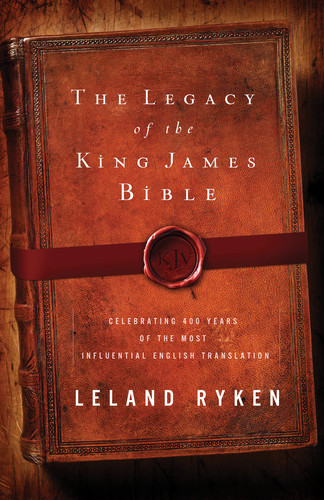 Crossway Books is contributing to this year’s celebration of the 400th anniversary of the publication of the King James Bible with the help of Wheaton College professor of English, Dr. Leland Ryken, author of The Legacy of the King James Bible: Celebrating 400 Years of the Most Influential English Translation. In promotion of this title, Justin Taylor has conducted a concise interview with the author in three parts over at the Crossway Blog. You can watch:
“How Did the King James Bible Come To Be? (Part 1)”
“The Growth of the King James Bible (Part 2)”
“The Influence of the Bible on Literature & Culture (Part 3)”
Don’t miss this opportunity to be reminded of the significance of this venerable Bible translation. As a former radical King James Onlyist who now understands that the world of Bible translation was not supposed to come to a screeching halt with the publication of the KJV, I have often been distressed by the way so many who likewise recognize the need to keep retranslating the Bible would make disrespectful swipes at the KJV. This betrays an arrogance and an ignorance that only the new is worthy of our time. But how much we miss by not familiarizing ourselves with our own history and culture. The fact is that throughout the history and the development of the culture of the English-speaking world, the King James Bible has had a constant and influential presence–and the entire world has been the better for it. Perhaps, too, it’s time that all cultures found something to appreciate in it for a change.
The BBC is celebrating KJV400.
 The BBC is promoting the 400th anniversary of the publication of the Authorized “King James” Version of the Bible. In order to do so, they are airing a series of radio reports entitled, “King James Bible–History and Readings.” Here’s how they introduce the series:
The King James Bible is one of the great English literary works. On the 400th anniversary of its publication, a series of documentaries and readings explore its history and enduring appeal. Features James Naughtie, Simon Schama, Rowan Williams, Emilia Fox, Toby Stephens and others.
The first installment aired today, but you can subscribe to a podcast that follows this series by visiting their site at the link below:
BBC – Podcasts – King James Bible – History and Readings.
For your reading pleasure, peruse this site’s blogs posted under the category of “King James Version.”
The Masculine Media Considered

Hope you’ve all had a merry Christmas, and I hope you all have a happy new year. During my Christmas vacation between these holidays, I’m currently reading (finally!) T. David Gordon’s Why Johnny Can’t Preach: The Media Have Shaped the Messengers. It’s an awesome little volume (maybe too little, but I suppose it packs enough of a wallop that were it longer it might border on the uncharitable or abusive–something the author was concerned about, and which delayed his writing of it). I’m a slow reader, so I haven’t finished it yet. I just finished chapter two, “Why Johnny Can’t Preach, Part 1: Johnny Can’t Read (Texts),” and one passage in this chapter led me to consider something about the scriptural mandate that men (specifically, males) are God’s appointed medium in preaching. Concluding chapter two, Gordon writes:
In a sense, then, the few conversations there have been about preaching and preachers in the last generation have been relatively pointless. Whether a sermon is preached by a man or a woman is comparatively unimportant; whether it encourages a liberal or conservative sociopolitical agenda is comparatively inconsequential; whether its “how-to” advice or pop psychology is helpful or not makes little difference. What would make a difference would be Christian proclamation that is consequential, that is concerned less with current events than with the history-encompassing events of creation, fall, and redemption. What would make a difference would be Christian proclamation that did not panic every time a court rendered a decision on some pet geopolitical concern, but called our attention instead to the certain judgment of God, with whom we have to do. What would make a difference would be Christian proclamation that was less concerned with “how-to” and more concerned with “why-to,” why humans are fearfully and wonderfully made in the image of God. What might make a difference would be Christian proclamation that was less concerned with the latest news from the Beltway, and more concerned with the stunning and perennial good news that God in Christ is reconciling sinners to himself. But any one of these preferred alternatives requires a sensiblilty for the significant; a capacity to distinguish the weighty from the light, and the consequential from the trivial (pp. 59-60; emphasis mine).
Perhaps I didn’t need to transcribe the entire paragraph, but it’s all such sorely-needed information, I decided not to resist the temptation. The main point of the paragraph is beside the point of this post. Like a poorly expounded text of Scripture, I’m going to launch off onto a question raised by only one minor aspect of the paragraph mentioned only in passing, and as only one item in a long list of other items. My question is raised by the highlighted reference at the beginning of the paragraph to the comparative unimportance of whether a sermon is preached by a man or a woman.
I, and most of my readers, are well aware that Scripture certainly does prescribe that in corporate Christian worship, a male is the appropriate kind of person ordained by God to preach. Gordon’s point is not to deny this divine prescription, but to argue that the content of the sermon is much more important than the sex of the preacher, as important as that is. This point, made this way by Gordon, moved me to consider the reason behind God’s stated reason (a dangerous exercise, I’m sure) for the command that women are to neither teach nor usurp authority from the man (1 Timothy 2:12). Verse thirteen of 1 Timothy 2 appeals to the fall of Adam and Eve, and hence ultimately to the roles of husbands and wives and their typifying of the hierarchy of roles between Christ and his Bride, the Church (cf. Ephesians 5:22-33).
Perhaps my question is simply an unnecessary reduction of the husband/wife hierarchy, but, is it simply that males are God’s ordained medium for preaching because of the authority which males inherently and by Scriptural injunction represent? R. C. Sproul in his series on Recovering the Beauty of the Arts explains the basic principle that “all forms are art forms, and all art forms communicate something.” Sproul makes this his fundamental point in arguing for the benefit of many of the traditional forms that have come down to us from previous generations in the context of corporate worship–for example, pulpits and other aspects of traditional church architecture. Thinking in terms of the communicative nature of forms, am I getting off track to ponder whether it is basically the authority a man conveys by virtue of his sex in the act of preaching that God has in mind when he prescribes specifically men to serve in the office of elder/pastor/preacher?
I assume that many who are conditioned by modern egalitarian sensibilities regarding the inherent nature of males versus that of females would challenge this whole line of reasoning. But consider another medium and its use of male and female images: television commercials. I’m convinced that it is safe to say that the vast majority of commercials advertizing, say, board games, portray the female winning a game played against a male. This image is just one of many ways the classic motif of David vs. Goliath plays out in probably all art, literature, television and movies. The “little guy” wins out over “the big guy.” I submit that the drama inherent in this simple motif is there because, among other reasons, males inherently represent authority or superordinate roles, whereas females inherently represent subordinate roles.
Although matriarchal cultures do exist, they are the exception, rather than the rule, and I think if the anthropologist were to examine such cultures to their foundations, he would find a point in their histories at which the matriarch replaced the patriarch as the head of those cultures. This is the case of at least one native American tribe in the Southwest. My family toured a village populated by this tribe (whose name eludes me), and the tour guide explained that this tribe was matriarchal, and that it wasn’t always so, but became so due to a lack of provision on the part of the males in that tribe. This also reminds me of the origin of the Full Gospel denomination, but that is a subject better taken up by Robert Godfrey of Westminster Seminary California.
Perhaps it’s going “beyond what is written” to ponder such things, but considering the reasons stated above, I hope you understand where I’m coming from.
Gospel-Driven: From Doctrine to Discipleship

Dr. Michael Horton and me
New St. Peter’s Presbyterian Church in Dallas hosts an annual Reformation Conference the weekend before Reformation Sunday. This year saw their fourth such conference, “Gospel-Driven: From Doctrine to Discipleship,” featuring the teaching of Dr. Michael Scott Horton, Associate Pastor of Christ United Reformed Church of Santee, CA (see Dr. Horton’s Adult Bible Class page), J. Gresham Machen Professor of Systematic Theology and Apologetics at Westminster Seminary California, host of the White Horse Inn radio show (and podcast), Editor-In-Chief of Modern Reformation Magazine, and author of an ever-growing number of books, three of which were the subject of this year’s conference (see his Wikipedia entry for more info).
Two of the three books have already been published, but the third, on which Dr. Horton spoke, is to be published in the coming months. These books are (in order), Christless Christianity, The Gospel-Driven Life, and I think the title of book three will be The Gospel Commission. The first volume addresses the heart of the problem with all of contemporary evangelical, even Reformed, Christianity–an exchange of preaching the gospel of the Lord Jesus Christ for the preaching of self-salvation by self-improvement in a variety of manifestations–preaching “good advice” at the expense of preaching the good news. The Gospel-Driven Life addresses why preaching the gospel (along with regularly receiving the Lord’s Supper) is essential for Christian growth and sanctification, not just evangelism. Finally, The Gospel Commission (if that is it’s actual title) will go into how the church is to obey the imperative Great Commission out of a conscious response to the gospel indicative of the complete authority over heaven and earth given to the Lord Jesus Christ by his Father (Matthew 28:18).
This was an exciting opportunity for me to meet the man who first introduced me to Reformed theology. Back in 1991 Dr. Horton published his first book, Mission Accomplished (later revised and republished as Putting Amazing Back Into Grace). In the providence of God, Dr. Horton was invited to promote the book on a morning talk show on, of all places, the Trinity Broadcasting Network! During this interview, Dr. Horton had the unique opportunity to introduce Calvinism to the constituents of the Word of Faith heresy of Kenneths Hagin and Copeland, Benny Hinn, Oral Roberts, and more recently Joyce Meyer, John Hagee and Joel Osteen, myself among them. I recall mostly his emphasis on how the doctrine of election and predestination, far from squashing evangelism, actually motivates it. I found my introduction to Reformed theology and its benefits fascinating and exciting. At the time Dr. Horton was leading a ministry called Christians United for Reformation (CURE). I subscribed to CURE’s newsletter for a short time–I found it equally fascinating and really cool, but I also found it to be waaay over my head. So I got on with my life, marrying my first wife, moving off to Missouri to study to be an Independent Baptist missionary (which plan would change), living life between my initial and later providential and interesting encounters with Reformed theology.
I brought my copy of Mission Accomplished with me to the conference to get it autographed by Dr. Horton, along with the copy of The Gospel-Driven Life which I purchased at the conference. It was my joy to be able to personally thank him for his introducing me to Reformed theology, and when I mentioned that I saw him on TBN, he grimaced with shame as if a deep, dark secret had been exposed, and we all enjoyed a laugh at the stark irony of his television debut. Then as he opened my book and began writing on the first page, he informed me that the host of that talk show was fired not long after that episode. He assured me that the fact that he had been a guest on the show “was not unrelated” to his firing–WOW! But it makes perfect sense, considering that it would not be long before Dr. Horton would edit an expose of the Word of Faith movement, The Agony of Deceit. But just think, that TBN host’s firing may have just been one of the best things to ever happen to him. I consider it a noble sacrifice for the cause on his part. I just wish I could remember that host’s name so I could search for videos of his interviews on YouTube in the hopes of finding his interview of Michael Horton. Now that would be a blast!
If you’ve never listened to the White Horse Inn, then you are not aware of just what a heady, yet eminently edifying and motivating speaker Dr. Horton is. The way he helped us understand the covenantal nature of God’s relationship to Old Testament Israel and the New Testament Church simply boggles the mind with how it brings together so many aspects of the biblical revelation of redemption and also highlights the importance of the doctrine of justification by grace alone (sola gratia) that is received by faith alone (sola fide). He even mentioned how Pope Benedict XVI has admitted that the Bible’s use of the form and content of ancient Near Eastern Suzerainty/Vassal treaties in his covenantal dealings with his people makes it understandable that the Reformers taught what they did about justification. Horton observed that when the Pope sounds more like the Reformers than contemporary Evangelical theologians, you know you are living in a Salvador Dali painting!
You can download the audio of the messages below (PS–I hear there’s a video in the works, but haven’t heard if and when it’ll be released):
- Christless Christianity: The Problem
- Gospel-Driven Life: The Solution
- Gospel Commission: The Application
- Questions and Answers with Dr. Horton
- The Missionary Servant: The Sermon
Memoir of the Rev. John Brown, part 5

Lithograph of the Reverend John Brown of Haddington
In his employment as a shepherd–a calling so much ennobled in the patriarchal age, and so universally celebrated both in the ancient and modern pastoral–he enjoyed more leisure, and better opportunities, for prosecuting his favourite studies, than could have fallen to his share in almost any other business; nor did he neglect to improve such promising circumstances. In a very short time he left far behind him many who had the advantage of every thing calculated to quicken their progress,–proper books, leisure to study them, and the best masters for their instructors. Left to his own resources, however, he acquired the knowledge of the Latin, Greek, and Hebrew languages, with a rapidity that attraced the attention of the neighbourhood, and became the general topic of conversation. But while this procured him many friends, it at the same time hurt the pride, and excited the malice, of some of his outstripped rivals in the race of literary fame. It was, accordingly, whispered, that the progress he was making in his studies, in the absence of all instruction, bearing no proportion to the powers of the human mind, could only be accounted for by supposing that his unaccountable progress was effected by the agency of the devil; who, with a similar temptation, had seduced the mother of mankind, and has, in all ages, taken the advantage of the studious and scholastic habits of individuals to entangle them in his snares.–“Report ye, and we will report: come, let us smite him with the tongue.” Notwithstanding that this malevolent slander had absurdity deeply imprinted on its forehead, it was eagerly laid hold of by the ignorant and credulous, and so widely circulated, that the innocent victim felt it extremely distressing, and more especially since even Mr. Moncrieff appeared, for a season, to be influenced by it, and withdrew his countenance from him–a thing which, he afterwards admitted, was very cruel and unkind. For although the charge of diabolical intercourse was no longer admissible in the criminal courts of the country, yet the superstitious notions and prejudices handed down from the dark ages of popery were, at that period, so far from being eradicated from the minds of the people, especially in sequestered corners of the country, that such surmises were still capable of ruining a man’s peace, and inflicting a serious wound on a mind of even the most ordinary feeling. To one so ardent in the prosecution of knowledge, and so anxious to attain the qualifications necessary for a minister of the gospel, it must have been no common affliction to have all his pleasing anticipations thus cruelly blighted in a moment; for, as he apprehended, the immediate tendency of this foul reproach was to blast his religious character, and counteract his whole purpose, by shutting against him the door of the divinity hall. On those who were best acquainted with him (the members of a praying society with which he was connected,) the slander had no impression; they continued his steady friends, and their attachment seemed to strengthen in proportion to the anguish he suffered from such an unmerited calumny. In the narrative already quoted we find him speaking thus: “The reproach was exceedingly distressing to me; however, God was gracious, for I enjoyed remarkable mixture of mercy and affliction. At the beginning of the trial these words, ‘The Lord will command his loving-kindness in the day-time, and in the night his song shall be with me, and my prayer unto the God of my life,’ were peculiarly sweet to my soul.”
Memoir of the Rev. John Brown, part 4

Brown’s Self-Interpreting Bible (1859 edition)
We resume our biography of the Reverend John Brown of Haddington (1722-1787), as he joins the Scottish Secession Church and teaches himself Latin and Greek while a humble, rural shepherd, preparing himself to one day become a shepherd of souls. We are also treated to a providential encounter that wins the young Brown the gift of a Greek New Testament.
To this party (the Secession Church) our shepherd considered it his duty to join himself; and, anxious to become a shepherd of souls in their communion, he prosecuted his studies with incredible ardour and perseverance, and soon acquired a considerable acquaintance with the Latin and Greek languages. In these difficult studies he had no instructor, excepting that, on some occasions of rare occurrence, he could find an hour to call on one or other of two neighbouring clergymen, namely, Mr. Moncrieff of Abernethy, and Mr. Johnston of Arngask, father of the late Dr. Johnston of North Leith, who kindly assisted him in surmounting any formidable difficulty that threatened to arrest the progress of literary pursuits. Having now obtained such an acquaintance with the Greek language as enlivened his hopes that he should ultimately succeed in his darling object of acquiring the necessary qualifications for preaching the blessed gospel of our Lord and Saviour Jesus Christ, he pressed forward with renovated vigour and growing confidence. But amongst the many things wanting to accelerate his motion, he was, at this time, anxious to obtain a Greek Testament, that he might have the satisfaction of reading, in the original language, the character and work, the holy life and vicarious death, of Him who feedeth his flock like a shepherd, and laid down his life for his sheep. Buoyed up with these hopes, and excited by this anxiety, after folding his flock one summer evening, and procuring the consent of his fellow-shepherd to watch it next day, he made a nocturnal trip to St. Andrews, distant about twenty-four miles, where he arrived in the morning. He called at the first bookseller’s shop that came in his way, and having inquired for the article in question, the shopman, on observing his apparent rusticity and mountain habiliments (dress characteristic of his occupation), told him that he had Greek Testaments and Hebrew Bibles in abundance, but suspected an English Testament would answer his purpose much better. In the mean time some gentlemen, said to have been professors in the university, happened to enter the shop, and learning what was going on, seemed much of the shopman’s opinion. One of these, however, ordered the volume to be produced, and, taking it in his hand, said, “Young man, here is the Greek Testament, and you shall have it at the easy charge of reading the first passage that turns up.” It was too good an offer to be rejected: the shepherd accepted the challenge, and performed the conditions to the satisfaction and astonishment of the party; and Mr. Brown very modestly retired with his prize.
Memoir of the Rev. John Brown, part 3

“Abraham Offering Up Isaac” from Brown’s Self-Interpreting Bible
In the year 1733 a serious rupture took place in the General Assembly of the Church of Scotland, in consequence of an act of Assembly passed in 1730, by which it was enacted, that reasons of dissent against the decisions of the judicatories of the Church should not be entered on the record; an enactment which prevented all who dissented in any case from exonerating their consciences by recording their dissent. This gave rise to much righteous indignation on the part of the godly ministers in the Church—an indignation which was augmented when, in 1732, the most solemn remonstrances against intrusive settlements were not so much as listened to. Along with these harsh dealings it was made a cause of censure for any minister to animadvert on the proceedings of the Church courts. Several ministers—inasmuch as they were bound by solemn engagement to the truth as expressed in the subordinate standards—found that they could not, as faithful servants of Jesus Christ, submit to censure for what appeared to them their obvious duty. Accordingly, Mr. Ebenezer Erskine, having freely animadverted on the growing defections of the Church, in a sermon delivered before the Synod of Perth and Stirling, in 1732, was called to account before said Synod, where he was found liable to censure in terms of the enactment aforesaid. To this decision, however, from a sense of duty, he peremptorily refused to submit, both before the Synod and General Assembly. Mr. Erskine was at this time joined by Messrs William Wilson, James Fisher, and Alexander Moncrieff: who, after due deliberation, finding that they could not, with a good conscience, continue in the communion of the church under these circumstances, seceded from her ecclesiastical jurisdiction, on the following grounds:–1st. The sufferance of error without adequate censure. 2d. The infringement of the people’s rights in electing their ministers, under the law of patronage. 3d. The neglect or relaxation of discipline. 4th. The restraint on ministerial freedom in opposing error and maladministration. 5th. The refusal of the prevailing party to be reclaimed. On these, and other solemn considerations, stated at large in their Testimony, they constituted themselves into a distinct presbytery, fully persuaded of the lawfulness of their separation.
“Extent”
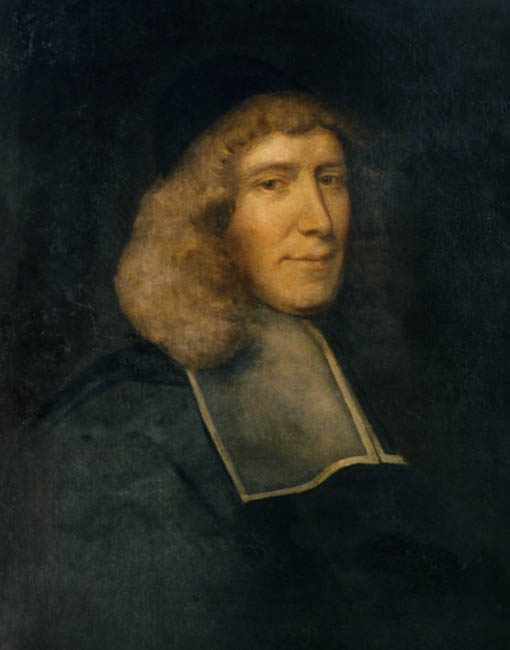
John Owen (1616-1683), thanks to ReformationArt.com
Time for our first break from Brown’s Self-Interpreting Bible. How about if we dabble in the doctrine of particular redemption?
I ran across, once again, the famous quote by Puritan theologian par excellence, John Owen (1616-1683), from his book, The Death of Death in the Death of Christ. Among statements in defense of the Reformed doctrine of particular redemption, this one is literally viral in the Reformed blogosphere. This quote is Owen’s logical critique of general redemption, and is worth thinking through and searching the Scriptures about if you’ve never taken the time.
Anyway, here’s a breakdown of his complex argument from Reformed.org:
The Father imposed His wrath due unto, and the Son underwent punishment for, either:
- All the sins of all men.
- All the sins of some men, or
- Some of the sins of all men.
In which case it may be said:
- That if the last be true, all men have some sins to answer for, and so, none are saved.
- That if the second be true, then Christ, in their stead suffered for all the sins of all the elect in the whole world, and this is the truth.
- But if the first be the case, why are not all men free from the punishment due unto their sins?
You answer, “Because of unbelief.”
I ask, Is this unbelief a sin, or is it not? If it be, then Christ suffered the punishment due unto it, or He did not. If He did, why must that hinder them more than their other sins for which He died? If He did not, He did not die for all their sins!”
I’ve looked at this many times and have until now always had trouble keeping the whole train of thought on the rails in my head, if you know what I mean. Finally, the other day, I decided I’m going to have to do with this what I do with Scripture verses and catechism questions that I want to memorize–put it to music!
The following is the result. It’s roughly based on the tune to the children’s song “I’m in the Lord’s Army,” although there are some divergences. Do what you will with it. So, without further ado, I give you . . .
Extent
by John D. Chitty
Did Christ die for
all sins of all men
or all sins of some men
or some sins of all men?
If Christ died for
some sins of all men,
then all die
for those he did not.
But if Christ died for
all sins of some men,
that’s what we believe,
all th’elect of all the nations!
But if Christ died for
all sins of all men,
why are not
all men saved?
You will answer
“Because of unbelief”–
Is unbelief a sin or not?
If not, why then,
for it give account?
Either for it
Christ was punished, or not!
If he was, then,
why does unbelief
prevent salvation
more than other sins he died for?
But if he did not
die for unbelief,
then for all sins of all men
Christ did not die!
So Christ died for
all sins of some men,
those the Father
gave to His Son!
I’m from Geneva, and I’m here to help!
Memoir of the Rev. John Brown, part 2
 About the eleventh year of his age his father was removed by death; and in some short time after, his loss was doubled in the death of his mother, and he left a poor orphan, without friends who could render him any essential service in his forlorn situation. But another ingredient was still wanting to fill up the bitter cup of adversity. About four months after the death of his mother, he was seized with a fever, four attacks of which rapidly succeeding each other, rendered his recovery almost hopeless: but his Master had employment assigned for him in his church; and having, by a series of afflicting circumstances, impressed his mind with the ineffable importance of eternal things, and rescued him from the jaws of the grave, provided the homeless orphan with a friend and protector. An elder in the parish of Abernethy—an aged shepherd and an eminent Christian, respectable also for his intelligence, though so destitute of education that he could not so much as read—cheerfully embraced the opportunity of supplying the deficiency under which he laboured, by engaging the homeless orphan, to assist him in tending his flock, and in reading for him as opportunity allowed. It will appear strange to many, that men, of considerable talents and religious intelligence, should have been so utterly neglected in their education, particularly in a country so famed for her public seminaries as Scotland has long been. To account for this, we have only to consult the history of the reigns of Charles II and his brother James, where we find that, during that persecuting period, the laws and social regulations of the country were greatly deranged; and that, under the then prelatic ascendancy, the parochial schools, established by our forefathers, were utterly neglected—a fact which shows how nearly allied the prelacy of the times was to popery—nor were they restored by law till eight years after the Revolution of 1688. The young generations, rising during that long period, must, therefore, have been either partially or totally deficient in point of instruction, with the exception merely of those who could afford a very uncommon expense. John Ogilvie, the elder, whose kindness to young Brown we have just mentioned, had felt the privation of parochial instruction. But the connexion with the orphan boy was peculiarly advantageous to both parties, who, well pleased with one another, set to work and constructed a small hut amongst the hills, to protect them from the rain and the storm, where they read and conversed with one another, and sent up their joint supplications to him who fills the hungry with good things, while the rich are sent empty away. During this reciprocity of kind offices and congenial feelings, by a strict attention to the dispensations of Providence, by pondering over the books he read, and the sermons he heard, the young man was brought under very impressive apprehensions of the majesty of God, the hatefulness of sin, the love of Christ, and the utter insignificance of all earthly enjoyments, when contrasted with the glories of heaven; so that the pleasure of his secret devotions was greatly augmented, while he felt his conscience daily becoming more tender, and his walk and conversation more assimilated to that of his Lord and Master. His mountain was now strong, and his state prosperous; but sun and shade are not more vacillating, in the natural world, than hope and fear, joy and sorrow, are in that of the spiritual. His pastoral friend and companion relinquished his mountain occupation, and settling in Abernethy, Mr. Brown was again out of employment; and wishing to provide for himself things honest in the sight of all men, he found it necessary to enter into the service of a neighbouring farmer, whose premises were much more extensive, and his domestics more numerous, and, as it would appear, whose lives were less exemplary than that of his former friend. Here he soon began to feel a sensible decline in his spiritual attainments, and a general lukewarmness and indifference in the exercise of religious duties, though his external deportment was still distinguished by manifold virtues, and particularly by the ornamental grace of meekness, patience, and Christian forbearance, under the most irritating provocations, with a spirit of Christian charity, ever ready to forgive.—A fellow shepherd, who, in his youthful gaiety, had taken a malicious pleasure in ridiculing and otherwise annoying the young man in his devotions, after observing for some time the unalterable serenity and interminable patience with which he endured the unprovoked insult, blushed himself into repentance; nor could he find rest in his own mind till he had acknowledged his fault, expressed the shame and sorrow he felt for what he had done, and had received an assurance of a frank forgiveness. This led to an intimate and cordial friendship, which lasted during life; and the same individual, when on his death-bed, declared that the admonitions and religious instructions he received from Mr. Brown, during their intercourse as fellow-servants, had laid him under obligations which no language could express.


 The Misadventures of Captain Headknowledge
Listen to This. . .
Cover of Herman Bavink: Pastor, Churchman, Statesman, and Theologian by Ron Gleason
Don’t miss these great podcasts this week.
Share this: