Theological & Doxological Meditation #44
Preface’s Teaching
Q. What does the preface to the ten commandments teach us?
A. The preface to the ten commandments teaches us, that because God is the Lord, and our God, and Redeemer, therefore we are bound to keep all his commandments (Luke 1:74-75; 1 Peter 1:15-18).
What shall I render to my God for all his kindness shown? My feet shall visit thine abode, my songs address thy throne.
How much is mercy thy delight, thou ever-blessed God! How dear thy servants in thy sight! How precious is their blood!
How happy all thy servants are! How great thy grace to me! My life, which thou hast made thy care, Lord, I devote to thee.
Now I am thine, forever thine, nor shall my purpose move; thy hand hath loosed my bonds of pain, and bound me with thy love.
Here in thy courts I leave my vow, and thy rich grace record; witness, ye saints who hear me now, if I forsake the Lord.
#637, Trinity Hymnal; from Psalm 116:12-19; Isaac Watts, 1719; DOWNS C.M.; Lowell Mason, 1832
Good Friday: Meditate on Christ’s Passion
 Consider the events which occurred during the first Passion Week, in which our Lord prepared to go to the cross, to pay the ransom that redeemed the souls of all those his Father gave him (John 6:37-40):
Jesus Christ, having been arrested in the Garden of Gethsemane by the Temple Guards through the guidance of Judas Iscariot, is brought to the house of Annas, who is father-in-law of the current high priest, Caiaphas. There he is interrogated with little result, and sent bound to Caiaphas the high priest, where the Sanhedrin had assembled (John 18:1-24).
Conflicting testimony against Jesus is brought forth by many witnesses, to which Jesus answers nothing. Finally the high priest adjures Jesus to respond under solemn oath, saying “I adjure you, by the Living God, to tell us, are you the Anointed One, the Son of God?” Jesus testifies in the affirmative, “You have said it, and in time you will see the Son of Man seated at the right hand of the Almighty, coming on the clouds of Heaven.” The high priest condemns Jesus for blasphemy, and the Sanhedrinconcurs with a sentence of death (Matthew 26:57-66).
In the morning the whole assembly brings Jesus to the Roman governor Pontius Pilate, under charges of subverting the nation, opposing taxes to Caesar, and making himself a king (Luke 23:1-2). Pilate authorizes the Jewish leaders to judge Jesus according to their own Law and execute sentencing, however the Jewish leaders reply that they are not allowed by the Romans to carry out a sentence of death (John 18:31).
Pilate questions Jesus, and tells the assembly that there is no basis for sentencing. Upon learning that Jesus is from Galilee, Pilate refers the case to the ruler of Galilee, King Herod, who was in Jerusalem for the Passover Feast. Herod questions Jesus but receives no answer; Herod sends Jesus back to Pilate. Pilate tells the assembly that neither he nor Herod have found guilt in Jesus; Pilate resolves to have Jesus whipped and released (Luke 23:3-16).
It was a custom during the feast of Passover for the Romans to release one prisoner as requested by the Jews. Pilate asks the crowd who they would like to be released. Under the guidance of the chief priests, the crowd asks for Barabbas, who had been imprisoned for committing murder during an insurrection. Pilate asks what they would have him do with Jesus, and they demand, “Crucify him” (Mark 15:6-14). Pilate’s wife had seen Jesus in a dream earlier that day; she forewarns Pilate to “have nothing to do with this righteous man” (Matthew 27:19).
Pilate has Jesus flogged, then brings him out to the crowd to release him. The chief priests inform Pilate of a new charge, demanding Jesus be sentenced to death “because he claimed to be God’s son.” This possibility filled Pilate with fear, and he brought Jesus back inside the palace and demanded to know from where he came (John 19:1-9).
Coming before the crowd one last time, Pilate declares Jesus innocent, washing his own hands in water to show he has no part in this condemnation. Nevertheless, Pilate hands Jesus over to be crucified in order to forestall a riot (Matthew 27:24-26). The sentence written is “Jesus of Nazareth, King of the Jews.” Jesus carries his cross to the site of execution, called the place of the Skull, or “Golgotha” in Hebrew and “Calvary” in Latin. There he is crucified along with two criminals (John 19:17-22).
Jesus agonizes on the cross for three hours while the sun is darkened. With a loud cry, Jesus gives up his spirit. There is an earthquake, tombs break open, and the curtain in the Temple is torn from top to bottom. The centurion on guard at the site of crucifixion declares, “Truly this was God’s Son!” (Matthew 27:45-54).
Joseph of Arimathea, a member of the Sanhedrin and secret follower of Jesus, who had not consented to his condemnation, goes to Pilate to request the body of Jesus (Luke 23:50-52). Pilate asks confirmation from the centurion whether Jesus is dead (Mark 15:44). A soldier pierced the side of Jesus with a lance causing blood and water to flow out (John 19:34), and the centurion informs Pilate that Jesus is dead (Mark 15:45).
Joseph of Arimathea takes the body of Jesus, wraps it in a clean linen shroud, and places it in his own new tomb that had been carved in the rock (Matthew 27:59-60) in a garden near the site of crucifixion. Another secret follower of Jesus and member of the Sanhedrin named Nicodemus (John 3:1) also came bringing 75 pounds of myrrh and aloes, and places them in the linen with the body of Jesus, according to Jewish burial customs (John 19:39-40). They rolled a large rock over the entrance of the tomb (Matthew 27:60). Then they returned home and rested, because at sunset began the Sabbath (Luke 23:54-56). —from Wikipedia
Over at Google Maps, you can view a satellite image of Jerusalem and the surrounding area, with tags identifying the events of the entire Passion Week from Christ’s Triumphal Entry, which we commemorated last Sunday through Good Friday which we commemorate tomorrow (or today, depending on when you are reading this). Each tag links to Scripture passages about each event identified on the satellite map.
Now, respond to that which you have taken in about the last week of the life of the Lord Jesus, by singing or praying this hymn written in 1630 by Johann Heermann called, “Ah, Holy Jesus, How Hast Thou Offended?” It is #248 in the Trinity Hymnal.
Ah, Holy Jesus, how hast thou offended, that man to judge thee hath in hate pretended? By foes derided, by thine own rejected, O most afflicted.
Who was the guilty who brought this upon thee? Alas, my treason, Jesus, hath undone thiee. ‘Twas I, Lord Jesus, I it was denied thee: I crucified thee.
Lo, the Good Shepherd for the sheep is offered; the slave hath sinned, and the Son hath suffered: for man’s atonement, while he nothing heedeth, God interceedeth.
For me, kind Jesus, was thine incarnation, thy mortal sorrow, and thy life’s oblation: thy death of anguish and thy bitter passion, for my salvation.
Therefore, kind Jesus, since I cannot pay thee, I do adore thee, and will ever pray thee, think on thy pity and thy love unswerving, not my deserving.
Worshiping With the Mind
 I started reading Paul S. Jones’ 2006 publication, Singing and Making Music: Issues in Church Music Today. I’m enjoying it very much. Having scanned ahead, I must concur with J. Ligon Duncan’s endorsement which is emblazoned across the front cover. He says, “Theologically astute, musically adept, construcively provocative.” Provocative, indeed. There are some thought-provoking preferences publicshed and recommendations made, of which only someone of Jones’ level of training would ever get around to thinking. But that shouldn’t make us shy away from considering the value of those opinions, but lead us to think a little more thoroughly about all facets of the way we worship God through music in corporate worship.
I thought I’d share an interesting excerpt with you from chapter six, “Leading in Worship as Accompanist.” Jones writes a few paragraphs that reminds us of the importance of spiritual, theological and biblical depth in the words we sing as a church, as well as the fact that accompanists can help highlight the lyrical content of the music in an effort to aid us in comprehending and understanding (and thus properly participating in) what we sing. Jones writes the following on pages 42-44 of his book:
The Accompanist’s Role
The accompanist directly influences singing. This is true not only of congregations, but of choirs and soloists. An accompanist can influence the singer as much as the choir director can (and often more). Why? Because we respond naturally in music to what we hear more than to what we see, read, or are told. For example, in a band or orchestra, the percussion section must be especially attentive to the conductor. If the snare drum moves a little faster or slower than the baton, the entire ensemble will move with the drummer. The percussive nature of the piano has a similar rhythmic effect. The choir or congregation will typically move along with what it hears. The organ, if it is a good one, has sufficient sound capacity to lead with force; but even here it is articulation that provides much of the rhythmic clarity.
So, then, if the accompanist influences the way in which a congregation sings, in what ways is this true? In addition to tempo and rhythm, which have already been mentioned, the accompanist influences volume and dynamic. Pacing (time between verses and how long chords are held), style, and articulation can also be included in the list, as can breathing and ensemble (togetherness/unity). Most significantly, through these various parameters one can affect people’s thinking as well as their connection to the truths being sung.
This last sphere of influence–thought–is the most important, and all the others are connected to it. Thought is missing more and more in worship today. Apparently we are more concerned about our emotional connection and what we are “getting” out of the worship experience than in being cognitively engaged or spiritually awakened. This mindset is one of the primary reasons that hymns have fallen out of popularity and use in many churches. It is because they require thought; and as a people, we do not want to think. Not many years ago I read a short article by a seminary professor in a prominent Christian periodical. He wrote something along the lines of, “Let’s stop being enslaved to the present rationalistic, intellect-centered approach to church that characterizes much of evangelicalism.” Well, he got his wish. Today most evangelicals come to church to be refreshed, not to work or think.
Yet proper worship does take work. It also takes thought, preparation, and action. If we understood that our singing is not for ourselves or directed principally to each other, but to and for God, that understanding would make a difference in how we engage in it. If we were more conscious of the fact that when we sing we are praising God and praying to him, that we are in the presence of the King of Glory, we would realize how important it is to know what we are singing.
Congregational music should deliver Christian doctrine, quote Scripture, or offer a message of challenge or encouragement to fellow believers while pointing all to Christ. Often, congregational song is prayer. How we think about these songs and how we sing them matters. The accompanist has a lot to do with that. I would venture that it is the single most important thing that one does as an accompanist. Such responsibility demands preparation on our parts. It requires practice. . . . “
Presbyterian & Reformed Publishing currently has this listed among their “Bargain Books” going for $8.50, if you’re interested in obtaining a copy. I recommend it for those who want to learn more about how to worship God well through the gift of music.
Theological and Doxological Meditation #40
 God’s First Revealed Rule
Q. What did God at first reveal to man for the rule of his obedience?
A. The rule which God at first revealed to man for the rule of his obedience was the moral law (Romans 2:14-15)
Most Perfect is the Law of God
Most perfect is the law of God, restoring those that stray; his testimony is most sure, proclaiming wisdom’s way.
The precepts of the Lord are right; with joy they fill the heart; the Lord’s commandments all are pure, and clearest light impart.
The fear of God is undefiled and ever shall endure; the statutes of the Lord are truth and righteousness most pure.
They warn from ways of wickedness displeasing to the Lord, and in the keeping of his Word there is a great reward.
REFRAIN
O how love I thy law! O how love I thy law! It is my meditation all the day. O how love I thy law! O how love I thy law! It is my meditation all the day.
#153, The Trinity Hymnal (© 1990); from Psalm 19:7-11; 119:97; The Psalter, 1912; KINSMAN C.M. ref.; James McGranahan, 1840-1907; alt. 1990
Larry Norman Goes “One Way”
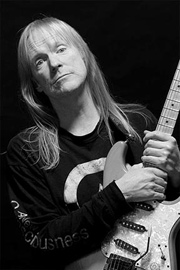 There’s some good reading in the Daily Evangel section, Evangelical News & Views, today about the passing of the Father of Christian Rock, Larry Norman. There is also some great reading about it by Steve Camp at his blog, where he shares a few memories from the days when he spent time with this music ministry mentor of his. But you gotta read, “Larry Norman, Coffee Shop Evangelist” by one of Larry’s more fruitful converts–she went on from her coffee shop conversation with Larry about Jesus to found Jews for Jesus (Wikipedia on J4J)
You know, they always say that you never know what will become of the people with whom you share Christ, the message may go on and on and on. And apparently it did in her case.
I’m not old enough to remember Larry’s music and impact back in the day, but, his legacy in contemporary Christian music played a role in my growing in the grace and knowledge of the Lord Jesus Christ, as I laid on my floor in front of my stereo, listening to Christian rock and reading the lyrics sheets and looking up the Scripture references that were often printed along with the words. I wonder if they still do that on lyrics sheets nowadays . . .
Here’s a nice song that seemed appropriate to feature in light of the passing of the effectively evangelistic Father of Christian Rock, Larry Norman. I’ll post another in the sidebar VODPOD.
<
Corinthian Creed Added to My Box
Over in my sidebar, you will find the recording made of the quartet who performed the song, “Corinthian Creed,” which I wrote to summarize the teaching of 1 Corinthians 15 on Paul’s defense of, teaching about and exhortations in light of the resurrection of Christ and our future resurrection at his Second Coming. Just find the black box on the lower right side of this page and select the file at the top of the list called “Corinthian Creed” and you’ll be able to hear our performance.
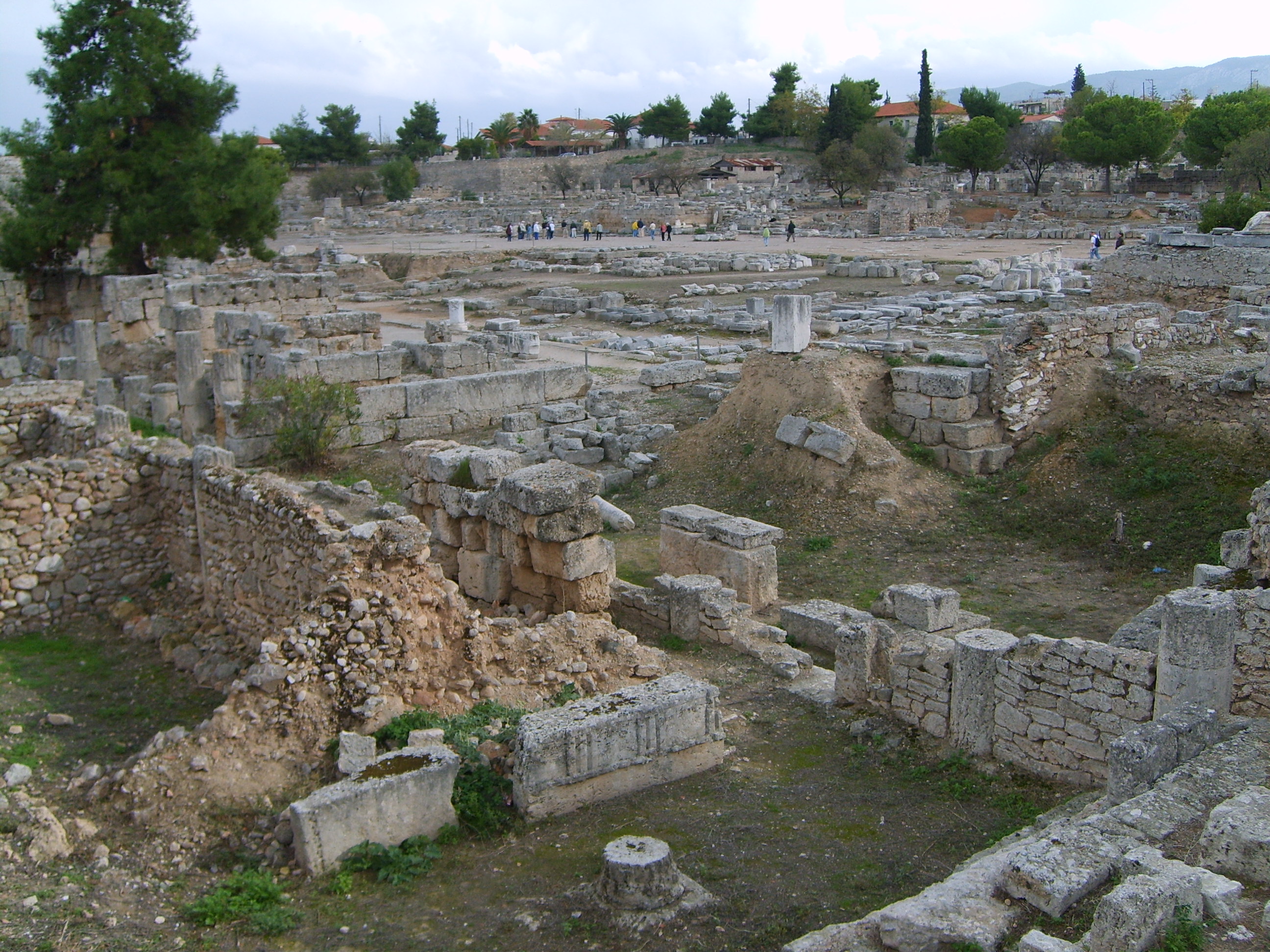
For a further introduction, read what I wrote about it back on September 30, 2006. Above, you may enjoy a view scanning across the ruins of Ancient Corinth which I shot on my Holy Land Tour in November of 2007, of which, more pictures are available for viewing in my Flikr photo box which is also in the sidebar to the right.
Theological & Doxological Meditation #43
Decalogue’s Preface Theological & Doxological Meditation #42
The Decalogue’s Sum
Q. What is the sum of the ten commandments?
A. The sum of the ten commandments is, To love the Lord our God with all our heart, with all our soul, with all our strength, and with all our mind; and our neighbor as ourselves (Matthew 22:37-40).
Take Thou Our Minds, Dear Lord
#593, Trinity Hymnal (© 1990)
William Hiram Foulkes, 1918
SURSUM CORDA 10.10.10.10.
George Lomas, 1876
Take thou our minds, dear Lord, we humbly pray; give us the mind of Christ each passing day; teach us to know the truth that sets us free; grant us in all our thoughts to honor thee.
Take thou our hearts, O Christ, they are thine own; come thou within our souls and claim thy throne; help us to shed abroad thy deathless love; use us to make the earth like heav’n above.
Take thou our wills, Most High! Hold thou full sway; have in our inmost souls thy perfect way; guard thou each sacred hour from selfish ease; guide thou our ordered lives as thou dost please.
Take thou our selves, O Lord, mind, heart, and will; through our surrendered souls thy plans fulfill. We yield ourselves to thee—time, talents, all; we hear, and henceforth heed thy sov’reign call.
Theological & Doxological Meditation #41
Legal Summary
Q. Where is the moral law summarily comprehended?
A. The moral law is summarily comprehended in the ten commandments (Deuteronomy 10:4; Matthew 19:17).
The Ten Commandments
#724, Trinity Hymnal (© 1990)
Versified by Dewey Westra, 1899-1979
Alt. in Psalter Hymnal, 1987
Tune Name: LES COMMANDMENTS DE DIEU 9.8.9.8.
Genevan Psalter, 1547
Arranged by Claude Goudimel, 1564; rev.
My soul, recall with rev’rent wonder
how God amid the fire and smoke
proclaimed his law with thunder
from Sinai’s mountain when he spoke:
“I am the Lord, your God and Sovereign,
who out of bondage set you free,
who saved you from the land of Egypt.
Then serve no other gods but me.
“You shall not bow to graven idols,
for I, a jealous God, your Lord,
shall punish sin in those who hate me,
but love all those who keep my Word.
“The Lord is God; his name is holy.
Do not his holiness profane.
God surely will not hold them guiltless
who take his holy name in vain.
“Remember, keep the Sabbath holy,
the day God sanctified and blessed.
Six days you shall do all your labor,
but on the seventh you shall rest.
“Honor your father and your mother;
obey the Lord your God’s command,
that you may dwell secure and prosper
with length of days upon the land.
“You shall not hate or kill your neighbor.
Do not commit adultery.
You shall not steal from one another
nor testify untruthfully.
“You shall not covet the possessions
your neighbors value as their own;
home, wife or husband, all their treasures
you shall respect as theirs alone.”
Teach us, Lord God, to love your precepts,
the good commandments of your law.
Give us the grace to keep your statutes
with thankfulness and proper awe.
Putting Myself In A Box
You may have noticed in the past few days that I’ve been experimenting with a new 
I’ll be featuring things to listen to now and then, like sermons I hear and want to share. Take for example, the one in my box today. It’s by my best friend’s pastor, Dr. Hamp Linehan of First Baptist Church of Richland Hills, Texas. Linehan is one of the greatest preachers in our area. I know you’ll enjoy and benefit from what you hear.
Christmas Carol Nativity Story
Read the following story of the birth of Jesus and see how many Christmas carols you can circle. Those were the instructions for our Sunday School Class yesterday, but I’m sharing it with you for your listening and reading pleasure. The carols are highligthed and linked to MIDI files from various sources. You’ll find we may miss the mark in a couple of instances, but, hey, we’re amateurs!
Merry Christmas!
THE FAITHFUL OF ISRAEL
O come, O come, Emmanuel! We have been waiting for you for thousands of years! Since God promised our first parents, Adam and Eve, that the Seed of the woman would crush the serpent’s head. Come, thou long-expected Jesus!
All our prophets have spoken of you. We have been watching for you to be among the descendants of Abraham, Isaac and Jacob, through the tribe of Judah and the family line of King David. As for his birthplace, the prophets wrote that this honor goes to you, O little town of Bethlehem.
ANGELIC ANNOUNCEMENTS
Mary was engaged to a carpenter named Joseph. One day, an angel appeared to her and told her that she had been blessed and would have a baby that would be God’s Son and he would be named Jesus. Joseph was very upset about this until an angel visited him. Then he understood how special this baby would be. He realized that Mary would soon bear the Child that they had all been waiting for. The baby Jesus is the Messiah for which his people, the Israelites, had been waiting for a very, very long time.
ROYAL ROAD TRIP
 Before the baby was born, Caesar made a law that everyone had to return to the city of his family’s birth to be counted so he could pay taxes. Mary and Joseph had to travel to Bethlehem, the birthplace of King David. It was time for her son to be born. But the baby wasn’t a normal child. This baby, whose name would be Jesus, was the Son of God, not the son of Joseph, or any other man. He was God in the flesh. Mary and Joseph went to Bethlehem. There was no room for them because so many people had come to Bethlehem to be registered. A kind Inn keeper let them stay in his stable. It was a silent night, holy night and a very special night to remember. O holy night! Tonight, the Savior would be born!When Jesus was born, there was not a comfortable cradle in which to lay him. The baby Jesus rested in a manger, a feeding trough for cattle! It was right there, away in a manger, where Jesus spent his first night in the world which he created.
SHEPHERDS TOLD
In a nearby field, while shepherds watched their flocks by night, angels from the realms of glory, came down to speak to them. The angel told the shepherds about a Savior that was born in the City of David. They wondered, “What child is this?” How could one small child bring such joy to the world? They finally understood that it was the birthday of a king! God had sent his Son to deliver Israel! “Hark!” The herald angels sing, “Glory to God in the highest! Peace on earth, good will to men!” The shepherds thought, “How Great Our Joy!” to be visited by angels with this most wonderful news.
THE SHEPHERDS WORSHIP
The shepherds rushed to Bethlehem to find Jesus. They were so excited when they found Mary, Joseph and Jesus. They fell down and worshiped. They were so very joyful, joyful! “We adore thee!” the shepherds told the baby Jesus. The shepherds told Mary and Joseph about their visit from the angels. One of the shepherds explained. “Angels we have heard on high told us about your holy child!” The shepherds told Joseph and Mary how they had wondered, “What can I give him?” They also told them how they hurried to find the place where he was born, to find the Savior where the angels said he would be.
THE SHEPHERDS SPREAD THE WORD
They left the stable and spread out to tell everyone about the birth of the Messiah. They went in many directions. Some went to go tell it on the mountain, some went to the desert. As they found others that believed God’s promises, they told them, “O come, all ye faithful, and worship the Savior!”
THE SAVIOR OF THE WORLD
 But God wasn’t going to keep the Good News of the birth of the King of the Jews from the rest of the world. On the night when Jesus was born, in a land faraway to the east, a Wise Man was studying the stars, when he suddenly asked one of his friends, “Do you see what I see?” The Wise Men saw a star that they somehow knew was a sign that the King of the Jews had just been born. This was the way God got the Good News to the Gentiles on the night of Jesus’ birth. These men showed they were truly wise by selecting valuable gifts of gold, frankincense and myrrh to present to the King of the Jews after they follow the star to worship him. Today, wise men all over the world still seek to worship the King of the Jews. Are you one of them? What gifts would you give him? He deserves your whole life!
New Files Added to My Public Box!
If you’d like a little Audio for Mind and Heart, I’ve just added a song I sang at church a  couple of Sunday mornings ago (you’ll be able to tell I’m not looking for a Dove award!), as well as the sermon preached to me upon my ordination to the office of deacon, just prior to my election to serve in that capacity by Shady Grove Baptist Church. Listen and praise the Lord with me in song and in hearing and heeding his Word preached.
The Pelagian Drinking Song
 Several years ago, back when I worked at “The Reformation Station,” Dr. Tom Browning taught a series on “The History of the Doctrine of Justification” (which I hear will be available in the future from his website!) at Arlington Presbyterian Church, Arlington, Texas. One of the lessons was on the debate between Augustine and Pelagius over the necessity of God’s grace in overcoming original sin. Dr. Browning had requested that my then boss, Randy Buster (founder of “The Reformation Station”), arrange a tune to a song he’d dug up in his studies about Pelagianism. It’s a hilarious song called “The Pelagian Drinking Song.”
I recently thought to email these dear brothers of mine to request the recording of Randy Buster’s arrangement of Hillaire Belloc’s “The Pelagian Drinking Song” and permission to blog about it. You can listen to this recording in the black Box.net widget toward the bottom of my sidebar.
And now, without further ado, I give you, “The Pelagian Drinking Song,” by Hilaire Belloc, through the teaching ministry of Dr. Tom Browning and the musical arrangement and perfomance of Randy Buster:
The Pelagian Drinking Song, by Hillaire Belloc (1870 – 1953)
Pelagius lived at Kardanoel
And taught a doctrine there
How, whether you went to heaven or to hell
It was your own affair.
It had nothing to do with the Church, my boy,
But was your own affair.
No, he didn’t believe
In Adam and Eve
He put no faith therein!
His doubts began
With the Fall of Man
And he laughed at Original Sin.
With my row-ti-tow
Ti-oodly-ow
He laughed at original sin.
Then came the bishop of old Auxerre
Germanus was his name
He tore great handfuls out of his hair
And he called Pelagius shame.
And with his stout Episcopal staff
So thoroughly whacked and banged
The heretics all, both short and tall –
They rather had been hanged.
Oh he whacked them hard, and he banged them long
Upon each and all occasions
Till they bellowed in chorus, loud and strong
Their orthodox persuasions.
With my row-ti-tow
Ti-oodly-ow
Their orthodox persuasions.
Now the faith is old and the Devil bold
Exceedingly bold indeed.
And the masses of doubt that are floating about
Would smother a mortal creed.
But we that sit in a sturdy youth
And still can drink strong ale
Let us put it away to infallible truth
That always shall prevail.
And thank the Lord
For the temporal sword
And howling heretics too.
And all good things
Our Christendom brings
But especially barley brew!
With my row-ti-tow
Ti-oodly-ow
Especially barley brew!
Forgive Me

Akin to the preaching of the gospel, we have another help to our faith in the sacraments in regard to which, it greatly concerns us that some sure doctrine should be delivered, informing us both of the end for which they were instituted, and of their present use.
The reason why the ancients used the term in this sense is not obscure. The old interpreter, whenever he wished to render the Greek term “musterion” into Latin, especially when it was used with reference to divine things, used the word sacramentum. Thus in Ephesians, “Having made known unto us the mystery (sacramentum) of his will;” and again, “If ye have heard of the dispensation of the grace of God, which is given me to you-wards, how that by revelation he made known unto me the mystery” (sacramentum,) (Eph. 1: 9; 3: 2.) In the Colossians, “Even the mystery which has been hid from ages and from generations, but is now made manifest to his saints, to whom God would make known what is the riches of the glory of this mystery,” (sacramentum,) (Col. 1: 26.) Also in the First Epistle to Timothy, “Without controversy, great is the mystery (sacramentum) of godliness: God was manifest in the flesh,” (1 Tim. 3: 16.) He was unwilling to use the word arcanum, (secret,) lest the word should seem beneath the magnitude of the thing meant. When the thing, therefore, was sacred and secret, he used the term sacramentum. In this sense it frequently occurs in ecclesiastical writers. And it is well known, that what the Latins call sacramental the Greeks call “musteria” (mysteries.) The sameness of meaning removes all dispute. Hence it is that the term was applied to those signs which gave an august representation of things spiritual and sublime. This is also observed by Augustine, “It were tedious to discourse of the variety of signs; those which relate to divine things are called sacraments,” (August. Ep. 5. ad Marcell.)
P&W Music


 The Misadventures of Captain Headknowledge