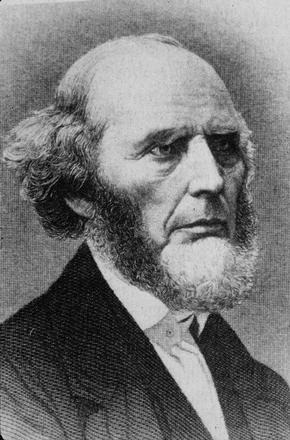
Here’s what it looks like when a shepherd lays down and rolls over for the wolves
If you’ve watched this video, did you notice Joel’s opinion of Mormons?
Joel believes Mormons (in general) are true Christians. Yes, you read that correctly. You have to see it to believe it. Watch the video. He accepts Mitt Romney as a “true Christian” because Romney says “Jesus is my Savior.” Joel may want his primary work to be motivating people to live better lives, but he must not focus on his moralistic message at the expense of evangelism and defense of the faith. To accept Mormons as true Christians just because he doesn’t want to be the one saying negative stuff about others is utter unfaithfulness to God.
When will modern evangelical Protestants regain their discernment? Turn this guy’s tv show off, brethren!
For a little more biblical bloviating on this issue, see Steve Camp’s post, “How wide is the narrow road at Lakewood Church?“on the subject which was written on the heels of Osteen’s FoxNews interview itself.
Christmas Carol Nativity Story
Read the following story of the birth of Jesus and see how many Christmas carols you can circle. Those were the instructions for our Sunday School Class yesterday, but I’m sharing it with you for your listening and reading pleasure. The carols are highligthed and linked to MIDI files from various sources. You’ll find we may miss the mark in a couple of instances, but, hey, we’re amateurs!
Merry Christmas!
THE FAITHFUL OF ISRAEL
O come, O come, Emmanuel! We have been waiting for you for thousands of years! Since God promised our first parents, Adam and Eve, that the Seed of the woman would crush the serpent’s head. Come, thou long-expected Jesus!
All our prophets have spoken of you. We have been watching for you to be among the descendants of Abraham, Isaac and Jacob, through the tribe of Judah and the family line of King David. As for his birthplace, the prophets wrote that this honor goes to you, O little town of Bethlehem.
ANGELIC ANNOUNCEMENTS
Mary was engaged to a carpenter named Joseph. One day, an angel appeared to her and told her that she had been blessed and would have a baby that would be God’s Son and he would be named Jesus. Joseph was very upset about this until an angel visited him. Then he understood how special this baby would be. He realized that Mary would soon bear the Child that they had all been waiting for. The baby Jesus is the Messiah for which his people, the Israelites, had been waiting for a very, very long time.
ROYAL ROAD TRIP
 Before the baby was born, Caesar made a law that everyone had to return to the city of his family’s birth to be counted so he could pay taxes. Mary and Joseph had to travel to Bethlehem, the birthplace of King David. It was time for her son to be born. But the baby wasn’t a normal child. This baby, whose name would be Jesus, was the Son of God, not the son of Joseph, or any other man. He was God in the flesh. Mary and Joseph went to Bethlehem. There was no room for them because so many people had come to Bethlehem to be registered. A kind Inn keeper let them stay in his stable. It was a silent night, holy night and a very special night to remember. O holy night! Tonight, the Savior would be born!When Jesus was born, there was not a comfortable cradle in which to lay him. The baby Jesus rested in a manger, a feeding trough for cattle! It was right there, away in a manger, where Jesus spent his first night in the world which he created.
SHEPHERDS TOLD
In a nearby field, while shepherds watched their flocks by night, angels from the realms of glory, came down to speak to them. The angel told the shepherds about a Savior that was born in the City of David. They wondered, “What child is this?” How could one small child bring such joy to the world? They finally understood that it was the birthday of a king! God had sent his Son to deliver Israel! “Hark!” The herald angels sing, “Glory to God in the highest! Peace on earth, good will to men!” The shepherds thought, “How Great Our Joy!” to be visited by angels with this most wonderful news.
THE SHEPHERDS WORSHIP
The shepherds rushed to Bethlehem to find Jesus. They were so excited when they found Mary, Joseph and Jesus. They fell down and worshiped. They were so very joyful, joyful! “We adore thee!” the shepherds told the baby Jesus. The shepherds told Mary and Joseph about their visit from the angels. One of the shepherds explained. “Angels we have heard on high told us about your holy child!” The shepherds told Joseph and Mary how they had wondered, “What can I give him?” They also told them how they hurried to find the place where he was born, to find the Savior where the angels said he would be.
THE SHEPHERDS SPREAD THE WORD
They left the stable and spread out to tell everyone about the birth of the Messiah. They went in many directions. Some went to go tell it on the mountain, some went to the desert. As they found others that believed God’s promises, they told them, “O come, all ye faithful, and worship the Savior!”
THE SAVIOR OF THE WORLD
 But God wasn’t going to keep the Good News of the birth of the King of the Jews from the rest of the world. On the night when Jesus was born, in a land faraway to the east, a Wise Man was studying the stars, when he suddenly asked one of his friends, “Do you see what I see?” The Wise Men saw a star that they somehow knew was a sign that the King of the Jews had just been born. This was the way God got the Good News to the Gentiles on the night of Jesus’ birth. These men showed they were truly wise by selecting valuable gifts of gold, frankincense and myrrh to present to the King of the Jews after they follow the star to worship him. Today, wise men all over the world still seek to worship the King of the Jews. Are you one of them? What gifts would you give him? He deserves your whole life!
A Slow Holiday Season for the Historical Jesus
I just got home from the barber shop, where I perused the December 24 issue of U. S. News & World Report, which featured as its “holiday” cover story, not some new theory that threatens to change everything we’ve ever thought about Christianity, like we’ve been treated to for the last several years in a row, but an article on how Catholics,  Protestants and Jews are all alike seeing a return to ritual and liturgy among the younger generation which is so underwhelmed by the boomer generation’s attempts to relevantize (is that a word? I’ll look it up later.) their respective religious expressions. We evangelicals will certainly think instantly of the seeker-sensitive model of worship. This trend seems to be reflected in Bill Hybels’ recent change of heart about how his church has been weak on discipleship (or “self-feeding”); at least he’s publicly acknowledging a little self-critical reevaluation. Or is it just vying for some of the consumers to be had among the aforementioned younger generation that’s “seeking” more tradition-sensitive models of worship?
Here’s one interesting excerpt featuring the Evangelical version of this phenomenon:
Talk to Carl Anderson, the senior pastor of Trinity Fellowship Church, and you get an idea. “Seven or eight years ago, there was a sense of disconnectedness and loneliness in our church life,” he says. The entrepreneurial model adopted by so many evangelical churches, with its emphasis on seeker-friendly nontraditional services and programs, had been successful in helping Trinity build its congregation, Anderson explains. But it was less successful in holding on to church members and deepening their faith or their ties with fellow congregants. Searching for more rootedness, Anderson sought to reconnect with the historical church.
Connections. Not surprisingly, that move was threatening to church members who strongly identify with the Reformation and the Protestant rejection of Catholic practices, including most liturgy. But Anderson and others tried to emphasize the power of liturgy to direct worship toward God and “not be all about me,” he says. Anderson also stressed how liturgy “is about us—and not just this church but the connection with other Christians.” Adopting the weekly Eucharist, saying the Nicene Creed every two or three weeks, following the church calendar, Trinity reshaped its worship practices in ways that drove some congregants away. But Anderson remains committed, arguing that traditional practices will help evangelical churches grow beyond the dependence on “celebrity-status pastors.” (emphasis added)
Having looked over Trinity’s website, the only critique I have is in their fear of being divisive with a “detailed confession of faith,” favoring instead as their confession a combination of the Nicene Creed and the ankle-deep NAE Statement of Faith. A little too bare-bones for my taste, but the rest, I really like. But then, I’m part of that younger generation that isn’t into commercialized worship. Would that more “traditional” churches would seriously examine a more historical, liturgical worship that centers on the regulative principle of worship and actively encourages an appreciation of “the communion of saints,” our “connection” with the entire church in all times and places, as we worship God in the heavenly Jerusalem (Hebrews 12:22-24). Speaking of which, the current episode of The White Horse Inn which is featured in my sidebar, deals with this very kind of topic. I highly recommend your listening to it. It will expand your understanding of what’s going on spiritually in Sunday morning worship, and help you have an idea of where I’m coming from on all of this stuff.
Be that as it may, I was relieved that it so far seems to be a slow holiday season for debunkers of the historically orthodox understanding of Christianity in general, and Jesus in particular. As I was flipping through the pages of the magazine, the only thing of that kind of “historical Jesus” hand-wringing was a timely recycling of all the recent junk that had been polluting our airwaves for the past few years.
Hybels Still Mistaken
 The Christianity Today Blog, Out of Ur, posted on Willow Creek Pastor Bill Hybels’ recent remarks that his seeker-sensitive research led them to make a “mistake.”
Here’s Hybels’ newsmaking confession:
We made a mistake. What we should have done when people crossed the line of faith and become Christians, we should have started telling people and teaching people that they have to take responsibility to become ‘self feeders.’ We should have gotten people, taught people, how to read their bible between service, how to do the spiritual practices much more aggressively on their own.
Can you see why I say Hybels is still mistaken? The answer to seeker-sensitive Christian consumerism isn’t “self-feeding.” I hear that this has already been the common advice given to attendees of the seeker-sensitive megachurches in my community. What many tell their consumers is that since we’re not going to talk a lot of doctrine from the stage (I can’t say, “from the pulpit”), you need to make sure you study on your own or among yourselves in your small groups. The star (aka, the pastor) is here to inspire us with motivational principles for living and entertain us with humorous autobiographical stories and illustration upon illustration, sandwiched between P&W sessions with the amps turned up to “11.”
Yes, I submit that Bill Hybels’ mea culpa is an example of a blind leader falling into a ditch. Up on the narrow road, were God to graciously grant him reformation, lies a neglected Bible, preached from a neglected pulpit, signified and sealed by neglected sacraments. The answer to seeker-sensitive demographic polling is what the Reformed call, “The Ministry of Word and Sacrament.”
Allow me to give you an idea of what I mean by introducing to you something I wrote several years ago as I was wrestling with this concept. It’s called “The Worshipers’ Creed and Prayer.”
We believe that sinners are justified by grace alone through faith alone
by means of the proclamation of Christ’s death for our sins
and his resurrection because of our justification (Romans 4:25),
signified and sealed to us in our baptism.
Likewise, we believe saints are sanctified by grace alone through faith alone
by means of the proclamation of Christ’s death for our sins
and resurrection unto our sanctification (Romans 6:4),
signified and sealed to us in the corporate observance of the Lord’s Supper.
Therefore, we believe the gospel is the agent of spiritual birth
by which the sinner comes to faith,
and also the agent of spiritual growth
by which his faith is nourished and strengthened.
So may we confess our sin in response to the application of the Law of God;
likewise may the gospel of Christ be thus proclaimed,
signified and sealed to us for our justification
and our sanctification until our glorification;
And so may we, out of gratitude for our justification,
and in hope of the glory of God,
glorify and praise our Savior,
as we gather for worship this Lord’s Day,
being afterward mindful to love one another, and our neighbor,
in the name of him who died for our sins,
that we might live in the power of his resurrection.
AMEN.
Since you’ll probably need further clarification, you may like to consult Part III of the PCA’s Book of Church Order, entitled, “The Directory for the Worship of God” (beginning on page 143 of the PDF file).
Is Reformed Important? Saturday Night Outline
At long last, now that the Sean Michael Lucas conference is a week’s worth of history, here’s the outline he allowed me to publish from his presentation.
Why bother being Reformed as a way of being Christian?
- It is not possible to live a “generic” Christian life
- Historically not possible
- Logically not possible
- The Christian life must be embodied through a particular identity
- Even “Bible churches” communicate a particular identity (beliefs, practices, stories)
- Genuine conversations with others must be rooted in a real sense of knowing who we are.
During this portion of the outline, Dr. Lucas gave the example of the Cane Ridge Revival, explaining how Barton Stone desired to reduce his denominational identity to “Christian.” Out of this revival emerged the Christian denomination (Disciples of Christ), Cumberland Presbyterianism, and others I forgot before I could jot them down. Now back to the outline . . .
- The question becomes, then,
- Which beliefs and practices are most biblical?
- And which communion most closely holds to those beliefs and engages in those practices?
- In the end, the reason it is important to be Reformed (and specifically, Presbyterian) is
- Because Presbyterian beliefs and practices are the closest to the biblical material, and,
- Because they provide the most workable identity for engaging life in this postmodern world.
Presbyterian beliefs
- God is King (the sovereignty of God)
- The Priority of Grace (in salvation, sanctification, consummation)
- God’s story, promises, and reign (covenant and kingdom)
- The nature of the Church (visible/invisible)
- The nature of the sacraments (baptism and Supper)
Presbyterian practices
- Piety
- Centering on worship [corporate, family, and private], stewardship, and service
- Worship
- Centering on its biblical, covenantal, and gospel-driven nature
- Polity
- Centering on a proper balance of church authority and liberty of conscience
Presbyterian stories
- These beliefs and practices make sense to us, in part, because of the stories (positive and negative) that we tell:
- Calvin, Knox and the Westminster divines
- Scots and Scots-Irish Presbyterianism
- Early American Presbyterianism
- 19th Century Presbyterianism
- 20th Century Presbyterianism
- North (PCUSA, OPC, BP, EP, RPCES)
- South (PCUS, PCA)
- Identity
- It is out of this particularly Presbyterian way of speaking the Gospel that we must speak.
- Catholicity
- In order to confess “one holy catholic church,” we must desire relationship and even partnership with other Christians.
- Our relationships with other Christians must be guided by the Gospel and must serve the Gospel.
- Humility
- The most productive partnerships come from recognizing the importance of others in imaging forth the Kingdom of God (Romans 1:11-12).
Check back periodically . . . I’ll post Dr. Lucas’ Reformation Sunday Sermon link when the church posts it.
Is Reformed Important? Friday Night Outline
Dr. Sean Michael Lucas
New St. Peters PC, Dallas, TX
October 26-27, 2007
Who Are You?: Understanding Identity
When you think about who you are, what comes to mind?
- Son, upper middle class, suburbs, two parents married 38 years, one sister
- Moved many times, mainly up an ddown the I-95 corridor between Washingong DC, and NYC.
- Husband, married nearly 14 years, four children
- Became a believer when a teenager–unusual religious journey
- Pastor with scholarly bent; historian with a pastor heart
- Writer and reader–love Mark Twain and Wendell Barry
- Gardner
- Avid sports fan–Indiana sports teams
- Springsteen, U2, country music
- Trucks, Fords, but when I follow NAsCAR, I am a Gordon fan.
Three Key Aspects to identify.
Belierfs
- the core understandings that form and motivate what and how I practice; they are also reinforced by these practices and by my stories.
Practice
- The regular activities that I engage in shape my understanding of myself and the world.
Stories
- narratives that help to make sense of what I believe and what I do.
“Identity Crisis”
- When someone is having an “identity crisis,” he/she has become disillusioned or is experiencing dissonance within her core.
- Perhaps produced through a lengthy questionaing of previously held beliefs.
- Perhaps caused through an interruption of key practices that reinforced identity.
- Perhaps result of a disillusionment with the master story
- A version of this identity crisis would be the “mid-life crisis.”
Identity Formation in “Modernity” and “Post-Modernity”
Pre- and Early Modernity
- Social relations and family connections
- Trade generally passed on through generatons.
- Church connections more by birth than over belief.
- Identity fairly stric==pre-determined by others and before birth.
Late and Post-Modernity
- Social mobility, loss of extended and nuclear family.
- Trades determined through interest,
- Church connections determined by belief less than birt; challenge to lay on any type of denominationalism
- Identity radically dynamic-self-created through choices
Forging Christian identity
The transition from “non-religious” [non-Christian] to “religious” (Christian] identity.
- New Beliefs–from Idolatry to faith in Father, Sond, Spirit (1 Thessalonians 1:9)
- New Practices–from non-observent to observant (Ephesians 4:17-24)
- New Stories—from “self-determined” to divinely determined within the story of Israel and the Church as found in the Bible.
- The forging of Christian Identity is varied and common
- Varied:
- No two transitions are exactly the same
- No two experiences of sin, grace, faith, repentance are exactly the same
- Common:
- The need experience by all human beings is the same
- The Gospel embraced by all believers is the same
- The grace granted to believers is the same
- Varied:
- The means for forging Christian identity (Acts 2:42-47)
- Word
- Sacraments
- Prayer
- Fellowship
Tomorrow, I’ll post Saturday night’s outline.
Is Reformed Important?
 A friend of mine (actually, my old boss), is a member of New St. Peter’s (NsP)
  Presbyterian Church in Dallas, Texas. Over this past “Reformation Weekend,” as I call it, NsP hosted a conference by Dr. Sean Michael Lucas of Covenant Theological Seminary in St. Louis, Missouri. The topic of the conference, “Is Reformed Important?” was a Power Point presentation summarizing the material from Dr. Lucas’ book, On Being Presbyterian, which I have not read. I found the conference very interesting, for his approach does not start with a defense of all of the Reformed and Presbyterian controversial, distinctive doctrines. The approach Dr. Lucas took was to deal with what it means to be Presbyterian as a facet of one’s personal identity. In this I think he’s attempting to appeal to, or at least converse with a postmodern worldview, which seems, by and large, skeptical of evangelical theologizing.
The sum of the conference was that a person’s identity is the result of one’s beliefs, practices and stories (bps), which colors his perspective on life, the universe and everything (to borrow from the British theologian, Douglas Adams). Therefore, the basic outline of “Is Reformed Important?” is a look at the beliefs, practices and stories of confessional, Reformed Presbyterianism in particular, rather than merely Reformed in general.One benefit of the format of the two day conference, followed by a Reformation Sunday sermon at NsP (which I did not attend, but the link to which I’ll post if and when it becomes available) lies in the fact that the first night really helps a non-Reformed, non-Presbyterian (like my beloved wife) not have to immediately endure all the stuff he disagrees with, but gently points out that one’s beliefs andpractices are worth taking a critical look at. Dr. Lucas did this by sharing much of his own bps in a rather disarming manner. This is definitely user-friendly material, not fodder for theology geeks, but down-to-earth and practical stuff.
At one point during the second lecture, Dr. Lucas brought up the prospect of what he’d do were he to notice that someone had published a book with the same title as his, On Being Presbyterian, yet noticed that the table of contents seems an awful lot like the one in his own work, and not only that, but that the other author happens to mention that he comes from the same hometown as Dr. Lucas. He said the first thing he’d probably do is punch the guy in the nose. This compelled me to approach him after the lecture to request permission to post his outline on my blog, which permission, Christian man that he is, he graciously granted. Thus, in my next post, I’ll give you Lecture Number One of “Is Reformed Important?”
Hope you all had a pleasant Reformation Sunday!
Reformata Semper Reformanda (”Reformed, Always Reforming”)
update
I just took a look at http://www.newstpeters.org/ and noticed that they give their members something called “Rooster Tracks” which provides short, weekday theological and devotional items to think through and/or study. The one for this week, naturally, introduces us to the Reformers and asks its readers to think through a topic related to the contribution of each individual Reformer which is treated, namely, Luther, Melancthon, Zwingli, Calvin, and Knox.
The Delusion of Extreme KJV Onlyism

In this simple paragraph from the Massachusetts General School Law of 1647, aka “The Old Deluder Satan Law”
Yt being one cheife piect of ye ould deluder, Satan, to keepe men from the knowledge of ye Scriptures, as in formr times by keeping ym in an unknowne tongue, so in these lattr times by pswading from ye use of tongues, yt so at least ye true sense & meaning of ye originall might be clouded by false glosses of saint seeming deceivers, yt learning may not be buried in ye grave of or fathrs in ye church & comonwealth, the Lord assisting or endeavors,—
lt is therefore ordred yt evry towneship in this jurisdiction, aftr ye Lord hath increased ym to ye number of 50 householdrs, shall then forthwth appoint one wthin their towne to teach all such children as shall resort to him to write & reade, whose wages whall be paid eithr by ye parents or mastrs of such children, or by ye inhabitants in genrall, by way of supply, as ye maior pt of those yt ordr ye prudentials of ye towne shall appoint; pvided, those yt send their children be not oppressed by paying much more ytn they can have tm taught for in othr townes; & it is furthr ordered, yt where any towne shall increase to ye numbr of 100 families or househouldrs, they shall set up a gramer schoole, ye mr thereof being able to instruct youth so farr as they may be fited for ye university, pvided, yt if any towne neglect ye pformance hereof above one yeare, yt every such towne shall pay 5 Ito ye next schoole till they shall pforme this order.
Now, let me revise the above highlighted clause in order to make it easier to read.
“. . . so in these latter times by persuading from the use of tongues, that so at least the true sense and meaning of the original [Old Testament Hebrew & New Testament Greek, that is] might be clouded by false glosses of saint-seeming deceivers . . . ”
What is the moral of this story? If you simply prefer the use of the King James Version of the Holy Scriptures for your own personal study and devotional reading, or even if you believe after a considerate examination of the issues of textual criticism, that it is best to retain the Byzantine readings of the New Testament, and therefore ought to not revise the King James Version with a modern, eclectic, critical Greek text, this post does not criticize your view (even though I certainly disagree with your view). But if you believe that the King James Version of the Bible was given by the special inspiration of God, and that it’s English text is superior to the lost original Hebrew and Greek manuscripts for the simple reason that we can hold the KJV in our hands, while we cannot hold the original manuscripts in our hands, and that therefore, we need not bother burdening our congregations with recourse to the original languages to properly interpret the words of the KJV, the Massachusetts General School Law of 1647 identifies those who would undermine the need to understand the Word of God in the original languages as “saint-seeming deceivers” whose efforts would in effect, bury learning in the graves of our fathers in the church. If only you would see the error of your ways, and stop deceiving unlearned believers under your care that it’s dangerous to “correct the King James” with anything, even the sense of the original Hebrew and Greek languages.
P.R.O.P.I.T.I.A.T.I.O.N.
You’d be amazed at the kinds of useless stuff that passes through my mind. Today I’m going to punish you with it. It’s just one of my little tests of friendship. Today, I wondered if I could come up with an acronym for the word “Propitiation.” You know, this year in AWANA, I’m teaching through Romans 3:21-26, which includes the gospel-rich terms “redemption,” “justification,” and “propitiation.” No, I haven’t come up with any for the other two terms, but here’s what I got for “propitiation.” I’m afraid it doesn’t help with the meaning of the term or anything, but it made me chuckle.
Presbyterians
Rarely
Ordain
People
Into
The
Institution
After
They
Invalidate
Old
Notions . . .
. . . Charles Finney excepted.
Yes, Charles Finney was ordained by the Presbyterian church, and yes, he did “invalidate old notions.” What old notions, you ask? Only biblical things like . . .
Original Sin . . . “The doctrine of original sin, or of a sinful constitution, and of necessary sinful actions, represents the whole moral government of God, the plan of salvation by Christ, and indeed every doctrine of the gospel, as a mere farce. Upon this supposition the law is tyranny, and the gospel an insult to the unfortunate.” (Systematic Theology, Lecture 24 on “Moral Depravity”)
Penal-Substitutionary Atonement of Christ . . . Finney’s invalidation of the old notion: the Moral Government theory–“Consequently, we find that, in this atonement, God has expressed His high regard for His law and for obedience to it. The design of executing the penalty of the law was to make a strong impression of the majesty, excellence, and utility of the law. Anything may answer as a substitute, which will as thoroughly demonstrate the mischief and odiousness of sin, God’s hatred to it, and His determination to carry out His law in all its demands. Especially may the proposed substitute avail if it shall also make a signal manifestation of God’s love to sinners.” (Charles Finney on the Atonement see also, Theopedia: Governmental Theory of the Atonement)
Imputation . . . “The doctrine of imputed righteousness, or that Christ’s obedience to the law was accounted as our obedience, is founded on a most false and nonsensical assumption.” (Horton, Michael: “The Disturbing Legacy of Charles Finney,” the quote may be found under the heading, “Distorting the Cardinal Doctrine of Justification.”)
Justification by Grace Alone through Faith Alone . . . “That gospel justification is not to be regarded as a forensic or judicial proceeding. Dr. Chalmers and those of his school hold that it is. But this is certainly a great mistake, as we shall see.” (Systematic Theology, Lecture 36, “Justification” )
The Miraculous Nature of Revival . . . “It is not a miracle, or dependent on a miracle, in any sense. It is a purely philosophical result of the right use of the constituted means—as much so as any other effect produced by the application of means. There may be a miracle among 13its antecedent causes, or there may not. The apostles employed miracles, simply as a means by which they arrested attention to their message, and established its divine authority. But the miracle was not the revival. The miracle was one thing; the revival that followed it was quite another thing. The revivals in the apostles’ days were connected with miracles, but they were not miracles.” (Lectures on Revivals of Religion, Lecture 1, “What a Revival of Religion Is“)
But, after all this, if what you really want is some good reading on “propitiation,” then check out the Wikipedia article.
New Files Added to My Public Box!
If you’d like a little Audio for Mind and Heart, I’ve just added a song I sang at church a  couple of Sunday mornings ago (you’ll be able to tell I’m not looking for a Dove award!), as well as the sermon preached to me upon my ordination to the office of deacon, just prior to my election to serve in that capacity by Shady Grove Baptist Church. Listen and praise the Lord with me in song and in hearing and heeding his Word preached.
Augustine on the Decrees of God: Roman or Reformed?
 I had to look up what the Roman Catholics claim about Augustine’s views on the sovereign grace of God, and I was surprised by what I found. But not entirely. One, “Albert,” posted the first comment to Bob Hayton’s Fundamentally Reformed post, “Legacy of Sovereign Joy: Augustine,” reviewing John Piper’s book, Legacy of Sovereign Joy, focusing on Piper’s reflections of Augustine, and Albert asked Bob if he was aware of what Augustine believed about grace and free will, and asserted that what he did believe was consistent with present, official Roman Catholic teaching. That’s why I wanted to see what the online Roman Catholic encyclopedia, New Advent, had to say about the matter. The entry entitled, “Teaching of St. Augustine of Hippo,” section II on “His System of Grace,” got into some interesting reading about some details regarding free will which differs from the traditional Reformed view, but what really astounded me was what the online encyclopedia reports was Augustine’s view of how God determined his decrees regarding election and reprobation:
Here is how the theory of St. Augustine, already explained, forces us to conceive of the Divine decree: Before all decision to create the world, the infinite knowledge of God presents to Him all the graces, and different series of graces, which He can prepare for each soul, along with the consent or refusal which would follow in each circumstance, and that in millions and millions of possible combinations. Thus He sees that if Peter had received such another grace, he would not have been converted; and if on the contrary such another Divine appeal had been heard in the heart of Judas, he would have done penance and been saved. Thus, for each man in particular there are in the thought of God, limitless possible histories, some histories of virtue and salvation, others of crime and damnation; and God will be free in choosing such a world, such a series of graces, and in determining the future history and final destiny of each soul. And this is precisely what He does when, among all possible worlds, by an absolutely free act, He decides to realize the actual world with all the circumstances of its historic evolutions, with all the graces which in fact have been and will be distributed until the end of the world, and consequently with all the elect and all the reprobate who God foresaw would be in it if de facto He created it.
If Augustine taught this imaginitive concept of God’s determinate counsel, then he would have gone beyond what is written in order to come up with it. This reminds me of an anecdote of Augustine which is intended to warn of the danger of attempting to explain that which is not revealed in Scripture about spiritual realities, in which someone asks Augustine, “What was God doing before he created the world?” to which Augustine replied, “Creating Hell for the curious.” I think, if Augustine taught what is contained in the paragraph cited above, then he failed to heed his own anecdotal warning. Another thing I found interesting about the presence of this concept in Augustine’s thought is the fact that the first time I’d ever heard of such a concept, it came from someone near and dear to me, who was taking exception to the Reformed view of God’s decrees of election and reprobation, claiming that this divine consideration of all possible realities and settling on the ones that come to pass, leaving folks free (in the sense Adam was) to choose between good and evil as effectually influenced by the particular circumstances and graces God places in the individual’s path, was the more biblical view.
In my opinion, this extra-biblical view is just a more elaborate form of the prescient view of foreknowledge, about which, long before I’d become a Calvinist, when thinking it through, I concluded that in this semi-pelagian system, God was leaving man free to determine his own election, but having looked forward from before the creation in order to ordain it before man made his free choice, thereby cutting man off at the pass for the glory. You could probably say I persuaded myself in favor of Calvinism when I came to that conclusion, but it would be a couple of more years before God would force me to deal with the issues once and for all.
But the final observation I want to make about Augustine’s view of grace and free will, election and reprobation, is that I don’t think the Reformers needed to adopt exactly what Augustine speculated about the doctrine, because, after all, the Reformers were in the business of double checking writers like Augustine with the Scriptures, practicing that more noble virtue of searching the Scriptures to see whether what he taught was so. The Reformation may not have been a pure Augustinian revival, but the Reformers certianly did stand on the shoulders of this theological giant from Africa, Augustine of Hippo.
The Pelagian Drinking Song
 Several years ago, back when I worked at “The Reformation Station,” Dr. Tom Browning taught a series on “The History of the Doctrine of Justification” (which I hear will be available in the future from his website!) at Arlington Presbyterian Church, Arlington, Texas. One of the lessons was on the debate between Augustine and Pelagius over the necessity of God’s grace in overcoming original sin. Dr. Browning had requested that my then boss, Randy Buster (founder of “The Reformation Station”), arrange a tune to a song he’d dug up in his studies about Pelagianism. It’s a hilarious song called “The Pelagian Drinking Song.”
I recently thought to email these dear brothers of mine to request the recording of Randy Buster’s arrangement of Hillaire Belloc’s “The Pelagian Drinking Song” and permission to blog about it. You can listen to this recording in the black Box.net widget toward the bottom of my sidebar.
And now, without further ado, I give you, “The Pelagian Drinking Song,” by Hilaire Belloc, through the teaching ministry of Dr. Tom Browning and the musical arrangement and perfomance of Randy Buster:
The Pelagian Drinking Song, by Hillaire Belloc (1870 – 1953)
Pelagius lived at Kardanoel
And taught a doctrine there
How, whether you went to heaven or to hell
It was your own affair.
It had nothing to do with the Church, my boy,
But was your own affair.
No, he didn’t believe
In Adam and Eve
He put no faith therein!
His doubts began
With the Fall of Man
And he laughed at Original Sin.
With my row-ti-tow
Ti-oodly-ow
He laughed at original sin.
Then came the bishop of old Auxerre
Germanus was his name
He tore great handfuls out of his hair
And he called Pelagius shame.
And with his stout Episcopal staff
So thoroughly whacked and banged
The heretics all, both short and tall –
They rather had been hanged.
Oh he whacked them hard, and he banged them long
Upon each and all occasions
Till they bellowed in chorus, loud and strong
Their orthodox persuasions.
With my row-ti-tow
Ti-oodly-ow
Their orthodox persuasions.
Now the faith is old and the Devil bold
Exceedingly bold indeed.
And the masses of doubt that are floating about
Would smother a mortal creed.
But we that sit in a sturdy youth
And still can drink strong ale
Let us put it away to infallible truth
That always shall prevail.
And thank the Lord
For the temporal sword
And howling heretics too.
And all good things
Our Christendom brings
But especially barley brew!
With my row-ti-tow
Ti-oodly-ow
Especially barley brew!
The Connection Between Election And Apostacy
 Here’s my transcription of a listener’s telephone comment on the Sunday, August 12 edition of The White Horse Inn, “Grace & Election in the Book of Ephesians.” On the one hand, the following conversation includes an anecdote which well portrays a “fightin’ fundamentalist” standing his ground against election in a way he may assume is as bold as Paul declaring that if resurrection didn’t really happen, then Christ died in vain and we’re dead in our sins. But on the other hand, it can really make you nervous about the danger to which professing believers expose themselves when they stubbornly deny the Word of God on the doctrines of grace. No, I don’t think dedicated Christians who love and serve Jesus and otherwise believe the Bible and sound conservative theology are apostate if they disagree with election–I mean those who go to the extreme and deny the faith because they refuse to accept the clear teaching of Scripture because of election. The kind to which I’m referring are the kind who understand exactly what the Bible says about election and reject the faith because of it.
Be afraid. Be very afraid.
Horton: Greg in Littleton, Colorado, good evening.
Greg: Hello. This is providential that you’re discussing this tonight, because my uncle who’s an Independent Baptist, to his disappointment, discovered that Spurgeon actually taught this.
Riddlebarger: (while other hosts laugh) Oh boy, did he ever!
Greg: . . . and he really is quite hostile to this teaching, and I really think, for one thing, I said to him, “If I could show you in Scripture where election is clearly taught, wouldn’t you have to give in and believe it?” And I was disappointed at his response–he said, “well, I would have to question the authenticity of the Scriptures.”
Rosenblatt: Holy smokes!
Riddlebarger: Oh, boy!
Horton: Wow. You know, this does bring up an important point. I’ve been in situations where I’ve been talking about this and people have said–even older folks, people who’ve been lifelong Christians, committed to the authority of Scripture, and Bible-believing Christians, and you go through this, and, uh, I remember throwing my Bible across the room when I read Romans 9.
Riddlebarger: Oh, I remember listening to a Donald Grey Barnhouse tape on election, up all night with my Bible going through all the passages he mentioned, just sick in the pit of my stomach. But, you know, that’s just like John chapter 6, when Jesus utters the hard words, “Unless the Father draws you, you can’t come,” and the crowd starts grumbling, so he says it again, and they all walk away.
Horton: Tough words. Even his own disciples: “This is a hard teaching and who can hear it?”
My Newest “Study Bible”!
 This one is definitely an “easy-to-read” Bible! Not only that, there are pictures on every page! What can be learned from this “study Bible” is not what the Greek word for so-and-so means, there are no charts of the Kings of Israel or anything like that, this study Bible teaches the reader that among the other popular and overused and often abused interpretations of Scripture, the main reason the stories of the Bible are written is to teach us about the One God promised to send to crush the Serpent’s head. And that’s all it teaches.
That’s also what preachers are supposed to base all their practical application and character studies on, too. How easy it is to forget. I can testify just in trying to write Sunday School and AWANA lessons for elementary age children. How much more is it necessary to keep in mind when the moms and dads are being preached to by the “teaching elder” (Ephesians 4:11; 1 Timothy 5:17).
Modern Christians have plenty of the other kinds of “headknowledge” about dates, locations, and name meanings, but most forget (in word and action, which are the ways that count), no, neglect, that which is “of first importance” according to Paul (1 Corinthians 15:3-4).
Bob Hayton of Fundamentally Reformed, in his post, “The Storybook for Preachers,” quotes Dr. Tim Keller as saying, ““I’d urge ministers to buy it and read it for themselves. It will improve their preaching.” That’s what hooked me, and that’s why I bought it. Sure, I’ll probably tackle one or two of my younger children (who are well into chapter books by now) and force them to listen to one or more of these stories on occasion, and any grandchildren the Lord may send my way someday will certainly benefit from it, but in the meantime this children’s book is mine! I’m also going to buy a copy and donate it to my church library, and I suggest you do the same. But some of you more daring (yet gentle and respectful–see 1 Peter 3:15) sorts may like to sweetly give a copy to your pastor with a copy of Keller’s quote tucked in as a bookmark.
One of my new favorite old radio shows is Haven Today, featuring the warm, fuzzy and comforting tone of Reformed radio man, Charles Morris (think Steve Brown, but not as funny), features a few recordings of Jesus Storybook Bible author, Sally Lloyd-Jones (I wonder if there’s any relation to D. Martyn? I suppose if there were, it would have come up), reading her Christ-centered children’s Bible stories. There are a lot of other interesting videos and links related to Sally and her book on the “Going Deeper” section of Haven Today’s homepage (on the right sidebar toward the bottom). Check out The Jesus Storybook Bible Sampler, and buy a few copies. We need to encourage Christ-centeredness in Christian publishing!
From Justification to Sanctification


 The Misadventures of Captain Headknowledge