How “Doctrinal Indifferentism” Leads to Works Righteousness
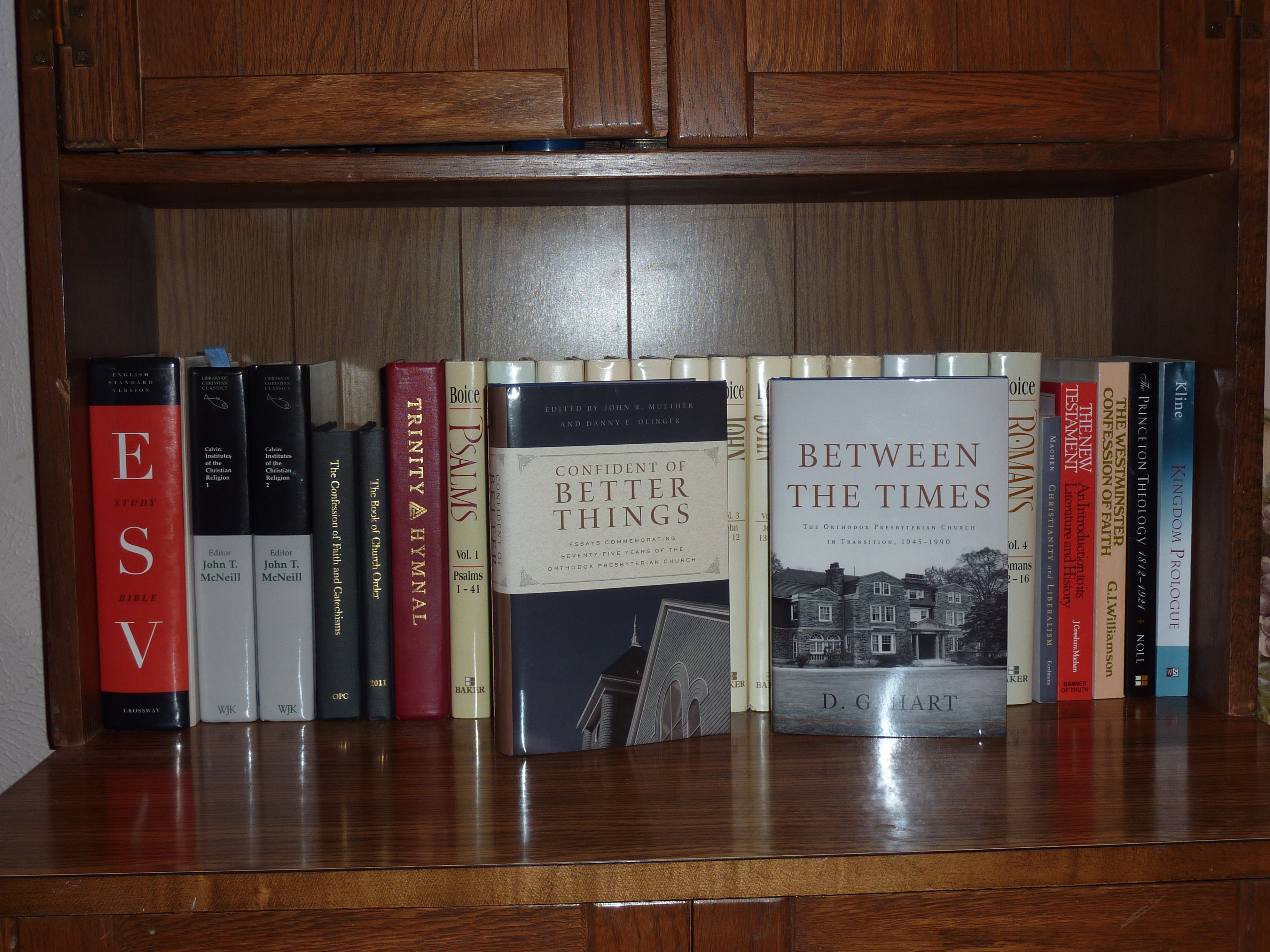
OPC 75 Titles--Confident of Better Things/Between the Times
Here’s a helpful paragraph from D. G. Hart’s new history of the Orthodox Presbyterian Church (OPC), released at the 78th General Assembly of the OPC two weeks ago in celebration of the OPC’s 75th anniversary. Here, Hart describes J. Gresham Machen’s reasons for objecting to Princeton Seminary President, J. Ross Stevensons proposal at the 1920 General Assembly of the PCUSA “for a grand plan to unite the largest Protestant denominations into one denomination” (p. 16). Hart writes:
The disadvantage of the plan for union, as Machen and most of his Princeton colleagues pointed out, was that by entering into a united church, Presbyterians would be abandoning those aspects of Protestantism that made them Presbyterian. If predestination, infant baptism, and Presbyterian polity, for instance, were actually revealed in God’s word as true and necessary for faithful witness, how could Presbyterians give away their teaching and practice to join with Baptists, Methodists, Lutherans, and Episcopalians in a generic Protestant church? The other problem with organic union, as Machen argued in a series of articles for church periodicals, was that it was based upon doctrinal indifferentism. Union turned away from serious doctrinal and ecclesiastical differences among Protestants and implied that these were less important than the greater good that a united church could achieve by transforming American society. Opposition to this sort of ecumenism, which was directly linked to the Social Gospel’s goal of ushering in the kingdomof God, was precisely the impetus for Machen’s important book, Christianity and Liberalism (1923). Not only did he argue that Christianity and liberalism were two different religions, and so liberalism needed to be excluded from the church. Machen also showed how American Protestant interdenominational cooperation stemmed from an indifference to Christian teaching and so distorted the gospel into a message of works righteousness.
D. G. Hart, Between the Times: The Orthodox Presbyterian Church in Transition, 1945-1990 (2011, The Committee for the Historian of the Orthodox Presbyterian Church,Willow Grove,PA), pp. 16-17. opc.org/publications.html Check out Hart’s blog, Old Life: Reformed Faith and Practice.
Theological & Doxological Meditation #43

The Decalogue’s Preface
Q. What is the preface to the ten commandments?
A. The preface to the ten commandments is in these words, I am the LORD thy God, which have brought thee out of the land of Egypt, out of the house of bondage (Exodus 20:2).
O God, Most Holy Are Your Ways
(play file 039 in “T&D mp3” sidebar widget)
#39, The Trinity Hymnal (© 1990)
Psalm 77:13-20
The Psalter, 1912; alt. 1990, mod.
VATER UNSER 8.8.8.8.8.8.
V. Schumann’s Geistliche Lider, 1539
O God, most holy are your ways,
and who like you deserves my praise?
You only do such wondrous things,
The whole wide world your glory sings;
Your outstretched arm your people saved,
Though sore distressed and long enslaved.
O God, from you the waters fled,
The depths were moved with mighty dread,
The swelling clouds their torments poured,
And o’er the earth the tempest roard;
‘mid lightning’s flash and thunder’s sound
great trembling shook the solid ground.
Your way was in the sea, O God,
Through mighty waters, deep and broad.
None understood but God alone,
To man your footsteps were unknown;
But safe your people you did keep,
Almighty Shepherd of your sheep.


 The Misadventures of Captain Headknowledge