How Faith Does NOT Justify
 Q. 73. How doth faith justify a sinner in the sight of God?
A. Faith justifies a sinner in the sight of God, not because of those other graces which do always accompany it, or of good works that are the fruits of it (Gal. 3:11; Rom. 3:28), nor as if the grace of faith, or any act thereof, were imputed to him for his justification; but only as it is an instrument by which he receiveth and applieth Christ and his righteousness.
Faith is the means which God has ordained for the elect in order that he may declare them righteous in his sight. Man, unfortunately, assumes he must perform, to achieve a perfect score when it comes to keeping God’s moral law. In this assumption, he is sadly mistaken. Paul writes in Galatians 3:11, “no one is justified before God by the law, for ‘The righteous shall live by faith.’” Later in his great exposition of the gospel in his epistle to the Romans, Paul echoes this truth when he writes, “For we hold that one is justified by faith apart from works of the law” (Romans 3:28).
In keeping with this Pauline distinction between faith and the law, the framers of the Westminster Standards of 1649 write in their Larger Catechism, “Faith justifies a sinner in the sight of God, not because of those other graces which do always accompany it, or of good works that are the fruits of it…” (Westminster Larger Catechism, Q&A #73). Here they write that good works are the fruit of faith, not the condition the elect must meet so God will declare them righteous in his sight (justify them). The catechism answer also denies that the other graces that accompany faith are the way we receive God’s justifying declaration of righteousness. For example, graces such as hope, love, joy, or any others are excluded, along with good works, as the basis on which faith justifies the sinner.
In short, faith does not justify because of good works; rather, good works are the result of justification by faith alone.
The Biblical Basis of the Reformed Confessions and Catechisms
As a member of a local confessional Presbyterian church and coming from my background as an Independent Baptist, I can’t help but notice how easy it is to confirm the common accusation that “Presbyterians often seem to cite the Confession more readily than they do the Bible.” As I listen to teaching (that of no one in particular, and this is not restricted to my own congregation), I often find myself listening to it as if I were a Baptist who was hearing this presentation for the first time. It doesn’t take long before all the biblicist defenses go up. A Reformed teacher will teach a vital biblical truth and then they will cite the Westminster Standards or something from the Three Forms of Unity (click on the “Creeds, Etc.” link at the top of this webpage for more information on these Reformed doctrinal standards). The response a self-respecting biblicist is trained to make to a presentation like this is, “That’s nice, now what does the Bible say about it?” or, more boldly, they might declare, “I don’t care what your confession or catechism says, what does the Bible say?”
It occurs to me that if Presbyterians and those of other confessional Reformed denominations want to persuade those from outside their tradition, like Baptists, to believe that what Reformed confessions and catechisms teach is based on the Bible, then perhaps it would be time well spent to express their biblically based confessional statements by first disclosing what the Bible says and working from this to showing how what the confession or catechism says is solidly based on what the Bible says.
After all, a “Confession” is not intended to be a rival for the Bible, but an expression of what Reformed churches believe the Bible teaches. To use the word “Confession” alone does not necessarily communicate this ultimate point to those from outside the tradition. That’s why when I personally explain things related to the Confession of Faith, I will put the word “Confession” in a sentence that attempts to fully express what a Confession of Faith is. For example, “This biblical truth (whatever it may be) is worded this way, or that way, in the Confession of what Reformed churches believe best summarizes the teaching of the Bible.”
Now I realize there are many good Reformed teachers who are careful to base their arguments on Scripture, but the stereotype that the Reformed in general have a bad habit of quoting the confession more than they do the Bible is grounded in verifiable reality. I love hearing an explanation of what the Confession teaches, but then, I have already gotten over the hurdle of being persuaded that what the Confession teaches is what the Bible teaches, although not infallibly, of course.
For this reason, I have decided to engage in a little exercise for a while, which I will share with my readers. In the spirit of how I would like to hear the teaching of the Reformed confessions and catechisms expressed, I’m simply going to take the Scripture Proofs cited for almost any given phrase in the Westminster Larger Catechism (which my church currently happens to being going through), summarize the point being highlighted in the verses, cite the verses themselves, then explain that this is the reason the Catechism reads the way it reads.
Sound like fun? I hope you’ll join me! In the following post, I will give this treatment to the first clause in Question and Answer #73 of the Westminster Larger Catechism.
The Mission of the Church

Don’t miss the latest episode of Westminster Seminary California’s Office Hours podcast, featuring an interview with Rev. Kevin DeYoung, pastor of University Reformed Church in Lansing, Michigan. Rev. DeYoung is the co-author of What is the Mission of the Church? and writes from his unique perspective as one who “ought to be Emergent, but isn’t.” Office Hours host, Dr. R. Scott Clark discusses with him how the biblical mission of the church compares to some of the many trendier ways of being “missional.” One of the key issues they discuss is the fact that the promises of God for the individual and the cosmos, both of which are contained in the gospel which it is the church’s mission to proclaim, are positive blessings which God will bring about in his time and in his way, and for which it is not always intended that we are to draw up a missional strategy of social outreach in order to participate in the fulfillment of these promises.
Kevin DeYoung also blogs at the Gospel Coalition. I just subscribed to his RSS Feed.
To the fast or to the wedding feast?
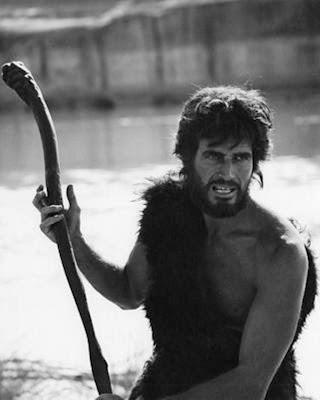
Charlton Heston as John the Baptist as seen in “The Greatest Story Ever Told” (1965).
Why does the Gospel According to John have Jesus calling three disciples and attending the wedding at Cana after his baptism, when the synoptic Gospels according to Matthew, Mark and Luke all have Jesus “immediately” being driven by the Spirit into the desert to be tempted by the devil (Matthew 3:1-4:11; Mark 1-13; Luke 3:1-4:12)? This seeming discrepancy was recently brought to my attention. After a little homework, I’d like to share with you what I discovered about John 1:19-2:25 and how this pericope is reconciled with the synoptic narratives of Jesus’ baptism and temptation. First, let’s read the passage in question. Passages relevant to chronology or paralleling the synoptic narratives are highlighted either in bold or italics:
And this is the testimony of John, when the Jews sent priests and Levites from Jerusalem to ask him, “Who are you?” He confessed, and did not deny, but confessed, “I am not the Christ.” And they asked him, “What then? Are you Elijah?” He said, “I am not.” “Are you the Prophet?” And he answered, “No.” So they said to him, “Who are you? We need to give an answer to those who sent us. What do you say about yourself?” He said, “I am the voice of one crying out in the wilderness, ‘Make straight the way of the Lord,’ as the prophet Isaiah said.”
(Now they had been sent from the Pharisees.) They asked him, “Then why are you baptizing, if you are neither the Christ, nor Elijah, nor the Prophet?” John answered them, “I baptize with water, but among you stands one you do not know, even he who comes after me, the strap of whose sandal I am not worthy to untie.” These things took place in Bethany across the Jordan, where John was baptizing.
The next day he saw Jesus coming toward him, and said, “Behold, the Lamb of God, who takes away the sin of the world! This is he of whom I said, ‘After me comes a man who ranks before me, because he was before me.’ I myself did not know him, but for this purpose I came baptizing with water, that he might be revealed to Israel.” And John bore witness: “I saw the Spirit descend from heaven like a dove, and it remained on him. I myself did not know him, but he who sent me to baptize with water said to me, ‘He on whom you see the Spirit descend and remain, this is he who baptizes with the Holy Spirit.’ And I have seen and have borne witness that this is the Son of God.”
The next day again John was standing with two of his disciples, and he looked at Jesus as he walked by and said, “Behold, the Lamb of God!” The two disciples heard him say this, and they followed Jesus. Jesus turned and saw them following and said to them, “What are you seeking?” And they said to him, “Rabbi” (which means Teacher), “where are you staying?” He said to them, “Come and you will see.” So they came and saw where he was staying, and they stayed with him that day, for it was about the tenth hour. One of the two who heard John speak and followed Jesus was Andrew, Simon Peter’s brother. He first found his own brother Simon and said to him, “We have found the Messiah” (which means Christ). He brought him to Jesus. Jesus looked at him and said, “You are Simon the son of John. You shall be called Cephas” (which means Peter).
The next day Jesus decided to go to Galilee. He found Philip and said to him, “Follow me.” Now Philip was from Bethsaida, the city of Andrew and Peter. Philip found Nathanael and said to him, “We have found him of whom Moses in the Law and also the prophets wrote, Jesus of Nazareth, the son of Joseph.” Nathanael said to him, “Can anything good come out of Nazareth?” Philip said to him, “Come and see.” Jesus saw Nathanael coming toward him and said of him, “Behold, an Israelite indeed, in whom there is no deceit!” Nathanael said to him, “How do you know me?” Jesus answered him, “Before Philip called you, when you were under the fig tree, I saw you.” Nathanael answered him, “Rabbi, you are the Son of God! You are the King of Israel!” Jesus answered him, “Because I said to you, ‘I saw you under the fig tree,’ do you believe? You will see greater things than these.” And he said to him, “Truly, truly, I say to you, you will see heaven opened, and the angels of God ascending and descending on the Son of Man.”
On the third day there was a wedding at Cana in Galilee, and the mother of Jesus was there. Jesus also was invited to the wedding with his disciples. When the wine ran out, the mother of Jesus said to him, “They have no wine.” And Jesus said to her, “Woman, what does this have to do with me? My hour has not yet come.” His mother said to the servants, “Do whatever he tells you.”
Now there were six stone water jars there for the Jewish rites of purification, each holding twenty or thirty gallons. Jesus said to the servants, “Fill the jars with water.” And they filled them up to the brim. And he said to them, “Now draw some out and take it to the master of the feast.” So they took it. When the master of the feast tasted the water now become wine, and did not know where it came from (though the servants who had drawn the water knew), the master of the feast called the bridegroom and said to him, “Everyone serves the good wine first, and when people have drunk freely, then the poor wine. But you have kept the good wine until now.” This, the first of his signs, Jesus did at Cana in Galilee, and manifested his glory. And his disciples believed in him.
After this he went down to Capernaum, with his mother and his brothers and his disciples, and they stayed there for a few days.
The Passover of the Jews was at hand, and Jesus went up to Jerusalem. In the temple he found those who were selling oxen and sheep and pigeons, and the money-changers sitting there. And making a whip of cords, he drove them all out of the temple, with the sheep and oxen. And he poured out the coins of the money-changers and overturned their tables. And he told those who sold the pigeons, “Take these things away; do not make my Father’s house a house of trade.” His disciples remembered that it was written, “Zeal for your house will consume me.”
So the Jews said to him, “What sign do you show us for doing these things?” Jesus answered them, “Destroy this temple, and in three days I will raise it up.” The Jews then said, “It has taken forty-six years to build this temple, and will you raise it up in three days?” But he was speaking about the temple of his body. When therefore he was raised from the dead, his disciples remembered that he had said this, and they believed the Scripture and the word that Jesus had spoken.
Now when he was in Jerusalem at the Passover Feast, many believed in his name when they saw the signs that he was doing. But Jesus on his part did not entrust himself to them, because he knew all people and needed no one to bear witness about man, for he himself knew what was in man. (John 1:19-2:25 ESV)
You see? It seems upon a quick reading of this passage that after Jesus’ baptism, instead of immediately being driven into the desert to be tempted by the devil, John rather has Jesus calling disciples, attending a wedding, cleansing the Temple and keeping the feast of Passover. But is this really what is going on? Look at John 1:19-34 a little more carefully…
John and the Synoptics Reconciled
It is true that the three synoptic gospels contain the narrative of Jesus’ baptism “immediately” followed by his departing for the wilderness to be tempted by the devil. It is also true that John chapter one contains some language shared by the synoptics’ baptism narratives, and it even contains a reference to the Spirit in the form of a dove descending and remaining on Jesus, which is what happened upon his baptism at the hands of John. But the big difference between the John narrative and those of the synoptics is the fact that in John’s gospel, the account of Jesus’ baptism is not given.
John 1:19-28 is John testifying to the priests and Levites sent by the Pharisees, which testimony contains some of the same language as is found in the synoptic baptism accounts. Then John 1:29-34 present the events of the day after John the Baptist’s testimony to the leaders from Jerusalem. Watch the action carefully: Jesus approaches, John announces his Messianic identity and then he “bears witness” that he saw the Spirit like a dove descend on him.
Nowhere does it say that it was on this day that John baptized him, nor does it say that John saw the Spirit descend on him on that very day, but in his dramatic announcement to his followers upon Jesus’ arrival, he informed them that he had seen the Spirit descend on him when he had baptized him in the past. This means that Jesus had been baptized by John some 40+ days prior to this. So the baptism and temptation in the wilderness takes place prior to John’s opening narrative which begins in John 1:19 (verses 1-18 are simply introduction).
Therefore, the days which follow this account—calling disciples for two days and the third day going to the wedding at Cana—do not contradict the eyewitness accounts contained in the synoptic gospels.
Introduce your child to Lady Jane Grey

I just added the website of author Simonetta Carr to my Recommended Sites page. She is the author of a series of children’s books called Christian Biographies for Young Readers. These are beautifully illustrated and informative stories of the lives of heroes of the faith to which most children’s books do not get around to featuring. Carr’s series includes titles on the lives of Athanasius, Augustine, John Calvin, John Owen and most recently, the martyr Lady Jane Grey.
I strongly recommend that you get these titles and read them to your children of any age. They are simple enough for your toddlers to get it, but informative enough to educate your interested pre-teens and even young teens, like my daughter, will enjoy them, too. She’s already submitted a request for her copy of Lady Jane Grey. She saw a movie about this martyr on Netflix last year and when I asked what the story was about, she explained that Grey was going to be killed for being a Protestant. Profoundly, yet humorously, she added, “A good way to die.”
Heresy in the Headlines: Camping & Schuller
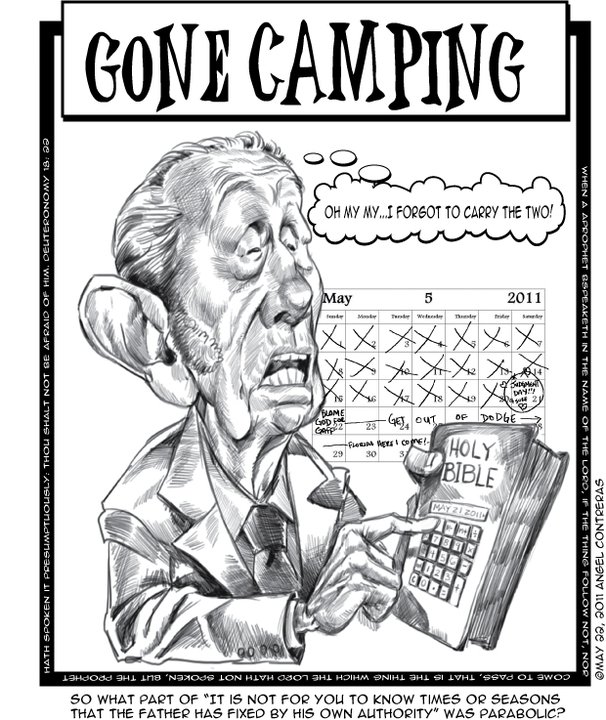
Strike Three and You’re Out
You may have heard that last week Harold Camping apologized for setting dates for the rapture. His bizarre application of civil engineer math geekiness to biblical hermeneutics misleads him to believe he could calculate the date of the rapture and the final judgment (See Robert Godfrey’s posts on Camping parts 1, 2, 3, 4 and 5). Strike one was back in 1994—No rapture. Camping discovers his miscalculation, and revises his date to May 21, 2011, which is also to kick off five months of judgment apparently in the form of rolling earthquakes that were to begin at a certain time of day all around the globe. Perhaps you noticed the billboards in some parts of the country, but most of you will recall the media attention given to it in the weeks leading up to Camping’s second date. May 21, 2011 comes and goes: strike two! Upon this failure, he claims that the rapture really did happen, but it was a spiritual rapture, and that a spiritual judgment has begun which will culminate in the complete end of the world all at once on October 21, 2011. Nothing. Strike three and you’re out, Harold Camping! In the stressful aftermath of this publicly humiliating fiasco, which brought much grief, consternation, and in some parts of the world, persecution, Camping suffers a stroke, and he is removed from regular broadcasting on Family Radio. I don’t know if the strike was brought on by the stress of the events, but a stroke he suffered, nonetheless.
Now that he’s had time to recover, this past week, Camping posts a letter on the Family Radio website apologizing for his “sin” of setting dates (read the letter here). In some ways it is an impressive statement. I was particularly moved to see his state in no uncertain terms that those of us who harped on Jesus’ words that “no man will know the day or hour” were right, and that he was wrong:
…we now realize that those people who were calling our attention to the Bible’s statement that “of that day and hour knoweth no man” (Matthew 24:36 & Mark 13:32), were right in their understanding of those verses and Family Radio was wrong. Whether God will ever give us any indication of the date of His return is hidden in God’s divine plan.
But this candid concession and apology was not good enough for Dan Elmendorf, former Family Radio broadcaster and now founder of Redeemer Broadcasting. In his weekly program, “A Plain Answer,” Elmendorf reminds us that the sin of date-setting was the least of Camping’s doctrinal problems. Absent from Camping’s open letter is any expression of repentance for having called on Christians to leave organized churches in which the gospel is preached and the sacraments of baptism and the Lord’s Supper are administered under the oversight by elders with the authority of exercising church discipline on members whose lives are persistently refusing to conform to a biblical standard of holiness and obedience to Scripture. Apparently, Camping still believes, and would have his listeners believe, that “the church age has ended.” So, it’s not that Camping has repented of the more heretical nature of his controversial “ministry.” I recommend that you listen to Elmendorf’s program, the first segment of which addresses Camping’s “weak apology.” The host shares some insight and experience which you can’t get from the Associated Press stories.
The Schuller’s Take Their Ball and Leave
In another recent instance of heresy in the headlines, it is reported that the entire family of positive-thinking televangelist, Robert Schuller, are leaving Crystal Cathedral Ministries. The 85 year-old Schuller, having retired from weekly “ministry” in 2009, was succeeded by his daughter, Sheila Schuller Coleman. According to the LA Times, Coleman announced this past Sunday that she will leave the Crystal Cathedral to start a new church citing a “hostile working environment” stemming from a growing divide between the Schuller family and the Crystal Cathedral’s board of directors. Robert Schuller and his wife applaud Coleman’s decision, but announce they will not be joining her at her new church, and that their plans for weekly worship are not yet finally decided. They will not, however, have any further public association with the work of the Crystal Cathedral and it’s broadcast The Hour of Power, started by Robert Schuller back in 1970. It seems that all positive (as opposed to “good”) things must come to an end. In my humble opinion, this end has been long overdue.
Memoir of the Rev. John Brown, part 7

Lithograph of the Reverend John Brown of Haddington
When the religious clause of the burgess’ oath came under discussion in the Associate synod, it appeared that the members entertained very different views of the subject ; the mournful consequence of which was a complete separation of the opposing parties into two distinct synods ; the one denominated the Burgher, the other the Antiburgher synod. Though not as yet officially connected with the Secession Church, yet as a conscientious member, Mr. Brown could not allow the question to pass without duly deliberating for himself and determining the path of duty ; the result of his deliberation was, that though not fully satisfied with regard to the lawfulness of the oath, he did not consider it a matter of sufficient magnitude to break up all Christian communion and fellowship ; but rather held it as a proper subject for the exercise of mutual forbearance. He consequently ranked with the adherents of the Burgher synod; of which body he continued a zealous and respected member till his death.
Licensed to preach.
During the vacations of his school, Mr. Brown attended the classes of philosophy and divinity under the superintendence of the Rev. Ebenezer Erskine and James Fisher ; till having gone through the several courses, he passed trials before the presbytery of Edinburgh, and was licensed by that reverend body at Dalkeith, in 1751, to preach the gospel in their connexion. On this sacred service, he entered deeply impressed with the awful responsibility of his office ; nor could he help being seriously affected with a coincidence, which one might think sufficient to shut the mouth of every calumniator ; namely, that about the same time, if not on the same night, on which he was licensed, and sent forth, in acknowledged innocence, a commissioned messenger of Christ, the author and principal propagator of those malicious imputations, from which he had suffered so much (see this post), was excommunicated by his own supporters.—His probationary labours were of short duration, two calls having been got up almost simultaneously for discharging the duties of the pastoral office ; the one from Haddington, the county town of East Lothian ; the other from Stow, situated on the southern border of the shire of Edinburgh. The presbytery left him the choice of the two situations ; and Mr. Brown accepted of Haddington, partly in consideration of several disappointments that congregation had sustained, and partly also because it was the smallest, and likely to afford him the more leisure to prosecute his studies. In gratitude to the people ofStow, for the predilection they had shown for him, and as a small compensation for their disappointment, he preached for them several Sabbaths, and continued to examine them every year till they were supplied with a pastor of their own.
Wallace to “Dialogue” on Ehrman’s Turf this Time
 In our previous debate, we learned Bart Ehrman’s peculiar twist on the integrity of the New Testament text. His focus is on the first hundred years or so of the original writing of the New Testament, for which we have essentially no manuscript evidence. His contention is that we can’t be sure how radical the variations were during this period because that early in history the scribes couldn’t have been as well trained as the scribes and monks of the middle ages, so what we have may be vastly different than what was originally written by the apostles and their associates.
Wallace rightly characterizes this as radical skepticism, and argues for the proposition that Ehrman’s claims are making a mountain out of a mole hill. His contention is that it’s less likely that the variation was as extreme as Ehrman wants us to conclude. This is part of what I came away with from their last meeting on Wallace’s turf in Dallas, Texas.
Now they plan to meet on Ehrman’s turf to “dialogue” (as opposed to debate? Is this just postmodern euphamism?) on whether the original New Testament was lost. I suspect my summary of their positions above will be at the heart of this dialogue. Wish I could attend, but, then, it gets old hearing the same jokes out of both fellows. Hopefully they come up with fresh material. More on this in a few weeks after the debate is made available to those of us unable to attend. (Click for more info)
Jesus Loves Religion

Portrait of a Religious Republican
Many of you may have already seen this viral video originally posted by The Resurgence website. A co-worker told me about it and it linked (at that time) to The Resurgence. At that point it had three million views. By the time I got home Friday morning and pulled it up again (about four hours later), it had six million views! Now it’s plateaued at over seven million. It’s effective, because it’s edgy. It’s edgy because it features a misdefinition of the word “Religion.”
Watch the video, before we move on:
Another friend of mine shared it on his Facebook page, with a lengthy discussion in which I just had to participate. Here’s what I wrote:
This forty-something Republican is down with most of this. But the “semantic” issue is that by “religion” he does mean legalism, but I’d like to submit that he’s also talking about hypocrisy. But I guess if he used the right words, it wouldn’t have been nearly as edgy and would have gotten a couple million fewer views on YouTube. At first I thought he was coming too close to advocating “don’t go to church, be the church” like Barna’s “Revolutionaries,” but I rewatched it and retained his clarification about “loving the church” which I suppose means he doesn’t advocate dropping out. He’s just, again, challenging legalism and hypocrisy.
Fortunately, a trained professional has now written a lengthy and helpful critique, which is not uncomplimentary, about this latest YouTube phenomenon. Kevin DeYoung, co-author of Why We Love the Church: In Praise of Institutions and Organized Religion (2009?, Moody Publishers) writes “Does Jesus Hate Religion? Kinda Sorta, Not Really.” Here’s DeYoung’s comments on the poet’s misleading use of the word “religion,” how religious Jesus was, and how religious he wants his followers to be:
More important is Bethke’s opening line: “Jesus came to abolish religion.” That’s the whole point of the poem. The argument—and most poems are arguing for something—rests on the sharp distinction between religion on one side and Jesus on the other. Whether this argument is fair depends on your definition of religion. Bethke sees religion as a man made attempt to earn God’s favor. Religion equals self-righteousness, moral preening, and hypocrisy. Religion is all law and no gospel. If that’s religion, then Jesus is certainly against it.
But that’s not what religion is. We can say that’s what is has become for some people or what we understand it to be. But words still matter and we shouldn’t just define them however we want. “Jesus hates religion” communicates something that “Jesus hates self-righteousness” doesn’t. To say that Jesus hates pride and hypocrisy is old news. To say he hates religion—now, that has a kick to it. People hear “religion” and think of rules, rituals, dogma, pastors, priests, institutions. People love Oprah and the Shack and “spiritual, not religious” bumper stickers because the mood of our country is one that wants God without the strictures that come with traditional Christianity. We love the Jesus that hates religion.
The only problem is, he didn’t. Jesus was a Jew. He went to services at the synagogue. He observed Jewish holy days. He did not come to abolish the Law or the Prophets, but to fulfill them (Matt. 5:17). He founded the church (Matt. 16:18). He established church discipline (Matt. 18:15-20). He instituted a ritual meal (Matt. 26:26-28). He told his disciples to baptize people and to teach others to obey everything he commanded (Matt. 28:19-20). He insisted that people believe in him and believe certain things about him (John 3:16-18; 8:24). If religion is characterized by doctrine, commands, rituals, and structure, then Jesus is not your go-to guy for hating religion. This was the central point behind the book Ted Kluck and I wrote a few years ago.
The word “religion” occurs five times in English Standard Version of the Bible. It is, by itself, an entirely neutral word. Religion can refer to Judaism (Acts 26:5) or the Jewish-Christian faith (Acts 25:19). Religion can be bad when it is self-made (Col. 2:23) or fails to tame the tongue (James 1:26). But religion can also be good when it cares for widows and orphans and practices moral purity (James 1:27). Unless we define the word to suit our purposes, there is simply no biblical grounds for saying Jesus hated religion. What might be gained by using such language will, without a careful explanation and caveats, be outweighed by what is lost when we give the impression that religion is the alloy that corrupts a relationship with Jesus.
Update: Poet Jefferson Bethke responds on his Facebook page to those using his video to “bash the church”:
If you are using my video to bash “the church” be careful. I was in no way intending to do that. My heart came from trying to highlight and expose legalism and hypocrisy. The Church is Jesus’ bride so be careful how you speak of His wife. If a normal dude has right to get pissed when you bash His wife, it makes me tremble to think how great the weight is when we do it to Jesus’ wife. The church is His vehicle to reach a lost word. A hospital for sinners. Saying you love Jesus but hate the Church, is like a fiancé saying he loves his future bride, but hates her kids. We are all under grace. Look to Him.
How to make Joel Osteen nervous
Ask him a politically-charged question about biblical sexual morality.
It’s good that Joel was able to get what he’s bound to believe out of his mouth. He would do well to work toward not only believing these things, but also ministering these truths in the way Paul advised Timothy in 2 Timothy 4:1-5, which reads,
I charge you in the presence of God and of Christ Jesus, who is to judge the living and the dead, and by his appearing and his kingdom: preach the word; be ready in season and out of season; reprove, rebuke, and exhort, with complete patience and teaching. For the time is coming when people will not endure sound teaching, but having itching ears they will accumulate for themselves teachers to suit their own passions, and will turn away from listening to the truth and wander off into myths. As for you, always be sober-minded, endure suffering, do the work of an evangelist, fulfill your ministry.
For the record, according to Joel Osteen, he believes that the Bible teaches the following:
“You shall not lie with a male as with a woman; it is an abomination” (Leviticus 18:22).
“If a man lies with a male as with a woman, both of them have committed an abomination…” (Leviticus 20:13).
“…and the men likewise gave up natural relations with women and were consumed with passion for one another, men committing shameless acts with men and receiving in themselves the due penalty for their error”(Romans 1:27).
“…just as Sodom and Gomorrah and the surrounding cities, which likewise indulged in sexual immorality and pursued unnatural desire, serve as an example by undergoing a punishment of eternal fire” (Jude 1:7; cf. Gen. 19).
But this next passage shows Joel should have also qualified his initially reassuring assertion to Oprah that “I think [homosexuals] will [go to heaven].” He does clarify that “they need forgiveness of their sins,” but this was an attempt to evade putting the two together until Oprah had to pull it out of him in uncertain terms. In this, he sounds nothing like the apostle Paul, whose inspired assertion is much clearer:
“Or do you not know that the unrighteous will not inherit the kingdom of God? Do not be deceived: neither the sexually immoral, nor idolaters, nor adulterers, nor men who practice homosexuality, nor thieves, nor the greedy, nor drunkards, nor revilers, nor swindlers will inherit the kingdom of God” (1 Corinthians 6:9-10).
Fortunately for homosexuals who repent and for Joel Osteen, Paul goes on in verse 11 to proclaim:
“And such were some of you. But you were washed, you were sanctified, you were justified in the name of the Lord Jesus Christ and by the Spirit of our God” (1 Corinthians 6:11).
It is the desire of every loving, right-minded Christian that the homosexuals should, by the grace of the Spirit of God,
- believe the good news of forgiveness through the sinless life, atoning death and enlivening resurrection of the Lord Jesus Christ, and so be justified through faith alone…
- repent of his sins, including the sin of homosexuality…
- be washed clean in the waters of baptism…
- learn to obey all that Christ taught, including his and his apostles’ teachings on sexual morality. Or, as Paul put it above “[be] sanctified.”
Short of this, the regrettable fact remains that the homosexual, as well as the sexually immoral, the idolater, the adulterer, the thief, the greedy, the drunkard, the reviler and the swindler, among other kinds of sinner, will not inherit the kingdom of God.
2011 in review
The WordPress.com stats helper monkeys prepared a 2011 annual report for this blog.
Here’s an excerpt:
The concert hall at the Syndey Opera House holds 2,700 people. This blog was viewed about 16,000 times in 2011. If it were a concert at Sydney Opera House, it would take about 6 sold-out performances for that many people to see it.
The Christ of the Bible
HT: Cado Odac
“Fundamental of all true religion”

“Master, which is the great commandment in the law? Jesus said unto him, Thou shalt love the Lord thy God with all thy heart, and with all thy soul, and with all thy mind. This is the first and great commandment. And the second is like unto it, Thou shalt love thy neighbour as thyself. On these two commandments hang tall the law and the prophets” (Matthew 22:36-40 KJV).
“These two commandments include the substance of the whole moral law, which is fundamental to all true religion. They include the whole natural law, which was originally written in the heart of man; the obligation of which can never be dissolved, and which all the revelations of God are founded on, and designed to enforce.”
Commentary by Rev. John Brown of Haddington from The Self-Interpreting Bible 1859.


 The Misadventures of Captain Headknowledge
God Imputes Righteousness, Not Faith
Q. 73. How doth faith justify a sinner in the sight of God?
A. Faith justifies a sinner in the sight of God, not because of those other graces which do always accompany it, or of good works that are the fruits of it, nor as if the grace of faith, or any act thereof, were imputed to him for his justification (Romans 4:5; 10:10); but only as it is an instrument by which he receiveth and applieth Christ and his righteousness.
Believing is not a good work. It earns nothing. If there were such a thing as a righteous person other than Jesus Christ, there would be no need to impute his righteousness to him. For this hypothetical person who earns righteousness by his own good works, having Christ’s righteousness imputed or credited to him would be superfluous, redundant, and unnecessary.
Christ did not come to call those who think their righteousness is good enough. God did not send his Son to die for those who never come to admit that they deserve to die because of their sin. In Romans 4:5, Paul describes God as “him who justifies the ungodly.” The ungodly one who despairs of his inability to earn righteousness by his good works is the kind of person whom God justifies, or declares righteous in his sight.
In this same passage, Paul explains that “his [the ungodly person’s] faith is counted as righteousness.” This is the biblical doctrine of imputation, and Paul elaborates on it in the rest of his sentence which concludes in verses 6 -8: “… just as David also speaks of the blessing of the one to whom God counts [imputes] righteousness apart from works: ‘Blessed are those whose lawless deeds are forgiven, and whose sins are covered; blessed is the man against whom the Lord will not count [impute, KJV] his sin.’” As you see, the Bible teaches that while a man’s faith may in one sense be “imputed,” or “counted” as righteousness, in a greater sense, what is really going on is that Christ’s righteousness is being imputed to the ungodly believer–the righteousness of Christ is counted as the righteousness of the ungodly believer. It is a careless misreading to interpret the Bible as teaching that God imputes faith to the ungodly; rather, God imputes the righteousness of Christ to him.
What, then, is the source of this faith by which we are justified by the imputed righteousness of Christ? “For with the heart one believes and is justified, and with the mouth one confesses and is saved” (Romans 10:10). In the song, “Rock of Ages,” Christians sing, “Nothing in my hand I bring/Simply to the cross I cling.” It is not the work of our hands by which we are justified, but the gracious gift of faith which emerges from a regenerate, spiritually living heart which has been newly freed from sin and empowered to rest on the finished work of his righteous Savior who has been crucified and risen for him. We may be justified by a righteousness that is not our own, but that righteousness is received by a faith that is very much our own, graciously enabled by the power of the Holy Spirit.
Answer #73 of the Westminster Larger Catechism, then, further denies that the faith by which he is justified was not imputed to him—it was not the faith of another, but his own faith which arises by God’s grace from his own regenerate heart. His faith is the fruit grown on the good tree of his own regenerate heart.
Share this: