The True Treasures of the Church (from the 95 Theses)
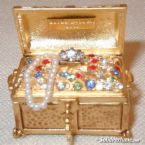
57. That indulgences are not temporal treasures is certainly clear, for many indulgence sellers do not distribute them freely but only gather them.
58. Nor are they the merits of Christ and the saints, for, even without the pope, the latter always work grace for the inner man, and the cross, death, and hell for the outer man.
59. St. Lawrence said that the poor of the church were the treasures of the church, but he spoke according to the usage of the word in his own time.
60. Without want of consideration we say that the keys of the church, given by the merits of Christ, are that treasure.
13 Now when Jesus came into the district of Caesarea Philippi, he asked his disciples, “Who do people say that the Son of Man is?” 14 And they said, “Some say John the Baptist, others say Elijah, and others Jeremiah or one of the prophets.” 15 He said to them, “But who do you say that I am?” 16 Simon Peter replied, “You are the Christ, the Son of the living God.” 17 And Jesus answered him, “Blessed are you, Simon Bar-Jonah! For flesh and blood has not revealed this to you, but my Father who is in heaven. 18 And I tell you, you are Peter, and on this rock [2] I will build my church, and the gates of hell [3] shall not prevail against it. 19 I will give you the keys of the kingdom of heaven, and whatever you bind on earth shall be bound in heaven, and whatever you loose on earth shall be loosed [4] in heaven.”
21 But now the righteousness of God has been manifested apart from the law, although the Law and the Prophets bear witness to it— 22 the righteousness of God through faith in Jesus Christ for all who believe. For there is no distinction: 23 for all have sinned and fall short of the glory of God, 24 and are justified by his grace as a gift, through the redemption that is in Christ Jesus, 25 whom God put forward as a propitiation by his blood, to be received by faith. This was to show God’s righteousness, because in his divine forbearance he had passed over former sins. 26 It was to show his righteousness at the present time, so that he might be just and the justifier of the one who has faith in Jesus.
“I will destroy the wisdom of the wise,and the discernment of the discerning I will thwart.”
20 Where is the one who is wise? Where is the scribe? Where is the debater of this age? Has not God made foolish the wisdom of the world? 21 For since, in the wisdom of God, the world did not know God through wisdom, it pleased God through the folly of what we preach to save those who believe.
A Study in Deformation: Or, How Luther’s Reformation was a High-Water Mark in Church History

October 10, in the year of our Lord . . .
 Arminians.”
  AD 1517-1700? The Age of Reformation (
Summary of Roman Catholic Justification

More Luther on Repentance
I was really impressed with some of the evangelical truth that is contained in some of Martin Luther’s 95 Theses. Consider the first four theses, in which Luther introduces the doctrine of repentance. If he were alive today, I think I could guess which side of the Lordship debate Luther would come down on, couldn’t you?
1. When our Lord and Master Jesus Christ said, “Repent” (Mt 4:17), he willed the entire life of believers to be one of repentance.
2. This word cannot be understood as referring to the sacrament of penance, that is, confession and satisfaction, as administered by the clergy.
3. Yet it does not mean solely inner repentance; such inner repentance is worthless unless it produces various outward mortification of the flesh.
4. The penalty of sin remains as long as the hatred of self (that is, true inner repentance), namely till our entrance into the kingdom of heaven.
Now, let us consider how he elaborates on repentance in the Smalcald Articles:
THE THIRD PART OF THE ARTICLES
Article III: Repentance
This office [of the Law] the New Testament retains and urges, as St. Paul, Rom. 1, 18 does, saying: The wrath of God is revealed from heaven against all ungodliness and unrighteousness of men.Again, 3, 19: All the world is guilty before God. No man is righteous before Him. And Christ says, John 16, 8: The Holy Ghost will reprove the world of sin.This, then, is the thunderbolt of God by which He strikes in a heap [hurls to the ground] both manifest sinners and false saints [hypocrites], and suffers no one to be in the right [declares no one righteous], but drives them all together to terror and despair.This is the hammer, as Jeremiah says, 23, 29: Is not My Word like a hammer that breaketh the rock in pieces?
This is not activa contritio or manufactured repentance, but passiva contritio [torture of conscience], true sorrow of heart, suffering and sensation of death.This, then, is what it means to begin true repentance; and here man must hear such a sentence as this: You are all of no account, whether you be manifest sinners or saints [in your own opinion]; you all must become different and do otherwise than you now are and are doing [no matter what sort of people you are], whether you are as great, wise, powerful, and holy as you may. Here no one is [righteous, holy], godly, etc.
But to this office the New Testament immediately adds the consolatory promise of grace through the Gospel, which must be believed, as Christ declares, Mark 1,15: Repent and believe the Gospel, i.e., become different and do otherwise, and believe My promise. And John, preceding Him, is called a preacher of repentance, however, for the remission of sins, i.e., John was to accuse all, and convict them of being sinners, that they might know what they were before God, and might acknowledge that they were lost men, and might thus be prepared for the Lord, to receive grace, and to expect and accept from Him the remission of sins.
Thus also Christ Himself says, Luke 24, 47: Repentance and remission of sins must be preached in My name among all nations. But whenever the Law alone, without the Gospel being added exercises this its office there is [nothing else than] death and hell, and man must despair, like Saul and Judas; as St. Paul, Rom. 7, 10, says: Through sin the Law killeth. On the other hand, the Gospel brings consolation and remission not only in one way, but through the word and Sacraments, and the like, as we shall hear afterward in order that [thus] there is with the Lord plenteous redemption, as Ps. 130, 7 says against the dreadful captivity of sin.
However, we must now contrast the false repentance of the sophists with true repentance, in order that both may be the better understood.
Of the False Repentance of the Papists.
It was impossible that they should teach correctly concerning repentance, since they did not [rightly] know the real sins [the real sin]. For, as has been shown above, they do not believe aright concerning original sin, but say that the natural powers of man have remained [entirely] unimpaired and incorrupt; that reason can teach aright, and the will can in accordance therewith do aright [perform those things which are taught], that God certainly bestows His grace when a man does as much as is in him, according to his free will.
Read more . . .
Babylonian Captivity of the Church
 A Prelude of Martin Luther
On the Babylonian Captivity of the Church
JESUS
Martin Luther, Augustinian, to his friend, Hermann Tulich, greeting.
(Tulich was born at Steinheim, near Paderborn, in Westphalia; graduated from Wittenberg (A.B., 1511); was a proofreader in Melchior Lotter’s printinghouse at Leipzig. He returned to Wittenberg in 1519 and received the doctorate in 1520; became professor of poetry at the university; rector of the same, 1525. He was a staunch supporter of Luther; rector of the school at Luneberg from 1532 until his death in 1540.)
Whether I wish it or not, I am compelled to become more learned every day, with so many and such able masters eagerly driving me on and making me work. Some two years ago I wrote on indulgences, but in such a way that I now deeply regret having published that little book (probably the Explanations of the Ninety-five Theses (1518)). At that time I still clung with a mighty superstition to the tyranny of Rome, and so I held that indulgences should not be altogether rejected, seeing that they were approved by the common consent of so many. No wonder, for at the time I was still engaged singlehanded in this Sisyphean task. Afterwards, thanks to Sylvester (Sylvester Prierias–more properly called Mazzolini–from Prierio in Piedmont, 1456-1532, was a prior of the Dominicans. He became Grand Inquisitor and Censor of Books in 1515. he and others of the order (e.g., Tetzel and Hochstraten) had written against Luther), and aided by those friars who so strenuously defended indulgences, I saw that they were nothing but impostures of the Roman flatterers, by which thy rob men of their money and their faith in God. Would that I could prevail upon the booksellers and persuade all who have read them to burn the whole of my booklets on indulgences, and instead of all that I have written on this subject adopt this proposition: INDULGENCES ARE WICKED DEVICES OF THE FLATTERIES OF ROME. 
"Disputation of Doctor Martin Luther on the Power and Efficacy of Indulgences" (1517)
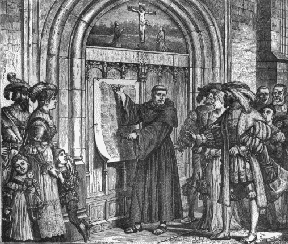
.jpg) What better way to begin to remember the life and ministry of Martin Luther, than to read the document which the Lord used so effectively to turn the world upside down and recover the article on which the church stands and falls, the doctrine of justification by faith alone!
What better way to begin to remember the life and ministry of Martin Luther, than to read the document which the Lord used so effectively to turn the world upside down and recover the article on which the church stands and falls, the doctrine of justification by faith alone!
1. When our Lord and Master Jesus Christ said, “Repent” (Mt 4:17), he willed the entire life of believers to be one of repentance.
2. This word cannot be understood as referring to the sacrament of penance, that is, confession and satisfaction, as administered by the clergy.
3. Yet it does not mean solely inner repentance; such inner repentance is worthless unless it produces various outward mortification of the flesh.
4. The penalty of sin remains as long as the hatred of self (that is, true inner repentance), namely till our entrance into the kingdom of heaven.
5. The pope neither desires nor is able to remit any penalties except those imposed by his own authority or that of the canons.
6. The pope cannot remit any guilt, except by declaring and showing that it has been remitted by God; or, to be sure, by remitting guilt in cases reserved to his judgment. If his right to grant remission in these cases were disregarded, the guilt would certainly remain unforgiven.
7. God remits guilt to no one unless at the same time he humbles him in all things and makes him submissive to the vicar, the priest.
8. The penitential canons are imposed only on the living, and, according to the canons themselves, nothing should be imposed on the dying.
9. Therefore the Holy Spirit through the pope is kind to us insofar as the pope in his decrees always makes exception of the article of death and of necessity.
10. Those priests act ignorantly and wickedly who, in the case of the dying, reserve canonical penalties for purgatory.
11. Those tares of changing the canonical penalty to the penalty of purgatory were evidently sown while the bishops slept (Mt 13:25).
12. In former times canonical penalties were imposed, not after, but before absolution, as tests of true contrition.
13. The dying are freed by death from all penalties, are already dead as far as the canon laws are concerned, and have a right to be released from them.
14. Imperfect piety or love on the part of the dying person necessarily brings with it great fear; and the smaller the love, the greater the fear.
15. This fear or horror is sufficient in itself, to say nothing of other things, to constitute the penalty of purgatory, since it is very near to the horror of despair.
16. Hell, purgatory, and heaven seem to differ the same as despair, fear, and assurance of salvation.
17. It seems as though for the souls in purgatory fear should necessarily decrease and love increase.
18. Furthermore, it does not seem proved, either by reason or by Scripture, that souls in purgatory are outside the state of merit, that is, unable to grow in love.
19. Nor does it seem proved that souls in purgatory, at least not all of them, are certain and assured of their own salvation, even if we ourselves may be entirely certain of it.
20. Therefore the pope, when he uses the words “plenary remission of all penalties,” does not actually mean “all penalties,” but only those imposed by himself.
21. Thus those indulgence preachers are in error who say that a man is absolved from every penalty and saved by papal indulgences.
22. As a matter of fact, the pope remits to souls in purgatory no penalty which, according to canon law, they should have paid in this life.
23. If remission of all penalties whatsoever could be granted to anyone at all, certainly it would be granted only to the most perfect, that is, to very few.
24. For this reason most people are necessarily deceived by that indiscriminate and high-sounding promise of release from penalty.
25. That power which the pope has in general over purgatory corresponds to the power which any bishop or curate has in a particular way in his own diocese and parish.
26. The pope does very well when he grants remission to souls in purgatory, not by the power of the keys, which he does not have, but by way of intercession for them.
27. They preach only human doctrines who say that as soon as the money clinks into the money chest, the soul flies out of purgatory.
28. It is certain that when money clinks in the money chest, greed and avarice can be increased; but when the church intercedes, the result is in the hands of God alone.
29. Who knows whether all souls in purgatory wish to be redeemed, since we have exceptions in St. Severinus and St. Paschal, as related in a legend.
30. No one is sure of the integrity of his own contrition, much less of having received plenary remission.
31. The man who actually buys indulgences is as rare as he who is really penitent; indeed, he is exceedingly rare.
32. Those who believe that they can be certain of their salvation because they have indulgence letters will be eternally damned, together with their teachers.
33. Men must especially be on guard against those who say that the pope’s pardons are that inestimable gift of God by which man is reconciled to him.
34. For the graces of indulgences are concerned only with the penalties of sacramental satisfaction established by man.
35. They who teach that contrition is not necessary on the part of those who intend to buy souls out of purgatory or to buy confessional privileges preach unchristian doctrine.
36. Any truly repentant Christian has a right to full remission of penalty and guilt, even without indulgence letters.
37. Any true Christian, whether living or dead, participates in all the blessings of Christ and the church; and this is granted him by God, even without indulgence letters.
38. Nevertheless, papal remission and blessing are by no means to be disregarded, for they are, as I have said (Thesis 6), the proclamation of the divine remission.
39. It is very difficult, even for the most learned theologians, at one and the same time to commend to the people the bounty of indulgences and the need of true contrition.
40. A Christian who is truly contrite seeks and loves to pay penalties for his sins; the bounty of indulgences, however, relaxes penalties and causes men to hate them — at least it furnishes occasion for hating them.
41. Papal indulgences must be preached with caution, lest people erroneously think that they are preferable to other good works of love.
42. Christians are to be taught that the pope does not intend that the buying of indulgences should in any way be compared with works of mercy.
43. Christians are to be taught that he who gives to the poor or lends to the needy does a better deed than he who buys indulgences.
44. Because love grows by works of love, man thereby becomes better. Man does not, however, become better by means of indulgences but is merely freed from penalties.
45. Christians are to be taught that he who sees a needy man and passes him by, yet gives his money for indulgences, does not buy papal indulgences but God’s wrath.
46. Christians are to be taught that, unless they have more than they need, they must reserve enough for their family needs and by no means squander it on indulgences.
47. Christians are to be taught that they buying of indulgences is a matter of free choice, not commanded.
48 Christians are to be taught that the pope, in granting indulgences, needs and thus desires their devout prayer more than their money.
49. Christians are to be taught that papal indulgences are useful only if they do not put their trust in them, but very harmful if they lose their fear of God because of them.
50. Christians are to be taught that if the pope knew the exactions of the indulgence preachers, he would rather that the basilica of St. Peter were burned to ashes than built up with the skin, flesh, and bones of his sheep.
51. Christians are to be taught that the pope would and should wish to give of his own money, even though he had to sell the basilica of St. Peter, to many of those from whom certain hawkers of indulgences cajole money.
52. It is vain to trust in salvation by indulgence letters, even though the indulgence commissary, or even the pope, were to offer his soul as security.
53. They are the enemies of Christ and the pope who forbid altogether the preaching of the Word of God in some churches in order that indulgences may be preached in others.
54. Injury is done to the Word of God when, in the same sermon, an equal or larger amount of time is devoted to indulgences than to the Word.
55. It is certainly the pope’s sentiment that if indulgences, which are a very insignificant thing, are celebrated with one bell, one procession, and one ceremony, then the gospel, which is the very greatest thing, should be preached with a hundred bells, a hundred processions, a hundred ceremonies.
56. The true treasures of the church, out of which the pope distributes indulgences, are not sufficiently discussed or known among the people of Christ.
57. That indulgences are not temporal treasures is certainly clear, for many indulgence sellers do not distribute them freely but only gather them.
58. Nor are they the merits of Christ and the saints, for, even without the pope, the latter always work grace for the inner man, and the cross, death, and hell for the outer man.
59. St. Lawrence said that the poor of the church were the treasures of the church, but he spoke according to the usage of the word in his own time.
60. Without want of consideration we say that the keys of the church, given by the merits of Christ, are that treasure.
61. For it is clear that the pope’s power is of itself sufficient for the remission of penalties and cases reserved by himself.
62. The true treasure of the church is the most holy gospel of the glory and grace of God.
63. But this treasure is naturally most odious, for it makes the first to be last (Mt. 20:16).
64. On the other hand, the treasure of indulgences is naturally most acceptable, for it makes the last to be first.
65. Therefore the treasures of the gospel are nets with which one formerly fished for men of wealth.
66. The treasures of indulgences are nets with which one now fishes for the wealth of men.
67. The indulgences which the demagogues acclaim as the greatest graces are actually understood to be such only insofar as they promote gain.
68. They are nevertheless in truth the most insignificant graces when compared with the grace of God and the piety of the cross.
69. Bishops and curates are bound to admit the commissaries of papal indulgences with all reverence.
70. But they are much more bound to strain their eyes and ears lest these men preach their own dreams instead of what the pope has commissioned.
71. Let him who speaks against the truth concerning papal indulgences be anathema and accursed.
72. But let him who guards against the lust and license of the indulgence preachers be blessed.
73. Just as the pope justly thunders against those who by any means whatever contrive harm to the sale of indulgences.
74. Much more does he intend to thunder against those who use indulgences as a pretext to contrive harm to holy love and truth.
75. To consider papal indulgences so great that they could absolve a man even if he had done the impossible and had violated the mother of God is madness.
76. We say on the contrary that papal indulgences cannot remove the very least of venial sins as far as guilt is concerned.
77. To say that even St. Peter if he were now pope, could not grant greater graces is blasphemy against St. Peter and the pope.
78. We say on the contrary that even the present pope, or any pope whatsoever, has greater graces at his disposal, that is, the gospel, spiritual powers, gifts of healing, etc., as it is written, 1 Co 12[:28].
79. To say that the cross emblazoned with the papal coat of arms, and set up by the indulgence preachers is equal in worth to the cross of Christ is blasphemy.
80. The bishops, curates, and theologians who permit such talk to be spread among the people will have to answer for this.
81. This unbridled preaching of indulgences makes it difficult even for learned men to rescue the reverence which is due the pope from slander or from the shrewd questions of the laity.
82. Such as: “Why does not the pope empty purgatory for the sake of holy love and the dire need of the souls that are there if he redeems an infinite number of souls for the sake of miserable money with which to build a church? The former reason would be most just; the latter is most trivial.
83. Again, “Why are funeral and anniversary masses for the dead continued and why does he not return or permit the withdrawal of the endowments founded for them, since it is wrong to pray for the redeemed?”
84. Again, “What is this new piety of God and the pope that for a consideration of money they permit a man who is impious and their enemy to buy out of purgatory the pious soul of a friend of God and do not rather, because of the need of that pious and beloved soul, free it for pure love’s sake?”
85. Again, “Why are the penitential canons, long since abrogated and dead in actual fact and through disuse, now satisfied by the granting of indulgences as though they were still alive and in force?”
86. Again, “Why does not the pope, whose wealth is today greater than the wealth of the richest Crassus, build this one basilica of St. Peter with his own money rather than with the money of poor believers?”
87. Again, “What does the pope remit or grant to those who by perfect contrition already have a right to full remission and blessings?”
88. Again, “What greater blessing could come to the church than if the pope were to bestow these remissions and blessings on every believer a hundred times a day, as he now does but once?”
89. “Since the pope seeks the salvation of souls rather than money by his indulgences, why does he suspend the indulgences and pardons previously granted when they have equal efficacy?”
90. To repress these very sharp arguments of the laity by force alone, and not to resolve them by giving reasons, is to expose the church and the pope to the ridicule of their enemies and to make Christians unhappy.
91. If, therefore, indulgences were preached according to the spirit and intention of the pope, all these doubts would be readily resolved. Indeed, they would not exist.
92. Away, then, with all those prophets who say to the people of Christ, “Peace, peace,” and there is no peace! (Jer 6:14)
93. Blessed be all those prophets who say to the people of Christ, “Cross, cross,” and there is no cross!
94. Christians should be exhorted to be diligent in following Christ, their Head, through penalties, death and hell.
95. And thus be confident of entering into heaven through many tribulations rather than through the false security of peace (Acts 14:22).

Corinthian Creed
At last, my new song (hymn?) arranged for a group and performed in the worship service at church! All I could provide were the words and the basic melody, but I selected talented musicians at church who could arrange their own piano part, and who could harmonize by ear. Unfortunately, the recording doesn’t begin until we have already moved into the second verse. But that’s okay, you get to hear all the talented people who helped me, to whom I’m very grateful.
There is a saying among theologians (or at least R. C. Sproul refers to it frequently) that the orthodox owe a debt of gratitude to heretics. All of the creeds from the earliest centuries of church history involve an element of correcting the heresy that was most destructive to the faith in that generation. If you think back, even the Bible itself is largely written to correct the errors which afflicted God’s people. Nothing forces us to sharpen our focus and improve our understanding the way “competition” does.
I likewise owe a debt of gratitude to heresy in the writing of my hymn, “Corinthian Creed.” But the correction of heresy inspired my song in a different way. I was reading one of the books defending Christianity against the revisionist Da Vinci Code and noticed in a footnote that the passage in 1 Corinthians 15:3-7 was originally a creed which developed less than a decade after Christ’s crucifixion, resurrection and ascension! That really blew my mind! Growing up an anti-creedal Baptist, you tend to think creeds and Bibles are like apples and oranges. Here’s a creed in the Bible! The apostle Paul was catechized with the help of a creed! And look how well he turned out!
My way of memorizing verses frequently involves putting it to a tune. I do it quite a bit. So I did it to the “creed” in 1 Corinthians 15. This comprises the first verse of my song. Then after a short time I devised the chorus, and desired to write a couple of other verses to make it a genuine song. So it stayed in this form as I thought and prayed. Finally, it dawned on me to simply summarize the entire chapter–Paul’s great teaching on the fact of, and necessity of the resurrection of Christ and the fact of our resurrection in him. First Corinthians 15 is at once an apologetic defense (is that redundant?) of Christ’s resurrection, a thorough proclamation of the gospel, and a sermon exhorting believers to persevere in the faith in the hope of their resurrection in Christ at the last day! What better material could there be for a “modern hymn?”
In my next post, I will audioblog our performance of the song; below are the lyrics. Do any of my readers know anyone who can help me out with a four-part harmony for a choir?
Theological and Doxological Meditation #23
 Offices of the Redeemer
Q. What offices does Christ execute as our Redeemer?
A. Christ, as our Redeemer,
executes the office of a prophet (Acts 3:22),
of a priest (Hebrews 5:6),
and of a king (Psalm 2:6),
both in his state of humiliation and exaltation.
Blessed Jesus, At Your Word
#303, Trinity Hymnal (© 1990)
Stanzas 1-3, Tobias Clausnitzer, 1663;
Stanza 4, anon., 1707
Stanzas 1-3 translated by Catherine Winkworth, 1858;
Stanza 4 translated by anon.;
altered 1990, mod.
Blessed Jesus, at your word
we are gathered all to hear you;
let our hearts and souls be stirred
now to seek and love and fear you,
by your teachings, sweet and holy,
drawn from earth to love you solely.
All our knowledge, sense and sight
lie in deepest darkness shrouded,
till your Spirit breaks our night
with the beams of truth unclouded.
You alone to God can win us;
you must work all good within us.
Glorious Lord, your self impart,
Light of light, from God proceeding;
open now our ears and heart,
help us by your Spirit’s pleading;
hear the cry your people raises,
hear and bless our prayers and praises.
Father, Son and Holy Ghost,
praise to you and adoration!
Grant that we your Word may trust
and obtain true consolation,
while we here below must wander,
till we sing your praises yonder.
Baptist Successionism

Baptist Successionism: A Crucial Question in Baptist History
American Theological Library Association Monograph Series,
by James Edward McGoldrick,
Metuchen, NJ: The Scarecrow Press, 1994, 181 pp. $27.50
—Charles H. Spurgeon
The "Larger" and the "Shorter" of It: An Anniversary for the Westminster Catechisms
 September 15, 1648
The Larger and the Shorter Catechisms — both prepared by the Westminster Assembly the previous year — were approved by the British Parliament. These two documents have been in regular use among various Presbyterians, Congregationalists and Baptists ever since.
The following series of posts will be from,
“The Origins and Formation
of the Westminster Confession of Faith”
as published in,
The Constitution of the Presbyterian Church in the United States:
Containing the Confession of Faith,
the Larger and Shorter Catechisms,
as ratified by the General Assembly, at Augusta, Georgia, Dec. 1861,
with revised proof texts adopeted by the General Assembly of 1910.
Together with The Book of Church Order,
adopted by the General Assemblies of 1876-9 and 1893;
with amendments embodied up to and including the year 1910.
The Directory for the Worship of God, with Optional Forms, adopted 1894.
Rules of Parliamentary Order, adopted 1866.
I love those long titles!
My mother found this small tome at an estate sale a couple of years ago! (Yippie! I’m an old bibliophile!!!) Thanks to www.reformationart.com for all of the illustrations in this post.
“The Tendency Toward Thorough-Going Reform”:
Calvin and Luther through the work of the Puritans
As early as 1540, two great types of the reform of religion in northern Europe had made themselves manifest. Luther had moulded the one type. Calvin had moulded, or begun the moulding of, the other.
Luther was for retaining of Mediaeval doctrine, government, worship, many things — whatever seemed to him desirable and not forbiddn in the Word of God. Calvin was for bringing the Church into conformity with the pattern shown in the Word. He would have the Church hold the faith taught in the Word, govern itself according to the principles taught in the Word, and conduct its exercises of worship according to maxims derivable from the Word. He believed in the sufficiency of the Scriptures as a rule of faith and practice, and would have had the Church conform in all respects to Scripture teaching.
Lutheranism was the great type of moderate reform in northern Europe. Calvinism was the great type of thorough-going reform. Owing to the peculiar genius of the German people and to peculiar favoring providences, Lutheranism prevailed widely throughout north Germany and Scandinavia, but not a few in these regions craved a more thorough-going reform. Owing to the peculiar genius of the French, the Duth and south Germans, and to favoring providences, Calvinism prevailed in France, the Netherlands and in certain south German States and cities; among these peoples, however, there were some who had a greater love for features of the Mediaeval Church and would have retained them.
There were, thus, on the Continent two great types of reform movement, the one dominant in the one quarter, and the other dominant in other quarters. At the same time, in the sphere within which moderate reform prevailed, there was more or less demand for thorough-going reform; and in the sphere within which thorough-going reform prevailed there was more or less desire for merely moderate reform.
In England also, two types of reform were clearly manifest from the early days of Queen Elizabeth, the one a moderate, the other a type tending to thorough-going reform, each type indigenous, but each type strengthened by influences from beyond the Channel. The development of these two types of ecclesiastical reform in England was mightily influenced by the action of the crown, the one type being swerved by attraction, the other stimulated by opposition.
In no other country did the throne influence the character of reform so greatly. This was owing to this fact, amongst other forces, that the head of the English State had been made the head of the English Church. Henry VIII had, for personal, and, in the main, base reasons, revolted from the Papal rule; and had secured at the hands of Parliament in 1534, the “Act of Supremacy,” which ordered that the King “shall be taken, accepted and reputed the only supreme Head in earth of the Church of England, and shall have and enjoy annexed and united to the Imperial Crown of this realm as well the title and style thereof as all the honors, jurisdictions, authorities, immunities, profits and commodities to the said dignity belonging, with full power to visit, repress, redress, reform, and amend all such errors, heresies, abuses, comtempts and enormities, which by any manner of spiritual authority of jurisdiction might or may lawfully be reformed.”
While Henry vacillated somewhat in his attitude toward the reform movement, owing to political exigencies, and unwittingly furthered Protestantism at times, as in authorizing the publication of the Scriptures in the vernacular, he remained, at heart, a Romanist, in revolt against Papal rule, and was hostile to any representative of reform of either type who was bold enough steadily to maintain his convictions. During the reign of his son, Edward, moderate reform was favored.
During the reign of Mary, who succeeded Edward, every type of reform was bitterly and relentlessly persecuted, no less than two hundred and eighty persons were burned at the stake, and many hundreds of persons driven into exile. By the ruthlessness of her opposition Mary did much, however, to fertilize and stimulate the Protestant cause. She was succeeded, in 1558, by her half-sister, Elizabeth.
This last representative of the House of Tudor, though at heart holding a religion not very different from the Anglo-Catholicism of her father, so far as she had any religion, was forced by circumstances to favor Protestantism. Naturally, she favored moderate reform and fought thorough-going reform. This and her lust of power led her to resist constitutional changes that were proposed in the Church, jsut where she pleased. An aristocratic hierarchy, though with noble exceptions, naturally also, sided with her in repressing both the civil and religious liberties of the people.
With Elizabeth the Tudor dynasty became extinct. The Stuart dynasty succeeded to the throne in the person of James, VI of Scotland, I of England. Brought up under Presbyterian tutelage, but with the blood of tricksters in his veins, he knew and approved the better, but followed the worse way. The party of moderate reform was regarded by him as more in harmony with civil monarchy. Moreover, that party pleased him by approving his fatal theory of the divine right of kings, and by endless and unseemly flatteries.
His son Charles, who followed him on the throne, swung back toward Roman Catholicism–to Anglo-Catholicism. During these two Stuart reigns the party of moderate reform, enjoying the favor of the court, and tending toward Anglo-Catholicism, united with the court in a bitter effort at repression of the aprty of thorough-going reform. This persecution, together with the spread of Arminianism among the moderate reformers, stimulated into large vigor of life the party tending to thorough-going reform.
The party tending to thorough-going reform in England, finds its rootlets in the age of  Bloody Mary, in Ridley, Hooper, Latimer and others, and in part of the work of Cranmer. It finds rootlets reaching further back–to Tyndale, who, prior to his death in 1536, had spread widely his translation of the New Testament in Scotland as well as in England.
Some of its rootlets reach even further back–to the followers of Wycliffe and to Wycliffe 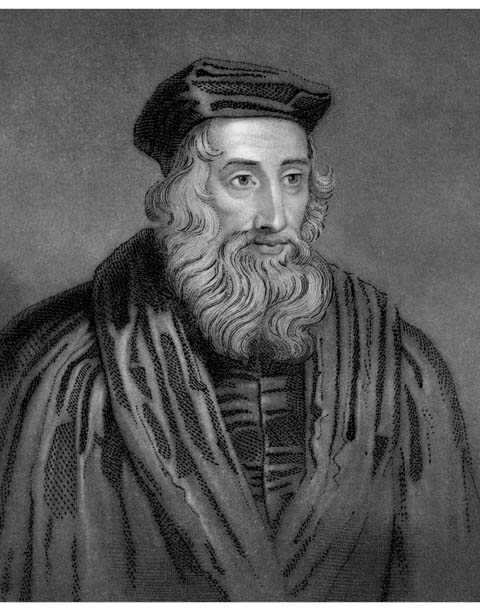 himself. But while thorough-going reform was thus indigenous to England, it received a mightly impulse from the Continent, and particularly from Geneva. Many of those driven from England by the Marian persecutions found a congenial exile at Geneva, and became apt and honest pupils of the great Calvin.
At the beginning of Elizabeth’s reign they returned thoroughly imbued with those views of Scripture truth, which he taught with a clarity and force elsewhere unparallelled. The Calvinistic Theology became the theology of the great men of the Anglican Church during the first forty years of Elizabeth’s reign. The most of these great men would willingly have tolerated a more thorough-going reform of the government and worship of the Church. Some of them positively and openly favored further reform in these departments. But Elizabeth stood in the way.
In 1563 the formularies of the Anglican Church were completed, containing Protestant doctrines along with a Mediaeval hierarchy and a partially Mediaeval cultus. In the following year the Queen began the attempt to enforce a rigid uniformity–an attempt resulting in the expulsion from the Established Church of many of the godliest ministers of all England.
Further trouble arose over the private meetings for worship in London at which Knox’s Book of  Common Order was used instead of the Liturgy, and over the more public meetings known as prophesyings–gatherings of ministers and pious laymen for the study and exposition of the Scriptures–very important meetings, as proven in their use in Zurich, Geneva and Scotland. Elizabeth commanded their suppression.
Before Elizabeth had been on the throne a score of years a consideable number of advocates of thorough-going reform, “who had been led on to substantially Presbyterian opinions, but, discouraged by friends abroad, and debarred by the authorities at home from overtly seceding from the national Church, begand to hold private meetings for mutual conference and prayer, and possibly also for the exercise of discipline over those who voluntarily joined their associations and submitted to their guidance.
It is even said that a Presbytery was formed at Wandsworth in Surrey, wherein eleven lay elders were associated with the lecturer of that congregation and certain leading Puritan clergymen. But if this was really a formal presbytery, it is probable that it was what was then called the lesser presbytery or session, not the greater presbytery or classis to which the name is now restricted. It is more certain that when Cartwright, the redoubled leader of this school of Puritans, was arrested in 1585 and his study searched, a copy was found of a Directory of Church Government, which made provision for synods, provincial and national, as well as for presbyteries, greater and lesser.
This, according to some authorities, had been subscribed by about five hundred Puritans of this School, and for some years–had to a certain extent been carried out, and a church withing the chuch virtually formed.” (Mitchell: The Westminster Assembly, pp. 51 and 52). These and all other expressions of thorough-going reform Elizabeth did her utmost to stamp out, using the despotic Courts of Star Chamber and High Commission without regard to the feelings and convictions of many of the most patriotic, learned and Christian of her subjects, but with disastrous failure, as the result. Her tyrannical measures called out and developed love for the more biblical form of religion which she persecuted. They multiplied the advocates of thorough-going reform, or Puritans, as they came early to be called in England.
National Tragedy and Repentance
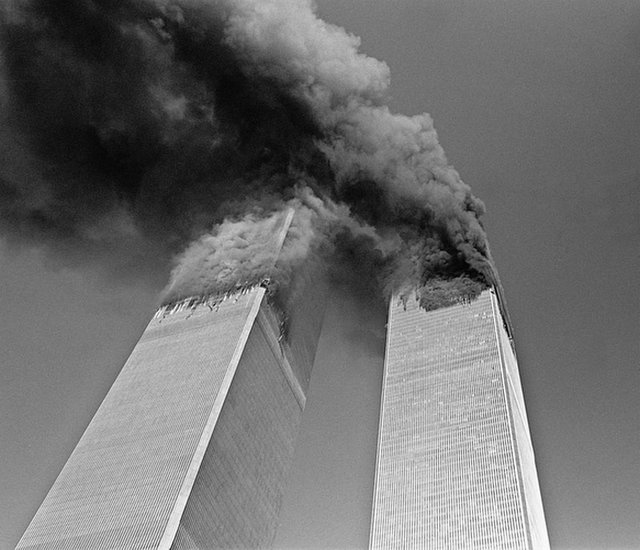 On September 11, 2001, four airliners were hijacked by Islamo-fascist terrorists, and two of them were piloted into the twin towers of the World Trade Center in New York City, killing 2,479 people. Tragedies such as this ofen move people to reflect and ask questions like, “Where is God when bad things happen to good people?” or “What can we learn from a tragedy such as this?”
In Luke 13:4-5, Jesus says, “Or those eighteen on whom the tower of Siloam fell and killed them: do you think that they were worse offenders than all the others who lived in Jerusalem? No, I tell you, but unless you repent, you will all likewise perish.”
What do we learn from a tragedy like the unexpected death of the eighteen in Siloam or the almost 2,500 in New York City? Are we to ask what sins did they commit to deserve such a horrible death? Are we to ask what national sins motivated God to punish the nation in such ways? Jesus takes the spotlight off the victims and the state of the nation and turns it one each and every one of us. What we are to remember in the event of the death of others is the fact that God is angry with sin and has decreed that the penalty for sin is death. But we are also called to remember that Godalso sent his Son, Jesus, to live a perfectly righteous life and earn eternal life, only to offer up himself to suffer the death penalty which sinners like all of us deserve, and to rise from the dead on the third day to declare that justification before God and eternal life has been purchased for all who trust Chrsit to save them from the wrath of God against their sin. This is where God is in tragedies such as this: he’s reminding us who survive that death is the result of sin; and the lesson we are to learn is that unless we turn from our sins to God who is angry with sin, and trust in Christ who died for sinners, we will die in our sins forever.
Examine your behavior in the light of the Ten Commandments, the holy Law of the holy God; have you kept each of these perfectly in thought, word and deed? If you are honest, you will recognize that you have not. This indicates that you are a sinner and you deserve to suffer the just wrath of the holy God and so you deserve to die. Now recall that the same just and holy God sent his Son, Jesus, to live a perfectloy righteous life, to keep God’s Law perfectly in thought, word and deed; then Jesus offered up himself to suffer the death that only sinners like you deserve so that God will give eternal life to sinners who turn from their sins and trust in Christ’s dath for sin.
Will you turn to God from your sins and trust Christ for forgiveness of your sins?
Why Memorize Scripture?
 I just received a beautiful email from Desiring God, which does a great job of encouraging believers to memorize Scripture. Click on the title above and it will take you to Desiring God’s newly redesigned website where you can read the message for yourself.
What a refreshing exercise it is to train your brain to store and meditate on, and your mouth to speak, the words God the Holy Spirit superintended as the Old Testament prophets and New Testament apostles wrote. In any responsible, well-made translation, this is truly a nourishing, cleansing, sanctifying and effective spiritual discipline.
As I was reading John Piper’s reasons to memorize Scripture, I was taken back to my days in the IFB movement. Boy, those King James Onlyists remain champions of the discipline of Scripture memorization! So many of the things John Piper writes are clear reflections of things I’d been taught all of my life. I had a similar experience when I read some of Leland Ryken’s The Word of God in English, written to promote the superiority of what is today becoming known as “essentially literal” translations of the Bible, over the decades long fad we’ve all gone through together in our lifetime known as “dynamic equivalent” or “thought-for-thought” translations. Ryken’s well-presented arguments for literal translation directly parallel much of what the King James Onlyists attempt to defend in their own way. Their way may be mixed with bad arguments defending other less compelling aspects of their position, but their stand on the superiority of literal translation as the most faithful way of rendering a text which happens to be the product of the breath of God cannot be faulted. Read Ryken’s book and compare it with Edward Hills’ arguments in The King James Version Defended.
Now, in case some of my overzealous former KJVonlyist readers are taking me the wrong way, no, I’m not promoting King James Onlyism, I’m promoting the time-honored tradition of literal translations of the Word of God, of which the KJV as well as the NKJV, NASB, ESV and several others are good examples. I’m also promoting the time-honored tradition of Scripture memorization. It’s true that with the advent of modern translations, especially in the case of the thought-for-thought variety, the discipline of Scripture memorization is a lost art. Yet another point on which KJV Onlyists are correct.
Find yourself a good, essentially literal translation of the Word of God. Being a brain-washed Reformed Christian, I recommend the English Standard Version. But any of them well suffice. Take that essentially literal translation of the Word of God and begin committing words, phrases, sentences, verses, chapters, books (you know, it has been done! ), to memory, and see if your Conformity to Christ, Daily Triumph over Sin, and Satan, Comfort and Counsel for People You Love, Communicating the Gospel to Unbelievers and Communion with God in the Enjoyment of His Person and Ways are not greatly fortified, strengthened, sanctified for the glory of God!
Theological and Doxological Meditation #22
The Redeemer’s Incarnation
Q. How did Christ, being the Son of God, become man?
A. Christ, the Son of God, became man,
by taking to himself a true body (Hebrews 2:14),
and a reasonable soul (Matthew 26:38),
being conceived by the power of the Holy Ghost,
in the womb of the virgin Mary,
and born of her (Luke 1:31, 35),
yet without sin (Hebrews 7:26).
Let All Mortal Flesh Keep Silent
#193, Trinity Hymnal (© 1990)
Liturgy of St. James, 5th Century
Adapted by Gerard Moultrie, 1864
Let all mortal flesh keep silence,
and with fear and trembling stand;
ponder nothing earthly-minded,
for with blessing in his hand,
Christ our God to earth descendeth,
our full homage to demand.
King of kings, yet born of mary,
as of old on earth he stood,
Lord of lords, in human vesture,
in the body and the blood,
he will give to all the faithful
his own self for heav’nly food.
Rank on rank the host of heaven
spreads its vanguard on the way,
as the Light of light descendeth
from the realms of endless day,
that the pow’rs of hell may vanish
as the darkness clears away.
At his feet the six-winged seraph;
cherubim, with sleepless eye,
veil their faces to the presence,
as with ceaseless voice they cry,
“Alleluia, alleluia, alleluia, Lord Most High!”
Christ And . . . (Part Two)
The Second of Two Parts Detailing the Historic Errors of Roman Catholicism, Contrasted with the Historice and Scriptural Emphases of the Protestant Reformation
“For there is one God, and there is one mediator between God and men, the man Christ Jesus . . . . ” (1 Timothy 2:5)
“And Mary said, ‘My soul magnifies the Lord, and my spirit rejoices in God my Savior, for he has looked on the humble estate of his servant. For behold, from now on all generations will call me blessed . . . . ‘ ” (Luke 1:46-48)
“To all those in Rome who are loved by God and called to be saints: grace to you and peace from God our Father and the Lord Jesus Christ.” (Romans 1:7)
“Everyone who goes on ahead and does not abide in the teaching of Christ, does not have God. Whoever abides in the teaching has both the Father and the Son.” (2 John 9)
Roman Redeemers: Christ and Mary and the “Saints”
As you may well know, a redeemer is one who buys a slave and then sets it free. Yahweh himself redeemed the people of Israel when he called Moses from the burning bush to command Pharaoh in his name to “let my people go.” Having struck Egypt time and again by the plagues, directly demonstrating his power over Egypt’s gods, God coerced the slave masters of Egypt to release their slaves to the service of Yahweh. This was the chief redemptive act of God in the Old Testament; it’s the one which unifies the identity of the nation of Israel, which directly points to and typifies the work of the ultimate Redeemer, the Lord Jesus Christ.
Christ our Redeemer was the only citizen of the nation of Israel to perfectly meet the demands of the covenant Yahweh instituted with the nation of Israel; he was the incarnation of the eternal Son of God, through whom God created the world. Thus our Redeemer was sent to Israel as a Prophet to reveal God’s will to his people; he was sent as King to conquer all his and his people’s enemies, namely the world, the flesh, the devil and death, rather than merely the political stranglehold of the Roman Empire over the nation of Israel; and in order to redeem his people, Christ served as the ultimate Priest, who mediated between the offending people and the offended God, Christ was God to man and man to God; his death met the terms of the holy and just God and likewise Christ’s death met the one essential spiritual need of the people, he demonstrated the grace and love without which all men live without hope. In this way, as Yahweh redeemed Israel from bondage to the Egyptians, so did Christ redeem his people from the consequences of the broken Law of God and bondage to sin.
Because Roman Catholicism receives Church Tradition as a source of revelation equal to Scripture, certain ideas about Mary have developed over time. These ideas are defended by inaccurate inferences drawn from Scripture texts related to Mary, coupled with an orthodox, Tradition-born title of her’s which has been misdefined and misapplied to make more out of Mary than is warranted by that title. One Church Council defended the doctrine that Christ was fully God and fully man from conception by saying that Christ was God even when he was in Mary’s womb. They bolstered this doctrine with a logical syllogism reasoning that since Mary is the Mother of Christ, and since Christ is God, then Mary is the “Mother of God” (theotokos). Through an inaccuarte transmission of this concept over time, the idea of Mary’s being the Mother of God gradually took into it associations of Mary with divinity. Coupling this with uncalled-for inferences from the Magnificat (Luke 1:46-48) and Mary’s “intercessory” activity in the New Testament account of the marriage at Cana (John 2:3), Roman Catholicism developed a divine mary who prays to her loving Son to extend forgiveness to penitent believers, making her a mediator between sinners and Christ, thus playing some role in Christ’s work as our Redeemer; a role which has led many Roman Catholics since the Middle Ages to call Mary “Co-Mediatrix” and “Co-Redemptrix” with Christ, which obviously contradicts the Bible’s emphasis that Christ alone (SOLU CHRISTUS, as the Reformers sloganized it) mediates between God and man (1 Timothy 2:5). Thus in popular Roman soteriology, Mary becomes, if you will, the matron saint of Roman Redeemers.
If Mary is the brightest star in a sky of Saints, let us now turn our attention to the lesser lights, each of which individually and corporately play a role in the nature and ongoing maintenance of Roman Redemption. Protestants understand that the word “saint” is used many times in the gospels and epistles. According to 1 Peter 1:1-2, a saint is a “sanctified one,” one who was elected by the Father in eternity past (cf. Ephesians 1:3-6) to be set apart by the work of the Holy Spirit in the gospel preached to receive the gift of faith (cf. Romans 10:17; Ephesians 2:8,9), and be sprinkled with Christ’s blood. The apostles greet many of the churches to which they write, referring to them as “the saints.” Clearly, these are references to the members of the church, without any distinction being made between classes of saints.
Church Tradition began to claim that a Saint is one whose personal righteousness was so meritorious that there was not only enough righteousness practiced to ensure his inclusion in the Lamb’s Book of Life, but enough also to be deposited in a so-called “Treasury of Merit” to be dispensed through the sacrament of penance to repair the damage done by sinning Catholics to their own justification. In other words, if post-justification righteousness was graded on a modern teacher’s scale, the “Saints” are those who scored over 100% in their lifetimes with the amount exceeding 100% being deposited into this “Treasury of Merit” for the benefit of the rest of the Church. Thus by this unscriptural doctrine, Christ alone is not enough to ensure our eternal salvation; he requires the assistance of his mother and the most worthy of his disciples. It cannot be urged too strongly to flee any doctrine that does not center on redemption SOLUS CHRISTUS, in Christ Alone! Certainly a gospel that requires such an elaborate team of Redeemers is a gospel that differs from the one originally proclaimed by the apostles.


 The Misadventures of Captain Headknowledge


